
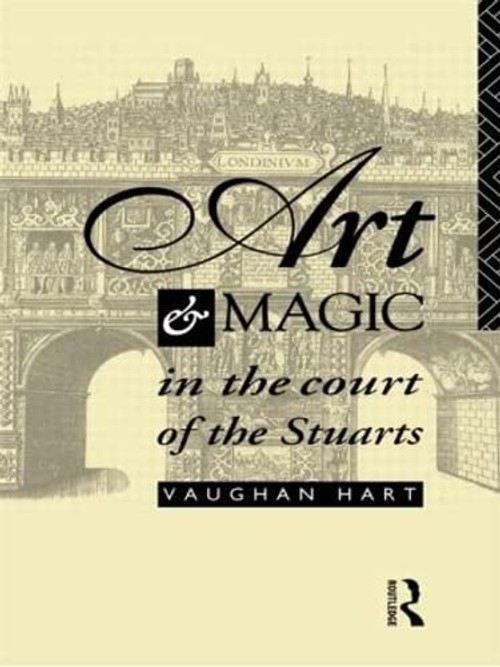
Art and Magic in the Court of the Stuarts: Renaissance Culture and Royal Propaganda by Hart Vaughan
Inclusive of all applicable taxes. FREE shipping on all orders.
Available Offers
- 🚚Free Delivery — Free shipping on all orders
- 💵Cash on Delivery — Pay when your order arrives
- ↩️15-Day Easy Returns — Hassle-free return policy
- 🔒Cash on Delivery — Pay safely when your order arrives
Check Delivery
Product Description
Introduction
In the annals of British history, few periods are as fascinating and turbulent as the Stuart era. From the glittering court of James I to the tragic fall of Charles I, this was a time when art, politics, and esoteric philosophy intertwined in extraordinary ways. Art and Magic in the Court of the Stuarts by Hart Vaughan offers a deep and original exploration of how Renaissance magic shaped the visual culture and royal propaganda of the Stuart monarchy. For Indian readers with a passion for history, art, or political symbolism, this book provides a captivating window into a world where divine right, Neoplatonism, and courtly spectacle merged to create a unique form of power.
Book Overview
Spanning from the accession of James I in 1603 to the execution of Charles I in 1649, this meticulously researched volume examines the role of magic in Renaissance art and its use as a tool of royal propaganda. Hart Vaughan argues that court artists deliberately employed magical imagery—rooted in Neoplatonic philosophy—to represent the monarch’s divine authority and his supposed command over nature’s hidden forces. Through masques, sermons, heraldry, gardens, architecture, and grand processions, the Stuarts sought to project an image of absolute power. Yet, as the book reveals, this very magic contributed to the ideological tensions that led to the English Civil War and the eventual destruction of the Stuart iconography.
Key Highlights
- Original Thesis: Connects Renaissance magic directly to political propaganda and the divine right of kings.
- Rich Visual Analysis: Examines court masques, architecture, gardens, and heraldic symbols as expressions of magical cosmology.
- Historical Depth: Covers the entire early Stuart period, from 1603 to 1649, with a focus on the reigns of James I and Charles I.
- Interdisciplinary Approach: Blends art history, political theory, philosophy, and cultural studies in a seamless narrative.
- Critical Insight: Explains how the magical worldview of the court inadvertently fueled the Civil War and the iconoclasm that followed.
Inside the Book
Readers will journey through the opulent halls of Whitehall Palace, the intricate symbolism of Inigo Jones’s stage designs, and the hidden meanings in royal portraits. Vaughan unpacks the Neoplatonic ideas that informed the court’s self-image, showing how artists like Rubens and Van Dyck wove magical motifs into their works. The book also delves into the role of alchemy, astrology, and hermetic thought in shaping the Stuart monarchy’s identity. Each chapter reveals a different facet of this magical Renaissance culture—from the masques that celebrated cosmic harmony to the gardens designed as microcosms of the universe.
Key Topics
- Neoplatonism and Renaissance magic in courtly art
- Divine right and absolutism in Stuart propaganda
- Court masques, heraldry, and ceremonial processions
- Architecture and garden design as expressions of cosmic order
- The role of sermons and literature in reinforcing royal magic
- The English Civil War and the destruction of royal imagery
- Artists such as Inigo Jones, Peter Paul Rubens, and Anthony van Dyck
Reader Benefits
- For History Enthusiasts: Gain a fresh understanding of the Stuart court beyond traditional political narratives.
- For Art Lovers: Discover the hidden magical symbolism in Renaissance paintings, architecture, and performances.
- For Students of Political Science: Learn how art and ideology combine to legitimize power.
- For Philosophy Readers: Explore the influence of Neoplatonism and hermetic thought on early modern culture.
- For Indian Readers: Draw parallels between the use of ritual and symbolism in European courts and similar traditions in Indian royal courts.
Learning Outcomes
- Understand the relationship between Renaissance magic and political authority.
- Identify key symbols and motifs used in Stuart court art.
- Analyze how art served as a tool of propaganda during the reigns of James I and Charles I.
- Explain the intellectual and cultural roots of the English Civil War.
- Appreciate the interdisciplinary nature of early modern studies.
Who Should Read
This book is ideal for undergraduate and postgraduate students of history, art history, political science, and cultural studies. It will also appeal to general readers with an interest in Renaissance magic, British monarchy, or the intersection of art and power. Indian students of comparative history or those studying the symbolism of royal courts in different cultures will find it especially enlightening.
About the Author
Hart Vaughan is a distinguished scholar of Renaissance art and architecture, known for his innovative research into the relationship between visual culture and political ideology. His work has been widely published in academic journals and his books are regarded as essential reading in the field of early modern studies. Vaughan’s expertise in Neoplatonic philosophy and courtly symbolism brings a unique depth to this volume.
About the Publisher
Taylor & Francis Ltd is a leading international academic publisher with a rich history of producing high-quality scholarly works. Renowned for its rigorous editorial standards, the publisher is a trusted name in the fields of humanities, social sciences, and law. This hardcover edition is a durable addition to any serious library.
Conclusion
Art and Magic in the Court of the Stuarts is a remarkable and thought-provoking book that sheds new light on a pivotal era. By revealing how magic and art were woven into the very fabric of Stuart kingship, Hart Vaughan offers readers a compelling lens through which to understand the rise and fall of a dynasty. Whether you are a student, a scholar, or a curious reader, this volume will enrich your appreciation of the complex forces that shaped early modern Britain. Order your copy today from Bookshops.in and step into the enchanted world of the Stuart court.
Quick Summary
Art and Magic in the Court of the Stuarts by Hart Vaughan is a scholarly exploration of how Renaissance magic and visual culture were harnessed to legitimise Stuart monarchy between 1603 and 1649. The book argues that court artists—through masques, heraldic displays, garden designs, architecture, and processions—deliberately invoked Neoplatonic ideas of hidden natural forces to portray the king as a divine figure with command over the cosmos. This artistic propaganda not only reinforced the doctrine of divine right but also served the absolutist ambitions of James I and Charles I. Vaughan demonstrates that these cultural expressions were not mere decoration; they were integral to the political struggles that culminated in the English Civil War. The book is ideal for Indian students and scholars of Renaissance art history, early modern British history, political theory, and occult studies. Readers will gain a nuanced understanding of how art functioned as a tool of power and how magical thinking shaped early modern politics. By choosing Bookshops.in, you support a trusted Indian bookstore that delivers authentic academic editions across the country.
Book Highlights
Book Specifications
| ISBN-13 | 9780415090315 |
| ISBN-10 | 0415090318 |
| Publisher | Routledge |
| Language | English |
| Dimensions | 15.88 x 2.54 x 24.13 cm |
| Weight | 748 g |
| Country | India |
| Category | New Age & Spirituality › Occult & Paranormal |
| Genre | Non-fiction |
| Original Language | English |
Frequently Asked Questions
What is Art and Magic in the Court of the Stuarts about?
Who is the author of this book?
What time period does the book cover?
Is this book suitable for Indian students?
Does the book discuss the English Civil War?
What themes are explored in the book?
Is this a hardcover or paperback edition?
What is the ISBN of this book?
What language is the book in?
Can I use this book for my research paper?
Does the book include illustrations?
Is this book part of a series?
Where can I buy this book in India?
Readers Also Search For
Customers Also Bought
Islam
Spiritual Economies (English, Daromir Rudnyckyj)

Islam
Who Is Allah? (English, Bruce B. Lawrence)
Islam
Islam and Liberal Citizenship: The Search for an Overlapping Consensus by Andrew F. March
Islam
Fiqh Us-Sunnah: Funerals and Diggers by Al-Sayyid Sabiq – Islamic Funeral Guide

Christianity
Genetics (English, Thomas a. Shannon | Mark P. Aulisio | Françoise Baylis)

Hinduism
Karma and Creativity by Christopher Key Chapple – Indian Philosophy
Related Products
View All
Religion & Spirituality
Spiritual Competency in Psychotherapy | by Philip Brownell | Springer Publishing Company | by Philip Brownell | Springer Publishing Company | by Philip Brownell | Springer Publishing Company | by Philip Brownell | Springer Publishing Company | by Philip Brownell | Springer Publishing Company | by Philip Brownell | Springer Publishing Company | by Philip Brownell | Springer Publishing Company | by Philip Brownell | Springer Publishing Company | by Philip Brownell | Springer Publishing Company | b
Religion & Spirituality
Religion as a Conversation Starter | by Ina Merdjanova | Continuum | by Ina Merdjanova | Continuum | by Ina Merdjanova | Continuum | by Ina Merdjanova | Continuum | by Ina Merdjanova | Continuum | by Ina Merdjanova | Continuum | by Ina Merdjanova | Continuum | by Ina Merdjanova | Continuum | by Ina Merdjanova | Continuum | by Ina Merdjanova | Continuum | by Ina Merdjanova | Continuum | by Ina Merdjanova | Continuum | by Ina Merdjanova | Continuum | by Ina Merdjanova | Continuum | by Ina Merdjano
Religion & Spirituality
The Other Jewish Question: Identifying the Jew and Making Sense of Modernity
Religion & Spirituality
The Oxford Guide to People & Places of the Bible | by Bruce M. Metzger | Michael D. Coogan | Oxford University Press | by Bruce M. Metzger | Michael D. Coogan | Oxford University Press | by Bruce M. Metzger | Michael D. Coogan | Oxford University Press | by Bruce M. Metzger | Michael D. Coogan | Oxford University Press | by Bruce M. Metzger | Michael D. Coogan | Oxford University Press | by Bruce M. Metzger | Michael D. Coogan | Oxford University Press | by Bruce M. Metzger | Michael D. Coogan |

Religion & Spirituality
Anti-Judaism in Early Christianity | by Stephen G. Wilson | Wilfrid Laurier University Press | by Stephen G. Wilson | Wilfrid Laurier University Press | by Stephen G. Wilson | Wilfrid Laurier University Press | by Stephen G. Wilson | Wilfrid Laurier University Press | by Stephen G. Wilson | Wilfrid Laurier University Press | by Stephen G. Wilson | Wilfrid Laurier University Press | by Stephen G. Wilson | Wilfrid Laurier University Press | by Stephen G. Wilson | Wilfrid Laurier University Press |
Religion & Spirituality