
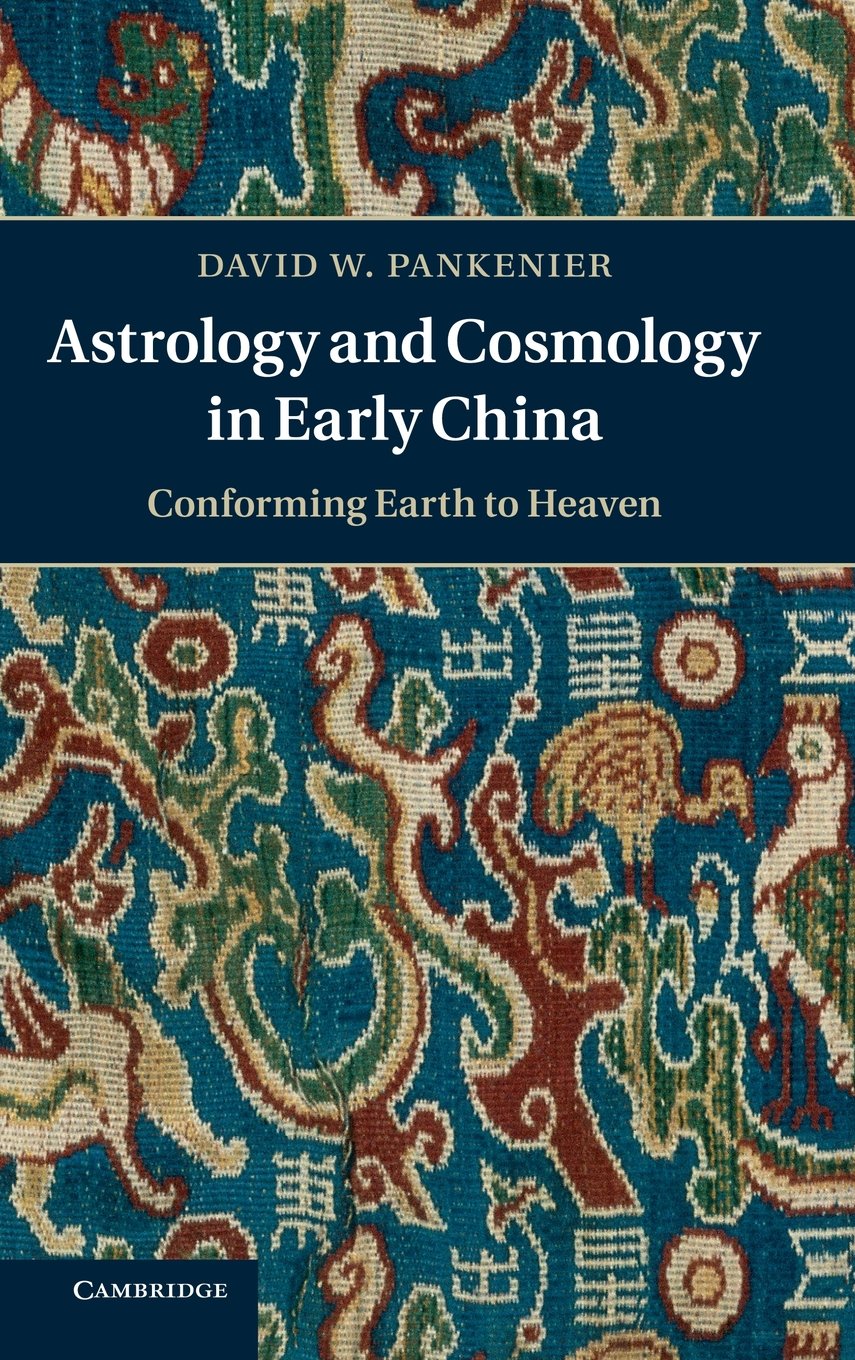
Cosmology, Astrology and the Foundations of Chinese Civilization, 2000 BC–220 CE by David Pankenier – A Deep Dive into A
Inclusive of all applicable taxes. FREE shipping on all orders.
Available Offers
- 🚚Free Delivery — Free shipping on all orders
- 💵Cash on Delivery — Pay when your order arrives
- ↩️15-Day Easy Returns — Hassle-free return policy
- 🔒Cash on Delivery — Pay safely when your order arrives
Check Delivery
Product Description
Introduction
In Cosmology, Astrology and the Foundations of Chinese Civilization, 2000 Bc–220 Ce, David Pankenier presents a groundbreaking exploration of how the heavens shaped the cultural, political, and intellectual life of ancient China. This meticulously researched volume, published by Cambridge University Press, reveals that the Chinese civilization was not merely influenced by celestial phenomena—it was fundamentally built upon them. For Indian readers and students fascinated by the intersections of science, history, and spirituality, this book offers a rare window into a worldview where astronomy and astrology were inseparable, and where the stars guided emperors, architects, and philosophers alike.
Book Overview
Spanning over two millennia, from the late Neolithic period through the end of the Han dynasty (220 CE), this hardbound work traces the profound impact of the Sun, Moon, and stars on Chinese civilization. Pankenier argues that the ancient Chinese deliberately mirrored astral patterns in their art, architecture, calendrical science, mythology, technology, and even military strategy. Drawing on archaeological discoveries, classical texts, inscriptions, and paleography, the book demonstrates how celestial events—from comets to planetary conjunctions—were interpreted as omens that shaped dynastic fortunes. The author emphasizes that in ancient China, there was no sharp division between astronomy and astrology; instead, astral omenology was a central pillar of governance and daily life.
Key Highlights
- Pioneering Interdisciplinary Approach: Bridges astronomy, archaeology, history, and cultural studies to present a holistic view of early Chinese civilization.
- Rich Source Material: Incorporates oracle bone inscriptions, bronze vessel texts, and early historical records to reconstruct ancient sky-watching practices.
- Focus on Astral Omenology: Highlights how celestial portents influenced political decisions, military campaigns, and the legitimation of rulers.
- Architectural and Artistic Impact: Explains how cosmic order was reflected in the design of palaces, tombs, and ritual objects.
- Calendrical Science: Details the development of luni-solar calendars and their role in agriculture, festivals, and statecraft.
Inside the Book
The book is structured to guide readers through the chronological evolution of Chinese cosmic thought. Early chapters examine Neolithic astronomical alignments and the emergence of the concept of the "Celestial Empire." Later sections delve into the Shang and Zhou dynasties, where astrological divination became integral to court life. The Han dynasty receives special attention for its systematic recording of celestial phenomena and the synthesis of cosmology with Confucian and Daoist philosophies. Throughout, Pankenier weaves together textual analysis with archaeological evidence, offering vivid reconstructions of how ancient Chinese observers tracked planets, eclipses, and supernovae.
Key Topics
- Archaeoastronomy and the origins of Chinese sky-watching
- The role of astrology in statecraft and imperial legitimacy
- Cosmic symbolism in ancient Chinese art and architecture
- The development of the Chinese calendar and its astronomical foundations
- Celestial omens and their interpretation in political contexts
- The influence of astronomy on military strategy and decision-making
- Comparisons between Chinese and other ancient astral traditions
Reader Benefits
This book offers Indian readers a unique comparative perspective on how another great civilization integrated celestial phenomena into its core identity. Students of history, astronomy, and religious studies will gain a deeper appreciation for the non-Western roots of scientific thought. The clear, accessible prose makes complex concepts understandable, while the extensive bibliography provides pathways for further research. Professionals in fields such as cultural astronomy, sinology, and comparative mythology will find this a valuable reference work.
Learning Outcomes
- Understand how astronomical observation shaped Chinese political and cultural history.
- Recognize the interplay between astrology, cosmology, and statecraft in ancient societies.
- Analyze primary source materials—including oracle bones and classical texts—for astronomical content.
- Compare Chinese astral traditions with those of India, Mesopotamia, and other ancient cultures.
- Appreciate the material evidence for early Chinese astronomy through archaeological case studies.
Who Should Read
Cosmology, Astrology and the Foundations of Chinese Civilization is ideal for undergraduate and postgraduate students of history, archaeology, astronomy, and Asian studies. It will also appeal to scholars of comparative religion, mythology, and the history of science. General readers with an interest in ancient civilizations, Chinese culture, or the history of astrology will find this book both enlightening and engaging. For Indian readers, the parallels and contrasts with Indian jyotisha and Vedic astronomy make this an especially rewarding study.
About the Author
David W. Pankenier is a professor of Chinese studies and astronomy at Lehigh University, USA. A leading authority on ancient Chinese astronomy and astrology, he has published extensively on archaeoastronomy, early Chinese texts, and the cultural history of celestial phenomena. His work combines rigorous philological analysis with astronomical computation, offering fresh insights into the cosmic worldview of early China.
About the Publisher
Cambridge University Press is one of the world's oldest and most respected academic publishers. Known for its rigorous editorial standards and commitment to scholarly excellence, Cambridge publishes works that advance knowledge across the sciences, humanities, and social sciences. This volume is part of their prestigious list in the history of science and Asian studies.
Conclusion
Cosmology, Astrology and the Foundations of Chinese Civilization, 2000 Bc–220 Ce is a seminal work that reshapes our understanding of how the stars influenced one of the world's oldest continuous civilizations. David Pankenier's masterful synthesis of textual, archaeological, and astronomical evidence reveals a culture that saw the cosmos as a mirror of earthly order—and sought to align human affairs with celestial patterns. For Indian readers, this book opens a fascinating dialogue with their own ancient astral traditions, making it an indispensable addition to any serious library on science, history, or culture.
Quick Summary
Cosmology, Astrology and the Foundations of Chinese Civilization, 2000 BC–220 CE by David Pankenier is a groundbreaking academic work that reveals how the ancient Chinese were profoundly influenced by celestial phenomena. The book argues that astronomy and astrology were inseparable in early China, with astral omenology guiding everything from political decisions to artistic expression. Covering the Xia, Shang, Zhou, and Han dynasties, Pankenier draws on archaeological discoveries, classical texts, and inscriptions to show how the stars shaped Chinese civilization. Readers will learn about the cosmic foundations of Chinese culture, including calendrical science, mythology, architecture, and military strategy. This hardcover from Cambridge University Press is ideal for Indian students and scholars of Chinese history, astronomy, and comparative ancient sciences. By purchasing from Bookshops.in, you support a trusted Indian bookstore that offers genuine imported academic titles with reliable delivery.
Book Highlights
Book Specifications
| ISBN-13 | 9781107006720 |
| ISBN-10 | 1107006724 |
| Publisher | Cambridge University Press |
| Language | English |
| Dimensions | 16.51 x 3.18 x 23.5 cm |
| Weight | 1 kg 90 g |
| Country | India |
| Category | New Age & Spirituality › Astrology |
| Genre | Non-fiction |
| Reading Age | Adult |
| Original Language | English |
Frequently Asked Questions
What is the main theme of this book?
Who is the author David Pankenier?
What time period does the book cover?
Is this book suitable for beginners?
Does the book discuss Indian or Western astronomy?
What sources does the author use?
How does the book define astrology?
Is there a focus on any particular dynasty?
What makes this book unique?
Can this book help in understanding Chinese culture?
Is the book illustrated?
What is the binding type?
Where can I buy this book in India?
Is the language English?
What is the price in INR?
Readers Also Search For
Customers Also Bought
Islam
Spiritual Economies (English, Daromir Rudnyckyj)

Islam
Who Is Allah? (English, Bruce B. Lawrence)
Islam
Islam and Liberal Citizenship: The Search for an Overlapping Consensus by Andrew F. March
Islam
Fiqh Us-Sunnah: Funerals and Diggers by Al-Sayyid Sabiq – Islamic Funeral Guide

Christianity
Genetics (English, Thomas a. Shannon | Mark P. Aulisio | Françoise Baylis)

Hinduism
Karma and Creativity by Christopher Key Chapple – Indian Philosophy
Related Products
View All
Religion & Spirituality
Spiritual Competency in Psychotherapy | by Philip Brownell | Springer Publishing Company | by Philip Brownell | Springer Publishing Company | by Philip Brownell | Springer Publishing Company | by Philip Brownell | Springer Publishing Company | by Philip Brownell | Springer Publishing Company | by Philip Brownell | Springer Publishing Company | by Philip Brownell | Springer Publishing Company | by Philip Brownell | Springer Publishing Company | by Philip Brownell | Springer Publishing Company | b
Religion & Spirituality
Religion as a Conversation Starter | by Ina Merdjanova | Continuum | by Ina Merdjanova | Continuum | by Ina Merdjanova | Continuum | by Ina Merdjanova | Continuum | by Ina Merdjanova | Continuum | by Ina Merdjanova | Continuum | by Ina Merdjanova | Continuum | by Ina Merdjanova | Continuum | by Ina Merdjanova | Continuum | by Ina Merdjanova | Continuum | by Ina Merdjanova | Continuum | by Ina Merdjanova | Continuum | by Ina Merdjanova | Continuum | by Ina Merdjanova | Continuum | by Ina Merdjano

Religion & Spirituality
The Other Jewish Question: Identifying the Jew and Making Sense of Modernity

Religion & Spirituality
The Oxford Guide to People & Places of the Bible | by Bruce M. Metzger | Michael D. Coogan | Oxford University Press | by Bruce M. Metzger | Michael D. Coogan | Oxford University Press | by Bruce M. Metzger | Michael D. Coogan | Oxford University Press | by Bruce M. Metzger | Michael D. Coogan | Oxford University Press | by Bruce M. Metzger | Michael D. Coogan | Oxford University Press | by Bruce M. Metzger | Michael D. Coogan | Oxford University Press | by Bruce M. Metzger | Michael D. Coogan |

Religion & Spirituality
Anti-Judaism in Early Christianity | by Stephen G. Wilson | Wilfrid Laurier University Press | by Stephen G. Wilson | Wilfrid Laurier University Press | by Stephen G. Wilson | Wilfrid Laurier University Press | by Stephen G. Wilson | Wilfrid Laurier University Press | by Stephen G. Wilson | Wilfrid Laurier University Press | by Stephen G. Wilson | Wilfrid Laurier University Press | by Stephen G. Wilson | Wilfrid Laurier University Press | by Stephen G. Wilson | Wilfrid Laurier University Press |
Religion & Spirituality