
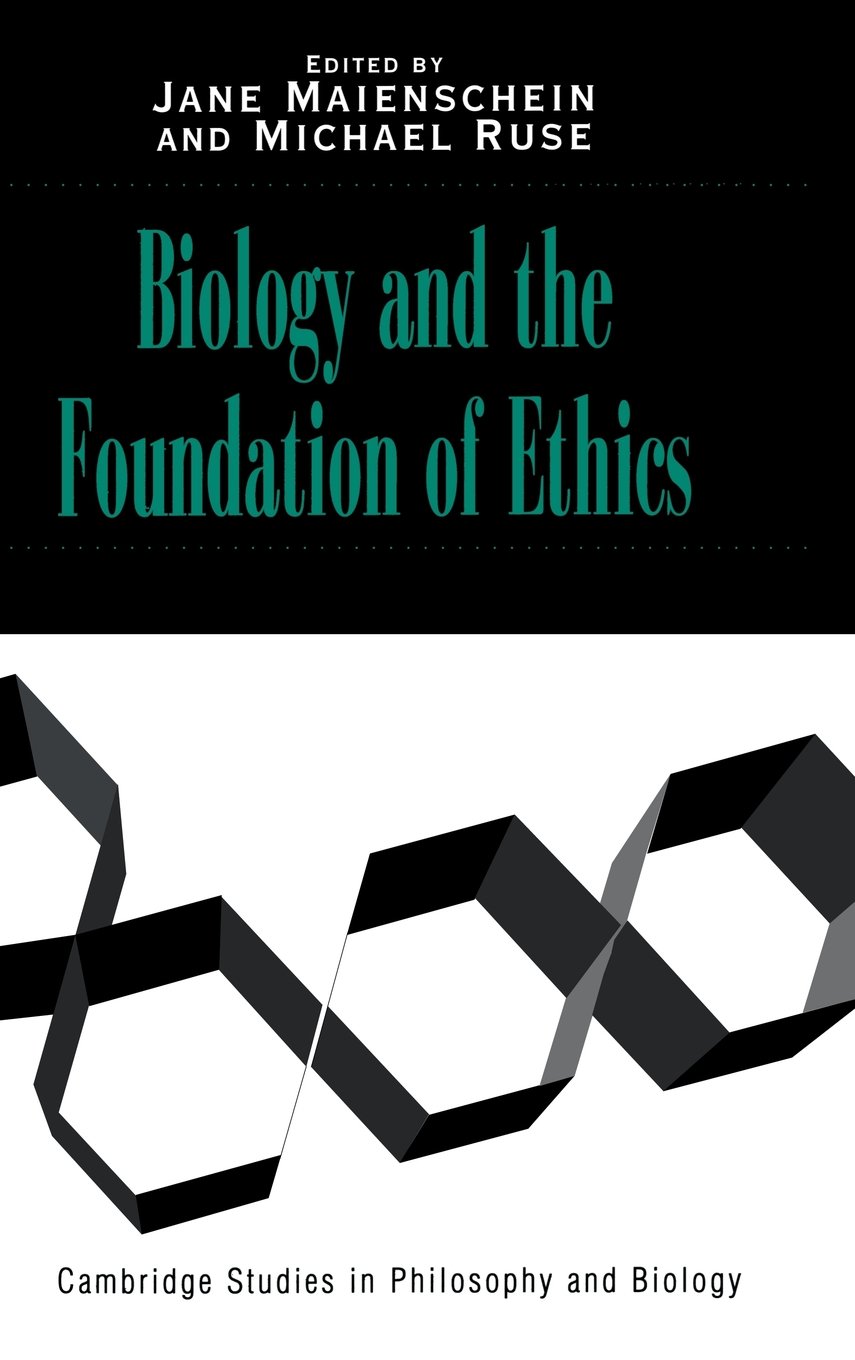
Biology and the Foundations of Ethics: A Historical Inquiry into Evolutionary Biology and Moral Philosophy by Jane Maien
Inclusive of all applicable taxes. FREE shipping on all orders.
Available Offers
- 🚚Free Delivery — Free shipping on all orders
- 💵Cash on Delivery — Pay when your order arrives
- ↩️15-Day Easy Returns — Hassle-free return policy
- 🔒Cash on Delivery — Pay safely when your order arrives
Check Delivery
Product Description
Introduction
For students and scholars navigating the intersections of biology, philosophy, and ethics, Biology and the Foundations of Ethics offers a rigorous and historically grounded exploration of a question that has intrigued thinkers for centuries: can our moral principles be traced back to our biological nature? Edited by Jane Maienschein and published by Cambridge University Press, this hardcover volume brings together cutting-edge essays from leading historians and philosophers of science. Whether you are a postgraduate student in India or a curious reader seeking to understand the biological roots of human morality, this book provides a thoughtful and accessible entry point into a complex field.
Book Overview
This collection of essays examines the relationship between evolutionary biology and foundational questions in ethics. Rather than offering a single, dogmatic answer, the book invites readers to consider multiple perspectives—from Aristotle’s virtue ethics to Hume’s moral sentiments, and from Darwin’s natural selection to the sociobiological theories of E. O. Wilson. The volume is organized chronologically, tracing the development of ideas about human nature and morality across centuries. Each chapter challenges readers to think critically about whether humans are innately selfish, how cooperation evolved, and what biological facts—if any—can inform our moral decisions. The essays are written by some of the most respected voices in the history and philosophy of science, making this a landmark publication in the field.
Key Highlights
- Historical Depth: The first book to offer a comprehensive historical perspective on biology and ethics, spanning from Aristotle to contemporary sociobiology.
- Renowned Contributors: Features essays by leading scholars in the history and philosophy of science, ensuring authoritative and thought-provoking content.
- Interdisciplinary Approach: Bridges biology, philosophy, ethics, and history, making it ideal for students and researchers across multiple disciplines.
- Critical Engagement: Encourages readers to question assumptions about human nature, selfishness, and the biological basis of morality.
- Academic Rigour: Published by Cambridge University Press, a hallmark of quality and scholarly excellence.
Inside the Book
The volume is structured to guide readers through the evolution of ethical thought in relation to biology. Early chapters examine Aristotle’s views on human nature and virtue, while later sections explore David Hume’s moral philosophy and its connection to natural human sentiments. The book then moves to Darwin’s revolutionary ideas about evolution and morality, before arriving at modern debates centred on sociobiology and the work of E. O. Wilson. Each essay is self-contained but builds upon earlier themes, creating a cohesive narrative. Readers will encounter discussions on altruism, cooperation, innate selfishness, and the implications of evolutionary theory for social practices. The writing is scholarly yet accessible, with careful explanations of key concepts.
Key Topics
- The biological roots of moral behaviour
- Evolutionary ethics and natural selection
- Human nature: selfishness versus cooperation
- Historical perspectives from Aristotle to Darwin
- Sociobiology and the legacy of E. O. Wilson
- Moral sentiments and their evolutionary origins
- The role of biology in shaping ethical frameworks
- Implications of evolutionary theory for social and political philosophy
Reader Benefits
By engaging with this book, readers will develop a nuanced understanding of the ongoing debate between biology and ethics. They will learn to critically evaluate claims about human nature, such as whether selfishness is hardwired or whether altruism can be explained by evolution. The historical approach allows readers to see how ideas have changed over time, providing context for contemporary discussions. Indian students and academics will find the book particularly valuable for courses in philosophy of science, bioethics, evolutionary psychology, and environmental ethics. The essays are rich with references and arguments that can be used in seminars, dissertations, and research papers.
Learning Outcomes
- Understand the major historical figures and theories linking biology to ethics
- Analyse arguments for and against the biological basis of morality
- Critically evaluate sociobiology and its critics
- Apply historical perspectives to contemporary ethical dilemmas
- Develop a sophisticated vocabulary for discussing human nature and ethics
- Identify the limitations of biological explanations for moral behaviour
Who Should Read
This book is ideal for postgraduate and advanced undergraduate students in philosophy, biology, psychology, anthropology, and history of science. It is also highly recommended for academics and researchers working in bioethics, evolutionary psychology, and moral philosophy. General readers with a strong interest in science and ethics—especially those who enjoy thoughtful, non-dogmatic explorations—will find it rewarding. Indian readers in particular will appreciate the book’s global perspective, which complements courses offered at universities such as Delhi University, JNU, IITs, and IISc.
About the Author
Jane Maienschein is a distinguished historian and philosopher of biology. She is a Regents’ Professor at Arizona State University, where she directs the Center for Biology and Society. Her research focuses on the history of developmental biology, genetics, and the ethical implications of biological research. She has authored and edited numerous books, and her work has been widely recognized for its clarity and depth. As the editor of this volume, she has brought together a stellar group of contributors whose expertise spans centuries of philosophical and biological thought.
About the Publisher
Cambridge University Press is one of the oldest and most respected academic publishers in the world. Founded in 1534, it has a long tradition of publishing authoritative works in science, philosophy, and the humanities. This volume upholds that tradition by offering a rigorous, well-edited collection that meets the highest scholarly standards. For Indian readers, a Cambridge University Press book is a mark of quality and reliability, making it a trusted resource for academic study and personal enrichment.
Conclusion
Biology and the Foundations of Ethics is an essential addition to the library of anyone interested in the deep connections between our biological makeup and our moral lives. By weaving together historical perspectives and contemporary debates, Jane Maienschein and her collaborators have created a book that is both intellectually stimulating and practically useful. Whether you are preparing for a seminar, writing a research paper, or simply exploring the big questions of human existence, this volume will challenge and inspire you. Order your hardcover copy from Bookshops.in today and join the conversation that spans from Aristotle to the frontiers of modern science.
Quick Summary
Biology and the Foundations of Ethics, edited by Jane Maienschein, is a landmark collection of essays that traces the historical interplay between evolutionary biology and moral philosophy. The book examines foundational questions such as whether humans are innately selfish and how biological nature informs social practices. It covers key thinkers from Aristotle and David Hume to Charles Darwin and the Harvard sociobiologist E.O. Wilson, offering a unique historical perspective not found in other works. This volume is ideal for Indian university students and researchers in philosophy, biology, and interdisciplinary studies who seek a rigorous yet accessible exploration of the biological roots of ethics. Readers will learn to critically evaluate arguments about human nature, altruism, and moral principles. By purchasing from Bookshops.in, you receive a genuine hardcover edition with reliable delivery across India, supporting a trusted local bookstore committed to academic excellence.
Book Highlights
Book Specifications
| ISBN-13 | 9780521551007 |
| ISBN-10 | 0521551005 |
| Publisher | Cambridge University Press |
| Language | English |
| Dimensions | 15.24 x 1.27 x 23.5 cm |
| Weight | 645 g |
| Country | USA |
| Category | Philosophy › Ethics |
| Genre | Nonfiction |
| Original Language | English |
Frequently Asked Questions
What is the main theme of Biology and the Foundations of Ethics?
Who is the author of this book?
Which historical figures are discussed in the book?
Is this book suitable for undergraduate students?
Does the book argue that humans are innately selfish?
Which publisher released this book?
Is this book available in hardcover?
What is the ISBN of this book?
Can this book be used for a course on ethics?
Does the book include contributions from multiple authors?
What is the price of this book in India?
Is this book relevant to Indian readers?
Where can I buy this book in India?
Readers Also Search For
Customers Also Bought
Islam
Spiritual Economies (English, Daromir Rudnyckyj)

Islam
Who Is Allah? (English, Bruce B. Lawrence)
Islam
Islam and Liberal Citizenship: The Search for an Overlapping Consensus by Andrew F. March

Islam
Fiqh Us-Sunnah: Funerals and Diggers by Al-Sayyid Sabiq – Islamic Funeral Guide

Christianity
Genetics (English, Thomas a. Shannon | Mark P. Aulisio | Françoise Baylis)

Hinduism
Karma and Creativity by Christopher Key Chapple – Indian Philosophy
Related Products
View All
Philosophy
Latin American Philosophy: Currents, Issues, Debates by Eduardo Mendieta

Philosophy
Al-Farabi's Short Commentary on Aristotle's Prior Analytics by Nicholas Rescher – Philosophy
Philosophy
Poetics of Imagining: Modern to Post-modern by Richard Kearney

Philosophy
The Metaphysics of Extrinsic Properties: 11 (Metaphysical Research, 11)
Philosophy
Dialogues on Metaphysics and on Religion by Nicolas Malebranche – Philosophy
Philosophy