
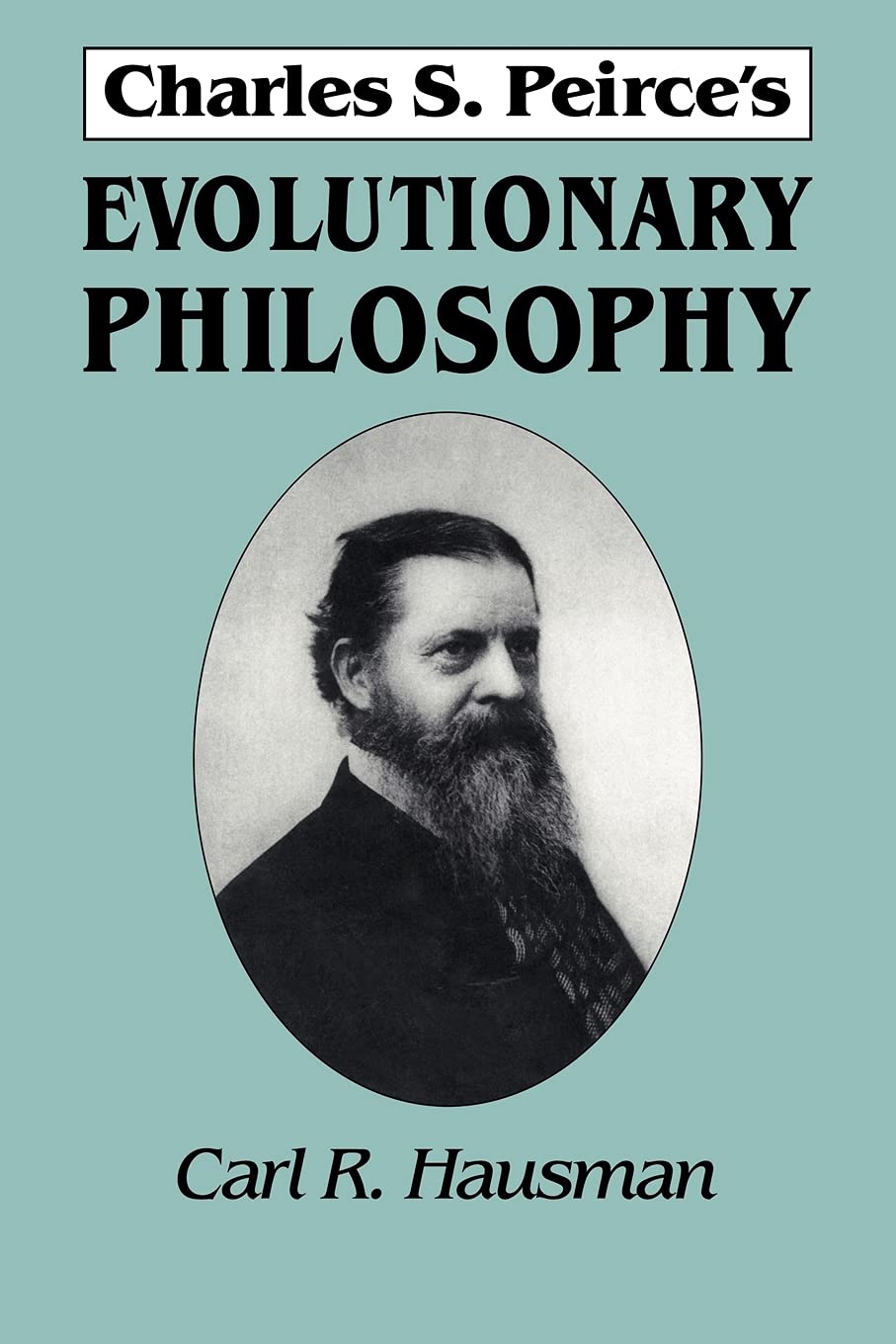
Charles S. Peirce's Evolutionary Philosophy: A Systematic Introduction to Pragmatism, Semiotics, and Metaphysical Realis
Inclusive of all applicable taxes. FREE shipping on all orders.
Available Offers
- 🚚Free Delivery — Free shipping on all orders
- 💵Cash on Delivery — Pay when your order arrives
- ↩️15-Day Easy Returns — Hassle-free return policy
- 🔒Cash on Delivery — Pay safely when your order arrives
Check Delivery
Product Description
Introduction
Charles Sanders Peirce, one of America’s most original and profound thinkers, laid the foundations for pragmatism, semiotics, and a unique evolutionary metaphysics. In Charles S. Peirce's Evolutionary Philosophy, Carl R. Hausman offers a rigorous yet accessible exploration of Peirce’s core ideas, showing how they form a coherent system rooted in continuity, change, and realism. This hardcover edition from Cambridge University Press is an indispensable resource for students and scholars of philosophy, semiotics, and the history of science.
Book Overview
Hausman systematically unpacks Peirce’s mature thought, focusing on four key pillars: pragmaticism (his refined version of pragmatism), the theory of signs (semiotics), phenomenology (or phaneroscopy), and the doctrine of synechism—the idea that continuity is fundamental to reality. The author argues that at the heart of Peirce’s project lies a distinctive metaphysical realism, one that embraces both evolutionary change and the unity of experience. The final chapter brings Peirce into dialogue with contemporary thinkers like Davidson, Putnam, and Rorty, making this book relevant to current debates on realism and anti-realism.
Key Highlights
- Systematic treatment of Peirce’s philosophy from a unified perspective
- Original interpretation linking pragmatism, semiotics, and evolutionary metaphysics
- Engagement with modern philosophy—compares Peirce with Davidson, Putnam, and Rorty
- Clear, scholarly prose suitable for advanced undergraduates and researchers
- Hardcover edition from a prestigious academic publisher
Inside the Book
The book is structured into nine chapters, beginning with an introduction to Peirce’s life and intellectual context. Hausman then examines Peirce’s pragmatic maxim and its development into pragmaticism, explaining how meaning and truth are tied to practical consequences. The middle chapters delve into Peirce’s semiotics—his triadic model of sign, object, and interpretant—and his phenomenology, which categorizes experience into Firstness, Secondness, and Thirdness. The later chapters explore synechism and evolutionary love, culminating in a defence of Peircean realism against contemporary anti-realist positions. Each chapter includes detailed references to Peirce’s original writings.
Key Topics
- Pragmaticism and the pragmatic maxim
- Semiotics: signs, icons, indices, and symbols
- Phenomenology: Firstness, Secondness, Thirdness
- Synechism: the metaphysics of continuity
- Evolutionary cosmology and tychism (chance)
- Realism vs. nominalism in contemporary philosophy
- Peirce’s influence on Davidson, Putnam, and Rorty
Reader Benefits
- Gain a deep, coherent understanding of Peirce’s entire philosophical system
- Learn how pragmatism connects to logic, signs, and metaphysics
- See how Peirce’s ideas challenge both classical and postmodern thought
- Develop tools for analysing meaning, truth, and reality in a changing world
- Access a reliable, scholarly guide written by a leading Peirce expert
Learning Outcomes
After reading this book, you will be able to explain Peirce’s pragmaticism in your own words, distinguish his semiotics from Saussurean models, and critically evaluate the role of continuity in metaphysical realism. You will also be equipped to engage with contemporary debates on realism, anti-realism, and the nature of truth. The book sharpens analytical skills and offers a fresh lens for interpreting philosophical problems.
Who Should Read
- Students of American philosophy and pragmatism
- Researchers in semiotics, linguistics, and communication studies
- Philosophers of science interested in evolutionary metaphysics
- Advanced undergraduates and postgraduates in philosophy
- Anyone curious about the foundations of modern thought
About the Author
Carl R. Hausman is a distinguished professor of philosophy known for his extensive work on Charles S. Peirce and American pragmatism. He has published numerous articles and books on metaphysics, semiotics, and the philosophy of creativity. Hausman’s scholarship is marked by clarity, depth, and a commitment to making Peirce’s complex ideas accessible to a wider academic audience.
About the Publisher
Cambridge University Press is one of the world’s oldest and most respected academic publishers, with a reputation for excellence in philosophy, science, and the humanities. This hardcover edition reflects the Press’s commitment to high-quality scholarly production, with durable binding and clear typography suitable for long-term study and reference.
Conclusion
Charles S. Peirce's Evolutionary Philosophy is more than an introduction—it is a thoughtful, integrative study that reveals the living relevance of Peirce’s thought. Whether you are a philosophy student, a linguist, or a curious reader, this book will deepen your understanding of how meaning, continuity, and evolution shape our reality. Order your copy today from Bookshops.in and add this essential work to your library.
Quick Summary
Charles S. Peirce's Evolutionary Philosophy by Carl R. Hausman is a comprehensive and systematic introduction to one of America's most original thinkers. The book delves into Peirce's pragmaticism—his unique version of pragmatism—his groundbreaking theory of signs (semiotics), his phenomenological categories, and his doctrine of synechism (continuity). Hausman argues that at the heart of Peirce's philosophy lies a distinctive metaphysical realism that reconciles evolutionary change with the structure of experience. This realism is then applied to contemporary debates, engaging with philosophers like Donald Davidson, Hilary Putnam, and Richard Rorty. The book is ideal for advanced philosophy students, researchers in pragmatism and semiotics, and anyone interested in the intersection of science and metaphysics. Readers will gain a deep understanding of Peirce's key concepts and their relevance today. By purchasing from Bookshops.in, you receive a genuine hardcover edition from Cambridge University Press, delivered to your doorstep across India, ensuring a reliable addition to your academic library.
Book Highlights
Book Specifications
| ISBN-13 | 9780521597364 |
| ISBN-10 | 0521597366 |
| Publisher | Cambridge University Press |
| Language | English |
| Dimensions | 15.24 x 1.6 x 22.86 cm |
| Weight | 420 g |
| Country | India |
| Category | Philosophy › History & Surveys |
| Genre | Non-fiction |
| Original Language | English |
Frequently Asked Questions
What is the main focus of Charles S. Peirce's Evolutionary Philosophy?
Who is the author of this book?
Is this book suitable for beginners in philosophy?
Does the book cover Peirce's theory of signs?
What is pragmaticism, and how is it different from pragmatism?
How does the book relate Peirce to contemporary philosophers?
What is synechism?
Can this book be used for a course on American philosophy?
Does the book address Peirce's phenomenology?
How does Hausman argue for Peirce's metaphysical realism?
What is the price of this book?
Are there any other books on Peirce by Carl R. Hausman?
Why should I buy this book from Bookshops.in?
Readers Also Search For
Customers Also Bought
Islam
Spiritual Economies (English, Daromir Rudnyckyj)

Islam
Who Is Allah? (English, Bruce B. Lawrence)
Islam
Islam and Liberal Citizenship: The Search for an Overlapping Consensus by Andrew F. March

Islam
Fiqh Us-Sunnah: Funerals and Diggers by Al-Sayyid Sabiq – Islamic Funeral Guide

Christianity
Genetics (English, Thomas a. Shannon | Mark P. Aulisio | Françoise Baylis)

Hinduism
Karma and Creativity by Christopher Key Chapple – Indian Philosophy
Related Products
View All
Philosophy
Latin American Philosophy: Currents, Issues, Debates by Eduardo Mendieta

Philosophy
Al-Farabi's Short Commentary on Aristotle's Prior Analytics by Nicholas Rescher – Philosophy
Philosophy
Poetics of Imagining: Modern to Post-modern by Richard Kearney

Philosophy
The Metaphysics of Extrinsic Properties: 11 (Metaphysical Research, 11)
Philosophy
Dialogues on Metaphysics and on Religion by Nicolas Malebranche – Philosophy
Philosophy