
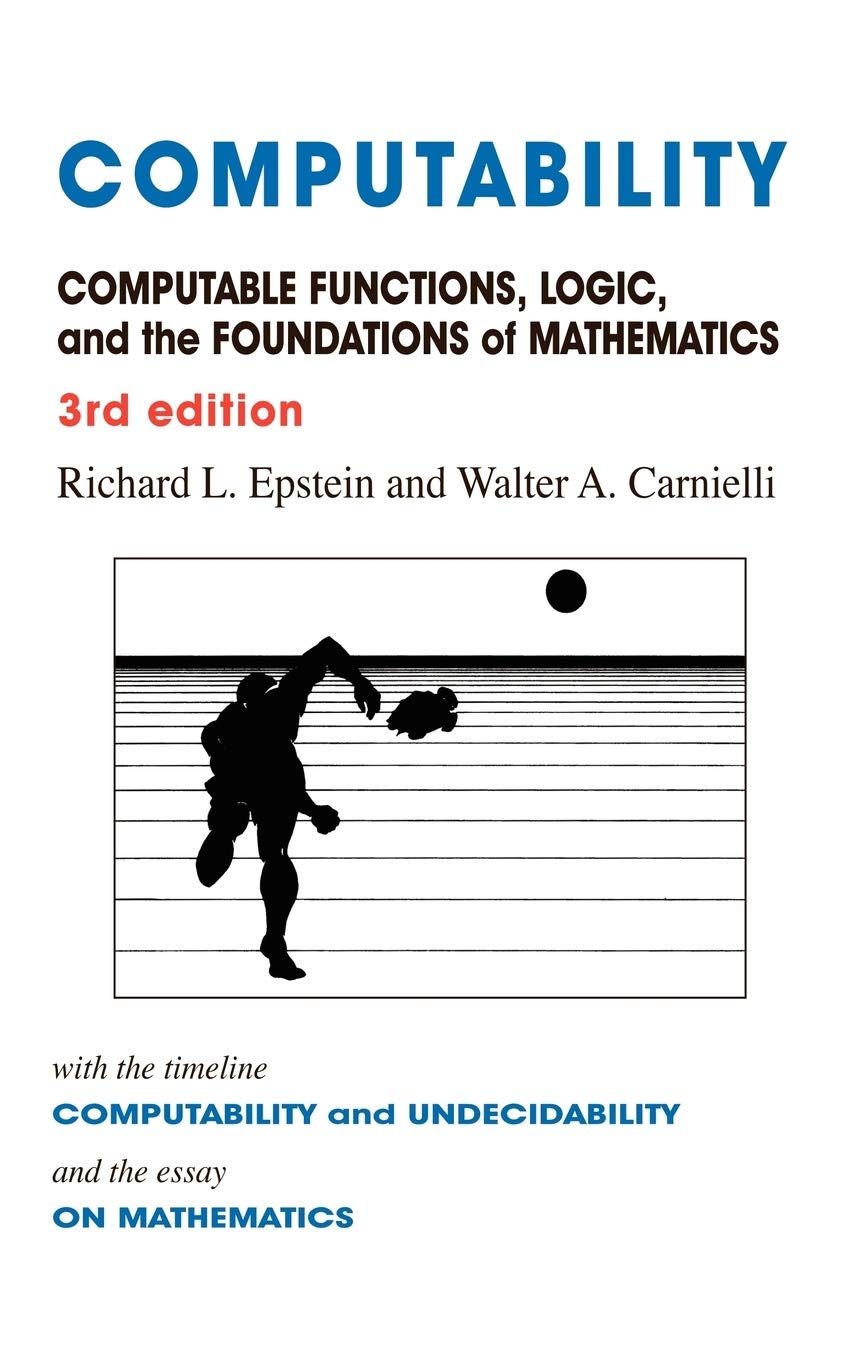
Computability: Computable Functions, Logic, and the Foundations of Mathematics by Richard L. Epstein – A Rigorous Explor
Inclusive of all applicable taxes. FREE shipping on all orders.
Available Offers
- 🚚Free Delivery — Free shipping on all orders
- 💵Cash on Delivery — Pay when your order arrives
- ↩️15-Day Easy Returns — Hassle-free return policy
- 🔒Cash on Delivery — Pay safely when your order arrives
Check Delivery
Product Description
Introduction
In the vast landscape of mathematical thought, few works manage to bridge the gap between abstract theory and foundational philosophy as elegantly as Richard L. Epstein's Computability: Computable Functions, Logic, and the Foundations of Mathematics. This hardcover edition, published by Advanced Reasoning Forum, is a definitive resource for Indian students, researchers, and enthusiasts who wish to understand the very fabric of computation and logic. Whether you are preparing for competitive examinations, pursuing advanced studies in computer science or mathematics, or simply curious about the limits of what machines can do, this book offers a rigorous yet accessible journey into the heart of computability theory.
Book Overview
Computability is not merely a textbook; it is a carefully crafted narrative that places the theory of computable functions within the broader context of the foundations of mathematics. The book begins by revisiting the early 20th-century crisis in mathematics, a period when questions about the nature of proof, truth, and infinity shook the discipline to its core. From there, it guides the reader through the pioneering work of Alan Turing and Emil Post, leading to a formal treatment of recursive functions. The later chapters delve into Gödel's incompleteness theorems, offering a full and self-contained development. The final part reflects on the philosophical significance of these results, including a detailed discussion of Church's Thesis. This edition also features a timeline titled 'Computability and Undecidability' and an insightful essay 'On Mathematics'.
Key Highlights
- Classic Presentation: A timeless approach to computability that integrates historical context with technical depth.
- Foundational Crisis: Engaging readings and discussions about the early 20th-century crisis in mathematics, making abstract ideas relatable.
- Original Readings: Includes seminal texts from Turing and Post, allowing readers to engage with primary sources.
- Gödel's Theorems: A complete, step-by-step development of the incompleteness theorems using sufficient formal logic.
- Philosophical Depth: Explores Church's Thesis and its implications for the foundations of mathematics.
- New Additions: Features the timeline 'Computability and Undecidability' and the essay 'On Mathematics' for enriched understanding.
Inside the Book
The book is structured into four major parts, each building upon the last. Part I introduces the basic ideas of whole numbers, functions, proof, and real numbers, all while motivating the study of computability through historical readings. Part II presents the formal theory of recursive functions, starting with Turing machines and Post's canonical systems. Part III equips the reader with the necessary formal logic to fully grasp Gödel's incompleteness theorems, culminating in their rigorous proof. Part IV returns to the big picture, discussing the significance of undecidability and the ongoing debates about the nature of mathematical truth. The appendix includes the timeline and essay, which serve as valuable reference tools.
Key Topics
- The crisis in the foundations of mathematics (1900–1930)
- Whole numbers, functions, and the concept of proof
- Real numbers and their computability
- Turing machines and Post's work
- Recursive and recursively enumerable sets
- Formal logic and arithmetic
- Gödel's first and second incompleteness theorems
- Church's Thesis and its philosophical implications
- Undecidability and the limits of computation
Reader Benefits
By studying this book, Indian readers will gain a solid foundation in one of the most intellectually rewarding areas of mathematics. The historical narrative makes the subject approachable, while the formal sections build analytical and problem-solving skills. Students preparing for advanced degrees in computer science, mathematics, or logic will find the treatment of recursive functions and undecidability invaluable for research and competitive exams like GATE, NET, or JRF. Moreover, the philosophical discussions encourage critical thinking about the nature of knowledge, computation, and reality itself.
Learning Outcomes
- Understand the historical context that led to the development of computability theory.
- Define and work with computable functions and recursive sets.
- Construct and analyze Turing machines and other models of computation.
- Prove and apply Gödel's incompleteness theorems.
- Evaluate the philosophical arguments surrounding Church's Thesis.
- Appreciate the limits of formal systems and computation.
Who Should Read
This book is ideal for undergraduate and postgraduate students of mathematics, computer science, and philosophy in Indian universities. It is also a must-read for researchers in theoretical computer science, logic, and foundations of mathematics. Educators teaching courses on computability, logic, or discrete mathematics will find it a rich source of lecture material. Self-learners with a strong background in basic mathematics and a curiosity about the limits of computation will also benefit greatly.
About the Author
Richard L. Epstein is a renowned mathematician, logician, and philosopher, known for his ability to present complex ideas with clarity and historical insight. He has authored numerous books on logic, set theory, and the foundations of mathematics, and his works are widely used in universities across the world. Epstein's writing style combines rigorous formalism with engaging narrative, making his books accessible to both beginners and advanced scholars.
About the Publisher
Advanced Reasoning Forum is a respected academic publisher dedicated to producing high-quality works in logic, mathematics, and philosophy. Their publications are known for their careful editing, durable hardcover bindings, and commitment to preserving the intellectual heritage of foundational studies. This edition of Computability reflects their standard of excellence, ensuring that Indian readers receive a book that is both physically and intellectually robust.
Conclusion
Computability: Computable Functions, Logic, and the Foundations of Mathematics is more than a textbook—it is a gateway to understanding the deepest questions about what can be computed, what can be proven, and what remains forever beyond our reach. For Indian students and scholars seeking a comprehensive, historically grounded, and philosophically rich exploration of computability, Richard L. Epstein's work stands as an indispensable companion. Add this hardcover volume to your library today and embark on a journey that will transform the way you think about mathematics and computation.
Quick Summary
Computability: Computable Functions, Logic, and the Foundations of Mathematics by Richard L. Epstein is a classic textbook that provides a thorough introduction to the theory of computable functions within the broader context of the foundations of mathematics. The book is structured in four parts: Part I motivates the study of computability by exploring the early 20th-century crisis in mathematics, covering basic concepts of numbers, functions, and proofs. Part II presents formal theories of recursive functions and Turing computability, drawing on original readings from Alan Turing and Emil Post. Part III develops sufficient formal logic to fully prove Gödel's incompleteness theorems, a cornerstone of modern logic. Part IV reflects on the philosophical significance of these results, including a discussion of Church's Thesis. This edition also features a timeline of computability and an essay by the author. Ideal for graduate students and researchers in mathematics, computer science, and philosophy, the book balances technical rigor with historical and philosophical context. Readers will gain a deep understanding of what it means for a function to be computable, the limits of formal systems, and the enduring questions about the nature of mathematics. Buy from Bookshops.in for a reliable hardcover edition delivered across India.
Book Highlights
Book Specifications
| ISBN-13 | 9780981550725 |
| ISBN-10 | 098155072X |
| Publisher | Advanced Reasoning Forum |
| Category | Philosophy › Logic |
| Genre | Nonfiction |
| Reading Age | Adult |
| Original Language | English |
Frequently Asked Questions
What is the main focus of this book?
Who is the author Richard L. Epstein?
Is this book suitable for beginners?
Does the book cover Turing machines?
What is unique about this edition?
Can I use this book for a course on mathematical logic?
Does the book discuss Church's Thesis?
What are some key topics covered?
Is this book available in hardcover?
What is the ISBN-13 of this book?
Does the book include exercises?
Who is the publisher?
Is this book relevant for computer science students?
What is the price in India?
How is this book different from other computability texts?
Readers Also Search For
Customers Also Bought
Islam
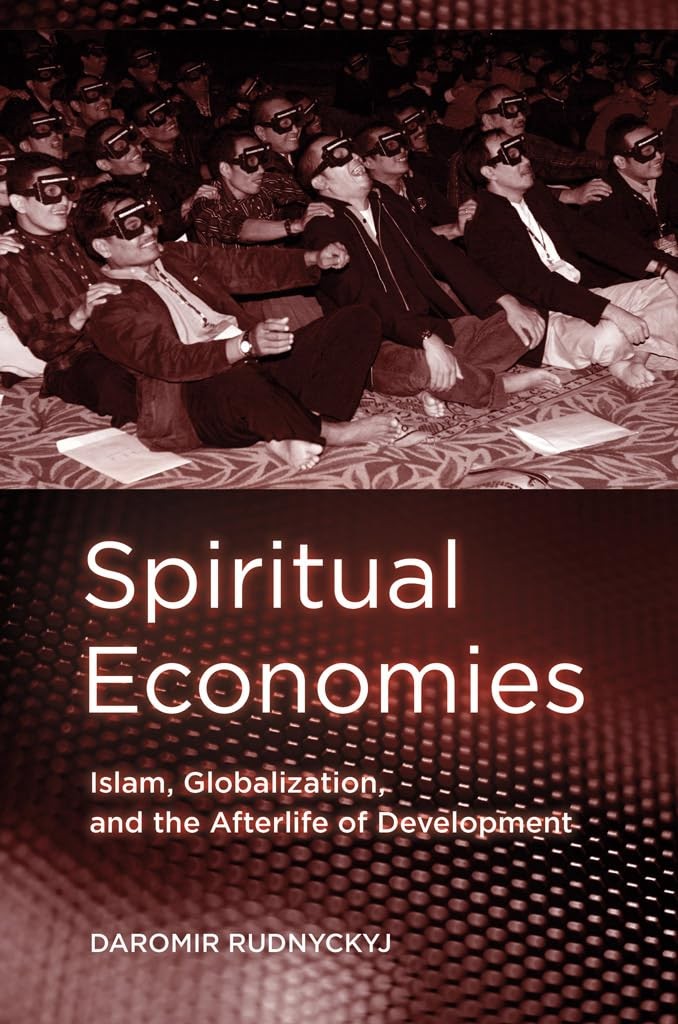
Spiritual Economies (English, Daromir Rudnyckyj)

Islam
Who Is Allah? (English, Bruce B. Lawrence)
Islam
Islam and Liberal Citizenship: The Search for an Overlapping Consensus by Andrew F. March

Islam
Fiqh Us-Sunnah: Funerals and Diggers by Al-Sayyid Sabiq – Islamic Funeral Guide

Christianity
Genetics (English, Thomas a. Shannon | Mark P. Aulisio | Françoise Baylis)

Hinduism
Karma and Creativity by Christopher Key Chapple – Indian Philosophy
Related Products
View All
Philosophy
Latin American Philosophy: Currents, Issues, Debates by Eduardo Mendieta

Philosophy
Al-Farabi's Short Commentary on Aristotle's Prior Analytics by Nicholas Rescher – Philosophy
Philosophy
Poetics of Imagining: Modern to Post-modern by Richard Kearney
Philosophy
The Metaphysics of Extrinsic Properties: 11 (Metaphysical Research, 11)
Philosophy
Dialogues on Metaphysics and on Religion by Nicolas Malebranche – Philosophy
Philosophy