
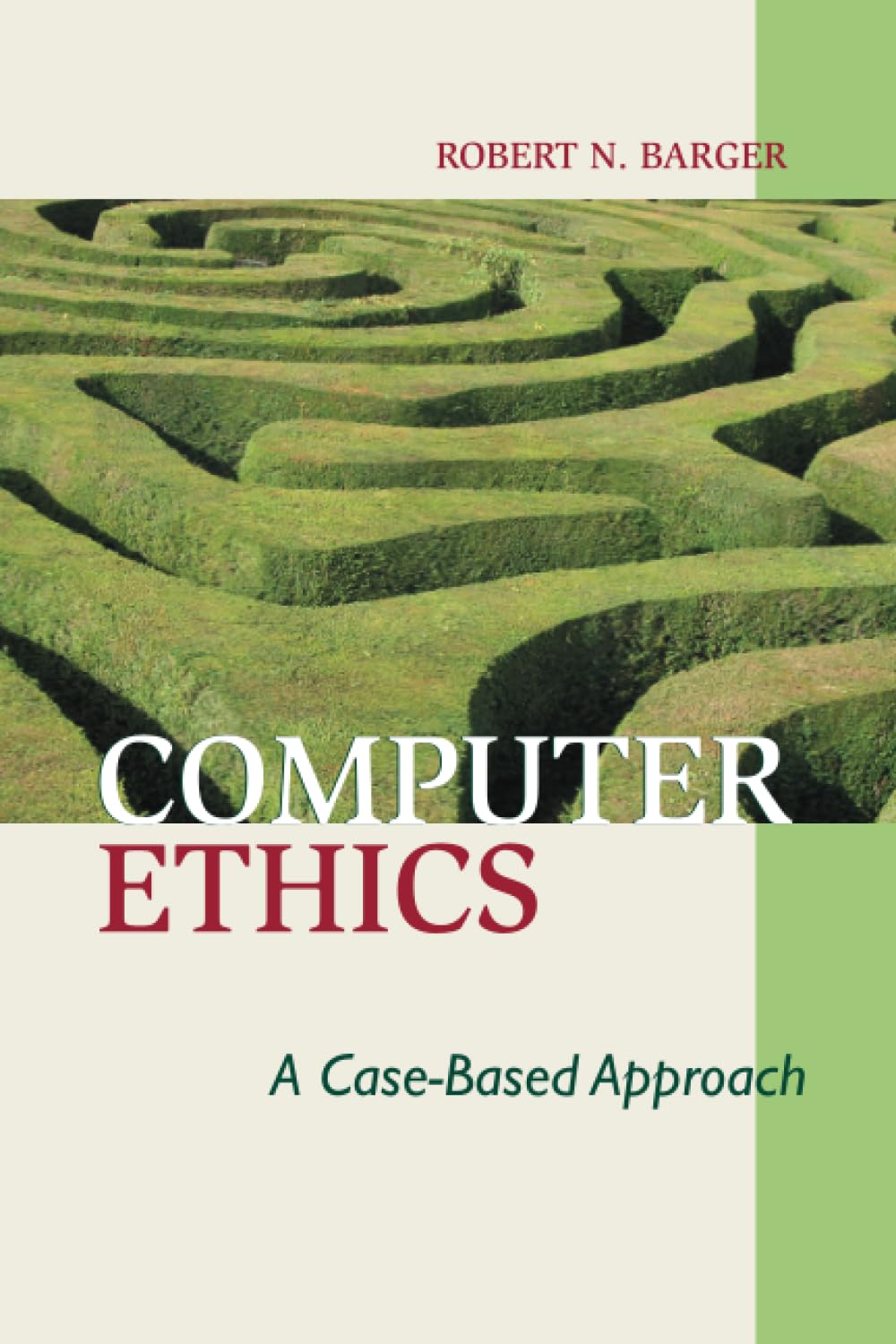
Computer Ethics: A Case-based Approach by Robert N. Barger – A Philosophical Framework for Solving Ethical Dilemmas in C
Inclusive of all applicable taxes. FREE shipping on all orders.
Available Offers
- 🚚Free Delivery — Free shipping on all orders
- 💵Cash on Delivery — Pay when your order arrives
- ↩️15-Day Easy Returns — Hassle-free return policy
- 🔒Cash on Delivery — Pay safely when your order arrives
Check Delivery
Product Description
Introduction
In an age where technology touches every aspect of our lives, the ethical dimensions of computing have never been more critical. Computer Ethics: A Case-based Approach by Robert N. Barger offers a thoughtful and practical guide for students and professionals who wish to navigate the complex moral landscape of the digital world. Published by Cambridge University Press, this hardcover edition is an essential resource for anyone in India looking to understand the philosophical foundations behind real-world computing dilemmas.
Book Overview
This book takes a unique philosophical, rather than purely legal, approach to computing ethics. It begins by introducing five major ethical frameworks—Idealism, Realism, Pragmatism, Existentialism, and Philosophical Analysis—and explains how each can serve as a basis for solving ethical challenges in computing. The author then provides a structured worksheet of key questions to guide readers through the decision-making process. The heart of the book lies in twenty-nine carefully selected case studies drawn from the real-life experiences of computer professionals, allowing readers to test their understanding and identify the philosophical underpinnings of various solutions.
Key Highlights
- Philosophical foundation: Explores five major ethical systems and their application to computing dilemmas.
- Real-world cases: Twenty-nine authentic scenarios from the field of computing help bridge theory and practice.
- Structured problem-solving: A unique worksheet of key questions enables systematic ethical analysis.
- Practical orientation: Encourages students to think critically and develop their own ethical reasoning skills.
- Authoritative publisher: Published by Cambridge University Press, ensuring academic rigor and quality.
Inside the Book
The book is organized into two main parts. The first part provides a clear exposition of the five philosophical approaches—Idealism, Realism, Pragmatism, Existentialism, and Philosophical Analysis—each with its own strengths and limitations when applied to computing. The second part presents the case studies, covering a wide range of issues such as privacy, intellectual property, professional responsibility, security, and the social impact of technology. Each case includes discussion questions and prompts that encourage readers to apply the philosophical frameworks and the worksheet method to arrive at well-reasoned conclusions.
Key Topics
- Ethical theories: Idealism, Realism, Pragmatism, Existentialism, and Philosophical Analysis
- Privacy and data protection in the digital age
- Intellectual property and software ownership
- Professional ethics for software engineers and IT professionals
- Security, hacking, and responsible disclosure
- Social responsibility and the impact of computing on society
- Decision-making frameworks for ethical dilemmas
Reader Benefits
By studying this book, readers will gain a robust framework for thinking about ethical issues in computing. The case-based approach makes abstract philosophical concepts tangible and relatable. Students will learn to identify the ethical dimensions of everyday computing situations, evaluate competing values, and justify their decisions with clarity. Professionals will find the book useful for navigating workplace dilemmas, while educators will appreciate the ready-made teaching tool for courses in computer ethics.
Learning Outcomes
- Understand the core principles of five major ethical philosophies.
- Apply philosophical reasoning to real-world computing dilemmas.
- Use a structured worksheet to systematically analyze ethical problems.
- Develop critical thinking and moral reasoning skills.
- Recognize the ethical implications of technological decisions.
- Articulate and defend ethical solutions in professional contexts.
Who Should Read
This book is ideal for undergraduate and postgraduate students in computer science, information technology, and related fields. It is also highly relevant for software developers, IT managers, data analysts, and anyone working with technology who wants to deepen their understanding of professional ethics. Educators teaching courses on computer ethics, philosophy of technology, or professional practice will find it a valuable classroom resource.
About the Author
Robert N. Barger is a respected scholar in the field of computer ethics. With a background in philosophy and technology, he brings a unique interdisciplinary perspective to the subject. His work emphasizes the importance of ethical reflection in the design and use of computing systems, and he has contributed significantly to the academic discourse on technology and morality.
About the Publisher
Cambridge University Press is one of the world's oldest and most prestigious academic publishers. Known for its commitment to scholarly excellence, Cambridge publishes works that set the standard in education and research. This book reflects their dedication to producing high-quality, impactful content for students and professionals alike.
Conclusion
Computer Ethics: A Case-based Approach is more than a textbook—it is a guide for responsible innovation in the digital era. By blending philosophical depth with practical case studies, Robert N. Barger equips readers with the tools they need to make principled decisions in a field that shapes our future. Whether you are a student, educator, or computing professional, this book will help you navigate the ethical challenges of technology with confidence and clarity.
Quick Summary
Computer Ethics: A Case-based Approach by Robert N. Barger is a practical and philosophical guide designed to help students and professionals navigate ethical dilemmas in the computing field. Instead of focusing solely on legal rules, the book introduces five major philosophical frameworks—Idealism, Realism, Pragmatism, Existentialism, and Philosophical Analysis—and shows how each can be used to resolve complex ethical issues. A unique worksheet of key questions aids readers in systematically analyzing dilemmas. The book features 29 real-life cases drawn from the experiences of computer professionals, allowing readers to test their ethical reasoning and identify the philosophical underpinnings of their solutions. This book is ideal for Indian students pursuing computer science, IT professionals seeking ethical clarity, and educators teaching ethics courses. By blending theory with practice, it equips readers with lasting moral reasoning skills. Purchase your copy from Bookshops.in, India's premium online bookstore, for fast delivery and authentic Cambridge University Press editions. Benefit from competitive pricing, reliable service, and a curated selection of academic books.
Book Highlights
Book Specifications
| ISBN-13 | 9780521709149 |
| ISBN-10 | 0521709148 |
| Publisher | Cambridge University Press |
| Language | English |
| Dimensions | 15.24 x 1.52 x 22.86 cm |
| Weight | 360 g |
| Country | India |
| Category | Philosophy › Ethics |
| Genre | Non-fiction |
| Original Language | English |
Frequently Asked Questions
What is the main focus of Computer Ethics: A Case-based Approach?
Who is the author of this book?
Is this book suitable for beginners in philosophy?
How many case studies are included?
What is the ISBN-13 of this book?
Is this book available in hardcover?
Can Indian students use this book for university courses?
Does the book cover legal aspects of computing?
What is the price of this book on Bookshops.in?
How is this book different from other computer ethics books?
Does the book include a worksheet?
What is the reading level of this book?
Is this book only for computer science students?
Readers Also Search For
Customers Also Bought
Islam
Spiritual Economies (English, Daromir Rudnyckyj)

Islam
Who Is Allah? (English, Bruce B. Lawrence)
Islam
Islam and Liberal Citizenship: The Search for an Overlapping Consensus by Andrew F. March
Islam
Fiqh Us-Sunnah: Funerals and Diggers by Al-Sayyid Sabiq – Islamic Funeral Guide

Christianity
Genetics (English, Thomas a. Shannon | Mark P. Aulisio | Françoise Baylis)

Hinduism
Karma and Creativity by Christopher Key Chapple – Indian Philosophy
Related Products
View All
Philosophy
Latin American Philosophy: Currents, Issues, Debates by Eduardo Mendieta

Philosophy
Al-Farabi's Short Commentary on Aristotle's Prior Analytics by Nicholas Rescher – Philosophy

Philosophy
Poetics of Imagining: Modern to Post-modern by Richard Kearney

Philosophy
The Metaphysics of Extrinsic Properties: 11 (Metaphysical Research, 11)

Philosophy
Dialogues on Metaphysics and on Religion by Nicolas Malebranche – Philosophy
Philosophy