
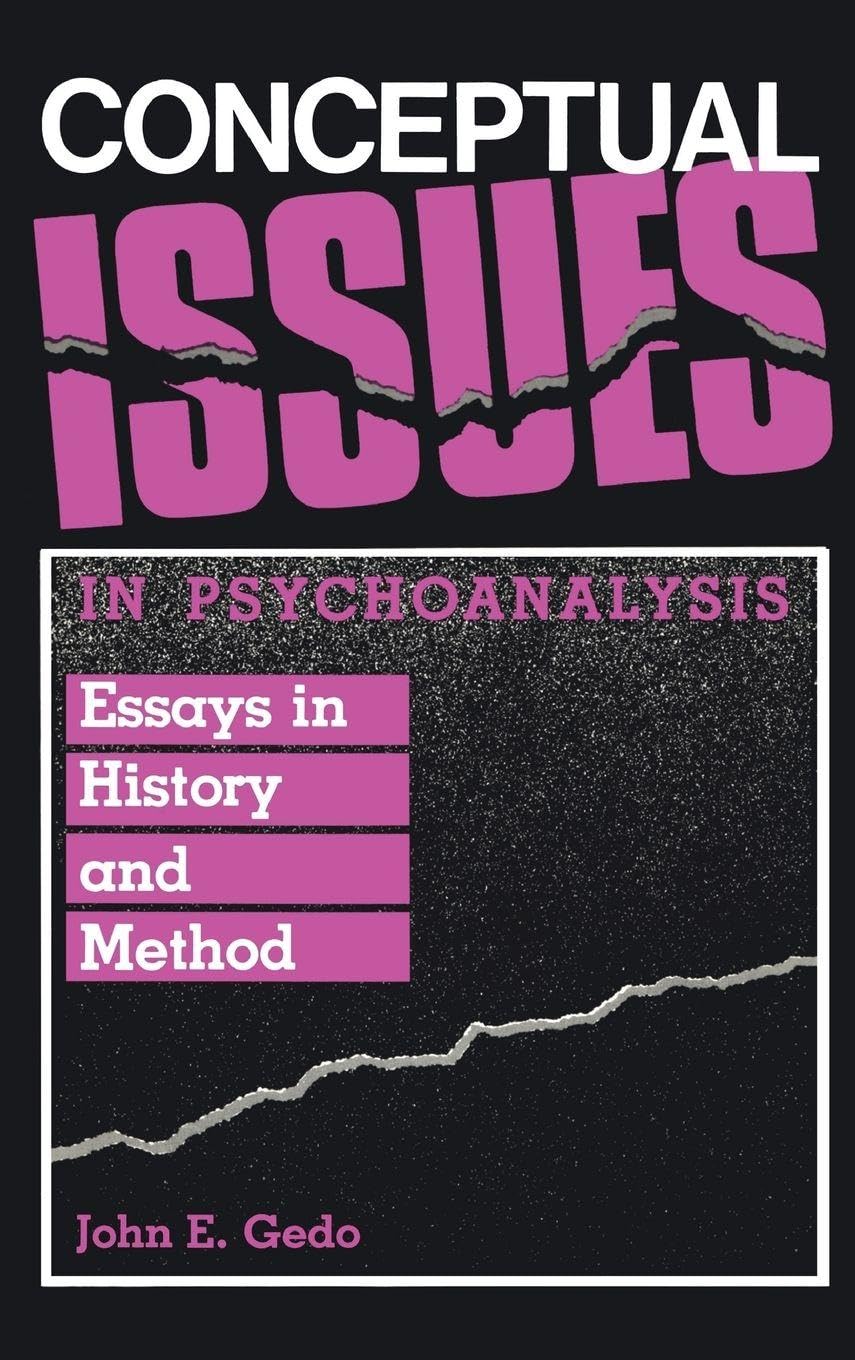
Conceptual Issues in Psychoanalysis: Essays in History and Method by John E. Gedo – A Critical Study of Freudian Theory
Inclusive of all applicable taxes. FREE shipping on all orders.
Available Offers
- 🚚Free Delivery — Free shipping on all orders
- 💵Cash on Delivery — Pay when your order arrives
- ↩️15-Day Easy Returns — Hassle-free return policy
- 🔒Cash on Delivery — Pay safely when your order arrives
Check Delivery
Product Description
Introduction
Conceptual Issues in Psychoanalysis: Essays in History and Method by John E. Gedo is a profound exploration of the intellectual currents that have shaped psychoanalytic thought. This hardcover volume, published by Routledge, offers Indian students, clinicians, and scholars a rigorous yet accessible journey through the evolution of psychoanalytic theory. Gedo, a distinguished psychoanalyst and historian, examines the tensions between orthodoxy and innovation, providing a nuanced understanding of how dissident voices have enriched the field. For readers in India seeking to deepen their grasp of psychoanalysis beyond textbook summaries, this book is an indispensable resource.
Book Overview
In this collection of essays, John E. Gedo brings his vast knowledge of Freudian theory and historical methodology to bear on the concept of dissidence in psychoanalysis. The book opens with a critical reflection on recent assessments of Freud's character by figures such as Frank Sulloway, Jeffrey Masson, and Peter Swales. Gedo deftly unpacks the intellectual and personal agendas behind these portraits, setting the stage for his own definition of psychoanalysis within its historical context. The subsequent essays offer detailed studies of Sandor Ferenczi, Melanie Klein, and Heinz Kohut—three generations of dissidents who sought to replace or revise Freud's hypotheses. Interspersed are insightful analyses of Lou Andreas-Salome and David Rapaport, whom Gedo portrays as epistemological referees striving to reconcile conflicting viewpoints. The book culminates in a second section that delves into methodological issues, including the nature of psychoanalytic evidence, the role of narrative in clinical work, and the challenges of integrating new findings with established theory. Throughout, Gedo maintains a balanced tone, neither dismissing dissidents as heretics nor uncritically celebrating them as revolutionaries, but instead examining their contributions with scholarly precision.
Key Highlights
- Original Essays: A series of thought-provoking chapters that bridge history, theory, and clinical practice.
- Critical Analysis of Freud: A nuanced examination of recent biographical works on Freud and their implications for psychoanalysis.
- Focus on Dissidence: In-depth studies of Ferenczi, Klein, and Kohut, highlighting their challenges to Freudian orthodoxy.
- Epistemological Reflections: Unique perspectives on Lou Andreas-Salome and David Rapaport as mediators of theoretical conflict.
- Methodological Rigor: A second part dedicated to the methods and evidence base of psychoanalysis, making it relevant for contemporary researchers.
- Historical Context: Places psychoanalytic debates within the broader intellectual history of the 20th century.
Inside the Book
The book is structured in two main parts. The first part, comprising historical essays, scrutinizes the personal and theoretical dynamics that drove key figures to challenge Freud. Gedo begins with a re-evaluation of Freud's legacy, arguing that dissidents like Ferenczi and Klein were not merely rebels but contributors to a living tradition. The chapter on Heinz Kohut is particularly illuminating, as Gedo traces Kohut's self psychology back to earlier debates about narcissism and empathy. The second part shifts focus to method, addressing questions such as how psychoanalytic theories are validated, the role of the analyst's subjectivity, and the limits of narrative coherence. Gedo draws on his own clinical experience to illustrate these points, making the text accessible to practitioners while retaining academic depth. The writing is clear and engaging, with each essay building on the previous one to create a cohesive argument about the nature of psychoanalytic knowledge.
Key Topics
- Freud's Legacy: A critical reassessment of Freud's character and the agendas of his biographers.
- Dissident Traditions: The contributions of Ferenczi, Klein, and Kohut to psychoanalytic theory.
- Epistemological Mediation: The role of figures like Lou Andreas-Salome and David Rapaport in bridging theoretical divides.
- Methodological Issues: The nature of evidence in psychoanalysis, including clinical case studies and empirical research.
- Historical Context: How political and cultural factors influenced the development of psychoanalytic schools.
- Narrative and Truth: The interplay between storytelling and scientific rigor in psychoanalytic practice.
Reader Benefits
Indian readers will find this book especially valuable for understanding the global trajectory of psychoanalysis and its relevance to contemporary mental health discourse. Gedo's balanced approach helps readers appreciate the richness of dissident perspectives without losing sight of Freud's foundational insights. The essays are self-contained, allowing readers to dip into specific topics of interest, yet they form a coherent whole that rewards sustained engagement. Clinicians will gain new tools for reflecting on their own theoretical allegiances, while students will appreciate the clear exposition of complex ideas. Scholars will find the historical and methodological analyses useful for their own research. The hardcover edition is built to last, making it a worthy addition to any library.
Learning Outcomes
By reading this book, you will be able to: critically evaluate the major schools of psychoanalytic thought from a historical perspective; understand the motivations and contributions of key dissidents like Ferenczi, Klein, and Kohut; analyze the role of epistemology in shaping psychoanalytic methods; articulate the tensions between narrative and evidence in clinical practice; and apply historical insights to contemporary debates in psychology and psychotherapy. The book also enhances your ability to read primary psychoanalytic texts with greater nuance and to engage in scholarly discussions about the evolution of the field.
Who Should Read
This book is ideal for postgraduate students of psychology, psychiatry, and psychoanalysis in Indian universities; practicing psychotherapists and counsellors seeking to deepen their theoretical grounding; scholars of intellectual history and the history of science; and anyone with a serious interest in the development of Freudian and post-Freudian thought. It is also suitable for advanced undergraduates in psychology or philosophy who are ready to engage with primary sources. The book assumes some familiarity with basic psychoanalytic concepts but is written in a style that rewards careful reading by newcomers as well.
About the Author
John E. Gedo is a highly respected American psychoanalyst and author, known for his extensive writings on the history and theory of psychoanalysis. A graduate of the Chicago Institute for Psychoanalysis, Gedo has held academic positions at several institutions and has served on the editorial boards of major psychoanalytic journals. His works, including The Mind in Disorder and The Languages of Psychoanalysis, are widely cited for their erudition and clarity. Gedo's ability to synthesise historical detail with clinical insight makes him a unique voice in the field, and Conceptual Issues in Psychoanalysis stands as a testament to his lifelong commitment to understanding the intellectual foundations of his discipline.
About the Publisher
Routledge is a premier academic publisher with a rich history of producing authoritative works in the social sciences and humanities. As part of the Taylor & Francis Group, Routledge is known for its rigorous editorial standards and global reach. This hardcover edition reflects Routledge's commitment to quality, with durable binding and clear typesetting suitable for repeated reference. For Indian readers, Routledge books are widely available through academic distributors and libraries, ensuring access to cutting-edge scholarship. This volume is part of Routledge's distinguished series in psychoanalysis, which includes works by leading theorists and clinicians from around the world.
Conclusion
Conceptual Issues in Psychoanalysis is more than a historical survey—it is a vital contribution to the ongoing dialogue about what psychoanalysis is and what it can become. John E. Gedo's essays challenge readers to think critically about the past while remaining open to future developments. Whether you are a student in Mumbai, a practitioner in Delhi, or a scholar in Kolkata, this book will enrich your understanding of the human mind and the theories that seek to explain it. Order your copy from Bookshops.in today and add this essential work to your collection.
Quick Summary
Conceptual Issues in Psychoanalysis: Essays in History and Method by John E. Gedo is a scholarly exploration of the contentious evolution of psychoanalytic theory. Gedo critically examines recent assessments of Freud's character by historians like Sulloway, Masson, and Swales, and then delves into the work of three major dissidents—Ferenczi, Klein, and Kohut—who challenged and expanded Freud's original hypotheses. The book is ideal for advanced psychology students, researchers, and mental health professionals who want to understand the historical and methodological debates that shaped modern psychoanalysis. Readers will gain a nuanced perspective on how dissidence has driven theoretical innovation in the field. By purchasing from Bookshops.in, Indian readers receive a genuine hardcover edition with reliable service, making this a valuable addition to any academic library.
Book Highlights
Book Specifications
| ISBN-13 | 9780881630503 |
| ISBN-10 | 0881630500 |
| Publisher | Routledge |
| Language | English |
| Dimensions | 16.76 x 2.46 x 23.72 cm |
| Weight | 522 g |
| Country | India |
| Category | Psychology › Psychopathology |
| Genre | Non-fiction |
| Reading Age | Adult |
| Original Language | English |
Frequently Asked Questions
What is Conceptual Issues in Psychoanalysis about?
Who is the author of this book?
Is this book suitable for beginners in psychoanalysis?
What topics does the book cover?
Is this a hardcover or paperback?
What is the ISBN-13 of this book?
Can I use this book for my psychology research?
Does the book include case studies?
Is this book available in India?
What is the price of this book?
What language is the book in?
Why should I buy this book from Bookshops.in?
Readers Also Search For
Customers Also Bought
Psychology
Koinonia: From Hate, Through Dialogue, to Culture in the Large Group by Patrick B. Demare

Psychology
Mindfulness-Based Interventions for Trauma and Its Consequences (Concise Guides on Trauma Care, 4)

Psychology
Handbook for Teaching Statistics and Research Methods by Mark E. Ware

Psychology
Psychoanalysis and the Nuclear Threat: Clinical and Theoretical Studies
Psychology
Humor and Psyche: Psychoanalytic Perspectives by James W. Barron

Relationships
The Experience and Expression of Uncertainty in Close Relationships by Jennifer A. Theiss
Related Products
View AllPsychology
Mindfulness-Based Interventions for Trauma and Its Consequences (Concise Guides on Trauma Care, 4)
Psychology
Handbook for Teaching Statistics and Research Methods by Mark E. Ware
Psychology
Psychoanalysis and the Nuclear Threat: Clinical and Theoretical Studies
Psychology
Humor and Psyche: Psychoanalytic Perspectives by James W. Barron

Psychology
Proceedings of the First International Conference on Genetic Algorithms and Their Applications
Psychology