
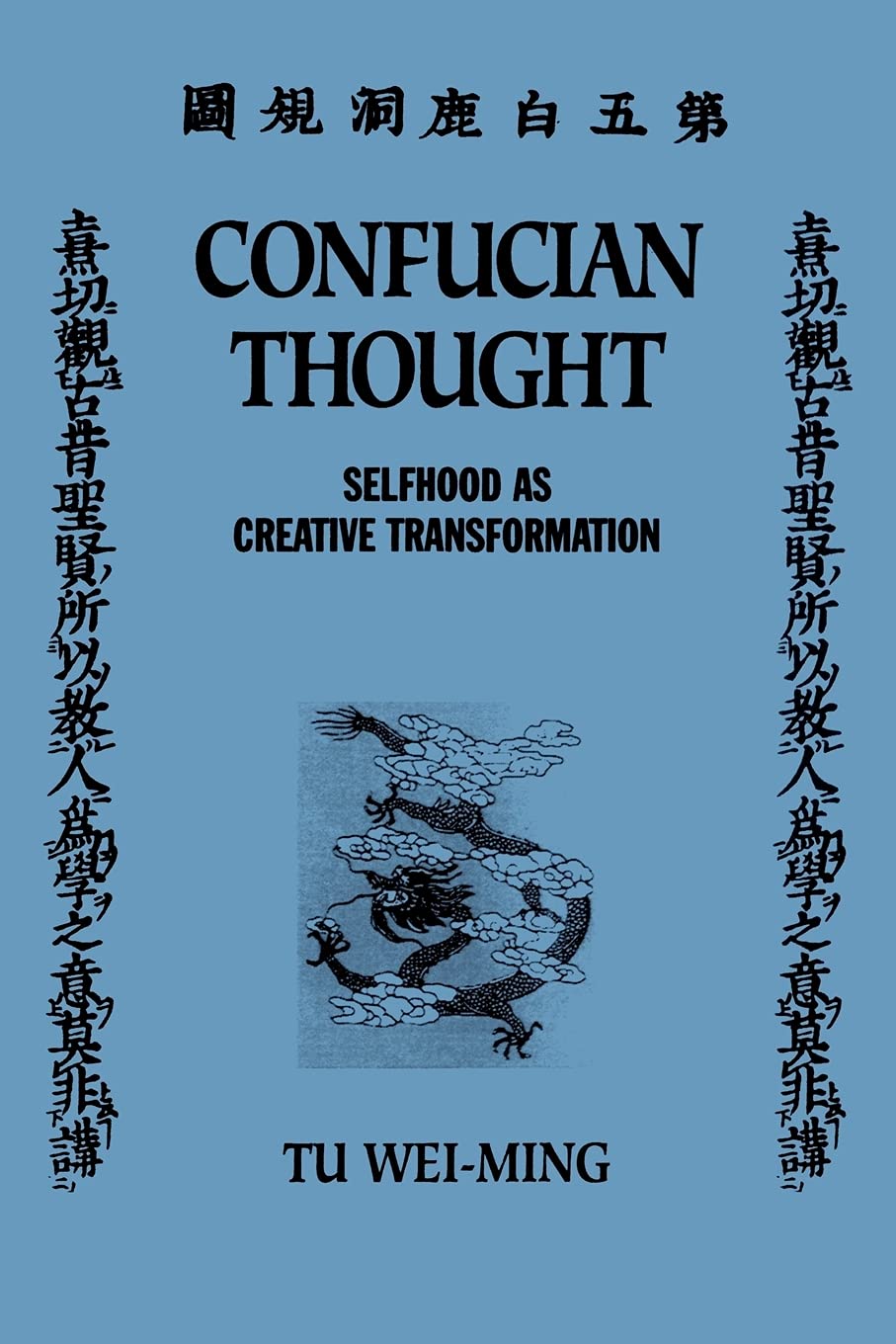
Confucian Thought: Selfhood As Creative Transformation by Tu Wei-Ming – An In-Depth Exploration of Confucian Philosophy
Inclusive of all applicable taxes. FREE shipping on all orders.
Available Offers
- 🚚Free Delivery — Free shipping on all orders
- 💵Cash on Delivery — Pay when your order arrives
- ↩️15-Day Easy Returns — Hassle-free return policy
- 🔒Cash on Delivery — Pay safely when your order arrives
Check Delivery
Product Description
Introduction
Confucian Thought: Selfhood As Creative Transformation by Tu Wei-Ming is a profound exploration of the Confucian conception of personhood, offering a rich tapestry of philosophical insight that bridges ancient wisdom with modern intellectual concerns. This hardcover edition presents a collection of seminal essays that delve into the essence of self-cultivation, moral development, and the transformative power of Confucian ideals. For Indian readers and students seeking a deeper understanding of Eastern philosophy, this book serves as a vital resource, illuminating the universal human quest for meaning and ethical living through the lens of Confucian thought.
Book Overview
In this carefully curated volume, Tu Wei-Ming weaves together perspectives from philosophy, history, anthropology, sociology, and psychology to create a coherent and compelling discussion of Confucian themes that continue to inspire modern intellectuals. The book is a sustained deliberation on the substance and worth of the Confucian conception of selfhood, emphasizing that the self is not a static entity but a dynamic process of creative transformation. Each essay builds upon the last, offering readers a nuanced understanding of how Confucian thought addresses perennial human concerns such as identity, relationships, and the pursuit of virtue. This is not merely an academic text but a living dialogue with tradition, inviting readers to engage with ideas that remain deeply relevant in contemporary India and beyond.
Key Highlights
- Original Essays: A collection of Tu Wei-Ming's most influential writings, presenting his deepening understanding of Confucianism over decades of scholarship.
- Interdisciplinary Approach: Blends philosophical inquiry with historical, anthropological, sociological, and psychological perspectives for a holistic view.
- Focus on Selfhood: Explores the Confucian concept of the self as a continuous, creative process rather than a fixed identity.
- Cultural Bridge: Connects ancient Chinese wisdom to modern global concerns, making it accessible to Indian readers interested in cross-cultural philosophy.
- Scholarly Yet Accessible: Written with clarity and depth, suitable for both students and seasoned academics.
Inside the Book
The book is structured around a series of essays that examine key aspects of Confucian thought, from the nature of self-cultivation to the role of ritual and community in moral formation. Tu Wei-Ming delves into the concept of ren (benevolence or human-heartedness) as the core virtue that defines the self in relation to others. He discusses the importance of li (ritual propriety) in shaping ethical behavior and the transformative power of xue (learning) in the journey toward self-realization. Each chapter offers a fresh perspective on how Confucian philosophy can inform modern debates about identity, ethics, and social harmony. The essays are complemented by thoughtful reflections on the relevance of Confucianism in a rapidly changing world, making this a timeless addition to any personal or academic library.
Key Topics
- Selfhood and Creative Transformation: The dynamic process of becoming a morally cultivated person.
- Confucian Ethics: Foundations of virtue, including ren, li, and yi (righteousness).
- Self-Cultivation: Practices and disciplines for personal and spiritual growth.
- Family and Community: The role of relationships in shaping ethical identity.
- Tradition and Modernity: Applying Confucian principles to contemporary issues.
- Chinese Thought and Religion: The philosophical and spiritual dimensions of Confucianism.
Reader Benefits
This book offers Indian readers a unique opportunity to engage with a major Eastern philosophical tradition that shares many resonances with Indian thought, such as the emphasis on self-discipline, duty, and the pursuit of higher knowledge. By reading this work, you will gain a deeper appreciation for how Confucian philosophy can enrich your understanding of ethics, personal development, and social harmony. The essays are written in a style that is both intellectually rigorous and warmly accessible, making complex ideas easy to grasp. Whether you are a student of philosophy, a teacher, or a lifelong learner, this book will challenge your assumptions and inspire you to reflect on your own journey of self-creation.
Learning Outcomes
- Understand the Confucian conception of selfhood as a continuous process of creative transformation.
- Analyze the key virtues of Confucian ethics and their application to personal and social life.
- Explore the interdisciplinary connections between philosophy, history, anthropology, and psychology in the study of Confucianism.
- Develop critical thinking skills by engaging with complex arguments about identity, morality, and tradition.
- Apply Confucian insights to contemporary issues such as community building, education, and ethical leadership.
Who Should Read
This book is ideal for students and scholars of philosophy, religious studies, Chinese studies, and comparative ethics. It is also highly recommended for Indian readers interested in Eastern philosophy, self-improvement, and cross-cultural dialogue. Teachers and educators will find valuable material for courses on ethics, Asian thought, and human development. General readers with a curiosity about Confucianism and its relevance to modern life will also find this book deeply rewarding. Anyone seeking to understand the transformative power of self-cultivation and the enduring wisdom of Confucian thought will benefit from this collection.
About the Author
Tu Wei-Ming is a preeminent scholar of Confucian philosophy and Chinese intellectual history. He has held distinguished professorships at leading universities, including Harvard University and Peking University, and has been a prolific contributor to the global understanding of Confucianism. His work has been instrumental in reviving interest in Confucian thought as a living philosophy applicable to contemporary challenges. Tu's writings are characterized by their depth, clarity, and ability to bridge cultural divides, making him one of the most influential voices in modern Chinese philosophy. His other notable works include Humanity and Self-Cultivation: Essays in Confucian Thought, which complements the themes explored in this volume.
About the Publisher
State University of New York Press (SUNY Press) is a leading academic publisher known for its rigorous scholarly standards and commitment to disseminating cutting-edge research in the humanities and social sciences. With a strong focus on philosophy, religion, and cultural studies, SUNY Press has published numerous works that explore the richness of Eastern and Western intellectual traditions. This hardcover edition of Confucian Thought: Selfhood As Creative Transformation reflects the publisher's dedication to producing high-quality, durable books that serve the needs of students, researchers, and lifelong learners. For Indian readers, SUNY Press titles are a trusted source of authoritative and insightful scholarship.
Conclusion
Confucian Thought: Selfhood As Creative Transformation is more than a book; it is an invitation to embark on a journey of intellectual and moral discovery. Tu Wei-Ming's masterful essays offer a fresh perspective on the Confucian tradition, showing how it can inspire personal growth and social harmony in our modern world. Whether you are a seasoned scholar or a curious reader, this hardcover edition will be a cherished addition to your library, providing years of reflection and insight. Embrace the wisdom of Confucian thought and discover the power of selfhood as creative transformation.
Quick Summary
Confucian Thought: Selfhood As Creative Transformation by Tu Wei-Ming is a seminal collection of essays that delves into the Confucian conception of personhood as a dynamic, creative process. The book integrates philosophical, historical, anthropological, sociological, and psychological perspectives to offer a comprehensive understanding of Confucian self-cultivation and its relevance to modern life. It is ideal for students of philosophy, Asian studies, and ethics, as well as anyone interested in personal growth and moral development. Readers will gain deep insights into Confucian thought, including the importance of ritual, relationality, and continuous self-improvement. By purchasing from Bookshops.in, you support a trusted Indian bookstore that offers high-quality academic titles with reliable delivery and customer service.
Book Highlights
Book Specifications
| ISBN-13 | 9780887060069 |
| ISBN-10 | 0887060064 |
| Publisher | State Univ of New York Pr |
| Language | English |
| Dimensions | 15.24 x 1.35 x 22.86 cm |
| Weight | 318 g |
| Country | India |
| Category | Humanities › Philosophy |
| Genre | Philosophy |
| Original Language | English |
Frequently Asked Questions
What is Confucian Thought: Selfhood As Creative Transformation about?
Who is the author of this book?
Is this book suitable for beginners in Confucian philosophy?
What makes this book different from other books on Confucianism?
Can Indian students benefit from reading this book?
Is this a hardcover edition?
Is this book part of a series?
What language is the book written in?
Does the book include references or bibliography?
What is the price of the book?
How is the book rated?
Where can I buy this book in India?
Readers Also Search For
Customers Also Bought
Islam
Spiritual Economies (English, Daromir Rudnyckyj)

Islam
Who Is Allah? (English, Bruce B. Lawrence)
Islam
Islam and Liberal Citizenship: The Search for an Overlapping Consensus by Andrew F. March
Islam
Fiqh Us-Sunnah: Funerals and Diggers by Al-Sayyid Sabiq – Islamic Funeral Guide

Christianity
Genetics (English, Thomas a. Shannon | Mark P. Aulisio | Françoise Baylis)

Hinduism
Karma and Creativity by Christopher Key Chapple – Indian Philosophy
Related Products
View All
Philosophy
Latin American Philosophy: Currents, Issues, Debates by Eduardo Mendieta

Philosophy
Al-Farabi's Short Commentary on Aristotle's Prior Analytics by Nicholas Rescher – Philosophy
Philosophy
Poetics of Imagining: Modern to Post-modern by Richard Kearney
Philosophy
The Metaphysics of Extrinsic Properties: 11 (Metaphysical Research, 11)
Philosophy
Dialogues on Metaphysics and on Religion by Nicolas Malebranche – Philosophy
Philosophy