
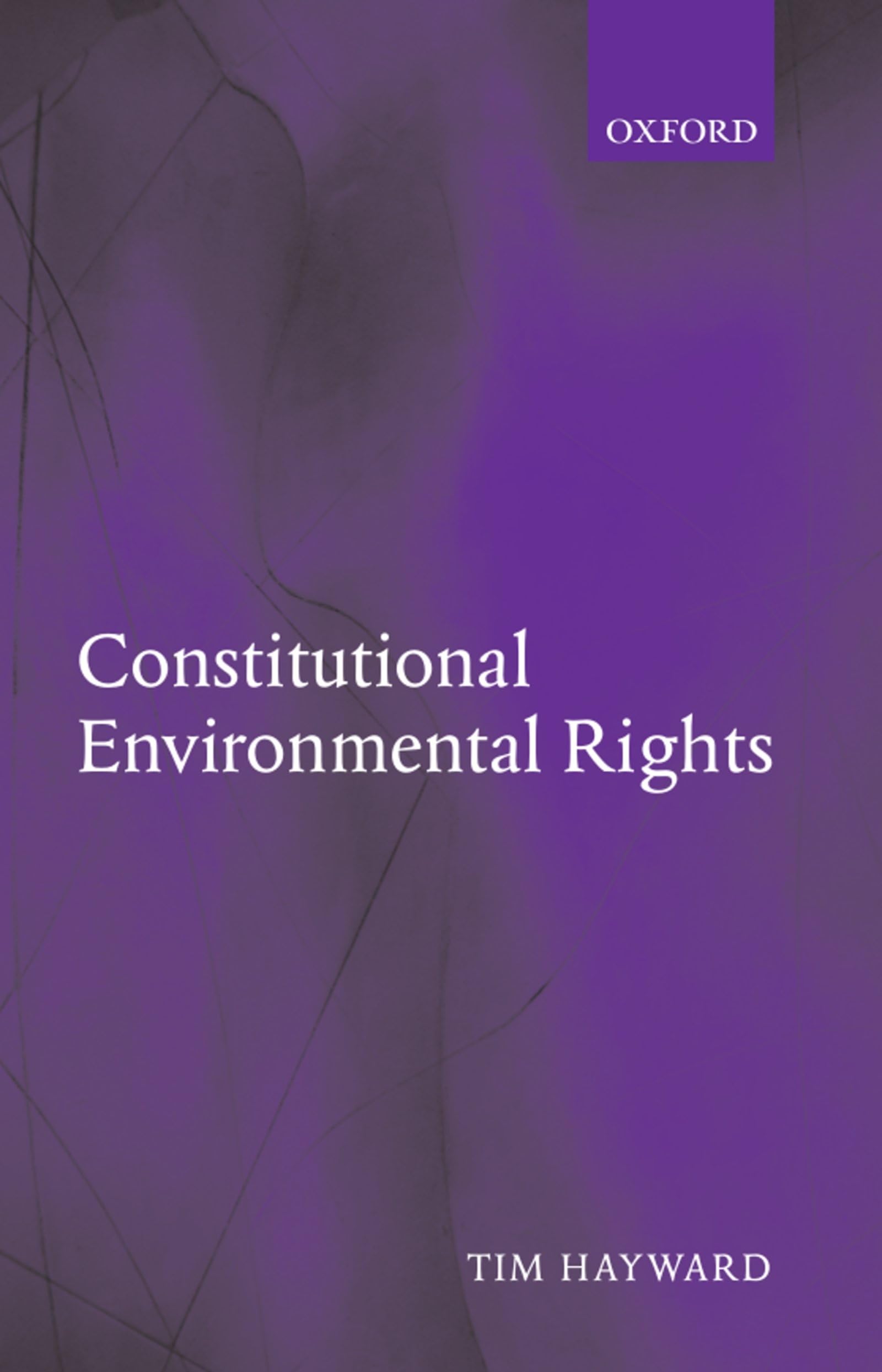
Constitutional Environmental Rights: A Political Analysis of Fundamental Environmental Rights in Democratic States by Ti
Inclusive of all applicable taxes. FREE shipping on all orders.
Available Offers
- 🚚Free Delivery — Free shipping on all orders
- 💵Cash on Delivery — Pay when your order arrives
- ↩️15-Day Easy Returns — Hassle-free return policy
- 🔒Cash on Delivery — Pay safely when your order arrives
Check Delivery
Product Description
Introduction
In an era where environmental degradation poses one of the greatest challenges to humanity, the question of whether a clean and healthy environment should be a fundamental constitutional right has never been more urgent. Constitutional Environmental Rights by Tim Hayward offers a rigorous and politically astute examination of this critical issue. Published by OUP Oxford, this hardcover volume is an indispensable resource for law students, legal practitioners, policymakers, and environmental activists in India and around the world. Hayward’s work goes beyond abstract legal theory to provide a compelling argument for embedding environmental rights in the constitutional framework of modern democratic states.
Book Overview
This book systematically explores the rationale, feasibility, and implications of constitutionalising the right to an adequate environment. Drawing on a wealth of comparative constitutional examples—from South Africa to Latin America, Europe to Asia—Hayward demonstrates how such a right is not only necessary but also effective in safeguarding ecological well-being. The author argues that a constitutional environmental right can enhance democratic participation, promote intergenerational equity, and serve the cause of international environmental justice. With clarity and depth, Hayward addresses sceptics who fear that such rights may be too vague or unenforceable, showing instead that they can be precisely defined and judicially enforced.
Key Highlights
- First politically-focused analysis of constitutional environmental rights, bridging law, political theory, and environmental ethics.
- Comparative global perspective with case studies from multiple jurisdictions, offering insights relevant to India’s own constitutional evolution.
- Rigorous defence of the right against common objections regarding vagueness, justiciability, and potential conflicts with other rights.
- Exploration of democracy and participation, showing how environmental rights empower citizens and communities.
- Focus on international environmental justice, linking domestic constitutional provisions to global ecological challenges.
Inside the Book
Hayward structures the book to guide readers from foundational questions to practical applications. Early chapters define what an ‘adequate environment’ means and why it merits constitutional status. Subsequent sections examine the relationship between environmental rights and democracy, the role of courts in enforcing such rights, and the potential for these provisions to address global inequalities. The book also engages with counterarguments from libertarian, socialist, and conservative perspectives, providing a balanced yet persuasive case. Each chapter is enriched with references to landmark cases, constitutional texts, and philosophical debates.
Key Topics
- The moral and political foundations of environmental rights
- Comparative constitutional models from around the world
- Justiciability and enforcement of environmental provisions
- Environmental rights and democratic participation
- International environmental justice and sovereignty
- Reconciling environmental rights with economic development
- The role of courts in shaping environmental policy
Reader Benefits
Readers will gain a deep understanding of how constitutional environmental rights can be drafted, interpreted, and implemented. The book equips law students with critical arguments for moot courts and examinations, while activists and policymakers will find practical insights for advocacy and reform. For anyone concerned about India’s environmental future—especially in light of landmark judgments like the right to a clean environment under Article 21—this book provides a theoretical and comparative framework that enriches domestic debates.
Learning Outcomes
- Understand the philosophical and legal justifications for constitutional environmental rights.
- Analyse how different countries have incorporated environmental rights into their constitutions.
- Evaluate the effectiveness of judicial enforcement of environmental provisions.
- Critically assess objections to constitutionalising environmental rights.
- Apply comparative insights to Indian constitutional law and environmental policy.
- Develop arguments for integrating environmental justice into democratic governance.
Who Should Read
This book is essential reading for law students specialising in constitutional law or environmental law; legal academics and researchers; judges and lawyers handling environmental litigation; policymakers and legislators drafting environmental legislation; environmental activists and NGOs; and anyone interested in the intersection of human rights, democracy, and ecological sustainability. It is particularly relevant for Indian readers given the growing judicial recognition of environmental rights and the ongoing debates about constitutional amendments.
About the Author
Tim Hayward is a Professor of Environmental Political Theory at the University of Edinburgh. He has written extensively on environmental justice, human rights, and political philosophy. His work is known for its interdisciplinary rigour and its commitment to linking theoretical principles with real-world policy challenges. Hayward’s scholarship has influenced debates on ecological citizenship and the ethical dimensions of environmental law.
About the Publisher
OUP Oxford (Oxford University Press) is one of the world’s oldest and most prestigious academic publishers. Known for its authoritative texts in law, political science, and the humanities, OUP ensures that each publication meets the highest standards of scholarly excellence. This hardcover edition is produced with durable binding and high-quality paper, making it a lasting addition to any library.
Conclusion
Constitutional Environmental Rights is a timely and thought-provoking work that challenges readers to rethink the relationship between law, democracy, and the environment. Tim Hayward makes a powerful case that constitutionalising the right to an adequate environment is not just a legal innovation but a moral imperative for any society that values justice and sustainability. For Indian readers, this book offers both a global perspective and a tool for advancing environmental protection within the framework of constitutional democracy. Order your copy from Bookshops.in today and join the conversation on shaping a greener, more just future.
Quick Summary
Constitutional Environmental Rights by Tim Hayward is a seminal work that critically examines the proposition that every modern democratic state should constitutionally guarantee its citizens a fundamental right to an adequate environment. Rather than a dry legal treatise, the book offers a politically engaged analysis, drawing on a wealth of precedents from democracies around the world to demonstrate that such a right is not only necessary and effective but also conducive to democratic principles and international environmental justice. Hayward systematically addresses objections, explores the practical implications of constitutional entrenchment, and connects the discourse to broader human rights and global governance frameworks. This book is ideal for law students, constitutional scholars, policymakers, environmental activists, and anyone interested in the intersection of law, politics, and environmental protection. Readers will gain a nuanced understanding of how constitutional design can shape environmental outcomes and why environmental rights matter for justice. By choosing Bookshops.in, you support a trusted Indian bookstore that delivers quality academic titles with care.
Book Highlights
Book Specifications
| ISBN-13 | 9780199278688 |
| ISBN-10 | 0199278687 |
| Publisher | OUP Oxford |
| Language | English |
| Dimensions | 13.79 x 1.57 x 21.01 cm |
| Weight | 295 g |
| Category | Philosophy › History & Surveys |
| Genre | Non-fiction |
| Original Language | English |
Frequently Asked Questions
What is 'Constitutional Environmental Rights' about?
Who is the author of this book?
Is this book suitable for Indian readers?
What is the main argument of the book?
Does the book cover international environmental law?
Is this a textbook or a scholarly monograph?
What is the ISBN of this book?
Does the book include case studies?
Is the book written in technical legal language?
What is the binding type of this book?
Can I use this book for my PhD research?
Where can I buy this book in India?
Readers Also Search For
Customers Also Bought
Islam
Spiritual Economies (English, Daromir Rudnyckyj)

Islam
Who Is Allah? (English, Bruce B. Lawrence)
Islam
Islam and Liberal Citizenship: The Search for an Overlapping Consensus by Andrew F. March

Islam
Fiqh Us-Sunnah: Funerals and Diggers by Al-Sayyid Sabiq – Islamic Funeral Guide

Christianity
Genetics (English, Thomas a. Shannon | Mark P. Aulisio | Françoise Baylis)

Hinduism
Karma and Creativity by Christopher Key Chapple – Indian Philosophy
Related Products
View All
Philosophy
Latin American Philosophy: Currents, Issues, Debates by Eduardo Mendieta

Philosophy
Al-Farabi's Short Commentary on Aristotle's Prior Analytics by Nicholas Rescher – Philosophy

Philosophy
Poetics of Imagining: Modern to Post-modern by Richard Kearney
Philosophy
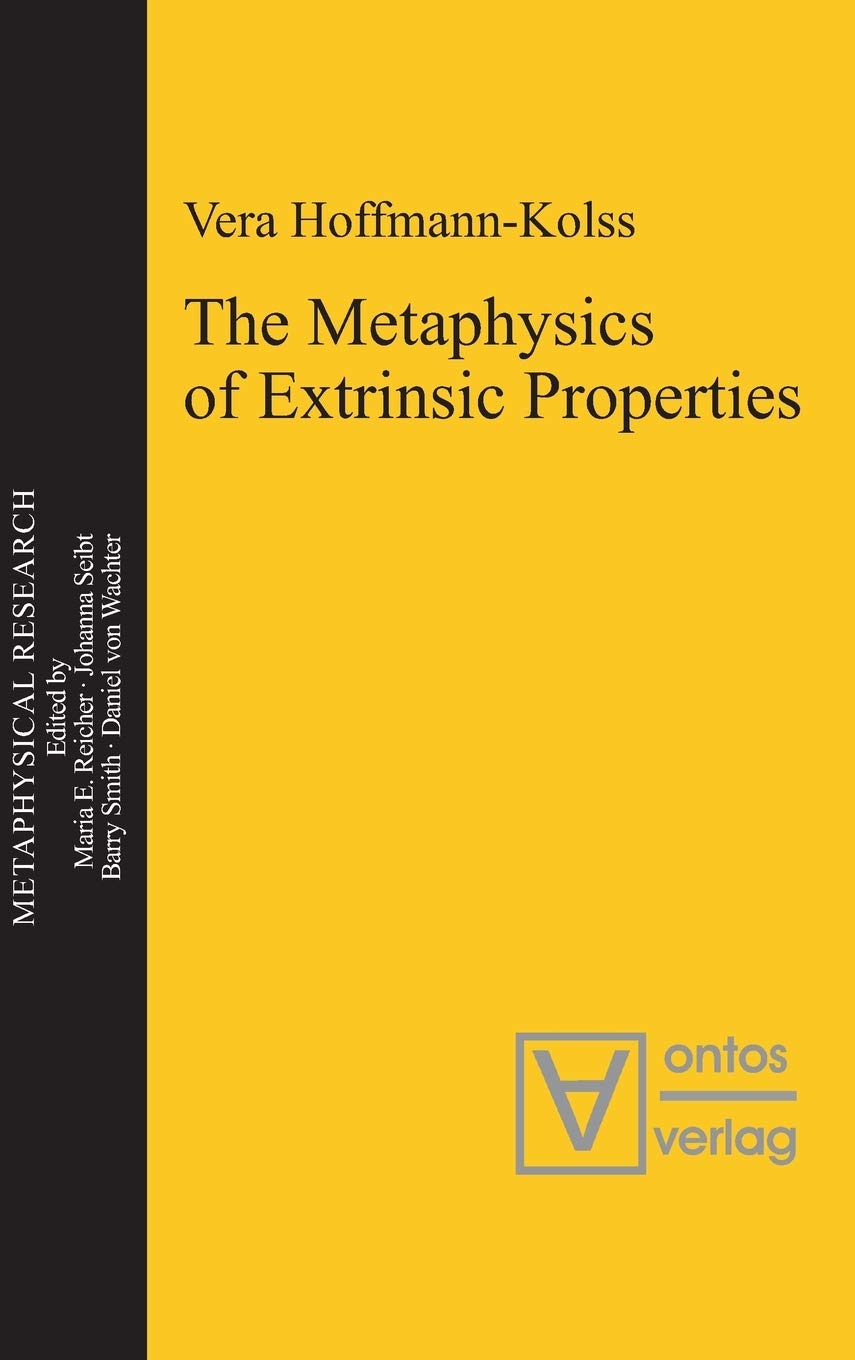
The Metaphysics of Extrinsic Properties: 11 (Metaphysical Research, 11)
Philosophy
Dialogues on Metaphysics and on Religion by Nicolas Malebranche – Philosophy
Philosophy