
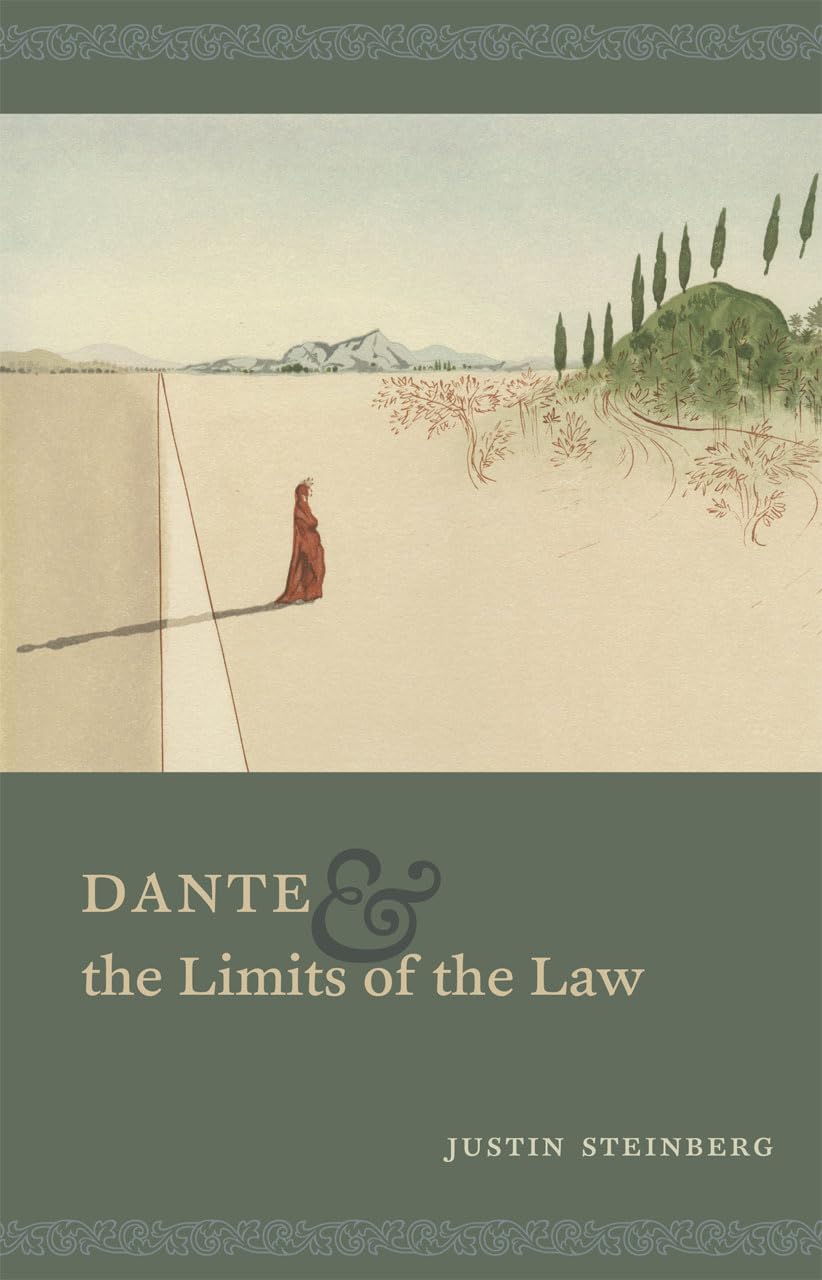
Dante and the Limits of the Law: A Comprehensive Study of Legal Structure in Dante's Divine Comedy by Justin Steinberg
Inclusive of all applicable taxes. FREE shipping on all orders.
Available Offers
- 🚚Free Delivery — Free shipping on all orders
- 💵Cash on Delivery — Pay when your order arrives
- ↩️15-Day Easy Returns — Hassle-free return policy
- 🔒Cash on Delivery — Pay safely when your order arrives
Check Delivery
Product Description
Introduction
In the vast landscape of medieval literature and legal philosophy, few works bridge the gap between poetic imagination and juridical theory as seamlessly as Justin Steinberg’s Dante and the Limits of the Law. This compelling hardcover volume, published by the University of Chicago Press, offers Indian readers—whether students of law, literature, or political thought—a profound exploration of how Dante Alighieri’s Divine Comedy constructs an afterlife governed by intricate legal systems. Steinberg unveils how Dante’s vision of hell, purgatory, and heaven is not merely a theological allegory but a sophisticated commentary on the nature of law, exception, and sovereignty. For anyone seeking to understand the intersection of jurisprudence and literary genius, this book is an indispensable resource.
Book Overview
Dante and the Limits of the Law delves into the legal architecture that underpins Dante’s otherworldly journey. Steinberg argues that the poet deliberately creates a highly structured juridical realm—complete with hierarchical jurisdictions, rational punishments, and graded rewards—only to systematically explore what happens when exceptions arise. The book examines how Dante uses these exceptions to critique the political and ecclesiastical crises of his time, particularly the overreach of papal authority and the absence of a strong Holy Roman Emperor. By framing the afterlife as a “system of exception,” Steinberg connects Dante’s medieval concerns to modern debates about sovereignty, mercy, and the limits of legal order. This is not just a study of Dante; it is a meditation on how literature can challenge and refine our understanding of law itself.
Key Highlights
- First comprehensive study of legal structures in Dante’s Divine Comedy, offering fresh insights into the poem’s juridical dimensions.
- Interdisciplinary approach that bridges medieval literature, legal philosophy, and political theory, making it accessible to diverse readers.
- Original argument about exceptions as vital to legal systems, showing how Dante anticipated contemporary debates on sovereignty and law.
- Critical analysis of church and empire crises in medieval Italy, providing historical context for Dante’s political allegories.
- Rigorous scholarship backed by extensive references to primary sources and modern legal theorists.
Inside the Book
Steinberg’s narrative unfolds across meticulously researched chapters. He begins by mapping the legal topography of Dante’s afterlife, showing how each realm—from the infernal courts to the celestial hierarchies—mirrors earthly legal systems. The middle sections explore specific episodes where characters challenge or transcend the law, such as the fate of suicides and the role of divine grace. Later chapters delve into Dante’s political treatises, connecting his poetic vision to his real-world advocacy for a unified empire. Throughout, Steinberg maintains a clear, engaging style that avoids unnecessary jargon, making complex ideas accessible to Indian students and general readers alike. The book also includes a comprehensive index and bibliography for further study.
Key Topics
- Legal structure of Dante’s afterlife and its hierarchical jurisdictions
- Concept of exception in medieval law and its literary representation
- Dante’s critique of papal authority and imperial absence
- Relationship between divine justice and human legal systems
- Literature as a tool for exploring legal and political theory
- Historical context of church-state conflicts in 14th-century Italy
Reader Benefits
This book enriches your understanding of one of Western literature’s greatest works by revealing its hidden legal framework. Law students will gain a new perspective on how legal principles can be tested through narrative. Literature enthusiasts will discover deeper layers of meaning in the Divine Comedy. Political science scholars will appreciate the nuanced discussion of sovereignty and exception. For Indian readers, the book offers parallels to ancient Indian legal traditions and debates about dharma, justice, and rule—making it a cross-cultural treasure. By the end, you will see Dante not just as a poet but as a legal thinker whose insights remain relevant today.
Learning Outcomes
- Understand the legal architecture of Dante’s afterlife and its symbolic significance
- Analyze how exceptions function within legal systems, both medieval and modern
- Connect Dante’s political views to his poetic representation of justice
- Critically evaluate the role of literature in shaping legal and political thought
- Identify key debates about sovereignty, mercy, and law in historical context
Who Should Read
This book is ideal for undergraduate and postgraduate students of law, literature, philosophy, and political science in Indian universities. It is equally valuable for academics and researchers specializing in medieval studies, legal theory, or comparative literature. General readers with an interest in Dante or the intersection of art and justice will find it engaging and thought-provoking. Whether you are preparing for competitive exams, writing a thesis, or simply expanding your intellectual horizons, Dante and the Limits of the Law offers a rewarding journey.
About the Author
Justin Steinberg is a distinguished scholar of medieval Italian literature and culture. He has published extensively on Dante, Boccaccio, and the legal traditions of the Middle Ages. Currently a professor at the University of Chicago, Steinberg brings decades of expertise to this work, combining philological rigor with theoretical sophistication. His research illuminates how medieval texts engage with political and legal questions, making him a leading voice in the field.
About the Publisher
University of Chicago Press is one of the most respected academic publishers in the world, known for its rigorous editorial standards and groundbreaking scholarship. Since its founding in 1890, it has published works that shape intellectual discourse across disciplines. This hardcover edition reflects the press’s commitment to quality, featuring durable binding and clear typography that will last for years on your bookshelf.
Conclusion
Dante and the Limits of the Law is a masterful study that transforms how we read the Divine Comedy. By uncovering the legal logic behind Dante’s poetic universe, Justin Steinberg offers a fresh lens for understanding justice, power, and exception. For Indian readers passionate about literature, law, or the humanities, this book is a vital addition to any library. Order your copy today from Bookshops.in and embark on an intellectual adventure that bridges centuries and cultures.
Quick Summary
Dante and the Limits of the Law by Justin Steinberg is a groundbreaking scholarly work that provides the first comprehensive analysis of the legal system within Dante's Divine Comedy. The book demonstrates how Dante constructs a meticulously ordered afterlife with laws, hierarchical jurisdictions, and rationalized punishments and rewards. Steinberg argues that Dante deliberately uses this legal structure to explore exceptions to the law, making the poem a profound meditation on sovereignty, justice, and the limits of legal order. Drawing on medieval canon law and contemporary legal theory, the author shows that exceptions were integral to medieval jurisprudence and that Dante's otherworld represents an ideal 'system of exception.' This book is essential for students and scholars of medieval literature, law and literature, and political theology. Readers will gain a deeper understanding of how Dante's poetic imagination engages with legal philosophy, and how the Divine Comedy remains relevant to current debates about law and exceptionality. By purchasing from Bookshops.in, Indian readers receive a premium hardcover edition with fast, free delivery across the country, ensuring a seamless academic experience.
Book Highlights
Book Specifications
| ISBN-13 | 9780226071091 |
| ISBN-10 | 022607109X |
| Publisher | University of Chicago Press |
| Language | English |
| Dimensions | 21.84 x 14.48 x 2.29 cm |
| Weight | 445 g |
| Category | World Literature › European |
| Genre | Literary Criticism |
| Reading Age | Adult |
| Original Language | English |
Frequently Asked Questions
What is Dante and the Limits of the Law about?
Who is the author of this book?
Is this book suitable for beginners?
Does the book cover all three parts of the Divine Comedy?
What makes this book different from other Dante studies?
Is this book available in hardcover?
Can I use this book for my Indian university coursework?
Does the book include references to modern legal theory?
Is the book written in English?
What is the ISBN?
Who should buy this book?
Does Bookshops.in deliver across India?
Is this book part of a series?
Readers Also Search For
Customers Also Bought
Constitutional Law
Indigenous law and the state
Constitutional Law
Great Cases in Constitutional Law (English, Robert P. George)
Constitutional Law
Guilty Pleas in International Criminal Law (English, Nancy Amoury Combs)
Constitutional Law
The Growth of the Law by Benjamin N. Cardozo – Jurisprudence
Constitutional Law
Court of Injustice: Law Without Recognition in U.S. Immigration by J. C. Salyer
Constitutional Law
Youth: Learning Through Cases
Related Products
View All
Law
Mediasport | by Lawrence Wenner | Routledge | by Lawrence Wenner | Routledge | by Lawrence Wenner | Routledge | by Lawrence Wenner | Routledge | by Lawrence Wenner | Routledge | by Lawrence Wenner | Routledge | by Lawrence Wenner | Routledge | by Lawrence Wenner | Routledge | by Lawrence Wenner | Routledge | by Lawrence Wenner | Routledge | by Lawrence Wenner | Routledge | by Lawrence Wenner | Routledge | by Lawrence Wenner | Routledge | by Lawrence Wenner | Routledge | by Lawrence Wenner | Rout
Law
Human Rights Diplomacy | by Rein Mullerson | Routledge | by Rein Mullerson | Routledge | by Rein Mullerson | Routledge | by Rein Mullerson | Routledge | by Rein Mullerson | Routledge | by Rein Mullerson | Routledge | by Rein Mullerson | Routledge | by Rein Mullerson | Routledge | by Rein Mullerson | Routledge | by Rein Mullerson | Routledge | by Rein Mullerson | Routledge | by Rein Mullerson | Routledge | by Rein Mullerson | Routledge | by Rein Mullerson | Routledge | by Rein Mullerson | Routled
Law
Rome the Law-Giver | by Declareuil J. | Routledge | by Declareuil J. | Routledge | by Declareuil J. | Routledge | by Declareuil J. | Routledge | by Declareuil J. | Routledge | by Declareuil J. | Routledge | by Declareuil J. | Routledge | by Declareuil J. | Routledge | by Declareuil J. | Routledge | by Declareuil J. | Routledge | by Declareuil J. | Routledge | by Declareuil J. | Routledge | by Declareuil J. | Routledge | by Declareuil J. | Routledge | by Declareuil J. | Routledge | by Declareuil
Law
Human Rights and Gender Politics | by Anne-Marie Hilsdon | Martha MacIntyre | Vera MacKie | Routledge | by Anne-Marie Hilsdon | Martha MacIntyre | Vera MacKie | Routledge | by Anne-Marie Hilsdon | Martha MacIntyre | Vera MacKie | Routledge | by Anne-Marie Hilsdon | Martha MacIntyre | Vera MacKie | Routledge | by Anne-Marie Hilsdon | Martha MacIntyre | Vera MacKie | Routledge | by Anne-Marie Hilsdon | Martha MacIntyre | Vera MacKie | Routledge | by Anne-Marie Hilsdon | Martha MacIntyre | Vera Mac
Law
Politics of Human Rights in Southeast Asia | by Philip J. Eldridge | Routledge | by Philip J. Eldridge | Routledge | by Philip J. Eldridge | Routledge | by Philip J. Eldridge | Routledge | by Philip J. Eldridge | Routledge | by Philip J. Eldridge | Routledge | by Philip J. Eldridge | Routledge | by Philip J. Eldridge | Routledge | by Philip J. Eldridge | Routledge | by Philip J. Eldridge | Routledge | by Philip J. Eldridge | Routledge | by Philip J. Eldridge | Routledge | by Philip J. Eldridge |
Law