
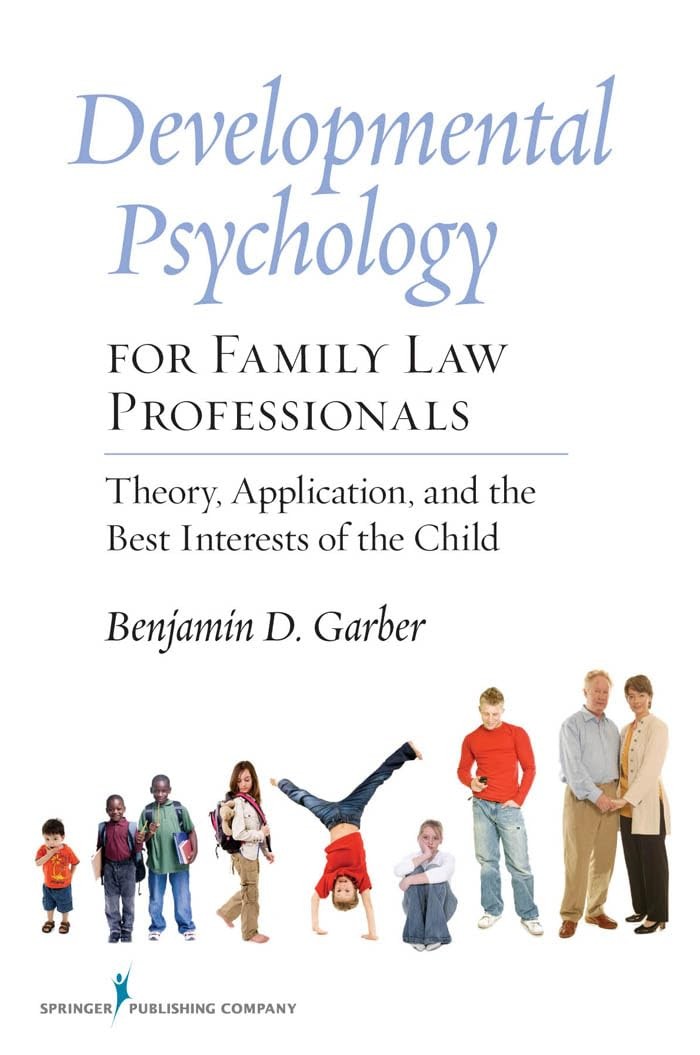
Developmental Psychology for Family Law Professionals: Theory, Application, and the Best Interests of the Child by Benja
Inclusive of all applicable taxes. FREE shipping on all orders.
Available Offers
- 🚚Free Delivery — Free shipping on all orders
- 💵Cash on Delivery — Pay when your order arrives
- ↩️15-Day Easy Returns — Hassle-free return policy
- 🔒Cash on Delivery — Pay safely when your order arrives
Check Delivery
Product Description
Introduction
Family law in India, as elsewhere, increasingly demands a nuanced understanding of child development. When parents separate or divorce, the legal system must make profound decisions about custody, visitation, and parental responsibility. These decisions hinge on one crucial principle: the best interests of the child. Yet, how can a lawyer, judge, or mediator truly assess what is best for a child without a solid grounding in developmental psychology? This book bridges that critical gap. Written by leading expert Benjamin D. Garber, Developmental Psychology for Family Law Professionals offers a comprehensive, practical guide that translates complex developmental theories into actionable insights for the courtroom and the consultation room.
Book Overview
This hardbound volume from Springer Publishing Company is a definitive resource for anyone involved in family law proceedings. It moves beyond abstract theory to provide a clear framework for understanding children's needs at different ages and stages. The book equips readers with the tools to evaluate a child's developmental trajectory, assess the impact of family conflict, and make recommendations that truly serve the child's long-term well-being. With a focus on real-world application, it integrates case studies, research findings, and practical strategies that can be immediately used in legal practice, mediation, or therapeutic work with families.
Key Highlights
- Evidence-Based Framework: The book synthesizes decades of developmental research into a coherent model for family law decision-making.
- Practical Case Studies: Each chapter includes detailed examples that illustrate how developmental principles apply to specific custody and parenting disputes.
- Focus on the Best Interests Standard: Provides a clear methodology for operationalizing this often-vague legal standard using developmental science.
- Interdisciplinary Approach: Bridges the gap between psychology, law, and social work, making it accessible to professionals from all backgrounds.
- Indian Relevance: While rooted in international research, the principles and case examples are directly applicable to Indian family courts and cultural contexts.
Inside the Book
The book is structured to guide the reader from foundational concepts to advanced application. It begins with an overview of major developmental theories—from Piaget and Erikson to attachment theory and systems theory—and explains how each informs our understanding of children in high-conflict families. Subsequent chapters delve into specific developmental stages: infancy, toddlerhood, preschool, middle childhood, and adolescence. For each stage, the book explores the child's cognitive, emotional, and social capacities, and discusses how separation, divorce, and parental conflict can disrupt normal development. Later sections address special topics such as child alienation, relocation disputes, and the role of the expert witness. The final chapters offer practical tools for assessment, report writing, and testimony.
Key Topics
- Attachment and Separation: Understanding how parent-child bonds form and how they are affected by custody arrangements.
- Developmental Stages: Age-specific needs, capacities, and vulnerabilities from infancy through adolescence.
- Impact of High-Conflict Divorce: How exposure to parental conflict affects emotional and cognitive development.
- Parenting Plans: Designing schedules that support the child's developmental needs, including school, extracurriculars, and social relationships.
- Child Alienation and Gatekeeping: Identifying and addressing problematic parenting behaviours that harm the child.
- Cultural Considerations: How family structure, values, and community norms in India shape developmental outcomes.
- Ethical and Legal Standards: The professional responsibilities of psychologists, lawyers, and mediators in family court.
Reader Benefits
By reading this book, family law professionals will gain a deeper understanding of the children they serve. They will learn to ask the right questions, interpret behavioural and verbal cues, and make recommendations that are grounded in science rather than intuition. The book helps readers avoid common pitfalls, such as relying on outdated stereotypes about child development or making assumptions based on a child's age alone. Instead, it offers a nuanced, individualized approach that considers each child's unique temperament, history, and family context. For lawyers, this translates into stronger arguments and better outcomes for clients. For psychologists and social workers, it provides a robust framework for assessment and intervention. For judges, it offers a lens through which to evaluate evidence and craft orders that truly protect children.
Learning Outcomes
- Identify the key developmental milestones and vulnerabilities at each stage of childhood.
- Apply developmental theories to real-world custody and parenting disputes.
- Assess the impact of family conflict, separation, and divorce on children's well-being.
- Design parenting plans and recommendations that align with the child's developmental needs.
- Communicate developmental concepts effectively in court reports, testimony, and client consultations.
- Critically evaluate research and expert opinions in family law cases.
- Integrate cultural and contextual factors into developmental assessments.
Who Should Read
This book is essential for a wide range of professionals working with families in transition. It is ideally suited for family lawyers, judges, and magistrates who make decisions about custody and visitation. It is equally valuable for clinical psychologists, child psychiatrists, social workers, and counsellors who provide assessments or therapy in family law contexts. Mediators and collaborative law practitioners will find the developmental insights invaluable for facilitating productive discussions. Law students and postgraduate psychology students will benefit from the clear, applied approach. In short, anyone who wants to ensure that the best interests of the child are truly at the heart of family law practice will find this book indispensable.
About the Author
Benjamin D. Garber is a highly respected clinical psychologist, consultant, and author with decades of experience at the intersection of child development and family law. He has served as an expert witness in numerous custody cases, trained thousands of professionals across the United States and internationally, and written extensively on topics related to parenting, divorce, and child welfare. Dr. Garber brings a rare combination of academic rigour and practical wisdom to his work. His clear, compassionate writing style makes complex concepts accessible, and his commitment to improving outcomes for children shines through every chapter of this book.
About the Publisher
Springer Publishing Company is a leading academic and professional publisher known for high-quality resources in psychology, social work, medicine, and law. With a legacy spanning over 70 years, Springer is committed to advancing knowledge and practice through rigorous, evidence-based publications. This book is part of Springer's distinguished list in family studies and forensic psychology, ensuring that readers receive content that is both authoritative and up-to-date. Indian professionals can trust that this volume meets the highest standards of scholarly and practical excellence.
Conclusion
In a field where decisions have lifelong consequences for children, Developmental Psychology for Family Law Professionals is not just a book—it is an essential tool. It empowers lawyers, judges, psychologists, and mediators to move beyond guesswork and make informed, developmentally appropriate recommendations. By grounding family law practice in the science of child development, this book helps professionals fulfill their most important duty: protecting the best interests of every child. Whether you are preparing for a difficult custody case, writing a parenting plan, or seeking to deepen your understanding of children's needs, this book will be your trusted companion. Order your copy today from Bookshops.in and take a decisive step toward more effective, compassionate family law practice.
Quick Summary
Developmental Psychology for Family Law Professionals by Benjamin D. Garber is a comprehensive guide that bridges the gap between child development theory and family law practice. Designed for lawyers, judges, psychologists, social workers, and mediators, this book provides practical tools to ensure court decisions align with the best interests of the child. It covers essential topics such as attachment theory, trauma, parental alienation, developmental milestones, and effective parenting plans. Through real case studies, readers learn how to assess children's needs, testify in court, and collaborate with families. The book is particularly valuable for Indian professionals navigating complex custody and welfare cases. By grounding legal practice in developmental science, it helps reduce conflict and promote healthy outcomes for children. Published by Springer Publishing Company, this hardcover edition is a durable reference for any family law library. Buy from Bookshops.in for reliable delivery across India.
Book Highlights
Book Specifications
| ISBN-13 | 9780826105257 |
| ISBN-10 | 0826105254 |
| Publisher | Springer Pub Co |
| Language | English |
| Dimensions | 15.16 x 2.34 x 22.91 cm |
| Weight | 544 g |
| Country | India |
| Category | Psychology › Developmental Psychology |
| Genre | Non-fiction |
| Original Language | English |
Frequently Asked Questions
What is Developmental Psychology for Family Law Professionals about?
Who is the author of this book?
Is this book useful for Indian family law professionals?
What topics does the book cover?
Who should read this book?
Does the book include case studies?
What is the best interests of the child standard?
Is this book suitable for students?
Does the book address parental alienation?
What makes this book different from other family law texts?
Is the book based on research?
Can this book help in mediation?
What language is the book in?
Where can I buy this book in India?
Readers Also Search For
Customers Also Bought
Psychology
Koinonia: From Hate, Through Dialogue, to Culture in the Large Group by Patrick B. Demare
Psychology
Mindfulness-Based Interventions for Trauma and Its Consequences (Concise Guides on Trauma Care, 4)

Psychology
Handbook for Teaching Statistics and Research Methods by Mark E. Ware

Psychology
Psychoanalysis and the Nuclear Threat: Clinical and Theoretical Studies
Psychology
Humor and Psyche: Psychoanalytic Perspectives by James W. Barron

Relationships
The Experience and Expression of Uncertainty in Close Relationships by Jennifer A. Theiss
Related Products
View AllPsychology
Mindfulness-Based Interventions for Trauma and Its Consequences (Concise Guides on Trauma Care, 4)
Psychology
Handbook for Teaching Statistics and Research Methods by Mark E. Ware
Psychology
Psychoanalysis and the Nuclear Threat: Clinical and Theoretical Studies
Psychology
Humor and Psyche: Psychoanalytic Perspectives by James W. Barron

Psychology
Proceedings of the First International Conference on Genetic Algorithms and Their Applications
Psychology