
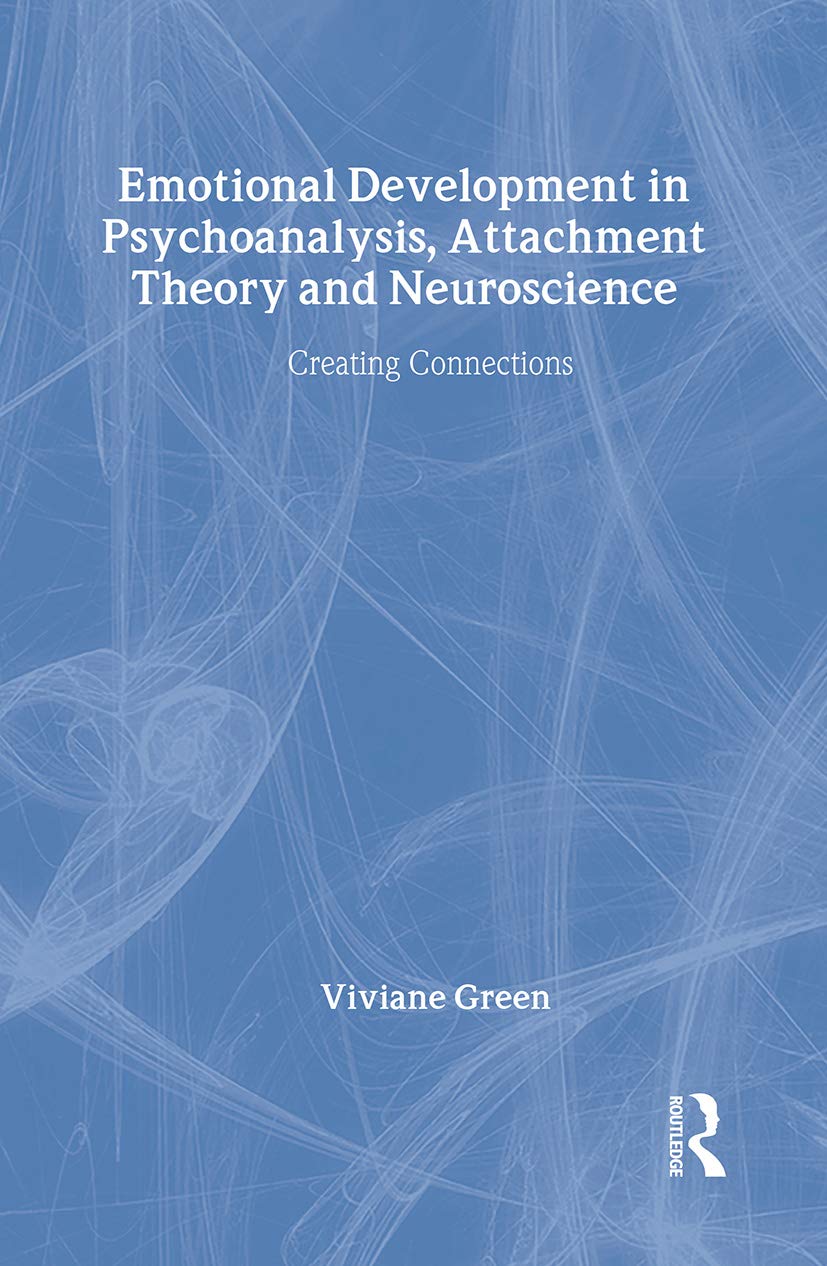
Emotional Development in Psychoanalysis, Attachment Theory and Neuroscience: Creating Connections by Viviane Green – A M
Inclusive of all applicable taxes. FREE shipping on all orders.
Available Offers
- 🚚Free Delivery — Free shipping on all orders
- 💵Cash on Delivery — Pay when your order arrives
- ↩️15-Day Easy Returns — Hassle-free return policy
- 🔒Cash on Delivery — Pay safely when your order arrives
Check Delivery
Product Description
Introduction
Emotional Development in Psychoanalysis, Attachment Theory and Neuroscience: Creating Connections by Viviane Green is a groundbreaking work that bridges three powerful disciplines to offer a holistic understanding of human emotional growth. Designed for students, clinicians, and researchers, this hardcover volume from Routledge presents a rare synthesis of psychoanalytic thought, attachment research, and modern neuroscience. For Indian readers exploring developmental psychology or mental health practice, this book provides a culturally adaptable framework that enriches clinical work and academic study alike.
Book Overview
This multi-disciplinary volume explores emotional development from infancy through adolescence, integrating insights from psychoanalysis, attachment theory, and neuroscience. Rather than treating these fields as separate, Viviane Green and her contributors weave them into a coherent narrative that explains how early relationships shape the brain, memory, and emotional life. The book draws on detailed case studies to illustrate how theoretical integration leads to more effective therapeutic interventions, especially with challenging young clients. It is an essential resource for anyone seeking a deeper, evidence-based understanding of how emotions evolve across the lifespan.
Key Highlights
- Tri-disciplinary approach: Uniquely combines psychoanalysis, attachment theory, and neuroscience in one accessible volume.
- Case-study rich: Features real-world clinical examples from childhood and adolescence to demonstrate practical application.
- Developmental focus: Covers emotional growth from infancy to adulthood, with attention to critical periods and transitions.
- Expert contributors: Written by leading figures in each field, ensuring depth and credibility.
- Indian relevance: Concepts of attachment and emotional regulation are universally applicable, making this book valuable for Indian psychologists, therapists, and students.
Inside the Book
The chapters delve into biological and neurological foundations of the unconscious and memory, the link between genetics and attachment patterns, and the early caregiver–infant relationship as the crucible of emotional life. Readers will explore how a developmental framework informs psychoanalytic work, with special attention to difficult-to-treat young patients. The book also examines how neuroplasticity and early experiences interact to shape emotional regulation, empathy, and self-awareness. Each section is grounded in research yet written with clarity, making complex ideas accessible.
Key Topics
- Biological and neurological factors in unconscious processes and memory formation
- Genetic influences on attachment styles and emotional development
- Early relationships and the growth of emotional life
- Developmental frameworks for psychoanalytic practice
- Integration of attachment theory with neurobiological findings
- Clinical work with children and adolescents facing severe emotional challenges
Reader Benefits
By reading this book, you will gain a nuanced understanding of how emotional patterns are formed and how they can be transformed. Mental health professionals will find practical tools for integrating multiple theoretical perspectives into their practice. Students will appreciate the clear explanations of complex concepts, while researchers will value the interdisciplinary synthesis. For Indian readers, the book offers a non-reductionist view of development that respects cultural diversity and relational contexts, making it suitable for adaptation in local clinical settings.
Learning Outcomes
- Understand the interplay between early attachment experiences and brain development.
- Apply psychoanalytic concepts within a neurobiological and attachment-based framework.
- Analyze clinical case studies to identify developmental pathways of emotional disorders.
- Critically evaluate how different schools of thought can complement each other in therapy.
- Develop a developmental perspective for assessing and treating emotional difficulties in children and adolescents.
Who Should Read
This book is ideal for clinical psychologists, psychiatrists, psychoanalysts, psychotherapists, and counsellors working with children, adolescents, or families. It is also highly recommended for postgraduate students in psychology, social work, neuroscience, and psychiatry. Academics teaching developmental psychology or attachment theory will find it a valuable reference. Indian professionals in mental health settings—whether in urban clinics or rural outreach—will benefit from its integrated, case-based approach.
About the Author
Viviane Green is a distinguished psychoanalytic psychotherapist and academic with extensive experience in child and adolescent mental health. She has contributed significantly to the integration of attachment theory and neuroscience within psychoanalytic practice. A former head of the Child Psychotherapy program at the Anna Freud Centre in London, she has taught and supervised clinicians internationally. Her work emphasizes the importance of developmental perspectives in understanding emotional life, and she is widely respected for her ability to bridge theory and clinical practice.
About the Publisher
Routledge is a leading global academic publisher known for its high-quality books in the social sciences, humanities, and behavioral sciences. With a legacy spanning over 180 years, Routledge publishes works that shape research, education, and professional practice. This hardcover edition reflects their commitment to producing authoritative, well-edited texts that serve scholars and practitioners worldwide. Indian readers can trust Routledge for rigorous scholarship and accessible writing.
Conclusion
Emotional Development in Psychoanalysis, Attachment Theory and Neuroscience: Creating Connections is more than a textbook—it is a bridge between disciplines and a guide for compassionate, effective clinical work. Whether you are a seasoned therapist or a student beginning your journey, this book will deepen your understanding of how emotions grow, falter, and heal. Order your copy today from Bookshops.in and add this indispensable volume to your professional library.
Quick Summary
Emotional Development in Psychoanalysis, Attachment Theory and Neuroscience: Creating Connections by Viviane Green is a multi-disciplinary exploration of how human emotions evolve from infancy through adulthood. The book uniquely integrates psychoanalytic thinking with attachment theory and modern neuroscience, offering readers a balanced and rich perspective on emotional growth. It covers biological and neurological factors in unconscious memory, the genetic underpinnings of attachment, the importance of early relationships, and how a developmental framework can inform clinical psychoanalytic work. Detailed case studies across childhood and adolescence bring theory to life. This book is ideal for psychology and psychiatry students, clinicians, researchers, and educators in India who want a comprehensive understanding of emotional development grounded in multiple scientific disciplines. By purchasing from Bookshops.in, Indian readers receive a genuine hardcover edition with reliable delivery and customer support.
Book Highlights
Book Specifications
| ISBN-13 | 9781583911358 |
| ISBN-10 | 1583911359 |
| Publisher | Routledge |
| Language | English |
| Dimensions | 15.6 x 1.42 x 23.39 cm |
| Weight | 386 g |
| Country | India |
| Category | Psychology › Developmental Psychology |
| Genre | Science & Mathematics |
| Original Language | English |
Frequently Asked Questions
What is the main focus of this book?
Who is the author of Emotional Development in Psychoanalysis, Attachment Theory and Neuroscience?
Is this book suitable for undergraduate students in India?
Does the book include case studies?
What makes this book different from other books on emotional development?
Is the book based on research?
Can clinicians benefit from reading this book?
Does the book cover genetics and attachment?
What age range does the book cover?
Is this book relevant for Indian readers?
Does the book include neuroscience topics?
Is this book available in hardcover?
Where can I buy this book in India?
Readers Also Search For
Customers Also Bought
Psychology
Koinonia: From Hate, Through Dialogue, to Culture in the Large Group by Patrick B. Demare
Psychology
Mindfulness-Based Interventions for Trauma and Its Consequences (Concise Guides on Trauma Care, 4)

Psychology
Handbook for Teaching Statistics and Research Methods by Mark E. Ware

Psychology
Psychoanalysis and the Nuclear Threat: Clinical and Theoretical Studies
Psychology
Humor and Psyche: Psychoanalytic Perspectives by James W. Barron

Relationships
The Experience and Expression of Uncertainty in Close Relationships by Jennifer A. Theiss
Related Products
View AllPsychology
Mindfulness-Based Interventions for Trauma and Its Consequences (Concise Guides on Trauma Care, 4)
Psychology
Handbook for Teaching Statistics and Research Methods by Mark E. Ware
Psychology
Psychoanalysis and the Nuclear Threat: Clinical and Theoretical Studies
Psychology
Humor and Psyche: Psychoanalytic Perspectives by James W. Barron

Psychology
Proceedings of the First International Conference on Genetic Algorithms and Their Applications
Psychology