
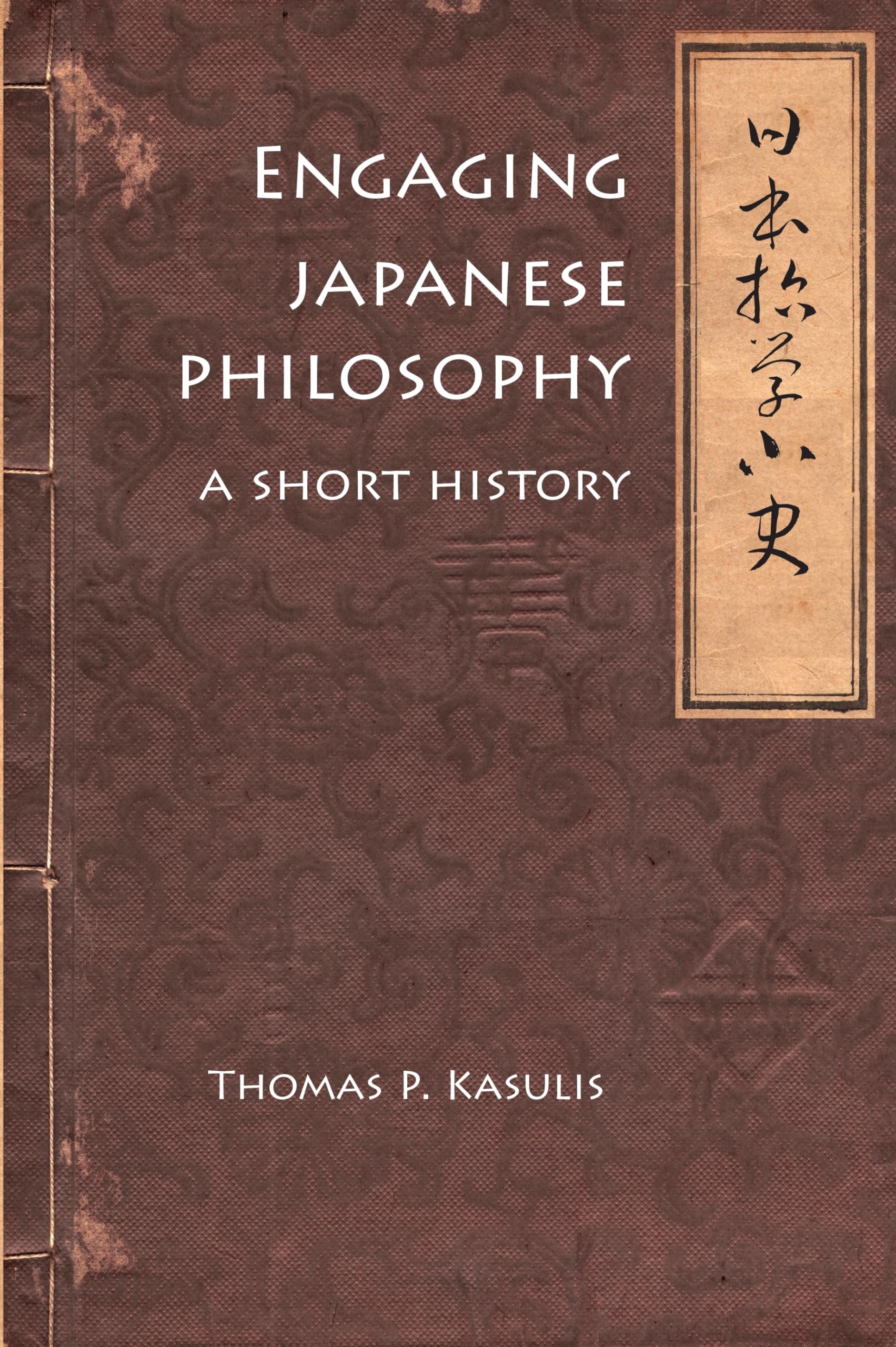
Engaging Japanese Philosophy: A Short History – A Journey into Japanese Thought and Culture
Inclusive of all applicable taxes. FREE shipping on all orders.
Available Offers
- 🚚Free Delivery — Free shipping on all orders
- 💵Cash on Delivery — Pay when your order arrives
- ↩️15-Day Easy Returns — Hassle-free return policy
- 🔒Cash on Delivery — Pay safely when your order arrives
Check Delivery
Product Description
Introduction
Japanese philosophy offers a profound way of thinking that is both deeply reflective and practically engaged with life. Unlike Western traditions that often prize detachment and abstract reasoning, Japanese thought emphasizes connection, embodiment, and lived experience. For Indian readers who value holistic wisdom, this tradition resonates beautifully with our own philosophical heritage. Engaging Japanese Philosophy: A Short History by Thomas P. Kasulis is the perfect gateway into this rich world. Written with clarity and warmth, this hardcover volume invites you to not just read about Japanese philosophy but to actually think with its masters.
Book Overview
This book is a comprehensive yet accessible survey of Japanese philosophical thought from its ancient origins to modern times. Kasulis, a world-renowned scholar, avoids dry academic jargon and instead uses engaging examples, analogies, and thought experiments. The book is structured chronologically, covering key periods such as Shinto, Buddhism, Confucianism, Neo-Confucianism, the samurai ethos, and modern philosophical movements. Each chapter weaves together cultural history, ethical ideas, aesthetic principles, and political contexts. The result is a narrative that feels alive and relevant, not like a dusty textbook.
Key Highlights
- Engagement over detachment: The book mirrors the Japanese philosophical tradition itself—it asks you to participate, not just observe.
- Jargon-free explanations: Complex ideas are broken down with simple language and relatable examples, making it ideal for beginners.
- Cultural and historical context: Philosophy is never presented in a vacuum; you understand how Japan's unique history shaped its thinkers.
- Pronunciation guide: A simplified guide to Japanese pronunciation helps Indian readers confidently engage with terms and names.
- Language insights: A special discussion on Japanese syntax, orthography, and linguistic layers reveals how language itself influences philosophical concepts.
Inside the Book
The book is divided into clear sections that guide you through Japan's intellectual evolution. You will explore the indigenous Shinto worldview, the arrival of Buddhism and its transformation in Japan, the rise of the samurai code (bushidō), the influence of Chinese Confucianism, and the modern encounters with Western philosophy. Each chapter includes thought-provoking questions and analogies that make you pause and reflect. Kasulis also addresses themes like aesthetics (wabi-sabi, mono no aware), ethics, politics, and the nature of selfhood. The writing is conversational yet deeply informed, making it a pleasure to read from cover to cover.
Key Topics
- Shinto and the concept of kami
- Zen Buddhism and the practice of mindfulness
- The samurai code and its ethical dimensions
- Neo-Confucianism in Japan
- Aesthetics: the beauty of imperfection and transience
- Modern Japanese philosophy and its global relevance
- The relationship between language, thought, and reality
Reader Benefits
By reading this book, you gain more than just knowledge—you gain a new lens for seeing the world. Indian readers, in particular, will appreciate the parallels with our own dharmic traditions, such as the emphasis on non-duality, impermanence, and the integration of philosophy into daily life. The book helps you develop a nuanced understanding of Japanese culture, which is increasingly important in today's interconnected world. You will also sharpen your own critical thinking by engaging with ideas that challenge Western assumptions about self, truth, and ethics.
Learning Outcomes
- Understand the major schools and periods of Japanese philosophy
- Recognize the influence of Buddhism, Confucianism, and Shinto on Japanese thought
- Analyze key concepts like emptiness, impermanence, and harmony
- Compare Japanese and Western philosophical approaches
- Appreciate how philosophy is lived, not just studied, in the Japanese tradition
Who Should Read
This book is perfect for students of philosophy, comparative religion, Asian studies, and history. It is also ideal for general readers who are curious about Japan, its culture, and its way of thinking. If you are a teacher, writer, or anyone who loves exploring big ideas in an accessible format, this volume will be a treasured addition to your library. No prior knowledge of Japanese philosophy is required—only an open mind and a willingness to engage.
About the Author
Thomas P. Kasulis is a distinguished professor of comparative studies at Ohio State University and a leading authority on Japanese philosophy. He has spent decades studying and teaching the subject, and his work is known for making complex ideas accessible to a global audience. Kasulis has written several influential books on Japanese thought, and his deep respect for the tradition shines through every page of this volume.
About the Publisher
University of Hawaii Press is a prestigious academic publisher known for its excellence in Asian studies, philosophy, and cultural history. With a commitment to scholarly rigor and readability, the press has been a trusted source for works on Japanese and Pacific Island cultures for over seven decades. This hardcover edition reflects their high standards of production and design.
Conclusion
Engaging Japanese Philosophy: A Short History is more than a book—it is an invitation to a conversation across centuries and cultures. Whether you are a student, a seeker of wisdom, or simply someone who loves a good intellectual journey, this volume will enrich your mind and spirit. Order your copy today from Bookshops.in and begin your exploration of one of the world's most profound philosophical traditions.
Quick Summary
Engaging Japanese Philosophy: A Short History is a masterful introduction to the rich traditions of Japanese thought, written by Thomas P. Kasulis, a leading authority in the field. The book is designed for Indian students, scholars, and general readers who wish to explore Japanese philosophy without any prior background. It covers over a millennium of intellectual history, from ancient Shinto and Confucian influences to Zen Buddhism, the samurai code of Bushido, and modern movements like the Kyoto School. What sets this book apart is its emphasis on engagement rather than detachment—Kasulis invites readers to think with the Japanese masters through relatable analogies, thought experiments, and clear, jargon-free explanations. Readers will learn how Japanese philosophy integrates aesthetics, ethics, politics, and self-cultivation into a cohesive worldview that challenges Western assumptions. By purchasing from Bookshops.in, you receive a premium hardcover edition with fast delivery across India, ensuring you have a durable reference for years to come.
Book Highlights
Book Specifications
| ISBN-13 | 9780824874070 |
| ISBN-10 | 0824874072 |
| Publisher | University of Hawai'i Press |
| Language | English |
| Dimensions | 15.24 x 3.81 x 24.13 cm |
| Weight | 1 kg 80 g |
| Category | Religious Studies › History of Religion |
| Genre | Philosophy |
| Reading Age | 18+ |
| Original Language | English |
Frequently Asked Questions
Is this book suitable for beginners with no background in philosophy?
Does the book cover modern Japanese philosophy?
What major traditions are discussed?
How is this book different from other introductions to Japanese philosophy?
Can this book help me understand Japanese culture better?
Is the book focused only on religious philosophy?
Does the book include comparisons with Western philosophy?
What is the reading level of this book?
Is this a textbook or a general interest book?
Does the book have illustrations or diagrams?
What is the significance of 'engagement' in Japanese philosophy?
Is the book relevant for Indian readers?
Who is Thomas P. Kasulis?
Where can I buy this book in India?
Readers Also Search For
Customers Also Bought

Islam
Spiritual Economies (English, Daromir Rudnyckyj)

Islam
Who Is Allah? (English, Bruce B. Lawrence)

Islam
Islam and Liberal Citizenship: The Search for an Overlapping Consensus by Andrew F. March

Islam
Fiqh Us-Sunnah: Funerals and Diggers by Al-Sayyid Sabiq – Islamic Funeral Guide

Christianity
Genetics (English, Thomas a. Shannon | Mark P. Aulisio | Françoise Baylis)

Hinduism
Karma and Creativity by Christopher Key Chapple – Indian Philosophy
Related Products
View All
Religion & Spirituality
Spiritual Competency in Psychotherapy | by Philip Brownell | Springer Publishing Company | by Philip Brownell | Springer Publishing Company | by Philip Brownell | Springer Publishing Company | by Philip Brownell | Springer Publishing Company | by Philip Brownell | Springer Publishing Company | by Philip Brownell | Springer Publishing Company | by Philip Brownell | Springer Publishing Company | by Philip Brownell | Springer Publishing Company | by Philip Brownell | Springer Publishing Company | b

Religion & Spirituality
Religion as a Conversation Starter | by Ina Merdjanova | Continuum | by Ina Merdjanova | Continuum | by Ina Merdjanova | Continuum | by Ina Merdjanova | Continuum | by Ina Merdjanova | Continuum | by Ina Merdjanova | Continuum | by Ina Merdjanova | Continuum | by Ina Merdjanova | Continuum | by Ina Merdjanova | Continuum | by Ina Merdjanova | Continuum | by Ina Merdjanova | Continuum | by Ina Merdjanova | Continuum | by Ina Merdjanova | Continuum | by Ina Merdjanova | Continuum | by Ina Merdjano

Religion & Spirituality
The Other Jewish Question: Identifying the Jew and Making Sense of Modernity

Religion & Spirituality
The Oxford Guide to People & Places of the Bible | by Bruce M. Metzger | Michael D. Coogan | Oxford University Press | by Bruce M. Metzger | Michael D. Coogan | Oxford University Press | by Bruce M. Metzger | Michael D. Coogan | Oxford University Press | by Bruce M. Metzger | Michael D. Coogan | Oxford University Press | by Bruce M. Metzger | Michael D. Coogan | Oxford University Press | by Bruce M. Metzger | Michael D. Coogan | Oxford University Press | by Bruce M. Metzger | Michael D. Coogan |

Religion & Spirituality
Anti-Judaism in Early Christianity | by Stephen G. Wilson | Wilfrid Laurier University Press | by Stephen G. Wilson | Wilfrid Laurier University Press | by Stephen G. Wilson | Wilfrid Laurier University Press | by Stephen G. Wilson | Wilfrid Laurier University Press | by Stephen G. Wilson | Wilfrid Laurier University Press | by Stephen G. Wilson | Wilfrid Laurier University Press | by Stephen G. Wilson | Wilfrid Laurier University Press | by Stephen G. Wilson | Wilfrid Laurier University Press |

Religion & Spirituality