
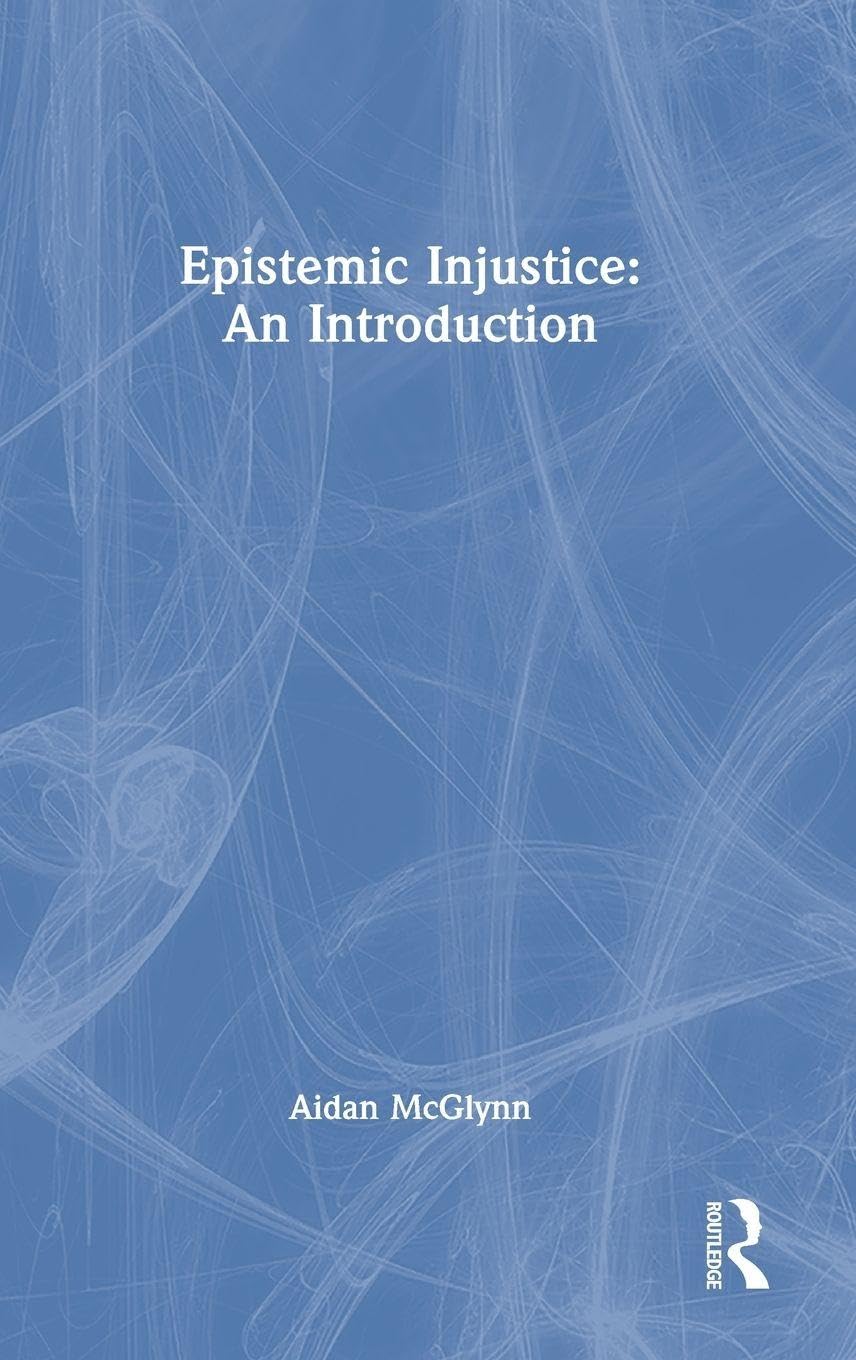
Epistemic Injustice: An Introduction – A Philosophical Examination of Knowledge and Prejudice
Inclusive of all applicable taxes. FREE shipping on all orders.
Available Offers
- 🚚Free Delivery — Free shipping on all orders
- 💵Cash on Delivery — Pay when your order arrives
- ↩️15-Day Easy Returns — Hassle-free return policy
- 🔒Cash on Delivery — Pay safely when your order arrives
Check Delivery
Product Description
Introduction
In an age where conversations about social justice, identity, and power dynamics are reshaping our understanding of the world, the concept of epistemic injustice has emerged as a critical lens through which we can examine how knowledge and credibility are distributed in society. Aidan McGlynn's Epistemic Injustice: An Introduction offers a rigorous yet accessible entry point into this transformative philosophical field. Published by Routledge, this hardcover volume is an essential resource for Indian students, academics, and anyone seeking to understand how prejudice and ignorance can harm individuals not just socially or legally, but in their very capacity as knowers.
Book Overview
Epistemic injustice refers to the wrong done to someone specifically in their role as a knower—when their testimony is dismissed, their experiences are marginalized, or their conceptual resources are inadequate to make sense of their own lives. McGlynn's book provides a comprehensive introduction to this rich area of philosophy, tracing its origins in the work of Miranda Fricker and expanding into contemporary debates. The author carefully distinguishes between testimonial injustice (where prejudice leads us to give a speaker less credibility than they deserve) and hermeneutical injustice (where gaps in collective understanding prevent someone from making sense of their own experiences). Written in clear, jargon-sensitive prose, this book bridges abstract theory with real-world examples drawn from gender, race, caste, and disability contexts, making it particularly relevant for Indian readers grappling with systemic inequalities.
Key Highlights
- First comprehensive introduction to epistemic injustice tailored for students and general readers
- Clear conceptual frameworks distinguishing testimonial injustice, hermeneutical injustice, and epistemic oppression
- Practical examples from gender, race, caste, and disability that resonate with Indian social realities
- Critical engagement with leading philosophers including Fricker, Dotson, and Medina
- Action-oriented chapters on how to work toward epistemic justice in everyday life
Inside the Book
The book is structured to guide readers from foundational concepts to advanced applications. McGlynn begins by defining epistemic injustice and explaining why it matters, then moves through detailed analyses of testimonial and hermeneutical injustice. Each chapter builds on the previous one, introducing key thinkers and debates while maintaining a steady focus on lived experience. The author does not shy away from difficult questions: Can epistemic injustice be unintentional? How does it intersect with systemic oppression? What are the primary harms—psychological, social, and political—that result from being disbelieved or misunderstood? The final chapters offer hopeful pathways toward epistemic justice, emphasizing solidarity, listening, and structural change.
Key Topics
- What is epistemic injustice and why is it significant?
- Epistemic oppression and its difference from epistemic injustice
- Testimonial injustice: credibility deficits and excesses
- Hermeneutical injustice: gaps in shared understanding
- Primary harms of epistemic injustice: silencing, self-doubt, and alienation
- Identity power and its role in knowledge production
- Epistemic responsibility and virtue epistemology
- Paths toward epistemic justice: institutional reform and everyday practices
Reader Benefits
This book empowers readers to recognize and articulate forms of injustice that often go unnamed. For Indian students, it offers a vocabulary to discuss caste-based credibility hierarchies, gender-based silencing, and the marginalization of disabled voices in academic and public discourse. McGlynn's balanced approach helps readers avoid oversimplification while still making the material engaging and applicable. By the end of the book, readers will be able to identify epistemic injustice in their own communities, critique knowledge systems that perpetuate inequality, and contribute to building more inclusive spaces for dialogue.
Learning Outcomes
- Understand the central concepts of epistemic injustice and epistemic oppression
- Analyze real-world cases of testimonial and hermeneutical injustice
- Critically evaluate philosophical arguments about credibility, power, and knowledge
- Apply theoretical insights to Indian contexts such as caste, gender, and disability
- Develop strategies for fostering epistemic justice in personal and professional settings
Who Should Read
This book is ideal for undergraduate and postgraduate students in philosophy, sociology, political science, law, gender studies, and disability studies. It is also highly valuable for journalists, activists, educators, and policymakers who want to deepen their understanding of how knowledge and power intersect. Anyone interested in social justice, critical theory, or the philosophy of knowledge will find this book an indispensable guide. Indian readers, in particular, will appreciate how McGlynn's framework can be applied to local issues such as caste discrimination, religious prejudice, and the silencing of marginalized communities in public debates.
About the Author
Aidan McGlynn is a Senior Lecturer in Philosophy at the University of Edinburgh, where he specializes in epistemology, philosophy of mind, and social philosophy. His research focuses on the ethics of belief, epistemic injustice, and the nature of understanding. McGlynn has published extensively in leading philosophical journals and is known for his ability to make complex ideas accessible without sacrificing depth. His work is informed by a commitment to social justice and a belief that philosophy should engage with the pressing issues of our time.
About the Publisher
Routledge is one of the world's leading academic publishers, known for its extensive catalogue in the humanities and social sciences. With a history spanning over 180 years, Routledge has been at the forefront of publishing groundbreaking works in philosophy, including seminal texts on epistemology, ethics, and social theory. Their commitment to rigorous scholarship and global perspectives makes them the ideal publisher for a book that bridges Western philosophical traditions with urgent global conversations about justice and knowledge.
Conclusion
Epistemic Injustice: An Introduction is more than a textbook—it is a call to recognize the subtle ways in which people are wronged as knowers, and a guide to building a more equitable world. Aidan McGlynn's clear writing, careful argumentation, and attention to real-world examples make this book a must-read for anyone committed to understanding and combating injustice in all its forms. Whether you are a student beginning your philosophical journey or a seasoned scholar looking for a fresh perspective, this Routledge hardcover will deepen your understanding of one of the most important concepts in contemporary philosophy.
Quick Summary
Epistemic Injustice: An Introduction by Aidan Mcglynn is a timely and accessible philosophical work that unpacks one of the most significant ideas in contemporary social epistemology. The book defines epistemic injustice as the wrong done to a person specifically in their role as a knower, caused by factors such as prejudice and ignorance. Mcglynn carefully distinguishes between testimonial injustice, where a speaker is disbelieved due to identity prejudice, and hermeneutical injustice, where gaps in shared understanding prevent someone from making sense of their own experience. He also explores epistemic oppression as a related but distinct concept. Written for students and scholars alike, this Routledge hardcover offers a step-by-step analysis of the harms involved and proposes pathways toward epistemic justice. Indian readers—whether in philosophy departments, law schools, or social science institutes—will find the arguments highly relevant to local debates about caste, gender, and knowledge hierarchies. By ordering from Bookshops.in, you receive a genuine, high-quality print edition with prompt delivery across India, supporting a trusted local bookstore committed to academic excellence.
Book Highlights
Book Specifications
| ISBN-13 | 9781032251615 |
| ISBN-10 | 1032251611 |
| Publisher | Routledge |
| Language | English |
| Dimensions | 16.2 x 2.31 x 23.99 cm |
| Weight | 750 g |
| Category | Philosophy › Epistemology |
| Genre | Philosophy |
| Original Language | English |
Frequently Asked Questions
What is epistemic injustice?
Who is the author of this book?
Is this book suitable for beginners?
What are the main types of epistemic injustice covered?
Does the book include Indian examples?
Is this a textbook for a philosophy course?
What is the price in India?
Is the book available in paperback?
Can I use this book for my research?
Does it discuss epistemic justice?
What is the difference between epistemic injustice and epistemic oppression?
Is this book part of a series?
Why should I buy from Bookshops.in?
Readers Also Search For
Customers Also Bought

Islam
Spiritual Economies (English, Daromir Rudnyckyj)

Islam
Who Is Allah? (English, Bruce B. Lawrence)
Islam
Islam and Liberal Citizenship: The Search for an Overlapping Consensus by Andrew F. March

Islam
Fiqh Us-Sunnah: Funerals and Diggers by Al-Sayyid Sabiq – Islamic Funeral Guide

Christianity
Genetics (English, Thomas a. Shannon | Mark P. Aulisio | Françoise Baylis)

Hinduism
Karma and Creativity by Christopher Key Chapple – Indian Philosophy
Related Products
View All
Philosophy
Latin American Philosophy: Currents, Issues, Debates by Eduardo Mendieta

Philosophy
Al-Farabi's Short Commentary on Aristotle's Prior Analytics by Nicholas Rescher – Philosophy

Philosophy
Poetics of Imagining: Modern to Post-modern by Richard Kearney

Philosophy
The Metaphysics of Extrinsic Properties: 11 (Metaphysical Research, 11)

Philosophy
Dialogues on Metaphysics and on Religion by Nicolas Malebranche – Philosophy
Philosophy