
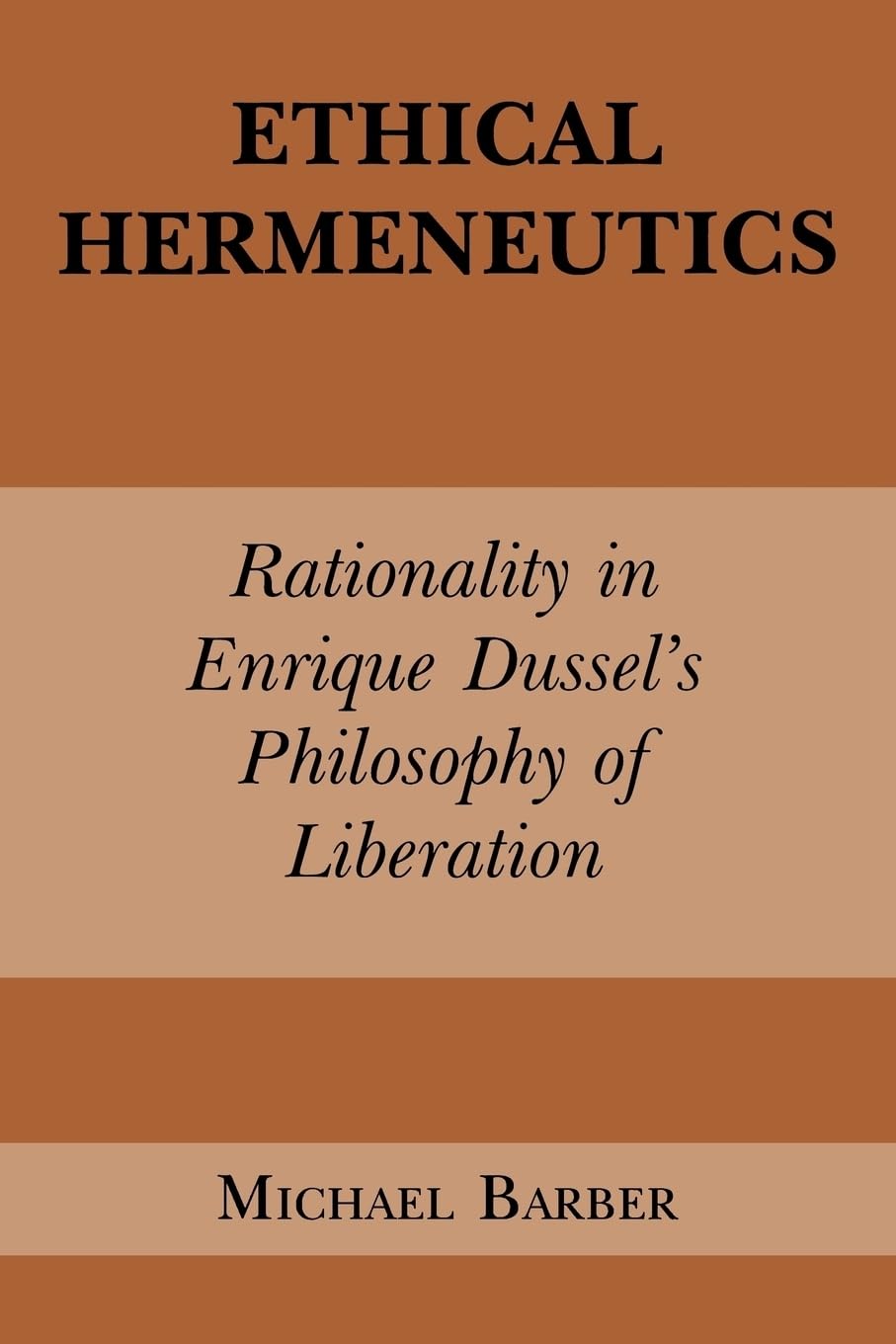
Ethical Hermeneutics: Rationality in Enrique Dussel's Philosophy of Liberation by Michael D. Barber – A Comprehensive St
Inclusive of all applicable taxes. FREE shipping on all orders.
Available Offers
- 🚚Free Delivery — Free shipping on all orders
- 💵Cash on Delivery — Pay when your order arrives
- ↩️15-Day Easy Returns — Hassle-free return policy
- 🔒Cash on Delivery — Pay safely when your order arrives
Check Delivery
Product Description
Introduction
In the vast landscape of contemporary philosophy, few thinkers have addressed the question of justice for the marginalized with the depth and urgency of Enrique Dussel. Ethical Hermeneutics: Rationality in Enrique Dussel's Philosophy of Liberation, authored by Michael D. Barber and published by Fordham University Press, is a seminal work that unpacks Dussel's revolutionary approach to ethics and rationality. This hardbound edition, now available at Bookshops.in, offers Indian readers—students, scholars, and seekers of critical thought—a rigorous yet accessible pathway into one of Latin America's most influential philosophical systems. Whether you are exploring postcolonial theory, liberation philosophy, or the ethics of difference, this book is an indispensable resource.
Book Overview
At its core, Ethical Hermeneutics is a careful reconstruction of Dussel's intellectual journey from Hegelian dialectics to the ethics of Emmanuel Levinas. Barber demonstrates how Dussel develops a hermeneutic method that interprets reality from the standpoint of the 'other'—those who are vanquished, forgotten, or excluded from dominant socio-political and cultural systems. The book traces Dussel's ethical theory through its formative stages, showing how rationality itself can be reimagined as a tool for liberation rather than domination. Barber's exposition is both sympathetic and critical, making this text a definitive guide for anyone seeking to understand Dussel's place in global philosophy.
Key Highlights
- Original synthesis: Barber presents Dussel's thought as a coherent system of 'ethical hermeneutics' that bridges phenomenology, Marxism, and Latin American liberation theology.
- Levinasian foundation: The book explores how Dussel adapts Levinas's concept of the 'face of the Other' to address historical and political exclusion.
- Critical engagement with Hegel: Detailed analysis of Dussel's departure from Hegelian dialectics, which he sees as totalizing and dismissive of alterity.
- Contextual relevance: While rooted in Latin American experience, the ethical framework speaks directly to Indian realities of caste, class, and colonial legacies.
- Rigorous scholarship: Barber's work is widely cited in philosophy departments worldwide, making this a trusted academic reference.
Inside the Book
The volume is organized into thematic chapters that guide the reader from Dussel's early ethical reflections to his mature philosophy. Barber begins with an examination of Dussel's critique of European modernity and its exclusionary rationality. Subsequent chapters delve into Dussel's reading of Levinas, his reinterpretation of the Hegelian master-slave dialectic, and his construction of a 'material ethics of life.' The book also includes Barber's own critical reflections, which help readers evaluate the strengths and limitations of Dussel's project. Each chapter is densely argued yet clearly written, making complex ideas accessible without oversimplification.
Key Topics
- Philosophy of liberation as a response to colonial violence
- Ethical hermeneutics and the interpretation of reality from the margins
- The role of the 'Other' in ethical theory
- Critique of Eurocentric rationality
- Intersections of phenomenology, Marxism, and theology
- Dussel's theory of analectics as a method for social transformation
Reader Benefits
- Deepen your understanding of postcolonial and liberation philosophies that challenge mainstream Western thought.
- Enhance your critical thinking by engaging with Dussel's alternative model of rationality grounded in ethical responsibility.
- Connect theory to practice by exploring how philosophical ideas can inform activism, policy, and social justice work.
- Gain scholarly credibility with a text that is essential reading for courses in continental philosophy, ethics, and political theory.
- Expand your philosophical toolkit with concepts such as 'transmodernity,' 'exteriority,' and 'analectical method.'
Learning Outcomes
By reading this book, you will be able to: articulate the central arguments of Dussel's philosophy of liberation; compare Dussel's ethics with those of Levinas, Hegel, and Marx; apply the concept of ethical hermeneutics to contemporary issues of marginalization in India; critically evaluate the limitations and possibilities of liberation philosophy; and engage in informed academic discussions about rationality, justice, and the ethics of difference.
Who Should Read
- Philosophy students at undergraduate and postgraduate levels seeking specialized knowledge in continental and Latin American thought.
- Scholars of ethics and political theory interested in non-Western philosophical traditions.
- Researchers in postcolonial studies looking for philosophical foundations to support their work.
- Activists and social workers who want a deeper theoretical understanding of liberation and justice.
- General readers with a passion for critical philosophy and a desire to explore perspectives from the Global South.
About the Author
Michael D. Barber is a professor of philosophy at St. Louis University, where he specializes in phenomenology, ethics, and social philosophy. He has written extensively on the philosophy of Emmanuel Levinas and the intersection of ethics and politics. Barber's work is known for its clarity and depth, and he is recognized as one of the foremost interpreters of Dussel's thought in the English-speaking world. His scholarship bridges Continental and Latin American traditions, making him an ideal guide for readers new to liberation philosophy.
About the Publisher
Fordham University Press, based in New York, is a distinguished academic publisher known for its contributions to philosophy, theology, and the humanities. With a commitment to publishing works that challenge conventional wisdom, Fordham has been a vital platform for thinkers like Enrique Dussel. This hardcover edition reflects the press's high standards of production, making it a durable addition to any personal or institutional library.
Conclusion
Ethical Hermeneutics: Rationality in Enrique Dussel's Philosophy of Liberation is more than an academic text—it is an invitation to rethink the very foundations of ethics and rationality. In a world marked by deepening inequalities and cultural conflicts, Dussel's voice offers a powerful alternative rooted in responsibility toward the excluded. Michael D. Barber's masterful exposition ensures that this voice reaches a wider audience, including readers in India who grapple with their own histories of marginalization. Order your copy today from Bookshops.in and embark on a philosophical journey that will transform how you see justice, knowledge, and the Other.
Quick Summary
Ethical Hermeneutics: Rationality in Enrique Dussel's Philosophy of Liberation by Michael D. Barber is a scholarly exploration of Dussel's ethical theory, rooted in the hermeneutic tradition and deeply influenced by Emmanuel Levinas's philosophy of the Other. The book traces Dussel's intellectual evolution from his engagement with Hegelian dialectics to his development of a liberation philosophy that prioritizes the voices of the vanquished, forgotten, and excluded. Barber systematically unpacks how Dussel redefines rationality through an ethical lens, making it a powerful tool for critiquing socio-political systems. This work is ideal for advanced philosophy students, researchers in critical theory, and anyone interested in Latin American thought or liberation theology. Readers will gain a nuanced understanding of how hermeneutics can serve social justice, and how Dussel's ideas remain relevant for contemporary debates on otherness and ethics. By purchasing from Bookshops.in, Indian readers receive a genuine hardcover edition with reliable delivery, supporting the local book ecosystem.
Book Highlights
Book Specifications
| ISBN-13 | 9780823217045 |
| ISBN-10 | 0823217043 |
| Publisher | Fordham Univ Pr |
| Language | English |
| Dimensions | 15.24 x 1.27 x 23.5 cm |
| Weight | 295 g |
| Country | India |
| Category | Philosophy › Ethics |
| Genre | Philosophy |
| Reading Age | Adult |
| Original Language | English |
Frequently Asked Questions
What is the main theme of Ethical Hermeneutics?
Who is the author of Ethical Hermeneutics?
Which philosophers are discussed in this book?
Is this book suitable for beginners in philosophy?
What is the ISBN of Ethical Hermeneutics?
Which publisher released this book?
Does this book cover liberation theology?
How does this book relate to Levinas?
What is ethical hermeneutics?
Can I use this book for my research paper?
Is this book available in hardcover?
What language is the book written in?
Does the book include a bibliography?
Why should I buy from Bookshops.in?
Readers Also Search For
Customers Also Bought
Islam
Spiritual Economies (English, Daromir Rudnyckyj)

Islam
Who Is Allah? (English, Bruce B. Lawrence)

Islam
Islam and Liberal Citizenship: The Search for an Overlapping Consensus by Andrew F. March
Islam
Fiqh Us-Sunnah: Funerals and Diggers by Al-Sayyid Sabiq – Islamic Funeral Guide

Christianity
Genetics (English, Thomas a. Shannon | Mark P. Aulisio | Françoise Baylis)

Hinduism
Karma and Creativity by Christopher Key Chapple – Indian Philosophy
Related Products
View All
Philosophy
Latin American Philosophy: Currents, Issues, Debates by Eduardo Mendieta

Philosophy
Al-Farabi's Short Commentary on Aristotle's Prior Analytics by Nicholas Rescher – Philosophy

Philosophy
Poetics of Imagining: Modern to Post-modern by Richard Kearney
Philosophy
The Metaphysics of Extrinsic Properties: 11 (Metaphysical Research, 11)

Philosophy
Dialogues on Metaphysics and on Religion by Nicolas Malebranche – Philosophy
Philosophy