
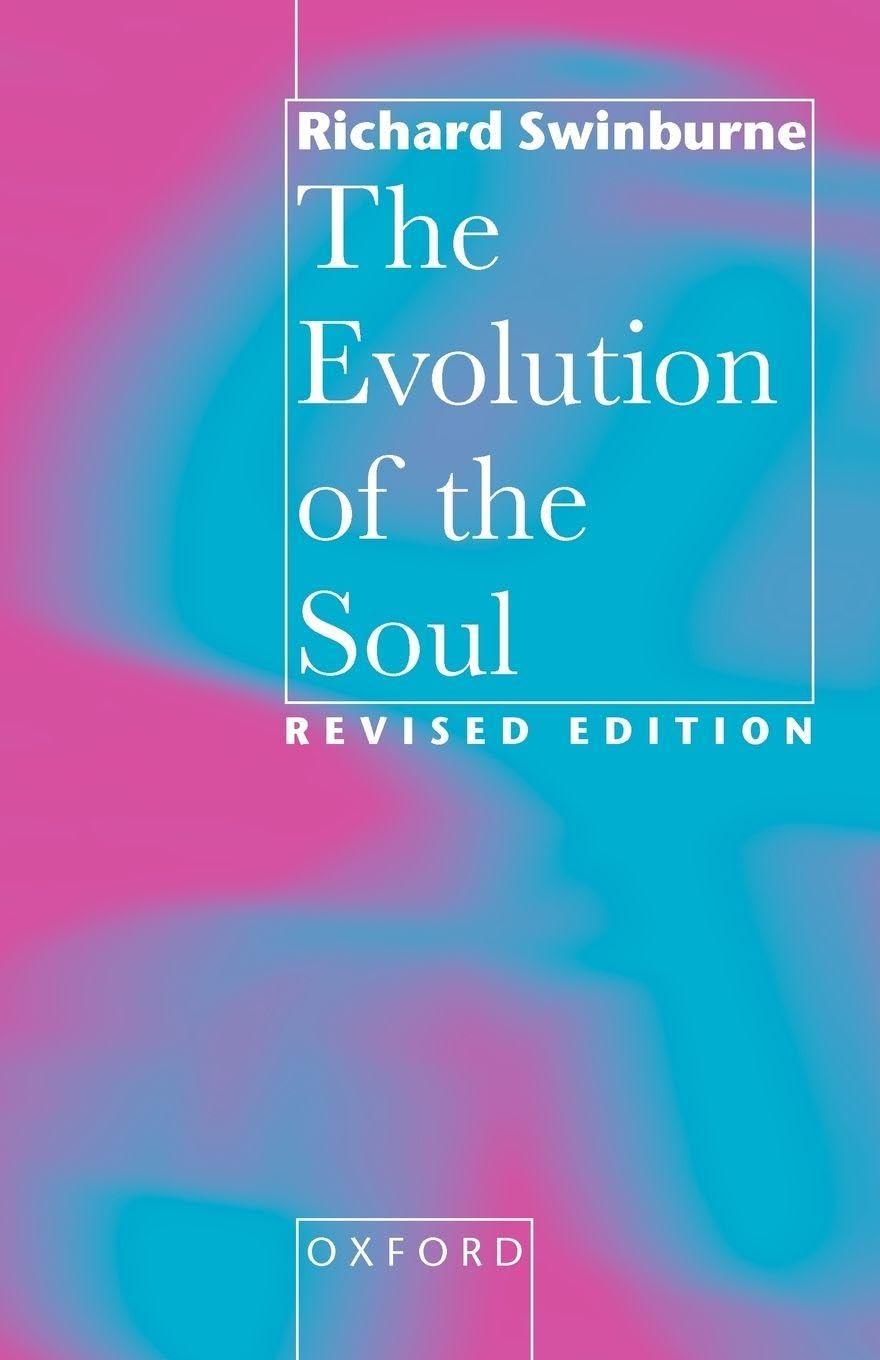
The Evolution of the Soul by Richard Swinburne – A Philosophical Inquiry into Mind, Body, and the Soul
Inclusive of all applicable taxes. FREE shipping on all orders.
Available Offers
- 🚚Free Delivery — Free shipping on all orders
- 💵Cash on Delivery — Pay when your order arrives
- ↩️15-Day Easy Returns — Hassle-free return policy
- 🔒Cash on Delivery — Pay safely when your order arrives
Check Delivery
Product Description
Introduction
The Evolution of the Soul by Richard Swinburne is a profound philosophical inquiry into one of humanity’s oldest questions: the relationship between the mind and the body. Published by OUP Oxford, this hardcover edition presents a revised and updated version of Swinburne’s landmark work. For Indian readers, especially students of philosophy, science, and theology, this book offers a rigorous yet accessible exploration of the nature of consciousness, the soul, and its evolution. Swinburne challenges materialist views, arguing that the soul is not merely a byproduct of brain activity but a distinct, interacting entity that gives meaning to human experience.
Book Overview
In this compelling work, Swinburne addresses the enduring mind-body problem with clarity and depth. He contends that the physical world alone cannot account for our subjective experiences, moral choices, and rational thought. Instead, he posits that the soul—a non-physical substance—interacts with the body, shaping our actions and perceptions. The book critically examines scientific explanations of consciousness and evolution, finding them insufficient to explain the emergence of the soul. Swinburne’s argument is grounded in analytic philosophy, drawing on logic, metaphysics, and philosophy of mind. This edition updates earlier arguments with contemporary scientific and philosophical insights, making it relevant for modern readers.
Key Highlights
- Revised and updated edition of a classic philosophical text, incorporating recent debates in neuroscience and philosophy.
- Rigorous argument for the existence of the soul as a non-physical entity that interacts with the body.
- Engaging critique of materialist and reductionist views of consciousness.
- Accessible language for both advanced students and general readers interested in philosophy of mind.
- Comprehensive treatment of topics such as free will, moral responsibility, personal identity, and the afterlife.
Inside the Book
The Evolution of the Soul is divided into thematic chapters that build Swinburne’s case step by step. He begins by defining key terms—mind, body, soul, and interaction—and then examines the limitations of purely physical explanations. The middle sections explore how mental events (thoughts, feelings, decisions) can cause physical changes and vice versa, a phenomenon he calls “interactionist dualism.” Swinburne also tackles the problem of other minds, the nature of consciousness, and the plausibility of the soul’s evolution within a Darwinian framework. The final chapters address theological implications, including the possibility of life after death. Throughout, Swinburne uses clear examples and logical reasoning, making complex ideas understandable.
Key Topics
- Mind-Body Problem: The nature of mental and physical substances and their interaction.
- Dualism vs. Materialism: Arguments for and against the existence of a non-physical soul.
- Evolution and Consciousness: How the soul could have emerged through natural processes.
- Free Will and Moral Responsibility: The role of the soul in human agency.
- Personal Identity: What makes a person the same over time, despite physical changes.
- Philosophy of Religion: Implications for the existence of God and the afterlife.
Reader Benefits
- Deepen your understanding of one of philosophy’s most challenging problems.
- Develop critical thinking skills by engaging with Swinburne’s logical arguments.
- Gain insights into the intersection of science, philosophy, and theology.
- Enhance academic performance in philosophy, psychology, or religious studies courses.
- Broaden your worldview by considering perspectives beyond mainstream scientific materialism.
Learning Outcomes
By reading The Evolution of the Soul, you will be able to: articulate the core arguments for and against dualism; evaluate the strengths and weaknesses of materialist theories of mind; understand the philosophical basis for concepts like free will and moral responsibility; critically assess scientific claims about consciousness; and apply philosophical reasoning to real-world ethical and existential questions. The book equips you with tools to think independently about the nature of self and reality.
Who Should Read
- Undergraduate and postgraduate students in philosophy, psychology, neuroscience, and religious studies.
- Academics and researchers seeking a rigorous, updated treatment of the mind-body problem.
- General readers with an interest in consciousness, spirituality, and the meaning of life.
- Teachers and educators looking for a clear, authoritative text to recommend to students.
- Indian readers who value philosophical traditions and want to engage with Western analytic philosophy.
About the Author
Richard Swinburne is one of the most influential philosophers of religion of the twentieth and twenty-first centuries. He was a Fellow of the British Academy and has taught at the University of Oxford, where he served as Nolloth Professor of the Philosophy of the Christian Religion. Swinburne has written extensively on the philosophy of mind, metaphysics, and the philosophy of religion. His works, including The Existence of God and Faith and Reason, are known for their clarity, logical rigor, and engagement with both scientific and theological perspectives. His scholarship has shaped contemporary debates on consciousness and the soul.
About the Publisher
OUP Oxford (Oxford University Press) is a prestigious academic publisher with a global reputation for excellence. It publishes authoritative works across disciplines, including philosophy, science, and theology. OUP’s commitment to rigorous scholarship and accessible writing makes it a trusted source for students, researchers, and general readers. This hardcover edition reflects OUP’s high production standards, ensuring durability and readability.
Conclusion
The Evolution of the Soul is an essential read for anyone seeking a deeper understanding of the mind, consciousness, and human identity. Richard Swinburne’s thoughtful, well-reasoned arguments challenge reductionist views and affirm the significance of the soul in explaining our inner lives. Whether you are a student, a scholar, or a curious reader, this book will enrich your intellectual journey. Available now at Bookshops.in, this hardcover edition is a valuable addition to any personal or institutional library. Order your copy today and explore the timeless question of what it means to be human.
Quick Summary
The Evolution of the Soul by Richard Swinburne is a landmark work in the philosophy of mind, presenting a rigorous defence of substance dualism. Swinburne argues that the soul, as a non-physical substance, is necessary to explain the interaction between mental and physical phenomena. He contends that no purely scientific account can fully explain the origin and nature of the soul, making this book a powerful critique of physicalism. This revised edition includes updated arguments and responses to contemporary challenges. The book is ideal for Indian postgraduate students, scholars of philosophy, and anyone interested in consciousness, free will, and personal identity. Readers will learn to critically evaluate materialist theories and understand a sophisticated dualist perspective. Buying from Bookshops.in ensures you receive an authentic hardcover copy with reliable delivery across India. Whether for academic study or personal enrichment, this book offers deep insights into one of philosophy's most enduring questions.
Book Highlights
Book Specifications
| ISBN-13 | 9780198236986 |
| ISBN-10 | 0198236980 |
| Publisher | Clarendon Pr |
| Language | English |
| Dimensions | 2.11 x 21.44 x 13.82 cm |
| Weight | 476 g |
| Category | Philosophy › Metaphysics |
| Genre | Philosophy |
| Original Language | English |
Frequently Asked Questions
What is The Evolution of the Soul about?
Who is Richard Swinburne?
Is this book suitable for Indian students?
What is the main argument of the book?
Does the book address scientific theories?
Is this book only for philosophy experts?
Does the book discuss Indian philosophy?
What is the price in India?
Can I use this book for a research paper?
Is there a digital version available?
What is the binding type?
Why should I buy from Bookshops.in?
Readers Also Search For
Customers Also Bought
Islam
Spiritual Economies (English, Daromir Rudnyckyj)

Islam
Who Is Allah? (English, Bruce B. Lawrence)

Islam
Islam and Liberal Citizenship: The Search for an Overlapping Consensus by Andrew F. March

Islam
Fiqh Us-Sunnah: Funerals and Diggers by Al-Sayyid Sabiq – Islamic Funeral Guide

Christianity
Genetics (English, Thomas a. Shannon | Mark P. Aulisio | Françoise Baylis)

Hinduism
Karma and Creativity by Christopher Key Chapple – Indian Philosophy
Related Products
View All
Philosophy
The Metaphysics of Extrinsic Properties: 11 (Metaphysical Research, 11)

Philosophy
Dialogues on Metaphysics and on Religion by Nicolas Malebranche – Philosophy
Philosophy
Metaphysics and Oppression: Heidegger's Challenge to Western Philosophy by John McCumber

Philosophy
Merleau-Ponty's Philosophy by Lawrence Hass – Phenomenology & Continental Philosophy

Philosophy
Feminism, Capitalism, and Ecology
Philosophy