
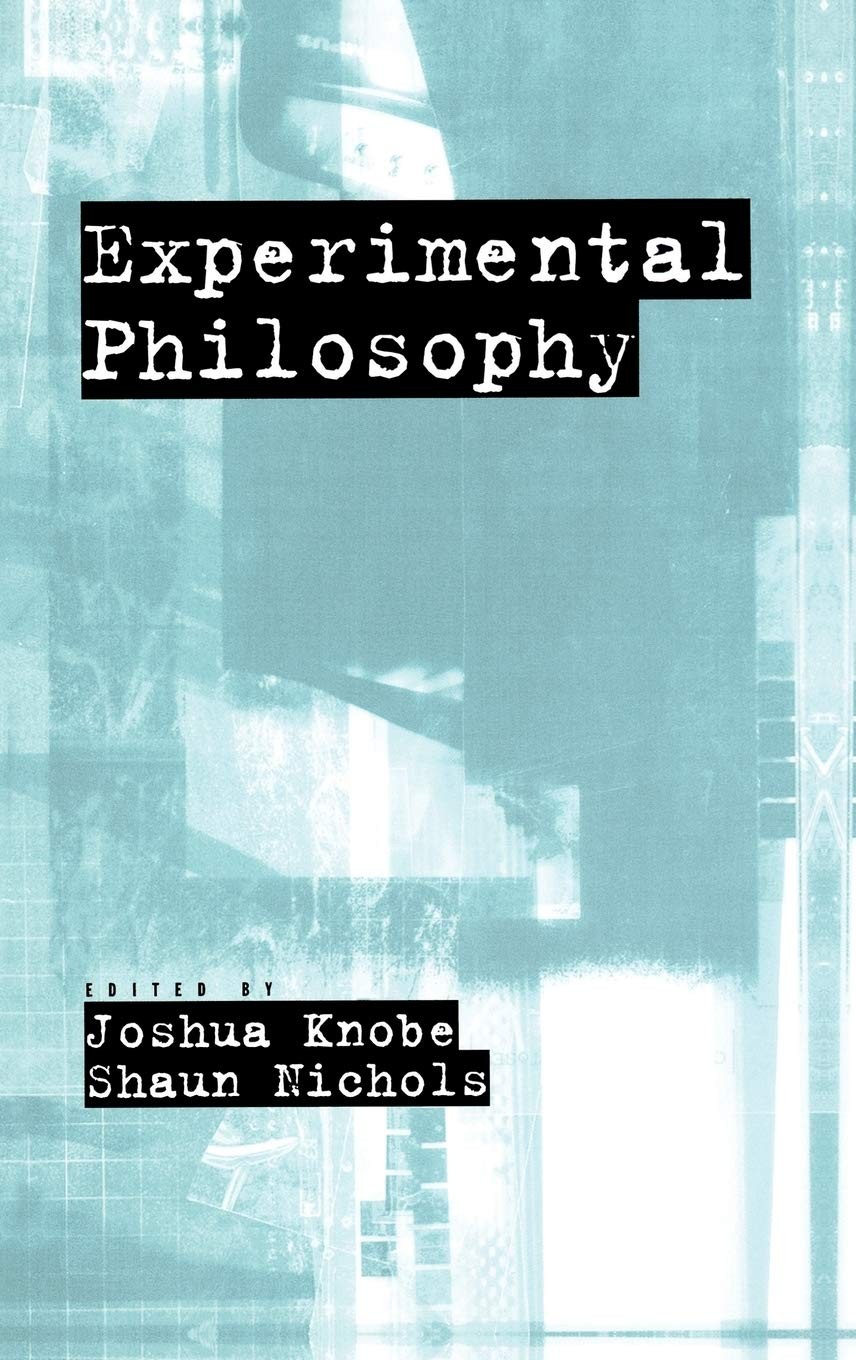
Experimental Philosophy by Joshua Knobe: An Empirical Approach to Philosophical Questions for Indian Students and Schola
Inclusive of all applicable taxes. FREE shipping on all orders.
Available Offers
- 🚚Free Delivery — Free shipping on all orders
- 💵Cash on Delivery — Pay when your order arrives
- ↩️15-Day Easy Returns — Hassle-free return policy
- 🔒Cash on Delivery — Pay safely when your order arrives
Check Delivery
Product Description
Introduction
Experimental Philosophy is a groundbreaking work that challenges the traditional boundaries of philosophical inquiry. Edited by Joshua Knobe, a leading figure in the field, this volume brings together a collection of influential essays that define the experimental philosophy movement. For Indian students and researchers interested in the intersection of philosophy, psychology, and cognitive science, this book offers a fresh perspective on how empirical methods can illuminate age-old philosophical questions. It is an essential read for anyone curious about how ordinary people think about concepts like morality, free will, and knowledge.
Book Overview
This hardcover edition from Oxford University Press presents a comprehensive introduction to experimental philosophy, a movement that emerged in the early 2000s. Unlike traditional philosophy, which relies heavily on thought experiments and introspection, experimental philosophers conduct systematic experiments to gather data about people's intuitions. The book compiles some of the most influential papers in the field, along with new essays that explore the theoretical implications of this research. It covers a wide range of topics, from intentional action and moral responsibility to the nature of consciousness and cultural differences in philosophical intuitions.
Key Highlights
- Pioneering Research: Features seminal works by Joshua Knobe, Shaun Nichols, Stephen Stich, and other key figures who shaped the experimental philosophy movement.
- Empirical Approach: Demonstrates how surveys, experiments, and statistical analyses can be applied to classic philosophical problems.
- Interdisciplinary Appeal: Bridges philosophy with cognitive science, social psychology, and anthropology, making it relevant for a broad academic audience.
- Critical Perspectives: Includes both supporters and critics of experimental philosophy, offering a balanced view of the debates within the field.
Inside the Book
The book is structured into several parts, each focusing on a different area of inquiry. Part I introduces the core methods and motivations behind experimental philosophy. Part II examines case studies, such as the Knobe effect, which reveals how people's judgments about intentional action are influenced by moral considerations. Part III explores cross-cultural variations in philosophical intuitions, challenging the assumption that certain concepts are universal. Part IV addresses objections and limitations, including discussions on the reliability of intuitive judgments and the role of experimental data in philosophical argumentation. Each chapter is accompanied by insightful commentary that helps readers navigate the complexities of the field.
Key Topics
- Moral Intuitions: How do people judge right and wrong, and how do these judgments vary across cultures?
- Free Will and Responsibility: Experimental studies on beliefs about determinism, choice, and moral accountability.
- Intentional Action: The famous Knobe effect and its implications for philosophy of mind.
- Knowledge and Skepticism: Empirical investigations into what people consider as knowledge and how they respond to skeptical scenarios.
- Consciousness: Folk intuitions about the mind-body problem and the nature of subjective experience.
- Methodological Issues: Debates on the validity and interpretation of experimental data in philosophical contexts.
Reader Benefits
This book empowers readers to engage with philosophy in a more hands-on, evidence-based manner. By exploring actual data on how people think, students can develop a deeper understanding of the psychological and cultural factors that shape philosophical debates. It also encourages critical thinking about the methods used in philosophy, fostering a more rigorous approach to inquiry. For Indian readers, the inclusion of cross-cultural studies provides valuable insights into how Indian philosophical traditions might differ from Western ones, opening up new avenues for research and dialogue.
Learning Outcomes
After reading this book, you will be able to: understand the core principles and methods of experimental philosophy; critically evaluate the strengths and weaknesses of empirical approaches to philosophical questions; apply experimental findings to classic problems in ethics, metaphysics, and epistemology; recognize the role of cultural and individual differences in shaping philosophical intuitions; and contribute to ongoing discussions about the future of philosophical methodology.
Who Should Read
This book is ideal for undergraduate and postgraduate students of philosophy, psychology, cognitive science, and sociology. It is also valuable for researchers and academics looking to incorporate experimental methods into their work. Indian students preparing for competitive exams like UGC-NET or pursuing advanced degrees in philosophy will find it particularly useful, as it covers contemporary trends in the discipline. General readers with an interest in how the mind works and why people disagree on fundamental issues will also enjoy this accessible yet intellectually stimulating volume.
About the Author
Joshua Knobe is a professor of philosophy and cognitive science at Yale University. He is widely recognized as one of the founders of experimental philosophy. His research focuses on moral cognition, intentional action, and the psychology of ordinary language. Knobe's work has been published in leading journals such as Mind and Philosophical Studies, and he has edited several influential volumes. His innovative approach has sparked a global movement that continues to reshape philosophical practice.
About the Publisher
Oxford University Press is a prestigious academic publisher with a long history of producing authoritative works in philosophy, science, and the humanities. Known for its rigorous editorial standards and global reach, OUP ensures that this book meets the highest scholarly benchmarks. For Indian readers, OUP titles are widely available through Bookshops.in, making it easy to access cutting-edge research from one of the world's most respected publishing houses.
Conclusion
Experimental Philosophy is more than just a collection of essays—it is a manifesto for a new way of doing philosophy. By grounding abstract debates in empirical reality, this book offers a refreshing and intellectually exciting perspective. Whether you are a seasoned philosopher or a curious newcomer, this volume will challenge your assumptions and expand your horizons. Add it to your library today and join the global conversation about the future of philosophical thought.
Quick Summary
Experimental Philosophy, edited by Joshua Knobe, is a landmark collection that defines the experimental philosophy movement. The book brings together groundbreaking research that uses systematic experiments to examine ordinary intuitions about morality, free will, consciousness, and intentional action. It challenges the traditional armchair approach by showing that philosophical intuitions vary across cultures and contexts, and that empirical data can enrich philosophical debate. This volume is ideal for Indian students and scholars in philosophy, cognitive science, and psychology who want to understand how real people think about deep questions. Readers will learn about the Knobe effect, cross-cultural differences in moral judgment, and the ongoing dialogue between experimentalists and traditional philosophers. By purchasing from Bookshops.in, you get a genuine Oxford University Press hardcover delivered to your doorstep in India, supporting a local bookstore that values academic excellence.
Book Highlights
Book Specifications
| ISBN-13 | 9780195323252 |
| ISBN-10 | 0195323254 |
| Publisher | OUP USA |
| Language | English |
| Dimensions | 23.62 x 2.29 x 16 cm |
| Weight | 1 kg 50 g |
| Category | Psychology › Cognitive Psychology |
| Genre | Non-fiction |
| Original Language | English |
Frequently Asked Questions
What is experimental philosophy?
Who is the author of this book?
Is this book suitable for beginners?
What topics are covered in the book?
Does the book include original research?
How is this book different from traditional philosophy books?
Can I use this book for a university course?
Is the book only about Western philosophy?
What is the Knobe effect?
Does the book discuss criticisms of experimental philosophy?
Is this book available in Indian bookstores?
Is the book written in English?
What is the price of this book?
Readers Also Search For
Customers Also Bought
Psychology
Koinonia: From Hate, Through Dialogue, to Culture in the Large Group by Patrick B. Demare
Psychology
Mindfulness-Based Interventions for Trauma and Its Consequences (Concise Guides on Trauma Care, 4)

Psychology
Handbook for Teaching Statistics and Research Methods by Mark E. Ware

Psychology
Psychoanalysis and the Nuclear Threat: Clinical and Theoretical Studies
Psychology
Humor and Psyche: Psychoanalytic Perspectives by James W. Barron

Relationships
The Experience and Expression of Uncertainty in Close Relationships by Jennifer A. Theiss
Related Products
View AllPsychology
Mindfulness-Based Interventions for Trauma and Its Consequences (Concise Guides on Trauma Care, 4)
Psychology
Handbook for Teaching Statistics and Research Methods by Mark E. Ware
Psychology
Psychoanalysis and the Nuclear Threat: Clinical and Theoretical Studies
Psychology
Humor and Psyche: Psychoanalytic Perspectives by James W. Barron

Psychology
Proceedings of the First International Conference on Genetic Algorithms and Their Applications
Psychology