
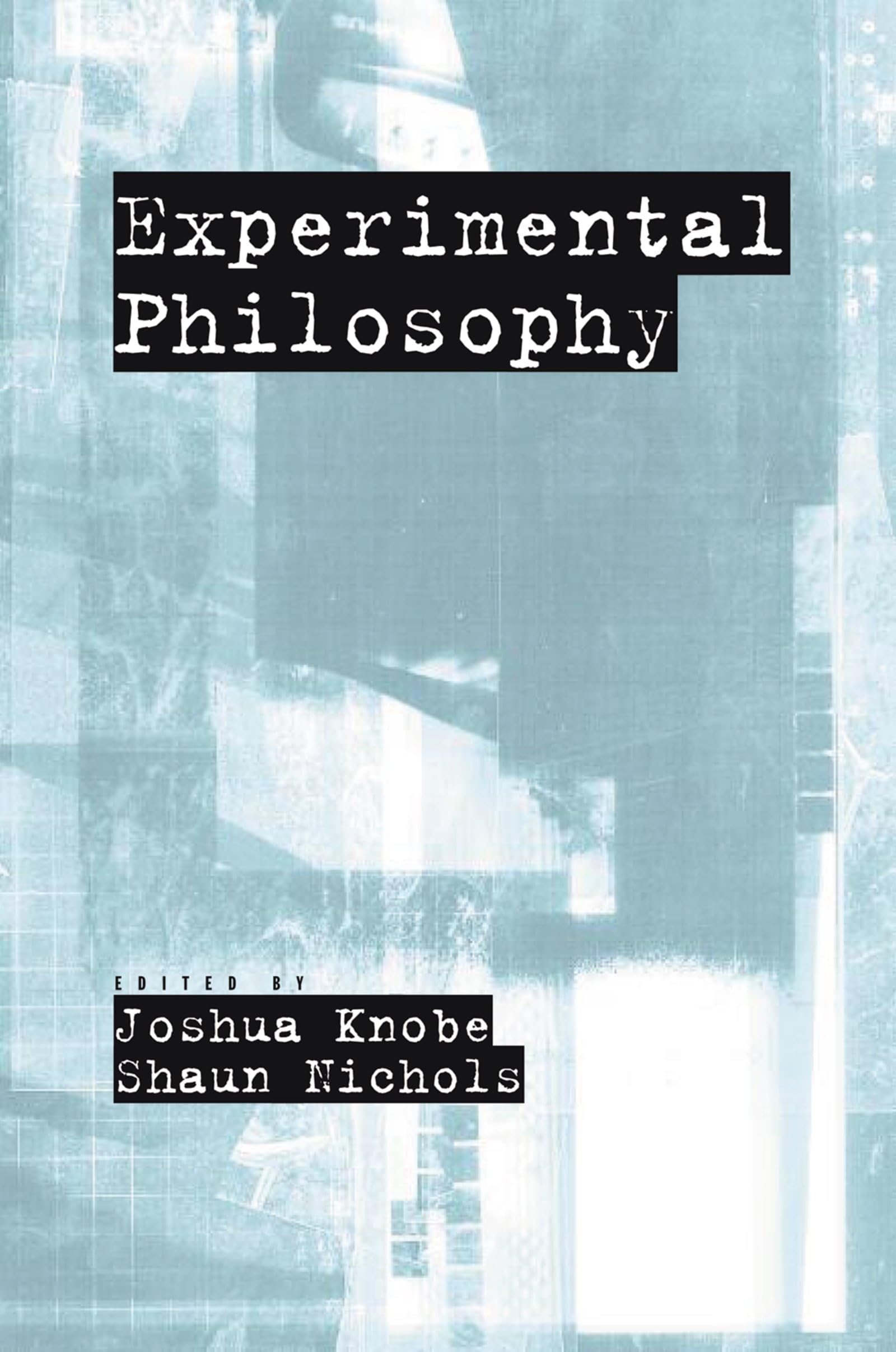
Experimental Philosophy: An Empirical Approach to Philosophical Questions by Joshua Knobe
Inclusive of all applicable taxes. FREE shipping on all orders.
Available Offers
- 🚚Free Delivery — Free shipping on all orders
- 💵Cash on Delivery — Pay when your order arrives
- ↩️15-Day Easy Returns — Hassle-free return policy
- 🔒Cash on Delivery — Pay safely when your order arrives
Check Delivery
Product Description
Introduction
Experimental Philosophy by Joshua Knobe is a groundbreaking work that bridges the gap between traditional philosophical inquiry and empirical cognitive science. This hardcover edition, published by Oxford University Press, invites readers to explore how systematic experiments can illuminate age-old philosophical questions about morality, free will, consciousness, and language. For Indian students and scholars, this book offers a fresh, data-driven approach to philosophy that resonates with contemporary research methods.
Book Overview
This volume serves as both an introduction and a comprehensive anthology of the experimental philosophy movement. Knobe, a leading figure in the field, compiles seminal papers alongside new contributions that challenge conventional philosophical assumptions. The book demonstrates how controlled experiments—rather than armchair reasoning—can reveal the intuitions people actually hold, reshaping debates in ethics, epistemology, and philosophy of mind.
Key Highlights
- Pioneering Research: Features landmark studies that sparked the experimental philosophy revolution, including work on intentional action, moral judgment, and causal reasoning.
- Interdisciplinary Approach: Blends philosophy with cognitive science, psychology, and linguistics, making it relevant for multiple academic disciplines.
- Critical Dialogues: Includes responses from traditional philosophers, offering a balanced view of the movement's strengths and limitations.
- Indian Context: The empirical methods resonate with India's growing emphasis on evidence-based research in the social sciences and humanities.
Inside the Book
The book is structured to guide readers from foundational concepts to advanced debates. Early chapters introduce the methodology of experimental philosophy, showing how surveys and behavioural experiments test philosophical intuitions. Later sections delve into specific topics: the nature of moral responsibility, the role of intention in action, and the cultural variability of philosophical beliefs. Each chapter includes clear explanations of experimental design, results, and their philosophical implications.
Key Topics
- Moral Intuitions: How do people judge right and wrong, and what factors influence these judgments?
- Free Will and Determinism: Do ordinary people believe in free will, and how does this affect moral responsibility?
- Consciousness and Qualia: Experimental approaches to the hard problem of consciousness.
- Philosophical Methodology: The debate between armchair philosophy and empirical investigation.
- Cross-Cultural Philosophy: How intuitions vary across cultures, including Indian and Eastern perspectives.
Reader Benefits
- Deepen Understanding: Gain a nuanced grasp of how experimental data can inform philosophical arguments.
- Critical Thinking: Learn to evaluate both empirical evidence and philosophical reasoning.
- Research Skills: Acquire tools to design and interpret experiments in philosophy and social sciences.
- Academic Edge: Stay ahead in courses on philosophy, psychology, or cognitive science with cutting-edge content.
Learning Outcomes
- Understand the core principles and history of experimental philosophy.
- Analyze key experiments and their impact on philosophical debates.
- Critically assess the strengths and weaknesses of empirical methods in philosophy.
- Apply experimental findings to real-world ethical and social issues.
- Develop the ability to read and critique interdisciplinary research papers.
Who Should Read
- Undergraduate and Postgraduate Students: Ideal for courses in philosophy, psychology, sociology, and cognitive science.
- Academic Researchers: A valuable resource for scholars exploring the intersection of philosophy and empirical science.
- Curious General Readers: Anyone interested in how science can shed light on timeless philosophical questions.
- Indian Educators: Perfect for designing curricula that incorporate modern research methods in philosophy.
About the Author
Joshua Knobe is a professor at Yale University and one of the founders of the experimental philosophy movement. His pioneering work on the Knobe Effect—which reveals how moral judgments influence perceptions of intentional action—has been widely cited across disciplines. Knobe's research continues to shape how philosophers and cognitive scientists approach questions about human nature.
About the Publisher
Oxford University Press (OUP) is a globally respected academic publisher with a strong presence in India. Known for rigorous editorial standards and high-quality academic texts, OUP ensures that this hardcover edition is durable and suitable for library or personal use. Their commitment to scholarly excellence makes this book a trusted resource for Indian institutions.
Conclusion
Experimental Philosophy is more than a book—it is an invitation to rethink how we do philosophy. By grounding abstract questions in real human responses, Joshua Knobe and his contributors offer a dynamic, evidence-based path forward. Whether you are a student, teacher, or lifelong learner, this volume will challenge your assumptions and expand your intellectual horizons. Order your copy from Bookshops.in today.
Quick Summary
Experimental Philosophy, edited by Joshua Knobe, is a landmark collection that introduces readers to a dynamic movement reshaping philosophical inquiry. Rather than relying solely on thought experiments and introspection, experimental philosophers conduct systematic empirical studies to understand how ordinary people form intuitions about morality, consciousness, free will, and intentional action. This volume gathers influential papers—including Knobe's own groundbreaking work on the 'Knobe effect'—alongside new research that challenges long-held assumptions in both philosophy and cognitive science. The book is ideal for students, academics, and curious readers who want to see how data-driven methods can illuminate age-old philosophical questions. By presenting real experiments and their implications, it offers a fresh perspective on what philosophy can become. Purchasing this hardcover from Bookshops.in ensures you receive a quality physical copy from a trusted Indian retailer, perfect for building your academic library or diving into a cutting-edge field.
Book Highlights
Book Specifications
| ISBN-13 | 9780195323269 |
| ISBN-10 | 0195323262 |
| Publisher | OUP USA |
| Language | English |
| Dimensions | 23.24 x 16 x 1.88 cm |
| Weight | 1 kg 50 g |
| Category | Psychology › Cognitive Psychology |
| Genre | Non-fiction |
| Reading Age | 18+ |
| Original Language | English |
Frequently Asked Questions
What is experimental philosophy?
Who is Joshua Knobe?
What is the Knobe effect?
Is this book suitable for beginners?
Does this book cover free will?
What topics are explored in the book?
How is this book different from traditional philosophy texts?
Is this book used in university courses?
Does the book include contributions from other authors?
Is this a hardcover edition?
Can I use this book for self-study?
Does the book address criticisms of experimental philosophy?
What is the price of this book?
Where can I buy this book in India?
Readers Also Search For
Customers Also Bought
Psychology
Koinonia: From Hate, Through Dialogue, to Culture in the Large Group by Patrick B. Demare
Psychology
Mindfulness-Based Interventions for Trauma and Its Consequences (Concise Guides on Trauma Care, 4)

Psychology
Handbook for Teaching Statistics and Research Methods by Mark E. Ware

Psychology
Psychoanalysis and the Nuclear Threat: Clinical and Theoretical Studies
Psychology
Humor and Psyche: Psychoanalytic Perspectives by James W. Barron

Relationships
The Experience and Expression of Uncertainty in Close Relationships by Jennifer A. Theiss
Related Products
View AllPsychology
Mindfulness-Based Interventions for Trauma and Its Consequences (Concise Guides on Trauma Care, 4)
Psychology
Handbook for Teaching Statistics and Research Methods by Mark E. Ware
Psychology
Psychoanalysis and the Nuclear Threat: Clinical and Theoretical Studies
Psychology
Humor and Psyche: Psychoanalytic Perspectives by James W. Barron

Psychology
Proceedings of the First International Conference on Genetic Algorithms and Their Applications
Psychology