
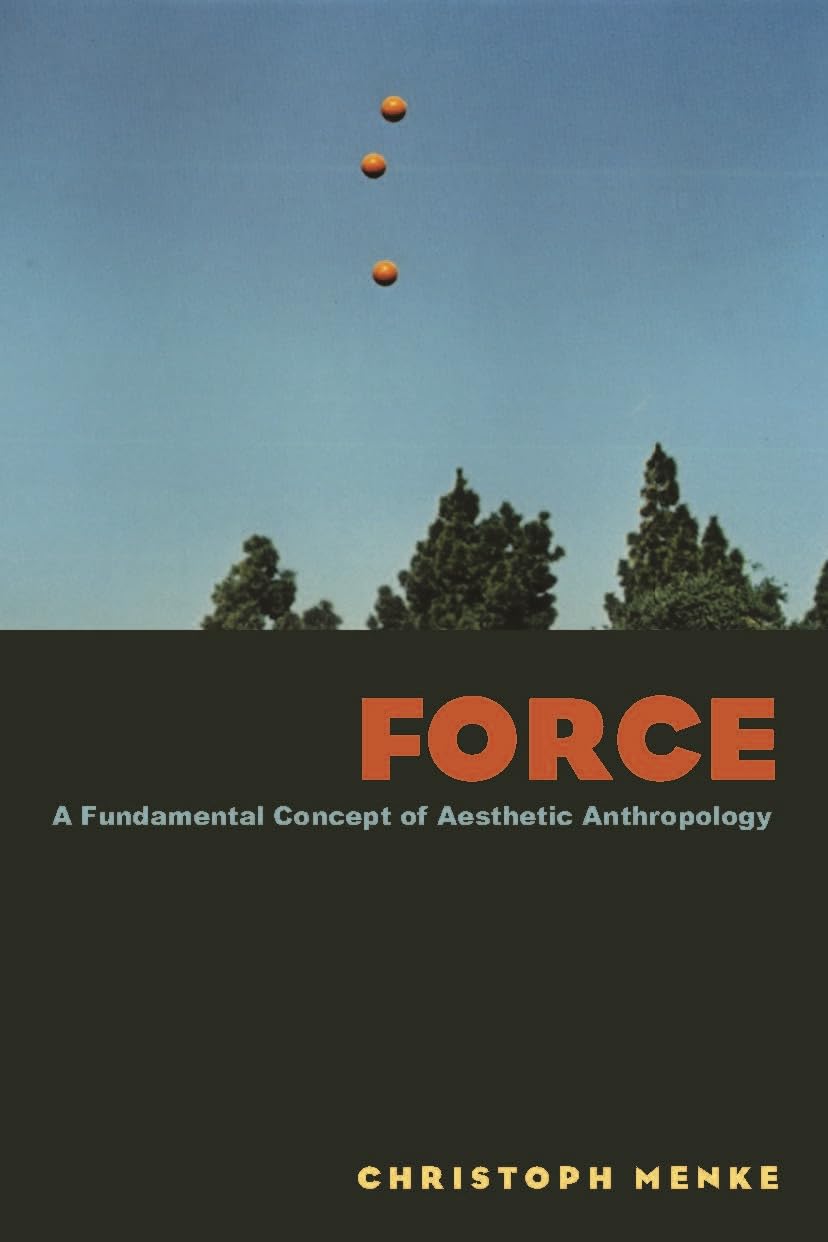
Force: A Fundamental Concept of Aesthetic Anthropology by Christoph Menke – A Scholarly Exploration of the Birth of Mode
Inclusive of all applicable taxes. FREE shipping on all orders.
Available Offers
- 🚚Free Delivery — Free shipping on all orders
- 💵Cash on Delivery — Pay when your order arrives
- ↩️15-Day Easy Returns — Hassle-free return policy
- 🔒Cash on Delivery — Pay safely when your order arrives
Check Delivery
Product Description
Introduction
In the vast landscape of modern philosophy, few works dare to challenge the very foundations of aesthetic theory as boldly as Christoph Menke's Force: A Fundamental Concept of Aesthetic Anthropology. This hardbound volume, published by Fordham University Press, offers Indian students and scholars a rigorous reexamination of how aesthetics emerged in the 18th century. Menke argues that modern aesthetics, and indeed modern philosophy itself, began not once but twice—first with Baumgarten's focus on the subject as a bundle of faculties, and then with a radically different conception centered on an obscure, unconscious force that resists representation. This book is not merely a historical survey; it is a provocative intervention that redefines what it means to experience art, beauty, and the sensible world.
Book Overview
Force traces the genesis of aesthetic thought between Baumgarten's Aesthetics and Kant's Critique of Judgment. Menke reveals a hidden tension: while Baumgarten's aesthetics organizes itself around the subject—a being defined by capabilities, an agent who is able—another tradition emerges that conceives the aesthetic not as sensible cognition but as a play of expression. This expression is propelled by a force that does not recognize or represent anything, because it is obscure, unconscious, and distinct from the subject's will. The book thus proposes an aesthetics of force, a thinking of the nature of humanity as aesthetic nature, separate from the culture acquired by practice. For readers in India, where philosophical inquiry often bridges Western and Eastern thought, this book offers a fresh lens to understand the intersection of art, self, and nature.
Key Highlights
- Dual Genesis of Aesthetics: Menke demonstrates that modern philosophy began twice—once with Baumgarten's subject-centered aesthetics and again with the aesthetics of force.
- Reconceptualization of Force: Force is not a faculty exercised by the subject; it is an obscure, unconscious drive that precedes representation and cognition.
- Interplay with Kant: The book critically engages with Kant's Critique of Judgment, showing how the aesthetics of force challenges Kantian notions of reflective judgment.
- Anthropological Turn: By linking aesthetics to human nature, Menke repositions the aesthetic as a fundamental, pre-cultural dimension of human existence.
- Rigorous Scholarship: Written with precision, this work is essential for anyone serious about continental philosophy and aesthetic theory.
Inside the Book
The book is structured to guide readers through a dense but rewarding argument. Early chapters unpack Baumgarten's concept of the subject as a totality of faculties, showing how this paved the way for a philosophy of capability. Menke then introduces the counter-tradition: the aesthetics of force, which draws on thinkers like Herder and Nietzsche to argue that the aesthetic event is an expression of a force that cannot be mastered by the subject. Later sections analyze Kant's Critique of Judgment as a site where these two aesthetics collide. Menke argues that Kant's notion of the sublime, in particular, points toward a force that exceeds the subject's faculties. The final chapters develop an aesthetic anthropology, suggesting that human nature is fundamentally aesthetic—a play of forces that culture can never fully tame.
Key Topics
- The origins of modern aesthetics in 18th-century Germany
- Baumgarten's theory of sensible cognition and the subject of faculties
- The concept of force as unconscious, non-representational expression
- Kant's Critique of Judgment and the sublime
- The relationship between aesthetics and anthropology
- The distinction between culture and aesthetic nature
- The role of obscurity and unconsciousness in artistic experience
- Philosophical debates on agency, capability, and expression
Reader Benefits
- Deepen Your Philosophical Foundations: Gain a nuanced understanding of how aesthetic theory evolved from Baumgarten to Kant and beyond.
- Challenge Conventional Wisdom: Menke's argument forces you to rethink the very definition of aesthetics—not as a theory of beauty or taste, but as a theory of force.
- Bridge Western and Indian Thought: The concept of an obscure, unconscious force resonates with Indian philosophical ideas of rasa and sakti, making this book a unique resource for comparative studies.
- Enhance Critical Reading: Engage with a demanding text that sharpens analytical skills and philosophical reasoning.
- Access Premium Scholarship: This Fordham University Press edition ensures authoritative content and meticulous editing.
Learning Outcomes
- Understand the dual origins of modern aesthetics and their implications for philosophy.
- Analyze the difference between a faculty-based aesthetics and an aesthetics of force.
- Critically evaluate Kant's role in mediating between these two traditions.
- Apply the concept of aesthetic force to contemporary debates in art, culture, and human nature.
- Develop a framework for reading aesthetic experience as a manifestation of pre-subjective forces.
Who Should Read
This book is ideal for postgraduate students and researchers in philosophy, especially those specializing in aesthetics, continental philosophy, or German idealism. It will also appeal to scholars of comparative literature, cultural studies, and art theory who seek a deeper philosophical grounding. Indian students pursuing courses in Western philosophy at universities like JNU, DU, or the University of Hyderabad will find this work indispensable for seminars on Kant, Baumgarten, or the history of aesthetics. Additionally, artists and critics interested in the theoretical underpinnings of creative expression will benefit from Menke's radical rethinking of force and form.
About the Author
Christoph Menke is a distinguished German philosopher and professor at the Goethe University Frankfurt. He is known for his work in aesthetics, legal philosophy, and critical theory. His scholarship bridges the traditions of German idealism, Nietzsche, and contemporary French thought, making him a pivotal figure in modern continental philosophy. Menke's writings, including Force, have been translated into multiple languages and are widely studied in academic circles across Europe and Asia.
About the Publisher
Fordham University Press, based in New York, is a leading academic publisher known for its rigorous scholarly titles in philosophy, theology, and the humanities. With a commitment to advancing critical thought, Fordham University Press brings works like Force to a global audience, ensuring that cutting-edge philosophical research reaches students and scholars everywhere, including India.
Conclusion
Force: A Fundamental Concept of Aesthetic Anthropology is not just a book; it is an intellectual event. By revealing the hidden battle between a faculty-based aesthetics and an aesthetics of force, Christoph Menke transforms how we understand the origins of modern philosophy. For Indian readers, this book offers a rare opportunity to engage with a text that challenges the boundaries between subject and nature, culture and expression. Whether you are a student of philosophy, a researcher in aesthetics, or a curious reader seeking depth, this hardbound volume from Fordham University Press deserves a place on your shelf. Order your copy from Bookshops.in today and step into a world where force, not faculty, shapes the aesthetic experience.
Quick Summary
Force: A Fundamental Concept of Aesthetic Anthropology by Christoph Menke is a groundbreaking philosophical work that reinterprets the origins of modern aesthetics. The book argues that aesthetics, and consequently modern philosophy, began not once but twice in the 18th century. On one hand, Baumgarten's Aesthetics introduced the concept of the subject as a totality of faculties—an agent defined by capabilities and the ability to cognize sensibly. On the other hand, a rival aesthetics of force emerged, which conceives the aesthetic as a play of expression driven by an obscure force that does not recognize or represent anything. Menke skillfully contrasts these two traditions, showing how the latter challenges the very foundations of subjectivity and cognition. This book is ideal for advanced students, researchers, and scholars in philosophy, aesthetics, and art theory who wish to delve into the complex genealogy of aesthetic thought. By reading Force, readers will gain a nuanced understanding of how aesthetic experience transcends mere sensory perception and becomes a dynamic, non-representational force. Purchase your copy from Bookshops.in, India's trusted source for premium academic books, and enrich your philosophical library with this essential text.
Book Highlights
Book Specifications
| ISBN-13 | 9780823249732 |
| ISBN-10 | 0823249735 |
| Publisher | Fordham Univ Pr |
| Language | English |
| Dimensions | 15.24 x 1.27 x 25.4 cm |
| Weight | 204 g |
| Country | USA |
| Category | Philosophy › Aesthetics |
| Genre | Non-fiction |
| Reading Age | Adult |
| Original Language | German |
Frequently Asked Questions
What is the main thesis of Force by Christoph Menke?
Who is the author of Force?
Which philosophical works does Force analyze?
Is this book suitable for beginners in philosophy?
Which publisher released Force?
What is the ISBN-13 of this book?
What format is Force available in?
What is the price of Force in India?
What is the language of the book?
What is the rating of Force on Bookshops.in?
Is Force part of a series?
Can I use Force for my academic research?
Where can I buy Force in India?
Readers Also Search For
Customers Also Bought
Islam
Spiritual Economies (English, Daromir Rudnyckyj)

Islam
Who Is Allah? (English, Bruce B. Lawrence)
Islam
Islam and Liberal Citizenship: The Search for an Overlapping Consensus by Andrew F. March

Islam
Fiqh Us-Sunnah: Funerals and Diggers by Al-Sayyid Sabiq – Islamic Funeral Guide

Christianity
Genetics (English, Thomas a. Shannon | Mark P. Aulisio | Françoise Baylis)

Hinduism
Karma and Creativity by Christopher Key Chapple – Indian Philosophy
Related Products
View All
Philosophy
Latin American Philosophy: Currents, Issues, Debates by Eduardo Mendieta

Philosophy
Al-Farabi's Short Commentary on Aristotle's Prior Analytics by Nicholas Rescher – Philosophy
Philosophy
Poetics of Imagining: Modern to Post-modern by Richard Kearney
Philosophy
The Metaphysics of Extrinsic Properties: 11 (Metaphysical Research, 11)
Philosophy
Dialogues on Metaphysics and on Religion by Nicolas Malebranche – Philosophy
Philosophy