
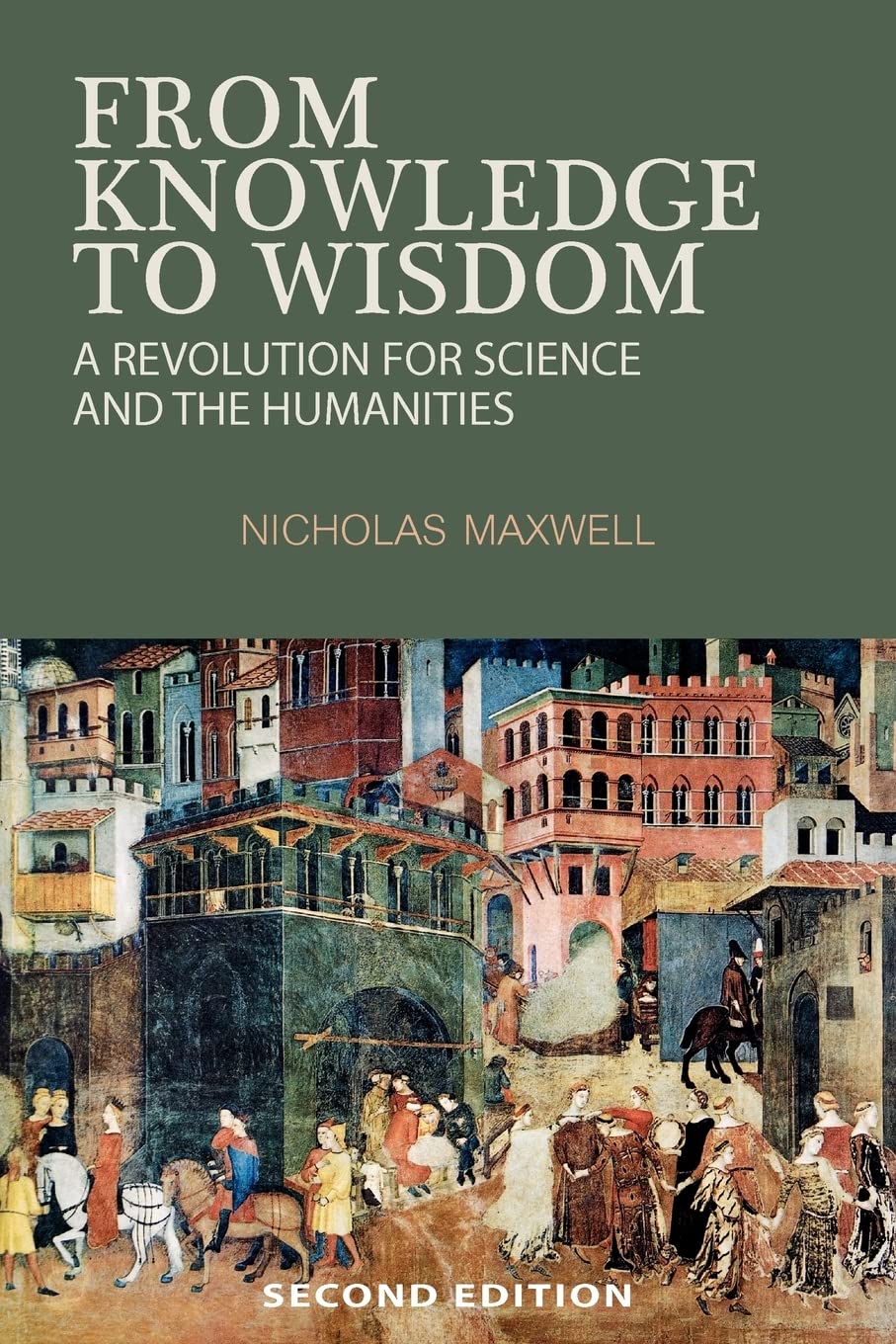
From Knowledge to Wisdom: A Revolution for Science and the Humanities by Nicholas Maxwell – A Transformative Vision for
Inclusive of all applicable taxes. FREE shipping on all orders.
Available Offers
- 🚚Free Delivery — Free shipping on all orders
- 💵Cash on Delivery — Pay when your order arrives
- ↩️15-Day Easy Returns — Hassle-free return policy
- 🔒Cash on Delivery — Pay safely when your order arrives
Check Delivery
Product Description
Introduction
In an age where scientific progress often outpaces ethical reflection, Nicholas Maxwell’s From Knowledge to Wisdom: A Revolution for Science and the Humanities offers a bold and necessary reimagining of the purpose of academic inquiry. First published by Pentire Press, this hardcover edition challenges the very foundations of how we pursue knowledge, urging a shift from mere accumulation of facts to the cultivation of wisdom. For Indian readers—students, scholars, and lifelong learners—this book is a thought-provoking call to rethink education, research, and the role of science in society.
Book Overview
At its core, From Knowledge to Wisdom argues that modern science and the humanities have lost sight of their ultimate goal: helping humanity learn how to create a better world. Maxwell contends that the current academic paradigm, which prioritizes knowledge acquisition above all else, is intellectually flawed and socially damaging. He proposes a revolutionary transformation—one where the primary aim of inquiry becomes wisdom, defined as the capacity to realize what is of value in life for oneself and others. This includes knowledge and technological know-how, but also ethical judgment, emotional intelligence, and a deep understanding of human well-being.
Key Highlights
- A Provocative Thesis: Challenges the dominant “knowledge-inquiry” model and presents a compelling case for “wisdom-inquiry.”
- Interdisciplinary Vision: Bridges the gap between science, philosophy, social sciences, and the humanities.
- Practical Implications: Offers a roadmap for reforming universities, research institutions, and public policy.
- Enduring Relevance: First published in 1984, this revised edition remains strikingly relevant to contemporary global crises—from climate change to social inequality.
Inside the Book
The book is structured as a rigorous philosophical argument, yet it remains accessible to non-specialists. Maxwell systematically deconstructs the assumptions underlying modern scientific inquiry, exposing how the obsession with “objective knowledge” has led to fragmented disciplines, ethical blind spots, and a failure to address humanity’s deepest problems. He then outlines a new framework for academic inquiry—one that integrates values, emotions, and practical wisdom into the very fabric of research and teaching. Each chapter builds on the last, combining sharp critique with constructive vision.
Key Topics
- The philosophy of science and its hidden assumptions
- The relationship between knowledge, values, and human flourishing
- The role of universities in society
- The crisis of modern academia and its discontents
- Wisdom as a practical, learnable capacity
- Reforming research priorities for global well-being
Reader Benefits
- Intellectual Stimulation: Engages with big ideas that challenge conventional thinking.
- Critical Perspective: Helps readers evaluate the purpose and limits of scientific knowledge.
- Practical Insight: Provides a framework for making wiser decisions in personal and professional life.
- Cultural Relevance: Offers a fresh lens for Indian readers to examine our own education system and societal priorities.
Learning Outcomes
- Understand the philosophical flaws in the current knowledge-centric model of inquiry.
- Recognize the urgent need for a wisdom-oriented approach to science and the humanities.
- Explore practical steps to integrate values and ethics into research and education.
- Develop a deeper appreciation for the role of wisdom in addressing complex global challenges.
Who Should Read
This book is ideal for university students, academics, researchers, policymakers, educators, and anyone interested in the future of knowledge and learning. It is particularly valuable for those in philosophy, science studies, sociology, education, and interdisciplinary fields. Indian readers concerned about the direction of higher education and the societal impact of science will find it especially thought-provoking.
About the Author
Nicholas Maxwell is a British philosopher of science, now Emeritus Reader at University College London. For over five decades, he has been a passionate advocate for reforming academic inquiry to prioritize wisdom. His work spans philosophy, science, and education, and he has authored several influential books, including Science and Enlightenment and The Human World in the Physical Universe. Maxwell’s ideas have sparked debate worldwide and continue to inspire scholars and activists alike.
About the Publisher
Pentire Press is an independent publishing house dedicated to works that challenge conventional thinking and promote intellectual and social progress. Based in the United Kingdom, Pentire Press specializes in philosophy, science, and humanities titles that encourage critical reflection and positive change. This edition of From Knowledge to Wisdom reflects their commitment to publishing ideas that matter.
Conclusion
Nicholas Maxwell’s From Knowledge to Wisdom is more than a book—it is a manifesto for a saner, more humane future. In a world grappling with climate crises, technological disruption, and social fragmentation, the call to place wisdom at the heart of inquiry has never been more urgent. For Indian readers, students, and thinkers, this hardcover edition offers a timeless invitation to rethink what it means to learn, to know, and to live well. Add it to your library and join the revolution.
Quick Summary
From Knowledge to Wisdom: A Revolution for Science and the Humanities by Nicholas Maxwell is a groundbreaking work that challenges the very foundation of modern academic inquiry. Maxwell argues that the current pursuit of knowledge, divorced from human values, has led to a crisis in science and society. Instead, he proposes a radical shift: the primary aim of research and education should be wisdom—the capacity to realize what is of value in life for oneself and others. This book is for Indian students, educators, researchers, and anyone concerned with the direction of our world. Readers will learn why knowledge alone is insufficient and how a wisdom-oriented approach can help solve humanity's most pressing problems. By purchasing from Bookshops.in, you support a trusted Indian bookstore that delivers authentic hardcover editions across the country, ensuring you own a physical copy of this transformative text.
Book Highlights
Book Specifications
| ISBN-13 | 9780955224003 |
| ISBN-10 | 0955224004 |
| Publisher | Pentire Press |
| Language | English |
| Dimensions | 15.24 x 2.46 x 22.86 cm |
| Weight | 658 g |
| Category | Philosophy › Epistemology |
| Genre | Philosophy |
| Original Language | English |
Frequently Asked Questions
What is the main argument of From Knowledge to Wisdom?
Who is the author Nicholas Maxwell?
Is this book suitable for Indian readers?
What does the book say about science and humanities?
How is this book different from typical philosophy books?
Is it a hardcover or paperback?
What is the price in India?
Can I use this book for academic research?
Does the book have any endorsements?
What is the ISBN?
Is the language easy to understand?
What topics are covered?
Why buy from Bookshops.in?
Readers Also Search For
Customers Also Bought
Islam
Spiritual Economies (English, Daromir Rudnyckyj)

Islam
Who Is Allah? (English, Bruce B. Lawrence)
Islam
Islam and Liberal Citizenship: The Search for an Overlapping Consensus by Andrew F. March

Islam
Fiqh Us-Sunnah: Funerals and Diggers by Al-Sayyid Sabiq – Islamic Funeral Guide

Christianity
Genetics (English, Thomas a. Shannon | Mark P. Aulisio | Françoise Baylis)

Hinduism
Karma and Creativity by Christopher Key Chapple – Indian Philosophy
Related Products
View All
Philosophy
Latin American Philosophy: Currents, Issues, Debates by Eduardo Mendieta

Philosophy
Al-Farabi's Short Commentary on Aristotle's Prior Analytics by Nicholas Rescher – Philosophy
Philosophy
Poetics of Imagining: Modern to Post-modern by Richard Kearney
Philosophy
The Metaphysics of Extrinsic Properties: 11 (Metaphysical Research, 11)
Philosophy
Dialogues on Metaphysics and on Religion by Nicolas Malebranche – Philosophy
Philosophy