
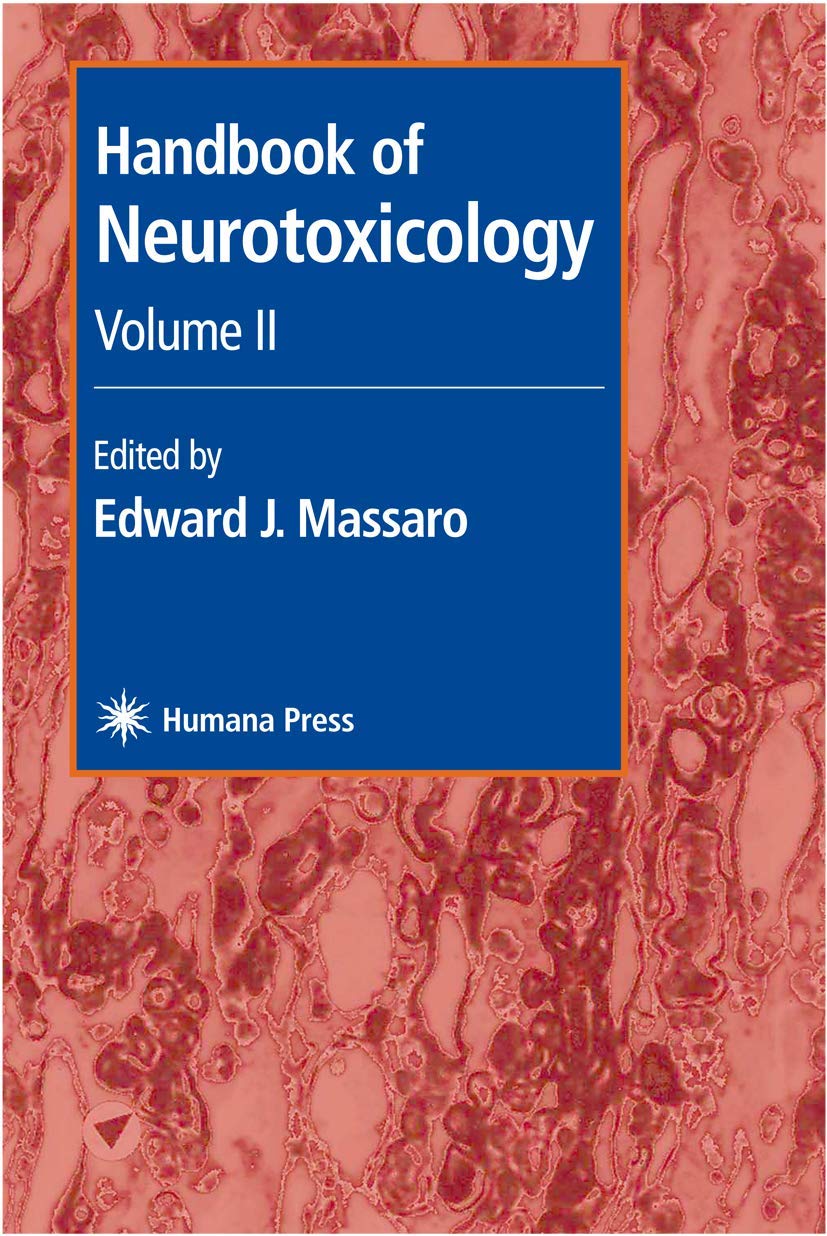
Handbook of Neurotoxicology: A Detailed Reference on Neurotoxins and Nervous System Toxicology by Edward J. Massaro
Inclusive of all applicable taxes. FREE shipping on all orders.
Available Offers
- 🚚Free Delivery — Free shipping on all orders
- 💵Cash on Delivery — Pay when your order arrives
- ↩️15-Day Easy Returns — Hassle-free return policy
- 🔒Cash on Delivery — Pay safely when your order arrives
Check Delivery
Product Description
Introduction
In an era where environmental and industrial toxins increasingly threaten human health, understanding the intricate effects of neurotoxic agents on the nervous system has never been more critical. Handbook of Neurotoxicology: Volume II, edited by the distinguished Edward J. Massaro, offers an authoritative and comprehensive exploration of this complex field. Published by Humana Press, this hardbound volume serves as an essential reference for researchers, clinicians, and students who seek to unravel the mechanisms by which natural and anthropogenic substances perturb neural function. Whether you are a postgraduate scholar in neuroscience, a toxicology professional, or a medical practitioner, this book provides a rigorous foundation for navigating the challenges posed by neurotoxicants in modern India and beyond.
Book Overview
This second volume of the acclaimed handbook series delves deep into the molecular, cellular, and systemic impacts of neurotoxic substances. It bridges the gap between fundamental research and practical application, covering a wide array of agents—from environmental pollutants like pesticides and heavy metals to biologically derived toxins with therapeutic potential. The book emphasizes how natural toxins, often accumulated for predatory or defensive purposes, can serve as powerful research reagents or lead compounds for drug development. With contributions from leading experts, the volume systematically examines the pathways through which neurotoxicants disrupt neural signaling, induce oxidative stress, and trigger neurodegenerative processes. It is a vital resource for anyone engaged in understanding the dual nature of toxins: their danger and their utility in medicine.
Key Highlights
- Expert Authorship: Edited by Edward J. Massaro, a renowned figure in toxicological sciences, ensuring depth and credibility.
- Comprehensive Coverage: Addresses both anthropogenic neurotoxicants (pesticides, lead, mercury, combustion byproducts) and natural toxins from plants and animals.
- Research-Relevant: Explores the use of neurotoxins as tools for studying neural circuits and as templates for therapeutic agents.
- Indian Context: Relevant to environmental health challenges in India, including occupational exposure and pollution-related neurological disorders.
- Hardcover Durability: A sturdy, long-lasting edition suitable for frequent reference in libraries and laboratories.
Inside the Book
The volume is structured to guide readers from foundational concepts to advanced applications. Early chapters provide an overview of neurotoxicology principles, including dose-response relationships and routes of exposure. Subsequent sections detail specific classes of neurotoxicants: organophosphates and carbamate pesticides, heavy metals like lead and mercury, and industrial pollutants such as polychlorinated biphenyls. Each chapter integrates molecular mechanisms with clinical implications, offering case studies and experimental data. The book also dedicates significant space to natural neurotoxins—snake venoms, spider toxins, and marine biotoxins—highlighting how these compounds modulate ion channels and neurotransmitter receptors. Throughout, the text emphasizes the dual role of these agents as both hazards and valuable research instruments.
Key Topics
- Mechanisms of neurotoxicity: oxidative stress, excitotoxicity, and apoptosis
- Neurotoxic effects of pesticides: organophosphates, carbamates, and pyrethroids
- Heavy metal neurotoxicity: lead, mercury, cadmium, and arsenic
- Natural toxins: venoms, alkaloids, and marine toxins as pharmacological tools
- Environmental accumulation and biomagnification of neurotoxicants
- Neurodevelopmental toxicity and long-term cognitive effects
- Therapeutic applications of neurotoxins in pain management and neurology
- Risk assessment and regulatory perspectives in neurotoxicology
Reader Benefits
This handbook equips readers with a deep understanding of how neurotoxicants interfere with nervous system function, enabling better interpretation of research data and clinical findings. It helps professionals identify potential neurotoxic hazards in occupational and environmental settings, particularly relevant in India's rapidly industrializing landscape. Students benefit from clear explanations of complex pathways, while researchers gain insights into experimental models and assay techniques. The book also fosters critical thinking about the balance between risk and benefit when studying or utilizing toxic compounds. By integrating basic science with translational perspectives, it empowers readers to contribute to safer environments and innovative therapeutics.
Learning Outcomes
- Understand the fundamental mechanisms by which neurotoxicants damage neural cells and circuits
- Identify major classes of neurotoxic agents, their sources, and their biological targets
- Analyze the role of natural toxins in neuroscience research and drug discovery
- Evaluate the impact of environmental pollution on neurological health in Indian populations
- Apply knowledge of neurotoxicology to risk assessment and public health policies
Who Should Read
This book is indispensable for postgraduate students and researchers in neuroscience, toxicology, pharmacology, and environmental health. Medical professionals, including neurologists and occupational health physicians, will find valuable clinical correlations. Regulatory scientists and policy makers working on chemical safety in India will benefit from the comprehensive risk assessment discussions. Additionally, faculty members teaching advanced courses in neurobiology or toxicology can use this volume as a primary text or reference. Anyone with a keen interest in how environmental and natural toxins shape nervous system function will find this book deeply rewarding.
About the Author
Edward J. Massaro is a distinguished toxicologist with decades of experience in neurotoxicology research and education. He has served as a senior scientist at the U.S. Environmental Protection Agency and as a professor at several prestigious universities. His work has focused on the mechanisms of metal neurotoxicity, developmental toxicology, and the application of natural toxins in biomedical research. Dr. Massaro has edited multiple seminal volumes in toxicology and is widely respected for his ability to synthesize complex scientific information into accessible, authoritative texts. His editorial leadership ensures that this handbook maintains the highest standards of accuracy and relevance.
About the Publisher
Humana Press, now an imprint of Springer Nature, is a globally recognized publisher of high-quality scientific and medical books. Known for its rigorous peer-review process and commitment to advancing knowledge, Humana Press specializes in laboratory manuals, handbooks, and monographs in the life sciences. Their publications are trusted by researchers and clinicians worldwide for their depth, clarity, and practical utility. This handbook continues that tradition, offering a reliable resource for the global scientific community, including readers in India who are at the forefront of addressing neurotoxic challenges.
Conclusion
Handbook of Neurotoxicology: Volume II is more than a reference—it is a gateway to understanding the profound impact of toxic agents on the nervous system and their potential for good. With its meticulous coverage of both environmental and natural neurotoxicants, this volume stands as an essential addition to any academic or professional library. For Indian readers grappling with the neurological consequences of pollution, pesticide use, and industrial exposure, this book offers the scientific foundation needed to drive change. Order your hardcover copy today from Bookshops.in and deepen your expertise in this vital field.
Quick Summary
Handbook of Neurotoxicology: Volume II, edited by Edward J. Massaro, is an authoritative reference that delves into the effects of environmental and natural toxins on the nervous system. It examines anthropogenic agents such as lead, mercury, pesticides, and combustion byproducts, as well as natural toxins produced by various species for defense or predation. The book explores how these substances perturb nervous tissue and highlights the potential therapeutic value of certain toxins. This volume is essential for toxicology students, neuroscientists, and environmental health researchers in India, offering comprehensive insights into mechanisms of neurotoxicity and public health implications. Readers will gain a deep understanding of how toxic agents impact neural function and learn about cutting-edge research in the field. Purchasing from Bookshops.in ensures you receive a quality hardcover edition with reliable delivery across India.
Book Highlights
Book Specifications
| ISBN-13 | 9780896037960 |
| ISBN-10 | 0896037967 |
| Publisher | Humana Press Inc. |
| Language | English |
| Dimensions | 18.75 x 2.92 x 26.06 cm |
| Weight | 215 g |
| Category | Basic Sciences › Pharmacology |
| Genre | Non-fiction |
| Original Language | English |
Frequently Asked Questions
What is the Handbook of Neurotoxicology: Volume II about?
Who is the author of this book?
Is this book suitable for Indian students?
What is the ISBN?
Is this a hardcover or paperback?
What language is the book in?
What is the price in INR?
Does the book cover natural toxins?
Is this book useful for PhD research?
Can I buy this book from Bookshops.in?
Does the book include information on pesticides?
What is the book's rating?
Readers Also Search For
Customers Also Bought

Anatomy
Ultrastructure of the Digestive Tract: 4 (Electron Microscopy in Biology and Medicine)

Anatomy
Ultrastructure of the Connective Tissue Matrix: 3 (Electron Microscopy in Biology and Medicine)

Anatomy
Reproductive Genetics (Royal College of Obstetricians and Gynaecologists Study Group)

Anatomy
Human Gross Anatomy: An Outline Text by Robert J. Leonard – Medical Anatomy

Pharmacology
Mathematical Modeling and Simulation in Enteric Neurobiology

Anatomy
Nature’s Patterns and the Fractional Calculus: 2 (Fractional Calculus in Applied Sciences and Engineering, 2)
Related Products
View All
Pharmacology
A Handbook of Artificial Intelligence in Drug Delivery (English, Anil K. Philip)
Pharmacology
Plant Microevolution and Conservation in Human-influenced Ecosystems by David Briggs
Pharmacology
Electrochemotherapy, Electrogenetherapy, and Transdermal Drug Delivery by Mark J. Jaroszeski – Biome

Pharmacology
A Guide to the Extrapyramidal Side-Effects of Antipsychotic Drugs by D. G. Cunningham Owens
Pharmacology
Progress in Heterocyclic Chemistry: A Critical Review of the 2000 Literature by G. W. Gribble
Pharmacology