
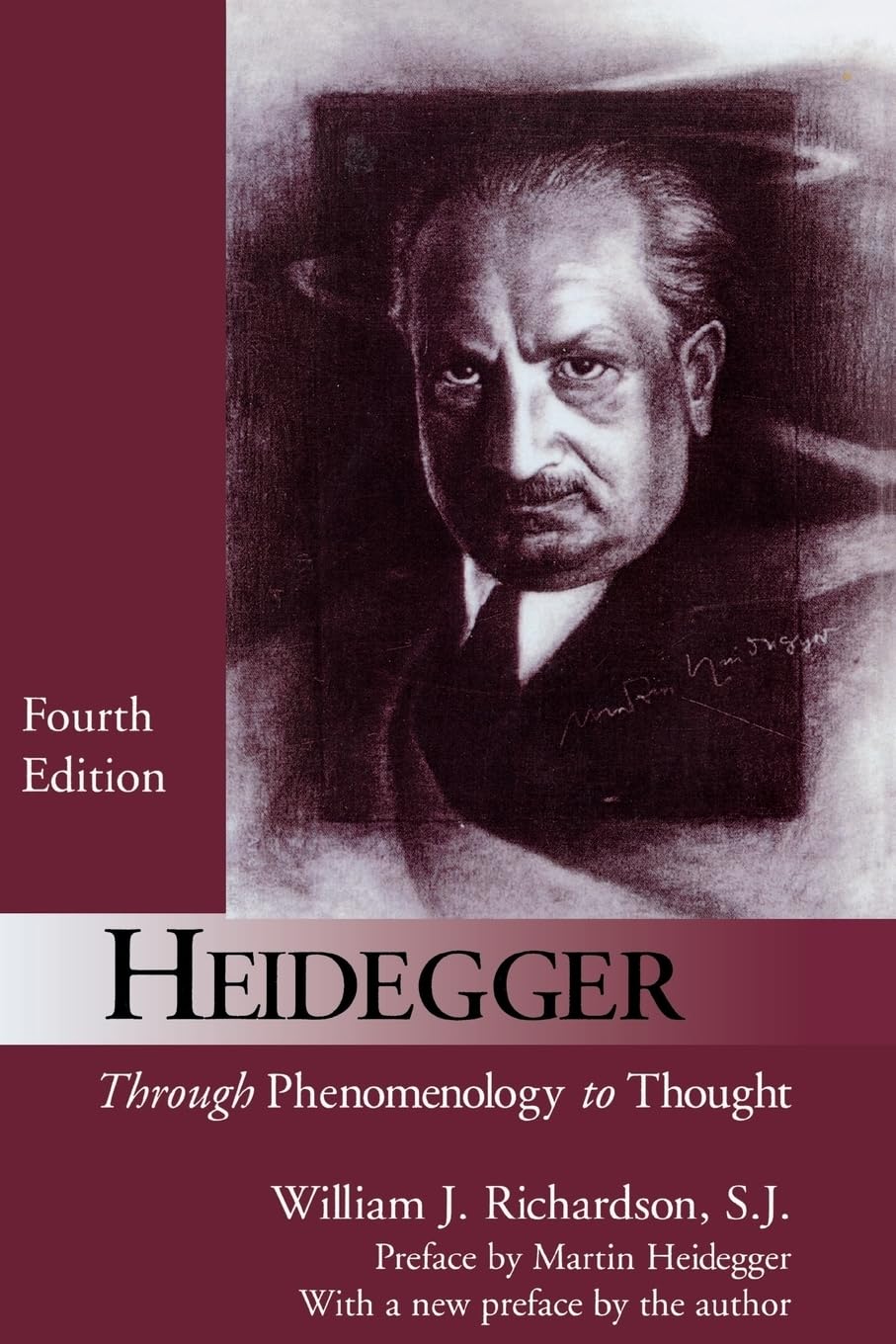
Heidegger: Through Phenomenology to Thought by William J. Richardson – A Definitive Study of Martin Heidegger's Philosop
Inclusive of all applicable taxes. FREE shipping on all orders.
Available Offers
- 🚚Free Delivery — Free shipping on all orders
- 💵Cash on Delivery — Pay when your order arrives
- ↩️15-Day Easy Returns — Hassle-free return policy
- 🔒Cash on Delivery — Pay safely when your order arrives
Check Delivery
Product Description
Introduction
For scholars, students, and serious readers of Continental philosophy, few works have commanded the respect and enduring relevance of William J. Richardson’s monumental study on Martin Heidegger. First published decades ago and now available in a handsome hardcover edition from Fordham University Press, Heidegger: Through Phenomenology to Thought remains an indispensable guide to understanding one of the twentieth century’s most profound and challenging thinkers. This book is not merely an introduction—it is a rigorous, systematic, and deeply insightful exploration of Heidegger’s intellectual journey, from his early phenomenological investigations to his later meditations on the meaning of Being. For Indian readers and students grappling with the complexities of existentialism, hermeneutics, and ontology, this work offers a clear and authoritative pathway into Heidegger’s transformative philosophy.
Book Overview
William J. Richardson’s study is widely regarded as a classic in Heidegger scholarship. The book traces the evolution of Heidegger’s thought, focusing on the famous 'turn' (Kehre) that occurred after his magnum opus, Being and Time. Richardson argues compellingly that this shift was not a rejection of his earlier work but a deepening and radicalization of the same fundamental question: the question of Being. By examining both the early and later writings—including texts that were published posthumously—Richardson demonstrates the underlying unity and continuity in Heidegger’s philosophical project. The volume also includes a special preface in the form of a letter Heidegger himself wrote to Richardson, along with a new writer’s preface and epilogue, making this edition even more valuable for contemporary readers.
Key Highlights
- Classic Status: One of the most frequently cited works on Heidegger in any language, essential for any serious study of Continental philosophy.
- Comprehensive Analysis: Covers Heidegger’s entire intellectual trajectory, from Being and Time to his later works on language, technology, and the history of Being.
- Unique Preface by Heidegger: Includes the famous letter Heidegger wrote to Richardson, offering rare insight into the philosopher’s own understanding of his work.
- New Material: This edition contains a new writer’s preface and an epilogue, updating the scholarship and reflecting on the book’s lasting impact.
- Rigorous Yet Accessible: While deeply scholarly, Richardson’s prose is clear and methodical, making it suitable for advanced undergraduates, graduate students, and researchers alike.
Inside the Book
The book is structured to guide the reader through Heidegger’s philosophical development in a logical and illuminating manner. Richardson begins with a thorough exposition of Heidegger’s early phenomenology, grounded in the methods of Husserl but transformed by Heidegger’s focus on Dasein and the question of Being. He then moves to the crucial period of the 'turn,' showing how Heidegger moved from a transcendental-phenomenological approach to a more meditative, historical thinking of Being. The later chapters delve into Heidegger’s reflections on poetry, language, technology, and the 'destiny' of Being in the modern world. Richardson’s analysis is always careful to highlight both the shifts and the underlying continuities, providing readers with a coherent map of a notoriously difficult terrain.
Key Topics
- The question of Being and its forgottenness in Western metaphysics
- Heidegger’s early phenomenology and the analytic of Dasein
- The famous 'turn' (Kehre) and its implications
- Heidegger’s critique of technology and modern nihilism
- Language, poetry, and the ‘house of Being’
- The history of Being and the destiny of the West
- Heidegger’s dialogue with the pre-Socratics and Nietzsche
- Continental philosophy, existentialism, and hermeneutics
Reader Benefits
Readers will gain a profound understanding of Heidegger’s thought that goes beyond superficial summaries. Richardson’s book equips you to read Heidegger’s original texts with greater confidence and insight. You will learn to see the connections between Heidegger’s early and later works, appreciate the depth of his critique of modernity, and engage with the ethical and existential dimensions of his philosophy. The inclusion of Heidegger’s own letter adds a rare personal touch, reminding us that philosophy is a living dialogue. Whether you are preparing for exams, writing a thesis, or simply seeking intellectual enrichment, this book will reward careful study.
Learning Outcomes
- Understand the central question of Being that animates all of Heidegger’s work.
- Trace the development of Heidegger’s thought from phenomenology to the thinking of Being.
- Identify the key concepts and terminology that define Heidegger’s philosophy.
- Critically evaluate the 'turn' and its significance for Continental philosophy.
- Apply Heideggerian insights to contemporary issues in philosophy, culture, and technology.
- Develop the skills to engage with primary texts by Heidegger and other existential phenomenologists.
Who Should Read
This book is ideal for advanced undergraduate and postgraduate students of philosophy, especially those specializing in Continental philosophy, phenomenology, or existentialism. It will also be of great value to researchers and academics working on Heidegger, hermeneutics, or twentieth-century German thought. Moreover, Indian readers with an interest in the intersections of Eastern and Western philosophy—such as the question of Being in Advaita Vedanta or Buddhist philosophy—will find Richardson’s careful analysis a stimulating comparative resource. Teachers and scholars in related fields like literary theory, theology, and cultural studies will also benefit from this authoritative study.
About the Author
William J. Richardson, S.J. (1920–2016) was a distinguished American philosopher and Jesuit priest. He earned his doctorate at the University of Louvain and taught for many years at Boston College. Richardson was renowned for his expertise in both Continental philosophy and psychoanalysis, and he authored numerous works on Heidegger, Lacan, and the intersection of philosophy and psychology. His book Heidegger: Through Phenomenology to Thought remains his magnum opus and a cornerstone of Heidegger scholarship worldwide.
About the Publisher
Fordham University Press, based in New York, is a prestigious academic publisher known for its outstanding contributions to philosophy, theology, and the humanities. With a commitment to rigorous scholarship and intellectual excellence, Fordham has published many seminal works in Continental philosophy, making it the perfect home for Richardson’s classic study. This hardcover edition reflects the press’s dedication to producing durable, beautifully designed books that will last a lifetime.
Conclusion
In the vast landscape of Heidegger studies, William J. Richardson’s Heidegger: Through Phenomenology to Thought stands as a beacon of clarity, depth, and scholarly integrity. It is a book that does not merely explain Heidegger—it teaches you how to think with him, through him, and beyond him. For any Indian reader or student serious about understanding the most profound questions of existence, meaning, and Being, this book is an invaluable companion. Order your copy today from Bookshops.in and embark on a journey into the heart of one of philosophy’s greatest thinkers.
Quick Summary
Heidegger: Through Phenomenology to Thought by William J. Richardson is a seminal work in Continental philosophy, widely regarded as one of the most important studies of Martin Heidegger's thought. The book meticulously traces Heidegger's intellectual journey from his early phenomenological project in Being and Time to his later, more meditative thinking on the question of Being. Richardson argues that the famous Kehre (turn) in Heidegger's philosophy is not a rejection of his earlier views but a deepening and transformation of them. Drawing on both published and unpublished works, the author provides a systematic and illuminating account of the continuities and shifts in Heidegger's philosophy. This hardcover edition, published by Fordham University Press, is an essential resource for advanced students, scholars, and anyone seeking a rigorous understanding of one of the 20th century's most influential philosophers. By purchasing from Bookshops.in, Indian readers gain access to a premium, authentic edition delivered with care.
Book Highlights
Book Specifications
| ISBN-13 | 9780823222551 |
| ISBN-10 | 0823222551 |
| Publisher | Fordham Univ Pr |
| Language | English |
| Dimensions | 15.24 x 4.45 x 22.23 cm |
| Weight | 1 kg 90 g |
| Country | India |
| Category | Philosophy › History & Surveys |
| Genre | Philosophy |
Frequently Asked Questions
What is the main focus of Heidegger: Through Phenomenology to Thought?
Who is William J. Richardson?
Is this book suitable for beginners in philosophy?
Does the book cover both early and later Heidegger?
What is the Kehre in Heidegger's philosophy?
How is this book different from other Heidegger studies?
What is the price of this book on Bookshops.in?
Can I use this book for my PhD research?
Is this book only about Heidegger's early work?
What language is the book in?
Is this book available in paperback?
Why should I buy from Bookshops.in?
Readers Also Search For
Customers Also Bought
Islam
Spiritual Economies (English, Daromir Rudnyckyj)

Islam
Who Is Allah? (English, Bruce B. Lawrence)

Islam
Islam and Liberal Citizenship: The Search for an Overlapping Consensus by Andrew F. March

Islam
Fiqh Us-Sunnah: Funerals and Diggers by Al-Sayyid Sabiq – Islamic Funeral Guide

Christianity
Genetics (English, Thomas a. Shannon | Mark P. Aulisio | Françoise Baylis)

Hinduism
Karma and Creativity by Christopher Key Chapple – Indian Philosophy
Related Products
View All
Philosophy
Latin American Philosophy: Currents, Issues, Debates by Eduardo Mendieta

Philosophy
Al-Farabi's Short Commentary on Aristotle's Prior Analytics by Nicholas Rescher – Philosophy
Philosophy
Poetics of Imagining: Modern to Post-modern by Richard Kearney

Philosophy
The Metaphysics of Extrinsic Properties: 11 (Metaphysical Research, 11)
Philosophy
Dialogues on Metaphysics and on Religion by Nicolas Malebranche – Philosophy
Philosophy