

How is Quantum Field Theory Possible? by Sunny Y. Auyang – A Philosophical and Scientific Inquiry into Quantum Field The
Inclusive of all applicable taxes. FREE shipping on all orders.
Available Offers
- 🚚Free Delivery — Free shipping on all orders
- 💵Cash on Delivery — Pay when your order arrives
- ↩️15-Day Easy Returns — Hassle-free return policy
- 🔒Cash on Delivery — Pay safely when your order arrives
Check Delivery
Product Description
Introduction
Quantum field theory (QFT) stands as the most fundamental framework in modern physics, merging quantum mechanics with Einstein's special relativity. Yet, its abstract nature often leaves students and researchers grappling with profound philosophical questions. In How is Quantum Field Theory Possible?, Sunny Y. Auyang bridges the gap between advanced physics and philosophy, offering a rigorous yet accessible exploration of the conceptual foundations of QFT. This book is not just a technical manual; it is a deep inquiry into how we can understand the physical world through the lens of quantum fields.
Book Overview
Published by Oxford University Press, this hardcover edition presents a unique synthesis of physics and philosophy. Auyang dissects the structures of QFT, from its mathematical formalism to its implications for our understanding of space, time, and causality. She argues that traditional philosophical categories—such as the relational-substantival debate on spacetime and the observer-observed distinction in quantum interpretations—are inadequate for capturing the richness of modern physical theories. Instead, she proposes a new framework that accommodates the intricate presuppositions embedded in QFT. The book systematically addresses how we can know the microscopic world without a fully satisfactory measurement theory, and what general conditions of the world make such knowledge possible.
Key Highlights
- Philosophical Depth: Offers a comprehensive critique of conventional quantum interpretations, proposing novel categories for understanding QFT.
- Rigorous Yet Accessible: Balances technical physics with clear philosophical arguments, suitable for advanced undergraduate and graduate students.
- Foundational Insights: Explores the presuppositions of physical theories, including the nature of fields, particles, and interactions.
- Critical Analysis: Challenges the relational-substantival debate on spacetime and the observer-observed dichotomy, offering fresh perspectives.
- Publisher Authority: Published by Oxford University Press, ensuring scholarly excellence and reliability.
Inside the Book
The book is structured to guide readers through the conceptual landscape of QFT. It begins with an introduction to the basic principles of quantum mechanics and special relativity, then delves into the core ideas of field quantization, symmetry, and renormalization. Auyang dedicates substantial chapters to the philosophical implications: the nature of quantum objects, the role of measurement, and the structure of physical laws. She uses clear examples and diagrams to illustrate complex ideas, making the material approachable for those with a background in physics or philosophy. The final sections tie together the arguments, showing how a proper understanding of QFT can reshape our worldview.
Key Topics
- The union of quantum mechanics and special relativity
- Field quantization and particle phenomenology
- Symmetry principles and gauge theories
- Renormalization and effective field theories
- Spacetime structure: relational vs. substantial views
- The observer-observed distinction in quantum mechanics
- Measurement theory and the problem of knowledge
- Presuppositions of modern physical theories
- Causality and locality in quantum fields
- Philosophical categories for describing the microscopic world
Reader Benefits
- Deepen Understanding: Gain a thorough grasp of the conceptual foundations of QFT, beyond mere mathematical manipulation.
- Enhance Critical Thinking: Learn to question and refine philosophical assumptions in physics.
- Bridge Disciplines: Ideal for physicists who want to engage with philosophy and philosophers who want to understand modern physics.
- Research Support: A valuable resource for thesis work, seminars, or self-study in quantum field theory and philosophy of science.
- Indian Context: The book's clarity and depth make it suitable for students in Indian universities pursuing advanced courses in theoretical physics or philosophy.
Learning Outcomes
By the end of this book, readers will be able to articulate the core conceptual challenges of QFT, evaluate competing philosophical interpretations, and develop a coherent framework for understanding quantum fields. They will gain the ability to critically analyze the presuppositions of physical theories and apply these insights to ongoing debates in physics and philosophy. The book also equips readers with the vocabulary and reasoning skills to engage with contemporary research on quantum gravity, foundations of quantum mechanics, and philosophy of science.
Who Should Read
- Physics Students: Advanced undergraduates and graduate students studying quantum field theory, particle physics, or foundations of quantum mechanics.
- Philosophers of Science: Those interested in the metaphysical and epistemological implications of modern physics.
- Researchers: Physicists and philosophers working on the interpretation of quantum theories, spacetime, or measurement.
- Curious Minds: Anyone with a strong background in physics or philosophy who wants to understand the deepest questions about the nature of reality.
- Indian Academics: Faculty and students in Indian universities offering courses on advanced quantum theory or philosophy of physics.
About the Author
Sunny Y. Auyang is a distinguished philosopher of physics with a deep understanding of both theoretical physics and philosophical inquiry. She has written extensively on the foundations of quantum field theory, spacetime, and the philosophy of science. Her work is characterized by rigorous analysis and a commitment to bridging the gap between scientific practice and philosophical reflection. Auyang's ability to translate complex physical ideas into clear philosophical arguments makes her a unique voice in the field.
About the Publisher
Oxford University Press is a globally respected academic publisher, known for its high-quality scholarly works in science, philosophy, and the humanities. With a legacy spanning centuries, OUP ensures rigorous editorial standards and wide dissemination of knowledge. This hardcover edition reflects the publisher's commitment to producing durable, beautifully crafted books that stand the test of time.
Conclusion
How is Quantum Field Theory Possible? is an indispensable guide for anyone seeking to understand the conceptual foundations of modern physics. Sunny Y. Auyang's masterful integration of physics and philosophy offers a fresh perspective on the deepest questions about the universe. Whether you are a student, researcher, or curious intellectual, this book will challenge and enrich your understanding of the microscopic world. Order your copy from Bookshops.in today and embark on a journey into the heart of quantum reality.
Quick Summary
How is Quantum Field Theory Possible? by Sunny Y. Auyang is a profound philosophical exploration of quantum field theory (QFT), the most fundamental physical theory that unifies quantum mechanics with Einstein's special relativity. This book delves into the deep conceptual questions that arise when we try to understand the microscopic world through QFT, which describes reality in ways vastly different from our everyday sensory experience. Dr. Auyang argues that current debates on space-time (relational vs. substantial) and the observer-observed distinction in quantum interpretations are inadequate and illusory. The book is ideal for advanced physics students, researchers, and philosophers of science who seek to understand the presuppositions of physical theories and the conditions that make scientific knowledge possible. Readers will learn to critically examine foundational concepts like measurement, reality, and causality in quantum physics. By purchasing from Bookshops.in, Indian readers receive a genuine Oxford University Press hardcover edition with reliable delivery and customer service.
Book Highlights
Book Specifications
| ISBN-13 | 9780195093445 |
| ISBN-10 | 0195093445 |
| Publisher | OUP USA |
| Language | English |
| Dimensions | 16.31 x 2.51 x 23.06 cm |
| Weight | 522 g |
| Country | India |
| Category | Psychology › Cognitive Psychology |
| Genre | Non-fiction |
| Original Language | English |
Frequently Asked Questions
What is the main topic of this book?
Who is the author of How is Quantum Field Theory Possible?
Is this book suitable for undergraduate students?
What is the ISBN of this book?
What language is the book in?
What is the price of this book?
Does the book cover measurement theory?
What is the reader rating for this book?
Can I use this book for my physics research?
Is this a textbook or a philosophical work?
Does the book discuss space-time?
What makes this book unique?
Where can I buy this book in India?
Readers Also Search For
Customers Also Bought

Psychology
Koinonia: From Hate, Through Dialogue, to Culture in the Large Group by Patrick B. Demare

Psychology
Mindfulness-Based Interventions for Trauma and Its Consequences (Concise Guides on Trauma Care, 4)

Psychology
Handbook for Teaching Statistics and Research Methods by Mark E. Ware

Psychology
Psychoanalysis and the Nuclear Threat: Clinical and Theoretical Studies
Psychology
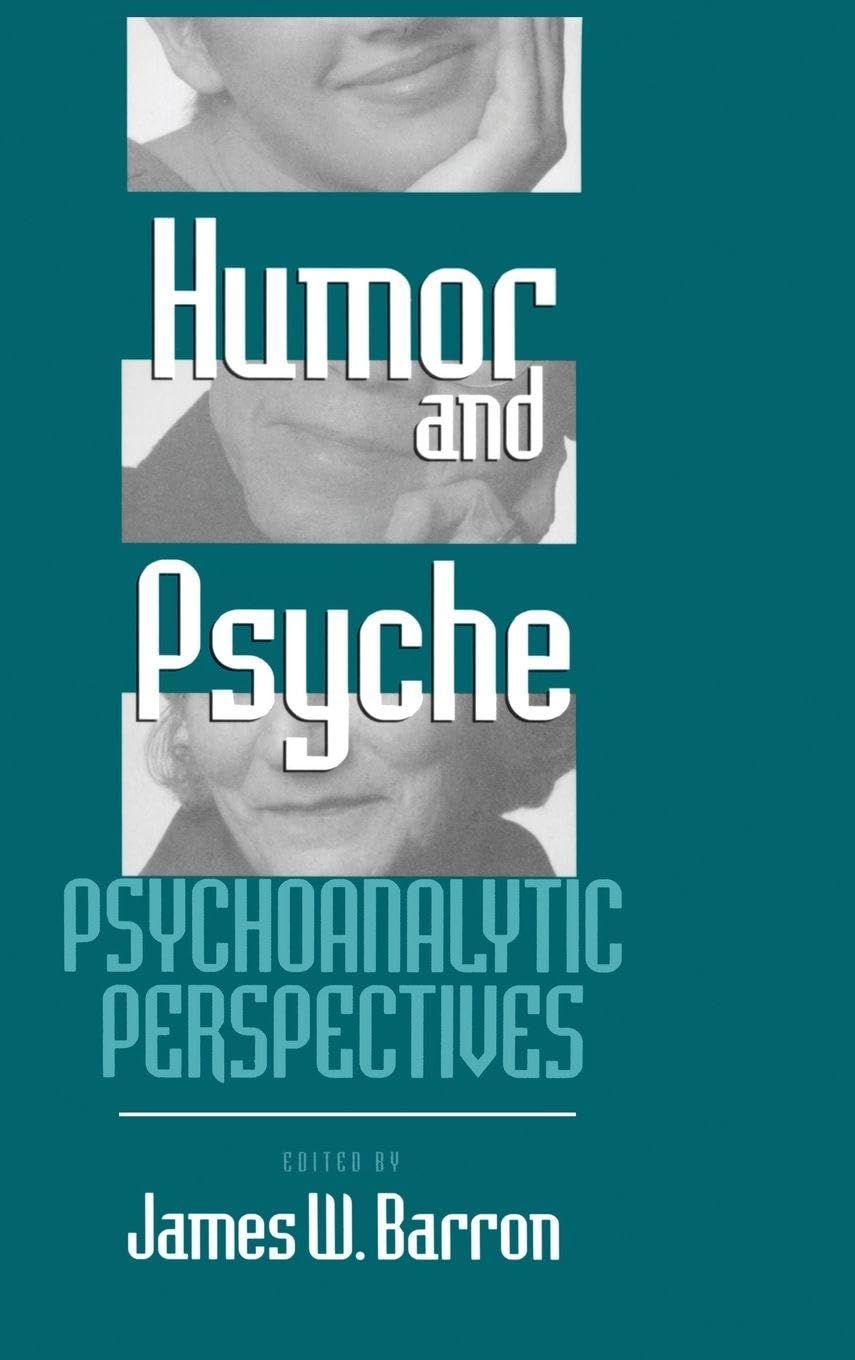
Humor and Psyche: Psychoanalytic Perspectives by James W. Barron

Relationships
The Experience and Expression of Uncertainty in Close Relationships by Jennifer A. Theiss
Related Products
View AllPsychology
Mindfulness-Based Interventions for Trauma and Its Consequences (Concise Guides on Trauma Care, 4)
Psychology
Handbook for Teaching Statistics and Research Methods by Mark E. Ware
Psychology
Psychoanalysis and the Nuclear Threat: Clinical and Theoretical Studies
Psychology
Humor and Psyche: Psychoanalytic Perspectives by James W. Barron

Psychology
Proceedings of the First International Conference on Genetic Algorithms and Their Applications
Psychology