
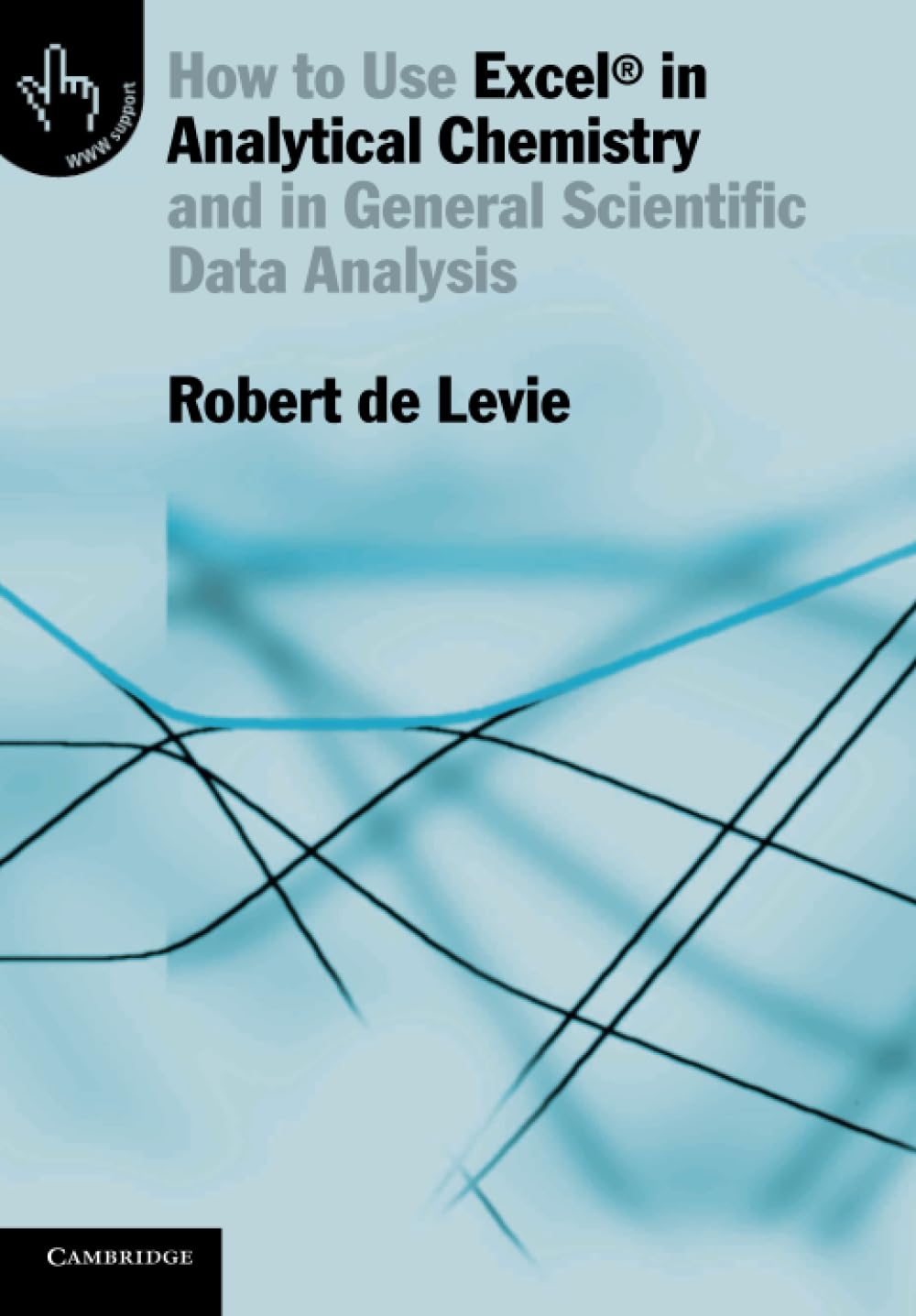
How to Use Excel in Analytical Chemistry: And in General Scientific Data Analysis by Robert de Levie – A Comprehensive G
Inclusive of all applicable taxes. FREE shipping on all orders.
Available Offers
- 🚚Free Delivery — Free shipping on all orders
- 💵Cash on Delivery — Pay when your order arrives
- ↩️15-Day Easy Returns — Hassle-free return policy
- 🔒Cash on Delivery — Pay safely when your order arrives
Check Delivery
Product Description
Introduction
In the world of modern chemistry and scientific data analysis, the ability to process, interpret, and visualise numerical data is just as essential as understanding theoretical concepts. How to Use Excel® in Analytical Chemistry: And in General Scientific Data Analysis bridges the gap between traditional chemistry education and the practical, spreadsheet-driven approach that scientists use every day. Written by the renowned Robert de Levie and published by Cambridge University Press, this hardbound volume is a definitive guide for students and researchers who want to harness the power of Excel for solving real-world chemical problems.
Book Overview
This textbook is designed specifically for undergraduate and entry-level graduate students in chemistry and chemical engineering. Unlike generic Excel manuals, this book focuses on the unique demands of scientific computation—from statistical analysis and chemical equilibria to instrumental methods like chromatography, spectrometry, and electroanalysis. The author takes a hands-on approach, walking readers through each concept with clear examples and step-by-step spreadsheet simulations. Whether you are preparing pH calculations, performing linear or non-linear least squares fitting, or exploring Fourier transformations, this book provides the tools you need to turn raw data into meaningful insights.
Key Highlights
- Comprehensive coverage of statistics, chemical equilibria, titrations, and instrumental analysis methods.
- Step-by-step Excel tutorials that demonstrate how to build simulations and test analytical procedures.
- In-depth treatment of modern data analysis including linear and non-linear least squares, matrix methods, and Fourier transforms.
- Real-world examples drawn from general and analytical chemistry, making concepts immediately applicable.
- Intuitive layout that leverages Excel’s graphical capabilities for visualising complex data.
Inside the Book
Each chapter is structured to build confidence progressively. Readers start with basic spreadsheet operations and move into advanced topics such as matrix algebra for data reduction and error propagation. The book includes numerous worked-out examples, exercises, and screenshots that guide you through every formula and chart. Special attention is given to the proper use of Excel functions for scientific purposes, ensuring that your calculations are both accurate and reproducible. The final chapters explore Fourier transformation methods, a powerful tool for signal processing in spectrometry and chromatography.
Key Topics
- Statistical analysis of experimental data
- Chemical equilibria and pH calculations
- Acid-base, complexometric, and redox titrations
- Chromatographic data analysis
- Spectrometric methods and calibration curves
- Electroanalytical techniques
- Linear and non-linear least squares fitting
- Matrix methods for data manipulation
- Fourier transformation and its applications
Reader Benefits
By working through this book, readers will gain a practical skill set that is immediately transferable to laboratory work and research. You will learn to automate repetitive calculations, create professional-quality graphs, and perform sophisticated data modelling without needing expensive specialised software. The Excel-based approach also helps you develop a deeper intuition for how mathematical models describe chemical phenomena, because you can see the effect of changing parameters in real time. This book saves you time, reduces errors, and makes data analysis an enjoyable part of the scientific process.
Learning Outcomes
- Confidently use Excel for statistical analysis, curve fitting, and error estimation.
- Design spreadsheet simulations to model chemical equilibria and titration curves.
- Apply matrix algebra to solve systems of equations in analytical chemistry.
- Perform Fourier transformations to analyse spectroscopic and chromatographic data.
- Interpret and present scientific data using Excel’s graphing tools.
- Validate analytical procedures through numerical testing and simulation.
Who Should Read
This book is ideal for undergraduate and postgraduate students in chemistry, chemical engineering, biochemistry, and environmental science. It is also a valuable resource for laboratory technicians, research assistants, and early-career scientists who want to strengthen their data analysis skills. Teachers and professors will find it an excellent supplementary text for courses in analytical chemistry, instrumental analysis, and scientific computing. Anyone who works with numerical data in a laboratory setting will benefit from the practical, no-nonsense approach presented here.
About the Author
Robert de Levie is a distinguished chemist and educator with decades of experience in analytical chemistry and scientific computing. He has taught at several leading universities and is known for his clear, methodical teaching style. His expertise in electrochemistry and data analysis is reflected in the depth and precision of this book. De Levie’s passion for making complex topics accessible shines through every chapter, making him a trusted guide for students navigating the intersection of chemistry and computation.
About the Publisher
Cambridge University Press is one of the oldest and most respected academic publishers in the world. With a commitment to excellence in education and research, Cambridge University Press produces textbooks and reference works that set the standard for accuracy and pedagogical quality. This hardcover edition reflects their dedication to producing durable, well-edited resources that support learning at every level.
Conclusion
How to Use Excel® in Analytical Chemistry: And in General Scientific Data Analysis is more than a textbook—it is a practical companion for anyone who wants to master the art of scientific data analysis using a tool they already have. With its clear explanations, hands-on examples, and comprehensive coverage of both classical and modern methods, this book empowers students and professionals alike to tackle chemical problems with confidence and efficiency. Add this essential volume to your library and transform the way you work with data.
Quick Summary
How to Use Excel in Analytical Chemistry by Robert de Levie is a practical textbook that bridges the gap between chemistry and spreadsheet computing. Designed for undergraduate and graduate students, it covers essential topics like statistics, chemical equilibria, pH calculations, titrations, chromatography, spectrometry, and electroanalysis. Readers will learn to harness Excel's intuitive interface and mathematical power to solve real-world chemical problems, perform numerical simulations, and analyze data effectively. The book is filled with examples and exercises, making it ideal for both classroom use and self-study. By choosing Bookshops.in, Indian students get a reliable physical copy delivered to their doorstep, supporting their academic journey with quality content from Cambridge University Press.
Book Highlights
Book Specifications
| ISBN-13 | 9780521644846 |
| ISBN-10 | 0521644844 |
| Publisher | Cambridge University Press |
| Language | English |
| Dimensions | 16.99 x 2.9 x 24.41 cm |
| Weight | 1 kg 20 g |
| Country | India |
| Category | Science & Mathematics › Chemistry |
| Genre | Non-fiction |
| Original Language | English |
Frequently Asked Questions
What is this book about?
Who is the author?
Is this book suitable for beginners?
Does it require prior Excel knowledge?
What topics are covered?
Is this book used in Indian universities?
Can I use this for self-study?
Does the book include practice problems?
What is the price in India?
Is the book available in paperback?
Is it only for chemistry students?
Does it cover modern Excel versions?
Why buy from Bookshops.in?
Readers Also Search For
Customers Also Bought
Mathematics
Stereotype Spaces and Algebras: 73 (De Gruyter Expositions in Mathematics, 73)
Mathematics
Semigroups in Algebra, Geometry and Analysis: 20 (De Gruyter Expositions in Mathematics, 20)
Mathematics
Geometry from the Pacific Rim: Proceedings of the Pacific Rim Geometry Conference held at National University of Singapore, Republic of Singapore, ... 1994 (De Gruyter Proceedings in Mathematics)

Mathematics
First International Tainan-Moscow Algebra Workshop: Proceedings of the International Conference held at National Cheng Kung University Tainan, Taiwan, ... 1994 (De Gruyter Proceedings in Mathematics)
Mathematics
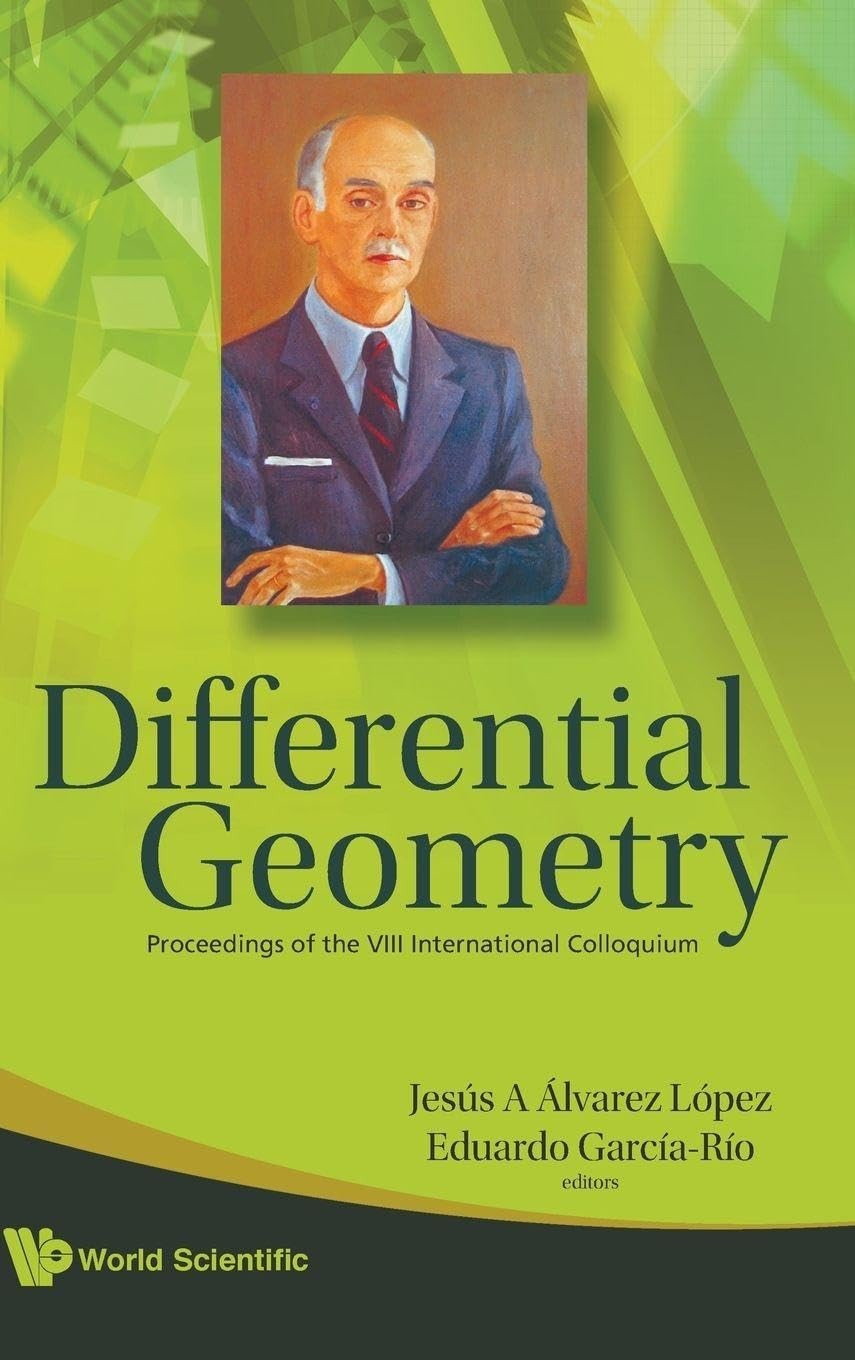
Differential Geometry - Proceedings of the VIII International Colloquium (English, Jesus A. Alvarez Lopez | Eduardo Garcia-Rio)
Mathematics
Mathematical Theory of Optimal Processes (Classics of Soviet Mathematics)
Related Products
View All
Chemistry
Proceedings of the Third USSR - FRG Symposium, Makhachkala (USSR), October 2–6, 1980: 001
Chemistry
Confining Electrochemistry to Nanopores: From Fundamentals to Applications: Volume 17 (Detection Science)
Chemistry
Inorganic Chemistry of the Main-Group Elements: Volume 1 (Specialist Periodical Reports - Inorganic Chemistry of the Main-Group Elements)
Chemistry
SYNTHETIC POLYMER CHEMISTRY: INNOVATIONS AND OUTLOOK: Volume 32 (Polymer Chemistry Series)
Chemistry
Theoretical Chemistry for Electronic Excited States: Volume 12 (Theoretical and Computational Chemistry Series)
Chemistry