
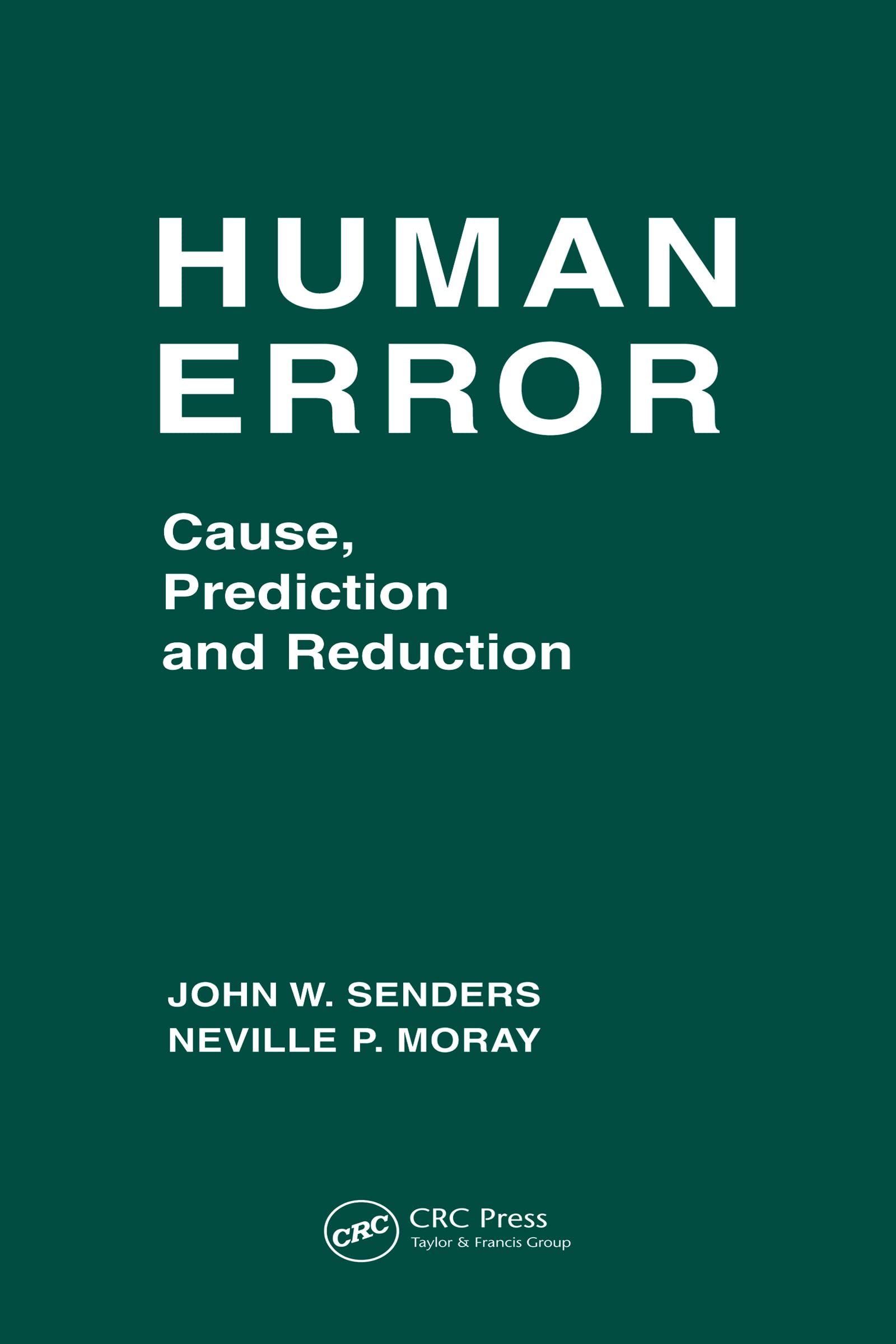
Human Error: Cause, Prediction, and Reduction by John W. Senders – A Foundational Text on Understanding and Preventing H
Inclusive of all applicable taxes. FREE shipping on all orders.
Available Offers
- 🚚Free Delivery — Free shipping on all orders
- 💵Cash on Delivery — Pay when your order arrives
- ↩️15-Day Easy Returns — Hassle-free return policy
- 🔒Cash on Delivery — Pay safely when your order arrives
Check Delivery
Product Description
Introduction
Human error is an unavoidable part of life, yet understanding it is critical to improving safety, efficiency, and performance across industries. Human Error: Cause, Prediction, and Reduction by John W. Senders offers a deep, multidisciplinary exploration of why errors happen, how they can be anticipated, and what measures can reduce their impact. Published by CRC Press, this hardcover volume is an essential resource for students, researchers, and professionals in India who seek to grasp the complexities of human fallibility in engineering, psychology, and philosophy.
Book Overview
This book is one of the first comprehensive texts to systematically examine human error from multiple angles. It brings together contributions from experts in psychology, philosophy, and engineering to create a cohesive understanding of error origins, classifications, and consequences. Rather than offering simple solutions, the book asks fundamental questions about the nature of error and provides a framework for predicting and mitigating its effects. It is a scholarly yet accessible work that balances theoretical depth with practical insights, making it valuable for both academic study and real-world application.
Key Highlights
- Multidisciplinary approach: Combines insights from psychology, philosophy, and engineering for a holistic view of human error.
- Foundational text: One of the earliest detailed examinations of error causation and reduction strategies.
- Predictive framework: Offers methods to anticipate errors before they occur, helping design safer systems.
- Real-world relevance: Discusses error impact on individuals, organizations, and society at large.
- Authoritative contributors: Features perspectives from leading thinkers in error research.
Inside the Book
The book is structured to guide readers from foundational concepts to advanced applications. Early chapters define what constitutes human error, distinguishing it from chance or system failures. Later sections delve into classification systems, cognitive mechanisms behind mistakes, and case studies from aviation, healthcare, and manufacturing. The final chapters focus on prediction models and practical reduction techniques, including training, interface design, and organizational policies. Each chapter includes references and discussion points, making it suitable for classroom use.
Key Topics
- Definitions and classifications of human error
- Cognitive and psychological roots of mistakes
- Error prediction models and methodologies
- System design for error reduction
- Case studies in high-risk industries
- Philosophical and ethical dimensions of error
Reader Benefits
Readers will gain a thorough understanding of why errors occur and how to create environments that minimize them. The book equips students with a strong theoretical foundation, while professionals can apply its frameworks to improve safety protocols in their workplaces. Engineers will learn to design more forgiving systems, psychologists will appreciate the cognitive explanations, and philosophers will find thought-provoking discussions on responsibility and blame. Ultimately, this book empowers readers to move beyond blaming individuals and toward systemic improvements.
Learning Outcomes
- Understand the multiple causes and classifications of human error
- Learn to predict error-prone situations using established models
- Develop strategies to reduce error frequency and severity
- Appreciate the interdisciplinary nature of error research
- Apply theoretical concepts to real-world case studies
Who Should Read
This book is ideal for graduate and postgraduate students in psychology, industrial engineering, human factors, and safety management. It is also highly relevant for professionals in aviation, healthcare, manufacturing, and software design who deal with human reliability. Academics and researchers looking for a foundational reference on error will find it indispensable. Indian readers in fields like railway safety, process industries, and healthcare quality will benefit from its practical insights.
About the Author
John W. Senders is a renowned figure in human factors engineering and error research. With a career spanning decades, he has contributed significantly to understanding how humans interact with complex systems. His work has influenced safety standards in aviation, medicine, and industrial design. Senders brings both academic rigor and practical experience to this book, making complex ideas accessible and actionable.
About the Publisher
CRC Press is a leading global publisher of scientific, technical, and medical content. Known for high-quality reference works and textbooks, CRC Press has a strong reputation in engineering, psychology, and safety disciplines. This book reflects their commitment to advancing knowledge that improves human well-being and system reliability.
Conclusion
Human Error: Cause, Prediction, and Reduction is a timeless resource that remains relevant in an era of increasing automation and complexity. By understanding the roots of error, we can design better systems, train more effectively, and ultimately create a safer world. Whether you are a student, researcher, or professional, this book offers the tools to think critically about human fallibility and turn that understanding into positive change. Order your copy from Bookshops.in today and add this essential volume to your library.
Quick Summary
Human Error: Cause, Prediction, and Reduction by John W. Senders is a foundational text that delves into the complex nature of human mistakes, offering a multidisciplinary perspective from psychology, philosophy, and engineering. The book systematically explores the origins and classifications of errors, providing readers with robust frameworks to predict and mitigate errors in various systems. It is designed for students, researchers, and professionals in fields such as human factors, safety engineering, cognitive psychology, and risk management. Readers will gain a deep understanding of error causation models, error taxonomies, and practical strategies for designing error-tolerant environments. This book is particularly valuable for Indian readers pursuing careers in aviation, healthcare, industrial safety, and organizational development. By choosing Bookshops.in, you support a trusted Indian bookstore that offers genuine imported editions, secure payment, and reliable delivery across India. Whether you are a student or a seasoned professional, this book will enhance your ability to analyze and reduce human error in any setting.
Book Highlights
Book Specifications
| ISBN-13 | 9780898595987 |
| ISBN-10 | 0898595983 |
| Publisher | CRC Press |
| Language | English |
| Dimensions | 14.61 x 1.91 x 22.86 cm |
| Weight | 386 g |
| Country | India |
| Category | Psychology › Cognitive Psychology |
| Genre | Nonfiction |
| Original Language | English |
Frequently Asked Questions
What is Human Error: Cause, Prediction, and Reduction about?
Who is the author of this book?
Is this book suitable for Indian students?
What disciplines does this book cover?
Does the book include practical strategies for error reduction?
What is the ISBN of this book?
Is this book available in hardcover?
What is the price of this book in India?
What is the rating of this book?
Who should read this book?
What language is the book in?
Can I use this book for academic research?
Readers Also Search For
Customers Also Bought

Psychology
Koinonia: From Hate, Through Dialogue, to Culture in the Large Group by Patrick B. Demare
Psychology
Mindfulness-Based Interventions for Trauma and Its Consequences (Concise Guides on Trauma Care, 4)

Psychology
Handbook for Teaching Statistics and Research Methods by Mark E. Ware

Psychology
Psychoanalysis and the Nuclear Threat: Clinical and Theoretical Studies

Psychology
Humor and Psyche: Psychoanalytic Perspectives by James W. Barron

Relationships
The Experience and Expression of Uncertainty in Close Relationships by Jennifer A. Theiss
Related Products
View AllPsychology
Mindfulness-Based Interventions for Trauma and Its Consequences (Concise Guides on Trauma Care, 4)
Psychology
Handbook for Teaching Statistics and Research Methods by Mark E. Ware
Psychology
Psychoanalysis and the Nuclear Threat: Clinical and Theoretical Studies
Psychology
Humor and Psyche: Psychoanalytic Perspectives by James W. Barron

Psychology
Proceedings of the First International Conference on Genetic Algorithms and Their Applications
Psychology