
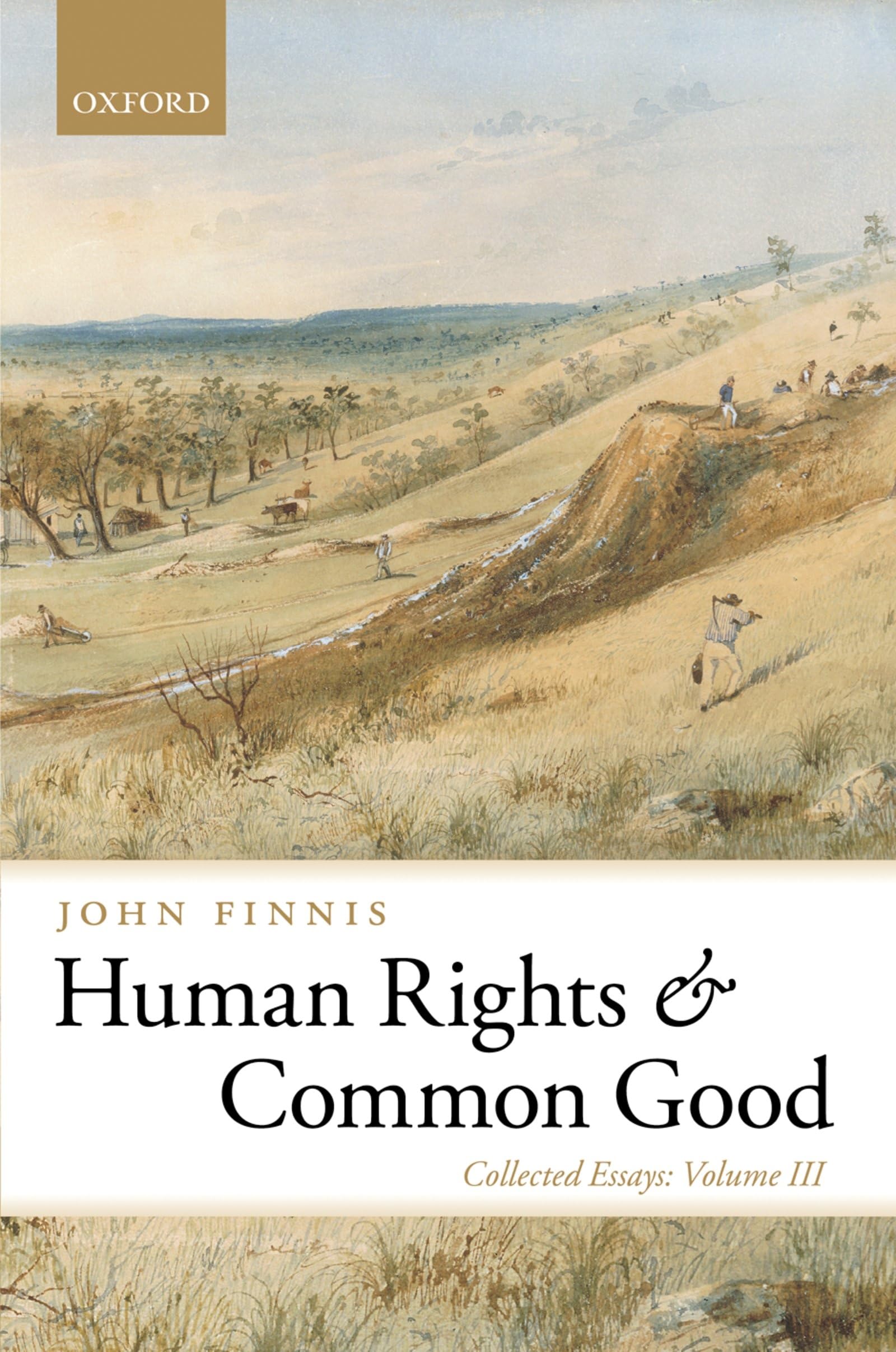
Human Rights and Common Good: Collected Essays by John Finnis – A Deep Dive into Political Philosophy and Legal Theory
Inclusive of all applicable taxes. FREE shipping on all orders.
Available Offers
- 🚚Free Delivery — Free shipping on all orders
- 💵Cash on Delivery — Pay when your order arrives
- ↩️15-Day Easy Returns — Hassle-free return policy
- 🔒Cash on Delivery — Pay safely when your order arrives
Check Delivery
Product Description
Introduction
John Finnis's Human Rights and Common Good: Collected Essays Volume III is a masterful exploration of the philosophical foundations that underpin modern political and legal systems. Published by OUP UK, this hardcover volume brings together Finnis's incisive writings on the interplay between individual rights and the collective good. For Indian students, scholars, and legal professionals, this book offers a rigorous framework to understand how rights are not absolute but exist within the context of community, justice, and the common good. It challenges simplistic notions of rights and invites readers to think deeply about law, ethics, and governance.
Book Overview
This third volume in Finnis's collected essays presents a sweeping analysis of political philosophy, from the theoretical underpinnings of social justice to practical critiques of constitutional institutions. The book opens with a powerful critique of Ronald Dworkin's moral-political arguments and the European Court of Human Rights' approach to fundamental rights. It also includes a penetrating examination of Kant's philosophy on law and ethics, an early assessment of John Rawls's A Theory of Justice, and a radical reinterpretation of Aquinas on limited government. The essays then delve into pressing issues of modern political communities, including the role of virtue in constitutions and the distinction between private and public spheres. Finnis's work remains deeply relevant for understanding the balance between rights and responsibilities in a democratic society.
Key Highlights
- Critique of Judicial Review: A searching analysis of the European Court of Human Rights and the role of courts in protecting rights.
- Kant and Ethics: A detailed study of Kant's thought on the intersection of law, right, and morality.
- Aquinas Reinterpreted: A fresh perspective on limited government and the public-private distinction in Thomistic philosophy.
- Rawls Assessed: An early and insightful evaluation of Rawls's A Theory of Justice.
- Virtue and Constitution: A challenging paper on how virtue shapes constitutional governance.
Inside the Book
The volume is structured into two major parts. The first part focuses on general theory, covering political community, social justice, and the nature of rights. The second part addresses central problems in modern political communities, such as the limits of state power, the role of law in promoting the common good, and the tension between individual liberty and collective welfare. Each essay is meticulously argued, drawing on legal philosophy, theology, and political theory. Finnis's style is dense but rewarding, making this a valuable resource for advanced study.
Key Topics
- Bills of Rights and their philosophical justifications
- Social justice and the common good
- Natural law theory and human rights
- Limited government and constitutionalism
- Kantian ethics and legal philosophy
- Virtue ethics in political thought
- Judicial review and democracy
Reader Benefits
Reading this book will sharpen your understanding of the philosophical roots of rights discourse. It equips you with the tools to critically evaluate contemporary debates on human rights, judicial activism, and the role of the state. For Indian readers, the essays offer a comparative lens to examine India's own constitutional framework and the evolving interpretation of fundamental rights. The book also enhances your ability to construct rigorous arguments in legal and political philosophy.
Learning Outcomes
- Gain a deeper grasp of the relationship between individual rights and the common good.
- Understand the critiques of modern rights-based theories from a natural law perspective.
- Analyze the philosophical foundations of judicial review and constitutional governance.
- Evaluate the works of major thinkers like Kant, Rawls, Dworkin, and Aquinas.
- Develop skills in critical reasoning and ethical argumentation.
Who Should Read
This book is essential for law students, legal practitioners, and academics specializing in jurisprudence, constitutional law, and political philosophy. It is also highly recommended for postgraduate students in philosophy, political science, and public policy. Indian judiciary aspirants and civil services candidates will find the essays particularly useful for understanding the philosophical underpinnings of rights and governance. Anyone interested in the intersection of law, ethics, and society will benefit from Finnis's profound insights.
About the Author
John Finnis is a preeminent legal philosopher and one of the leading exponents of natural law theory. He is Professor of Law Emeritus at the University of Oxford and a former Professor of Law at the University of Notre Dame. His seminal work Natural Law and Natural Rights is considered a classic in legal philosophy. Finnis's scholarship spans jurisprudence, political theory, and ethics, and he has profoundly influenced contemporary debates on human rights and the common good.
About the Publisher
Oxford University Press (OUP UK) is a prestigious academic publisher with a global reputation for excellence. OUP publishes authoritative works in law, philosophy, and the social sciences, making it a trusted source for students and scholars worldwide. This volume is part of OUP's commitment to advancing knowledge through rigorous scholarship.
Conclusion
Human Rights and Common Good: Collected Essays Volume III is an indispensable addition to the library of anyone serious about legal and political philosophy. John Finnis's essays challenge readers to think beyond surface-level rights discourse and engage with the deeper questions of justice, community, and the good life. For Indian readers, the book provides a robust theoretical foundation to navigate the complexities of rights in a diverse and democratic society. Order your hardcover copy from Bookshops.in today and enrich your understanding of the enduring relationship between human rights and the common good.
Quick Summary
Human Rights and Common Good: Collected Essays Volume III by John Finnis is a landmark collection that delves into the heart of political philosophy and legal theory. The book brings together Finnis's most influential essays, including the celebrated Maccabaean Lecture on Bills of Rights, which offers a rigorous critique of Ronald Dworkin's moral-political arguments and the European Court of Human Rights' approach to fundamental rights. Finnis also examines Kant's complex views on law and ethics, provides an early analysis of Rawls's A Theory of Justice, and reinterprets Aquinas's ideas on limited government. This volume is essential for students and scholars of law, philosophy, and political science who seek a deeper understanding of natural law, social justice, and the common good. Readers will learn to critically engage with foundational debates about rights, judicial review, and the nature of political community. By choosing Bookshops.in, Indian readers receive a premium hardcover edition with fast, reliable delivery and excellent customer service.
Book Highlights
Book Specifications
| ISBN-13 | 9780199580071 |
| ISBN-10 | 0199580073 |
| Publisher | Oxford Univ Pr on Demand |
| Language | English |
| Dimensions | 23.62 x 3.56 x 16.51 cm |
| Weight | 794 g |
| Category | Philosophy › Ethics |
| Series | Collected Essays |
| Genre | Non-fiction |
| Reading Age | Adult |
| Original Language | English |
Frequently Asked Questions
What is Human Rights and Common Good about?
Who is John Finnis?
Is this book part of a series?
What topics are covered in this volume?
Who should read this book?
Is this book suitable for beginners?
What is the Maccabaean Lecture?
Does the book cover natural law theory?
How does Finnis critique Rawls?
What is the binding of this book?
Can I use this book for my research?
Is the book available in other languages?
Why should I buy from Bookshops.in?
Readers Also Search For
Customers Also Bought
Islam
Spiritual Economies (English, Daromir Rudnyckyj)

Islam
Who Is Allah? (English, Bruce B. Lawrence)
Islam
Islam and Liberal Citizenship: The Search for an Overlapping Consensus by Andrew F. March

Islam
Fiqh Us-Sunnah: Funerals and Diggers by Al-Sayyid Sabiq – Islamic Funeral Guide

Christianity
Genetics (English, Thomas a. Shannon | Mark P. Aulisio | Françoise Baylis)

Hinduism
Karma and Creativity by Christopher Key Chapple – Indian Philosophy
Related Products
View All
Philosophy
Latin American Philosophy: Currents, Issues, Debates by Eduardo Mendieta

Philosophy
Al-Farabi's Short Commentary on Aristotle's Prior Analytics by Nicholas Rescher – Philosophy

Philosophy
Poetics of Imagining: Modern to Post-modern by Richard Kearney
Philosophy
The Metaphysics of Extrinsic Properties: 11 (Metaphysical Research, 11)
Philosophy
Dialogues on Metaphysics and on Religion by Nicolas Malebranche – Philosophy
Philosophy