
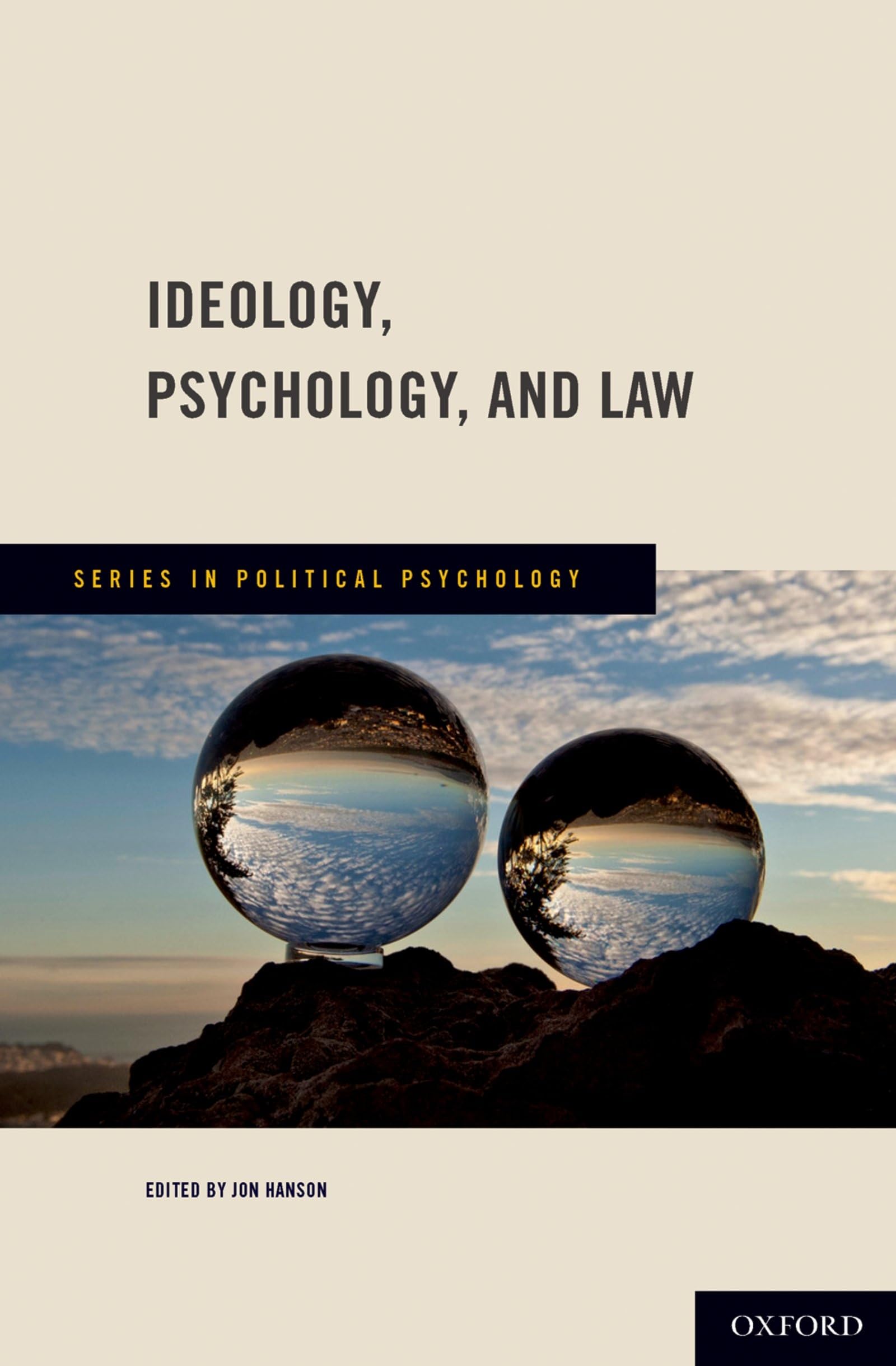
Ideology, Psychology, and Law by Jon Hanson – Uncovering the Unconscious Influences Behind Legal Reasoning and Judicial
Inclusive of all applicable taxes. FREE shipping on all orders.
Available Offers
- 🚚Free Delivery — Free shipping on all orders
- 💵Cash on Delivery — Pay when your order arrives
- ↩️15-Day Easy Returns — Hassle-free return policy
- 🔒Cash on Delivery — Pay safely when your order arrives
Check Delivery
Product Description
Introduction
In the Indian legal landscape, where the judiciary is revered for its impartiality and reasoned judgments, the question of what truly shapes judicial decisions remains both provocative and essential. Ideology, Psychology, and Law by Jon Hanson dares to peel back the curtain on the legal system, challenging the long-held belief that law is a purely logical, ideology-free enterprise. For law students, legal practitioners, and anyone curious about the hidden forces that influence justice, this book offers a groundbreaking exploration of the psychological and ideological undercurrents that guide legal reasoning. Published by the prestigious Oxford University Press, this hardcover edition is an indispensable addition to any serious legal library in India.
Book Overview
This compelling volume assembles leading scholars from law, psychology, and political science to examine the subtle yet powerful ways in which ideology and unconscious biases permeate legal thought and practice. The book systematically dismantles the myth of the judge as a neutral umpire, drawing on decades of empirical research in social cognition and behavioral psychology. It reveals how judges, lawyers, and even legal scholars are subject to the same cognitive shortcuts, motivated reasoning, and ideological commitments that influence all human decision-making. Rather than presenting a cynical view, the book provides a rigorous framework for understanding these dynamics, offering pathways toward a more self-aware and transparent legal system. For readers in India, where debates about judicial activism and constitutional interpretation are ever-present, this book provides a vital theoretical lens through which to view contemporary legal debates.
Key Highlights
- Interdisciplinary Approach: Seamlessly integrates insights from social psychology, cognitive science, political theory, and jurisprudence to explain legal behavior.
- Empirically Grounded: Builds on decades of experimental research on implicit bias, motivated reasoning, and group polarization, making complex ideas accessible.
- Critical of Legal Formalism: Challenges the traditional view that legal decisions are based solely on precedent and logic, revealing the role of personal and cultural ideologies.
- Relevance to Indian Context: While rooted in American legal scholarship, the principles discussed are universally applicable, offering Indian readers a powerful tool for analyzing judicial reasoning and legal education.
- Authoritative Contributors: Features essays from some of the most respected thinkers in law and psychology, edited by Harvard Law School professor Jon Hanson.
Inside the Book
The book is structured to guide readers from foundational concepts to advanced applications. Early chapters introduce the basic mechanisms of social cognition, including confirmation bias, in-group favoritism, and the backfire effect. Subsequent sections delve into how these processes shape legal doctrines, from contract law to constitutional interpretation. A particularly illuminating chapter examines how judges' political ideologies predict their decisions in seemingly straightforward cases, even when they believe they are being objective. The book also explores the role of legal education in perpetuating these biases and offers suggestions for reform. Throughout, the writing is engaging and avoids unnecessary jargon, making it suitable for both advanced students and curious general readers.
Key Topics
- The myth of judicial neutrality and the reality of motivated reasoning
- Implicit bias and its influence on legal outcomes
- The psychology of ideological belief systems
- How group dynamics shape judicial panels and legal institutions
- The role of system justification in maintaining legal hierarchies
- Implications for legal education, advocacy, and judicial selection
Reader Benefits
By reading this book, you will develop a critical understanding of the psychological forces that operate beneath the surface of legal reasoning. You will learn to recognize your own cognitive biases and those of others, making you a more effective legal analyst, advocate, or scholar. The book equips you with the conceptual tools to question received wisdom and to engage in more nuanced debates about law and justice. For Indian law students preparing for competitive exams or legal practice, this perspective can provide a significant intellectual edge, helping you see beyond the black-letter law to the human factors that truly drive legal change.
Learning Outcomes
- Understand the key psychological theories that explain how ideology influences legal decision-making.
- Identify common cognitive biases that affect judges, lawyers, and jurors.
- Critically evaluate the claim that law is an autonomous, neutral system.
- Apply insights from social psychology to real-world legal cases and controversies.
- Develop a more sophisticated framework for analyzing judicial opinions and legal arguments.
Who Should Read
This book is essential reading for law students and legal academics who wish to deepen their understanding of jurisprudence and legal process. Practicing lawyers, especially those involved in litigation or appellate work, will gain valuable insights into judicial behavior. It is also highly recommended for students of political science, psychology, and sociology who are interested in the intersection of law and human behavior. For judges, policymakers, and anyone concerned with the fairness and transparency of the legal system, this book offers a thought-provoking and transformative perspective.
About the Author
Jon Hanson is the Alfred Smart Professor of Law at Harvard Law School, where he has taught for over three decades. He is a leading figure in the field of law and psychology, and his work has been widely cited in legal scholarship. Hanson is the founder of the Project on Law and Mind Sciences at Harvard, which explores the implications of cognitive and social psychology for legal theory and practice. His research has helped shape the modern understanding of how unconscious biases and ideological commitments influence legal actors and institutions.
About the Publisher
Oxford University Press (OUP) is a globally respected academic publisher with a distinguished history of producing authoritative works in law, the humanities, and the sciences. Known for its rigorous editorial standards, OUP brings together the finest scholarship from around the world. This hardcover edition reflects OUP's commitment to quality, with durable binding and clear typography that will withstand years of study and reference.
Conclusion
Ideology, Psychology, and Law is not merely a book—it is an invitation to rethink the very foundations of legal authority. In an era where trust in institutions is increasingly scrutinized, this work provides the intellectual tools to understand how law really operates. For Indian readers, it offers a valuable framework for engaging with our own legal traditions and contemporary challenges. Whether you are a student, a professional, or a lifelong learner, this book will change the way you see the law. Order your copy today from Bookshops.in and embark on a journey into the hidden psychology of justice.
Quick Summary
'Ideology, Psychology, and Law' by Jon Hanson is a groundbreaking work that dismantles the myth of judicial objectivity. The book argues that legal decisions are not purely based on logical syllogisms but are deeply shaped by ideological commitments, unconscious biases, and psychological influences. Drawing from legal realism, cognitive psychology, and social science, Hanson shows how judges, like all humans, are influenced by their moral intuitions, political theories, and societal prejudices. The book traces this critique back to Oliver Wendell Holmes Jr., who famously noted that law is more about 'felt necessities' than formal logic. Readers will learn to identify the hidden forces that shape legal doctrines and courtroom outcomes. This book is ideal for law students, legal scholars, and anyone interested in the intersection of law, psychology, and social justice. By purchasing from Bookshops.in, Indian readers get an authentic Oxford University Press hardcover edition with reliable delivery and customer support.
Book Highlights
Book Specifications
| ISBN-13 | 9780199737512 |
| ISBN-10 | 0199737517 |
| Publisher | OUP USA |
| Language | English |
| Dimensions | 16 x 6.1 x 23.88 cm |
| Weight | 1 kg 250 g |
| Category | Philosophy › History & Surveys |
| Genre | Non-fiction |
| Original Language | English |
Frequently Asked Questions
What is 'Ideology, Psychology, and Law' about?
Who is the author of this book?
Is this book suitable for undergraduate students?
Does the book cover Indian legal systems?
What makes this book different from other law books?
Does this book include practical examples?
What is the binding type?
What is the ISBN-13?
Can I use this book for my law thesis?
Does the book address unconscious bias?
Is the book written in simple language?
Why should I buy from Bookshops.in?
Readers Also Search For
Customers Also Bought

Islam
Spiritual Economies (English, Daromir Rudnyckyj)

Islam
Who Is Allah? (English, Bruce B. Lawrence)
Islam
Islam and Liberal Citizenship: The Search for an Overlapping Consensus by Andrew F. March

Islam
Fiqh Us-Sunnah: Funerals and Diggers by Al-Sayyid Sabiq – Islamic Funeral Guide

Christianity
Genetics (English, Thomas a. Shannon | Mark P. Aulisio | Françoise Baylis)

Hinduism
Karma and Creativity by Christopher Key Chapple – Indian Philosophy
Related Products
View All
Philosophy
Latin American Philosophy: Currents, Issues, Debates by Eduardo Mendieta

Philosophy
Al-Farabi's Short Commentary on Aristotle's Prior Analytics by Nicholas Rescher – Philosophy

Philosophy
Poetics of Imagining: Modern to Post-modern by Richard Kearney

Philosophy
The Metaphysics of Extrinsic Properties: 11 (Metaphysical Research, 11)

Philosophy
Dialogues on Metaphysics and on Religion by Nicolas Malebranche – Philosophy
Philosophy