
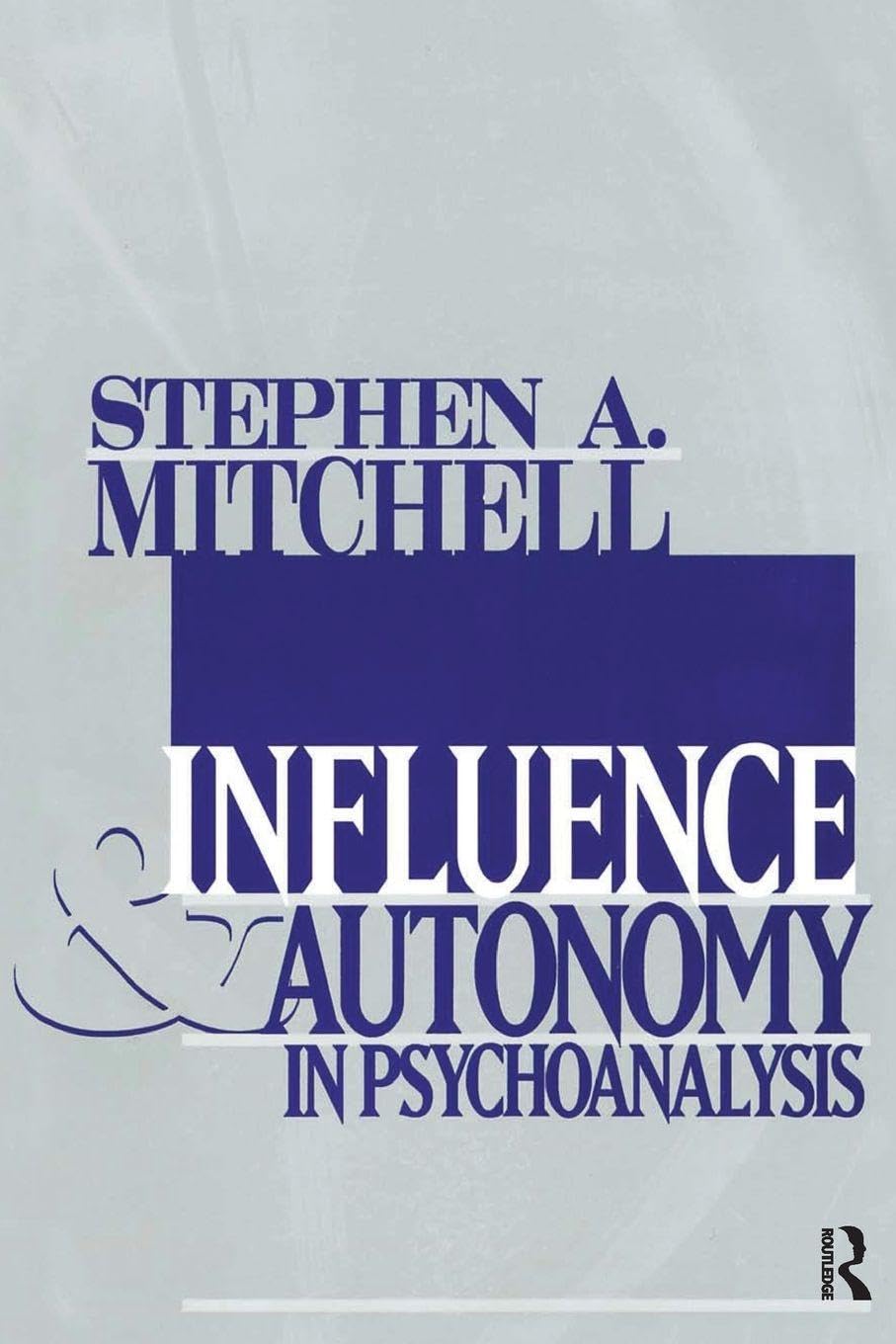
Influence And Autonomy in Psychoanalysis: A Relational Paradigm by Stephen A. Mitchell – Essential Reading for Clinician
Inclusive of all applicable taxes. FREE shipping on all orders.
Available Offers
- 🚚Free Delivery — Free shipping on all orders
- 💵Cash on Delivery — Pay when your order arrives
- ↩️15-Day Easy Returns — Hassle-free return policy
- 🔒Cash on Delivery — Pay safely when your order arrives
Check Delivery
Product Description
Introduction
Stephen A. Mitchell's Influence And Autonomy in Psychoanalysis is a landmark text that redefines the therapeutic relationship in modern psychoanalytic practice. Published by Routledge, this hardcover edition offers Indian students, clinicians, and scholars a profound exploration of how influence and autonomy shape the analytic encounter. Mitchell challenges traditional one-person models, advocating for a relational, two-person perspective that resonates deeply with contemporary clinical realities.
Book Overview
This book systematically unpacks the shift from classical Freudian neutrality to a dynamic, interactive framework where both analyst and analysand co-create meaning. Mitchell bridges Kleinian theory, interpersonal psychoanalysis, object relations, and progressive Freudian thought to present a cohesive vision of therapeutic action. He examines how the analyst's influence can either empower or undermine the patient's autonomy, offering a balanced approach that safeguards the analysand's integrity while embracing the inevitability of mutual impact.
Key Highlights
- Paradigm Shift: A comprehensive critique of the one-person model and a robust defense of the relational perspective.
- Critical Analysis: In-depth examination of anachronistic ideals such as anonymity and neutrality in modern practice.
- Gender and Sexuality: Pioneering discussion of gender and sexual orientation in the postmodern era, relevant to Indian socio-cultural contexts.
- Therapeutic Action: Fresh insights into how change occurs within the analytic dyad, moving beyond interpretation alone.
Inside the Book
The chapters delve into the nature of analytic knowledge and authority, questioning long-held assumptions about the analyst's role. Mitchell explores how power dynamics, transference, and countertransference intersect with issues of autonomy. He provides clinical vignettes that illustrate the delicate balance between offering guidance and respecting the patient's self-determination. The book also addresses the ethical dimensions of influence, making it a vital resource for practitioners navigating complex therapeutic relationships.
Key Topics
- The problem of influence in psychoanalysis
- Protecting patient autonomy and integrity
- Relational vs. one-person models
- Anonymity, neutrality, and authority
- Gender identity and sexual orientation in therapy
- Postmodernism and psychoanalytic knowledge
Reader Benefits
Readers gain a nuanced understanding of how to practice ethically in an interactive therapeutic space. The book equips clinicians with conceptual tools to reflect on their own influence, fostering more authentic and effective work with clients. For Indian readers, the relational focus aligns with community-based and family-oriented therapeutic approaches prevalent in the subcontinent. Students will appreciate the clear exposition of complex theories, while seasoned professionals will find fresh perspectives on enduring dilemmas.
Learning Outcomes
- Understand the historical shift from one-person to two-person psychoanalytic models.
- Critically evaluate concepts like neutrality, anonymity, and analytic authority.
- Apply relational principles to protect client autonomy while acknowledging therapeutic influence.
- Analyze gender and sexuality through a postmodern, relational lens.
- Integrate Kleinian, interpersonal, and object relations theories into a coherent practice.
Who Should Read
This book is essential for psychoanalysts, psychotherapists, clinical psychologists, and postgraduate students in psychology and counselling. It is also valuable for social workers, psychiatrists, and anyone interested in the philosophical underpinnings of therapeutic practice. Indian readers training in institutes affiliated with the Indian Psychoanalytical Society or pursuing M.Phil/Ph.D. in clinical psychology will find it particularly relevant.
About the Author
Stephen A. Mitchell (1946–2000) was a pioneering American psychoanalyst and a leading figure in relational psychoanalysis. He co-founded the relational school, challenging orthodox Freudianism and integrating interpersonal, object relations, and self-psychological perspectives. His works, including Relational Concepts in Psychoanalysis, remain foundational texts in contemporary psychoanalytic education worldwide.
About the Publisher
Routledge, a global academic publisher based in London and New York, is renowned for its authoritative texts in the humanities and social sciences. With a strong catalogue in psychology and psychoanalysis, Routledge ensures that this hardcover edition meets the highest scholarly standards, making it a durable addition to any Indian library or personal collection.
Conclusion
Influence And Autonomy in Psychoanalysis is more than a book—it is a transformative guide for anyone committed to ethical, relational practice. By navigating the tension between therapeutic influence and patient autonomy, Mitchell offers a path that honours both the clinician's expertise and the client's agency. For Indian readers seeking to deepen their psychoanalytic understanding, this Routledge hardcover is an indispensable resource.
Quick Summary
Influence And Autonomy in Psychoanalysis by Stephen A. Mitchell is a seminal work that redefines the landscape of contemporary psychoanalysis. Mitchell, a pioneer of the relational perspective, presents a critical and comparative analysis of the shift from the traditional one-person model to a two-person, interactive framework. The book delves into therapeutic action, exploring how analysts and patients co-create meaning and influence each other within the clinical setting. It challenges long-held ideals such as anonymity and neutrality, offering a nuanced understanding of analytic authority and knowledge. Drawing from Kleinian theory, interpersonal psychoanalysis, object relations, and progressive Freudian thought, Mitchell provides a rich synthesis that is both scholarly and clinically relevant. Readers will gain deep insights into the dynamics of gender and sexual orientation in analysis, making this book essential for clinicians, researchers, and students. This hardcover edition from Routledge is perfect for Indian psychology professionals and academics seeking a rigorous yet accessible text. By purchasing from Bookshops.in, you support a trusted Indian bookstore that delivers quality academic titles nationwide.
Book Highlights
Book Specifications
| ISBN-13 | 9780881634495 |
| ISBN-10 | 0881634492 |
| Publisher | Routledge |
| Language | English |
| Dimensions | 15.24 x 1.75 x 22.61 cm |
| Weight | 431 g |
| Country | India |
| Category | Psychology › Psychotherapy |
| Genre | Nonfiction |
| Reading Age | Adult |
| Original Language | English |
Frequently Asked Questions
What is Influence And Autonomy in Psychoanalysis about?
Who is the author of this book?
Is this book suitable for beginners in psychoanalysis?
What topics does the book cover?
How is this book different from other psychoanalysis texts?
Can I use this book for my postgraduate psychology course in India?
Is this a hardcover edition?
What is the ISBN for this book?
Does this book include case studies?
What is the price of this book on Bookshops.in?
Is this book available in Indian bookstores?
What language is the book in?
Readers Also Search For
Customers Also Bought

Psychology
Koinonia: From Hate, Through Dialogue, to Culture in the Large Group by Patrick B. Demare

Psychology
Mindfulness-Based Interventions for Trauma and Its Consequences (Concise Guides on Trauma Care, 4)

Psychology
Handbook for Teaching Statistics and Research Methods by Mark E. Ware

Psychology
Psychoanalysis and the Nuclear Threat: Clinical and Theoretical Studies

Psychology
Humor and Psyche: Psychoanalytic Perspectives by James W. Barron

Relationships
The Experience and Expression of Uncertainty in Close Relationships by Jennifer A. Theiss
Related Products
View AllPsychology
Mindfulness-Based Interventions for Trauma and Its Consequences (Concise Guides on Trauma Care, 4)
Psychology
Handbook for Teaching Statistics and Research Methods by Mark E. Ware
Psychology
Psychoanalysis and the Nuclear Threat: Clinical and Theoretical Studies
Psychology
Humor and Psyche: Psychoanalytic Perspectives by James W. Barron

Psychology
Proceedings of the First International Conference on Genetic Algorithms and Their Applications
Psychology