
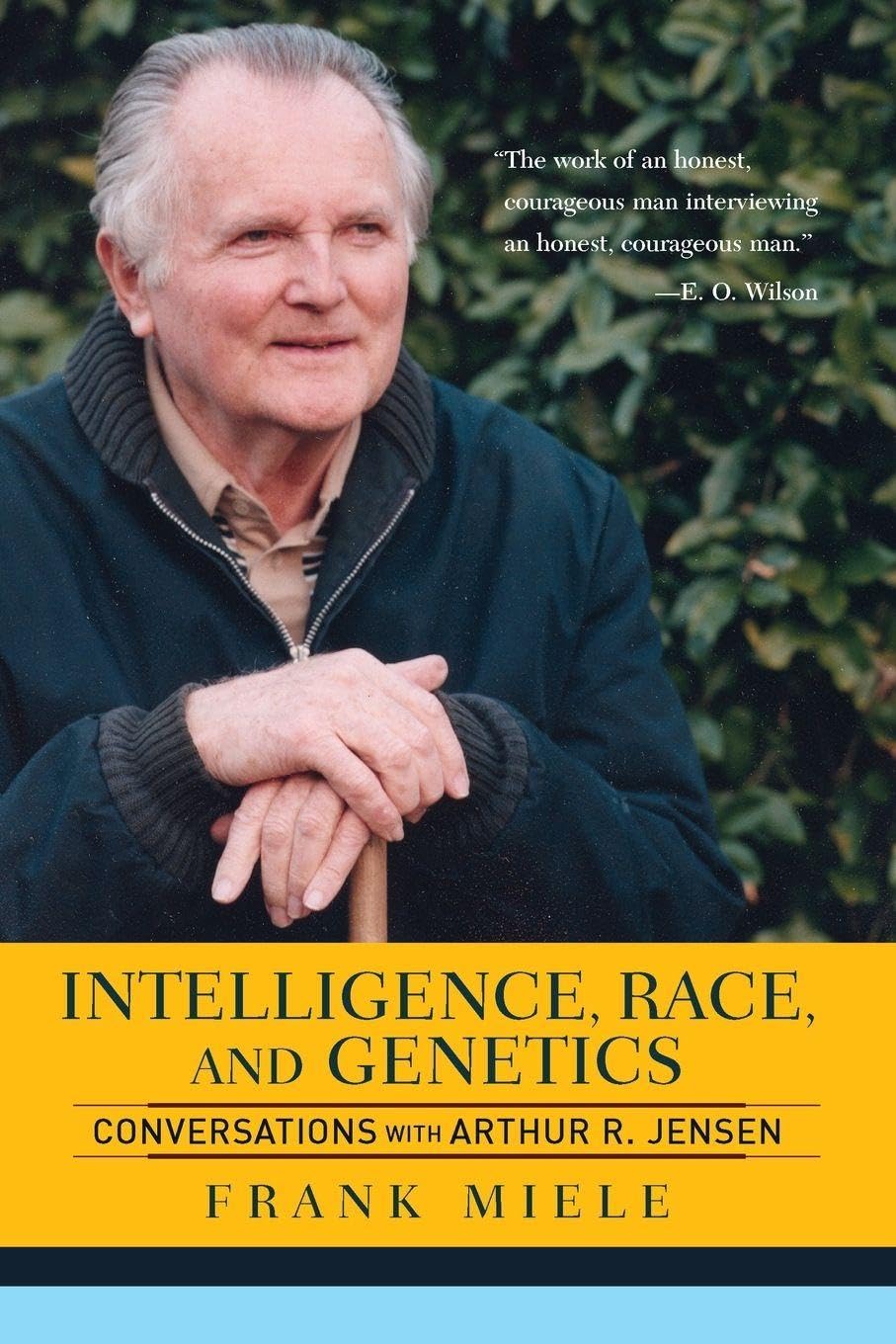
Intelligence, Race, And Genetics: Conversations With Arthur R. Jensen
Inclusive of all applicable taxes. FREE shipping on all orders.
Available Offers
- 🚚Free Delivery — Free shipping on all orders
- 💵Cash on Delivery — Pay when your order arrives
- ↩️15-Day Easy Returns — Hassle-free return policy
- 🔒Cash on Delivery — Pay safely when your order arrives
Check Delivery
Product Description
Introduction
In the landscape of psychological and sociological inquiry, few figures have stirred as much debate as Arthur R. Jensen. Intelligence, Race, And Genetics: Conversations With Arthur R. Jensen by Frank Miele offers a rare, deeply engaging dialogue that unpacks the controversial yet rigorously scientific work of one of the most influential thinkers in intelligence research. This book is not merely a biography or a dry academic text—it is a candid, intellectual journey that challenges readers to confront uncomfortable questions about human cognitive abilities, heredity, and social policy. For Indian students, researchers, and educators navigating the complexities of human diversity and educational equity, this volume provides a crucial, evidence-based perspective that is both thought-provoking and meticulously grounded in data.
Book Overview
Published by Routledge in a handsome hardcover edition, this book captures the essence of Arthur R. Jensen's lifelong dedication to understanding the nature of intelligence. Through a series of structured conversations with Frank Miele, a senior editor at Skeptic magazine, the book traces Jensen's intellectual odyssey from the optimistic programs of the Great Society through the heated Bell Curve Wars and into the twenty-first century. Miele skillfully cross-examines Jensen's views, ensuring that every assertion is defended with scrupulous scientific evidence. The result is a balanced, accessible, and unflinching exploration of topics that remain as relevant today as when Jensen first proposed them. This is a book for those who value truth over comfort and science over ideology.
Key Highlights
- First-hand dialogue with Arthur R. Jensen, offering unparalleled insight into his thought process and research methodology.
- Rigorous scientific backing for every major claim, emphasizing the importance of heritability estimates and g-factor theory.
- Historical context that situates Jensen's work within the broader currents of psychology, genetics, and public policy.
- Balanced critique by Frank Miele, who challenges Jensen without resorting to polemics, making the book intellectually honest and engaging.
- Relevance to Indian readers in understanding debates around caste, class, and educational achievement through a scientific lens.
Inside the Book
The book is structured as a series of conversational chapters, each focusing on a specific facet of Jensen's research. The opening chapters delve into the definition and measurement of intelligence, explaining why the general intelligence factor (g) remains the most robust construct in psychometrics. Subsequent sections explore the heritability of IQ, the role of environmental factors, and the controversial topic of racial and ethnic differences in cognitive abilities. Jensen does not shy away from discussing the political and social implications of his findings, and Miele ensures that alternative viewpoints are given a fair hearing. The final chapters reflect on Jensen's legacy, the ethical responsibilities of scientists, and the future of intelligence research. Throughout, the writing remains clear and accessible, making complex statistical and genetic concepts understandable for the general reader.
Key Topics
- The nature and measurement of general intelligence (g).
- Heritability of IQ and the interplay of genes and environment.
- Racial and ethnic differences in cognitive test scores: evidence and controversies.
- The history of the Bell Curve debate and its aftermath.
- Social policy implications: from compensatory education to affirmative action.
- Methodological rigor in psychometric research and the pitfalls of ideology.
Reader Benefits
- Critical thinking skills are sharpened as you navigate arguments that challenge mainstream narratives.
- Scientific literacy improves through exposure to real research designs, heritability estimates, and statistical reasoning.
- Informed opinions on sensitive topics like race, intelligence, and education become possible, grounded in evidence rather than emotion.
- Academic enrichment for psychology, sociology, and genetics students seeking primary-source-level engagement with a key figure.
- Personal growth by confronting one's own biases and learning to separate scientific facts from political agendas.
Learning Outcomes
After reading this book, you will be able to: clearly articulate the concept of general intelligence and its measurement; explain the difference between heritability and genetic determinism; critically evaluate claims about racial differences in IQ using empirical evidence; understand the historical trajectory of intelligence research from Galton to the present day; and engage in informed, respectful discussions about the intersection of genetics, race, and public policy. The book equips you with the tools to distinguish between sound science and pseudoscience, a skill invaluable in today's information-saturated world.
Who Should Read
- Students of psychology, sociology, genetics, and education at undergraduate and postgraduate levels.
- Researchers and academics seeking a comprehensive overview of Jensen's work and its critics.
- Educators and school administrators grappling with issues of ability grouping, curriculum design, and inclusive education.
- Policy makers and social scientists interested in evidence-based approaches to inequality.
- General readers with a curiosity about human intelligence and a willingness to explore controversial topics with an open mind.
About the Author
Frank Miele is a seasoned science writer and former senior editor at Skeptic magazine. With a background in anthropology and a talent for translating complex scientific ideas into accessible prose, Miele has spent decades interviewing leading thinkers in psychology, evolutionary biology, and genetics. His work is characterized by a commitment to intellectual honesty and a fearlessness in addressing taboo subjects. In this book, Miele serves as both interviewer and critical interlocutor, ensuring that the conversation remains rigorous, respectful, and illuminating. He is the author of several books and numerous articles that bridge the gap between academic research and public understanding.
About the Publisher
Routledge is a world-renowned academic publisher with a legacy spanning over 150 years. Headquartered in London and New York, Routledge is part of the Taylor & Francis Group, one of the largest scholarly publishers globally. Known for its rigorous peer-review process and commitment to disseminating high-quality research, Routledge publishes across the humanities, social sciences, and behavioral sciences. This book reflects Routledge's dedication to presenting controversial but scientifically grounded work, fostering informed debate rather than censorship. For Indian readers, a Routledge publication signifies trustworthiness, academic excellence, and global relevance.
Conclusion
Intelligence, Race, And Genetics: Conversations With Arthur R. Jensen is a landmark volume that refuses to shy away from difficult questions. In an era where academic discourse is often polarized, this book stands as a testament to the power of dialogue, evidence, and intellectual courage. Whether you agree with Jensen's conclusions or not, engaging with his work is essential for anyone serious about understanding human intelligence and its implications for society. For Indian readers, where debates about merit, reservation, and educational opportunity are ever-present, this book offers a rigorous, data-driven foundation for thought. Add this hardcover to your collection and embark on a conversation that will challenge, inform, and ultimately enrich your worldview.
Quick Summary
Intelligence, Race, And Genetics: Conversations With Arthur R. Jensen is a compelling academic work that brings together decades of research by one of psychology's most influential and controversial figures. Through a series of dialogues with science writer Frank Miele, Arthur Jensen explains his theories on the nature of intelligence, the role of heredity, and the scientific study of group differences. The book traces Jensen's intellectual journey from the Great Society programs of the 1960s to the Bell Curve wars of the 1990s and beyond. It is written for students, researchers, and anyone curious about human cognitive variation. Readers will gain a balanced, evidence-based understanding of IQ testing, heritability, and the complex interplay between genetics and environment. This hardcover edition from Routledge is a must-have for academic libraries. Purchase from Bookshops.in for fast delivery across India and reliable customer service.
Book Highlights
Book Specifications
| ISBN-13 | 9780813342740 |
| ISBN-10 | 0813342740 |
| Publisher | Westview Press Inc |
| Language | English |
| Dimensions | 15.24 x 1.37 x 22.86 cm |
| Weight | 416 g |
| Country | India |
| Category | Psychology › Cognitive Psychology |
| Genre | Non-fiction |
| Reading Age | Adult |
| Original Language | English |
Frequently Asked Questions
What is this book about?
Who is Arthur R. Jensen?
Is this book controversial?
Who wrote the book?
Is it suitable for Indian readers?
Does the book support any political view?
What is the binding?
Can I use it for my research?
Is the language easy to understand?
What is the price in India?
Does it include the Bell Curve debate?
Where can I buy it?
Readers Also Search For
Customers Also Bought
Psychology
Koinonia: From Hate, Through Dialogue, to Culture in the Large Group by Patrick B. Demare

Psychology
Mindfulness-Based Interventions for Trauma and Its Consequences (Concise Guides on Trauma Care, 4)

Psychology
Handbook for Teaching Statistics and Research Methods by Mark E. Ware

Psychology
Psychoanalysis and the Nuclear Threat: Clinical and Theoretical Studies
Psychology
Humor and Psyche: Psychoanalytic Perspectives by James W. Barron

Relationships
The Experience and Expression of Uncertainty in Close Relationships by Jennifer A. Theiss
Related Products
View AllPsychology
Mindfulness-Based Interventions for Trauma and Its Consequences (Concise Guides on Trauma Care, 4)
Psychology
Handbook for Teaching Statistics and Research Methods by Mark E. Ware
Psychology
Psychoanalysis and the Nuclear Threat: Clinical and Theoretical Studies
Psychology
Humor and Psyche: Psychoanalytic Perspectives by James W. Barron

Psychology
Proceedings of the First International Conference on Genetic Algorithms and Their Applications
Psychology