
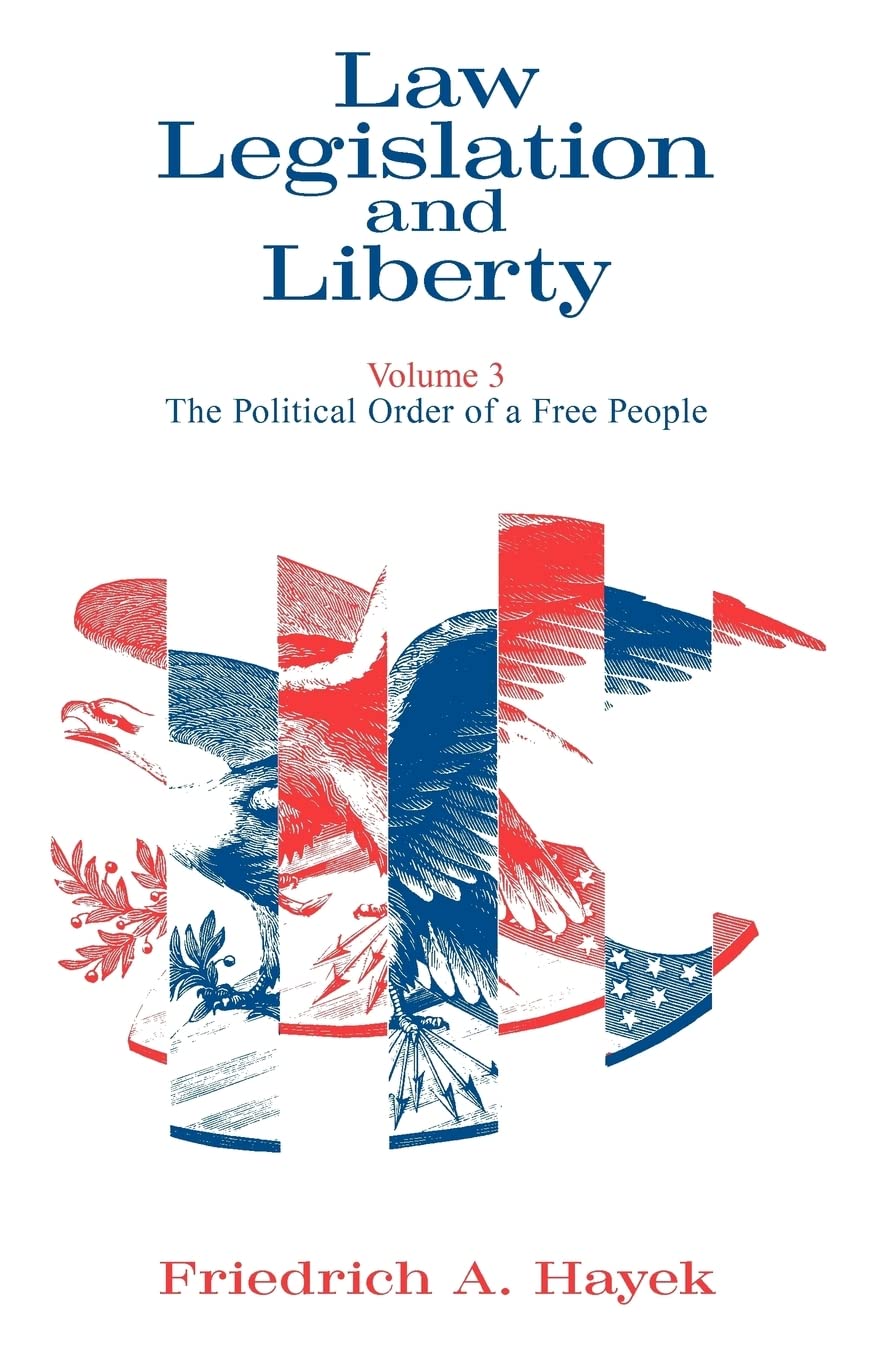
Law, Legislation & Liberty, Volume 3: The Political Order of a Free People by F. A. Hayek – A Definitive Treatise on Con
Inclusive of all applicable taxes. FREE shipping on all orders.
Available Offers
- 🚚Free Delivery — Free shipping on all orders
- 💵Cash on Delivery — Pay when your order arrives
- ↩️15-Day Easy Returns — Hassle-free return policy
- 🔒Cash on Delivery — Pay safely when your order arrives
Check Delivery
Product Description
Introduction
In the vast landscape of political philosophy and legal theory, few works stand as tall and as enduring as F. A. Hayek's monumental trilogy, Law, Legislation & Liberty. The third and concluding volume, The Political Order of a Free People, published by the University of Chicago Press, is a masterful synthesis of Hayek's lifelong inquiry into the foundations of a free society. For Indian readers, students of law, political science, and economics, this hardcover edition offers a profound exploration of how a spontaneous order of liberty can be sustained through the rule of law, constitutional design, and the limits of governmental power. It is not merely a book; it is a rigorous intellectual toolkit for understanding the delicate balance between individual freedom and collective governance.
Book Overview
This concluding volume brings Hayek's ambitious project to a powerful close. Building on the first two volumes—Rules and Order and The Mirage of Social Justice—Hayek here presents his clearest and most uncompromising vision of a political order that is both free and stable. He challenges the prevailing notions of democracy, arguing that unlimited majority rule can undermine the very liberties it is meant to protect. Instead, Hayek proposes a constitutional model that separates the making of general rules of just conduct from the administration of government. This book is a deep dive into the nature of law, the role of legislation, and the institutional framework necessary to preserve a free society against the encroachments of arbitrary power. It is a work of immense relevance for anyone concerned with the future of liberal democracy in India and around the world.
Key Highlights
- Concluding Masterpiece: The final volume of Hayek's trilogy, offering a complete and coherent political philosophy.
- Original Constitutional Model: A groundbreaking proposal for a bicameral legislature that distinguishes between law-making and governance.
- Defence of Spontaneous Order: A rigorous argument for how complex social systems emerge from individual actions, not central planning.
- Critical Analysis of Democracy: A sobering examination of how majoritarian democracy can become a threat to liberty if unchecked.
- Clarity and Eloquence: Hayek writes with a directness and intellectual honesty that makes complex ideas accessible to serious readers.
Inside the Book
The book is structured around Hayek's central thesis: that a free society requires a clear distinction between the rule of law (nomos) and the commands of government (thesis). He argues that true law is discovered, not made, and that legislation should be limited to articulating universal rules of just conduct. Inside, you will find rigorous chapters on the concept of a free people, the separation of powers in a modern context, the role of democracy as a safeguard against tyranny, and the necessity of limiting government by a higher legal framework. Hayek also addresses the failures of socialism and the dangers of unlimited administrative discretion. Each chapter is a building block in his comprehensive vision of a political order that respects individual autonomy while ensuring social cohesion.
Key Topics
- The meaning of a free political order
- Nomos (law) versus thesis (legislation)
- The model constitution for a free people
- Democracy and its limits
- The role of the judiciary in a free society
- Spontaneous order and social evolution
- The critique of social justice as a concept
- Constitutional safeguards against majority tyranny
Reader Benefits
- Deepen Your Understanding: Gain a foundational grasp of the principles that underpin liberal democracy and the rule of law.
- Sharpen Your Critical Thinking: Engage with Hayek's challenging ideas that question conventional political wisdom.
- Enhance Academic Work: An essential resource for essays, dissertations, and research in law, political science, and economics.
- Inform Your Worldview: Develop a coherent framework for evaluating contemporary political debates on freedom, regulation, and governance.
- Own a Classic: Add a timeless hardcover volume to your personal library from a Nobel Prize-winning economist.
Learning Outcomes
- Understand the distinction between law and legislation in a free society.
- Analyze the strengths and weaknesses of majoritarian democracy.
- Evaluate Hayek's proposed constitutional model for limiting government power.
- Critically assess the concept of social justice from a classical liberal perspective.
- Articulate the principles of spontaneous order and their application to political systems.
- Identify the institutional conditions necessary for the preservation of individual liberty.
Who Should Read
This book is indispensable for law students and legal professionals seeking a deeper philosophical grounding in jurisprudence. It is equally vital for students and scholars of political science, economics, and philosophy. Policymakers, journalists, and public intellectuals who grapple with questions of liberty, governance, and constitutional design will find Hayek's insights invaluable. Any thoughtful reader in India who wishes to understand the foundations of a free and prosperous society—and the threats it faces—should engage with this seminal work. It is for those who are not satisfied with slogans but demand rigorous, principled argument.
About the Author
Friedrich August von Hayek (1899–1992) was one of the most influential economists and political philosophers of the 20th century. A Nobel laureate in Economic Sciences (1974), Hayek's work spans monetary theory, capital theory, the history of ideas, and legal philosophy. His profound critique of socialism and central planning, articulated in works like The Road to Serfdom and The Constitution of Liberty, reshaped global political discourse. Hayek's intellectual legacy continues to inspire debates on liberty, the rule of law, and the limits of government.
About the Publisher
The University of Chicago Press is one of the most prestigious academic publishers in the world. Renowned for its rigorous editorial standards and commitment to scholarly excellence, it has been the home of groundbreaking works in economics, law, philosophy, and the social sciences for over a century. This hardcover edition reflects the Press's dedication to producing durable, beautifully crafted books that serve as lasting resources for students, scholars, and general readers alike.
Conclusion
Law, Legislation & Liberty, Volume 3: The Political Order of a Free People is not just a book—it is an intellectual landmark. For Indian readers seeking to navigate the complexities of modern governance with clarity and principle, Hayek's final volume offers an indispensable map. It challenges us to think deeply about the nature of law, the purpose of government, and the conditions that allow human freedom to flourish. This hardcover edition from the University of Chicago Press is a treasure for any serious library. Order your copy today from Bookshops.in and engage with one of the most important political philosophies of our time.
Quick Summary
Law, Legislation & Liberty, Volume 3: The Political Order of a Free People is the culminating work of Nobel laureate F. A. Hayek's profound exploration of the principles that sustain a free society. In this volume, Hayek delves into the nature of political order, arguing that true liberty can only flourish under a system where the rule of law constrains government power and where constitutional design prevents democratic tyranny. He offers a sharp critique of unlimited legislative authority and proposes a model constitution that safeguards individual rights. Written with clarity and intellectual rigor, this book is essential for anyone seeking a deeper understanding of legal philosophy, constitutional economics, and the foundations of liberal democracy. Indian law students, political scientists, economists, and policymakers will find Hayek's ideas particularly relevant in the context of India's constitutional framework and ongoing debates about liberty and governance. By purchasing this hardcover edition from Bookshops.in, you gain access to a timeless classic that belongs in every serious library.
Book Highlights
Book Specifications
| ISBN-13 | 9780226320908 |
| ISBN-10 | 0226320901 |
| Publisher | University of Chicago Press |
| Language | English |
| Dimensions | 21.69 x 14.07 x 1.4 cm |
| Weight | 295 g |
| Category | Political Science › Political History |
| Genre | Nonfiction |
| Reading Age | Adult |
| Original Language | English |
Frequently Asked Questions
What is the main theme of this book?
Is this book part of a series?
Who is the author F. A. Hayek?
Is this book suitable for Indian readers?
What is the reading level of this book?
Does the book include practical examples?
Is there a newer edition available?
Can I use this book for my law course?
What makes this book different from other Hayek works?
Is the book available in paperback?
What is the price in INR?
How is the book shipped?
Readers Also Search For
Customers Also Bought
Constitutional Law
Indigenous law and the state
Constitutional Law
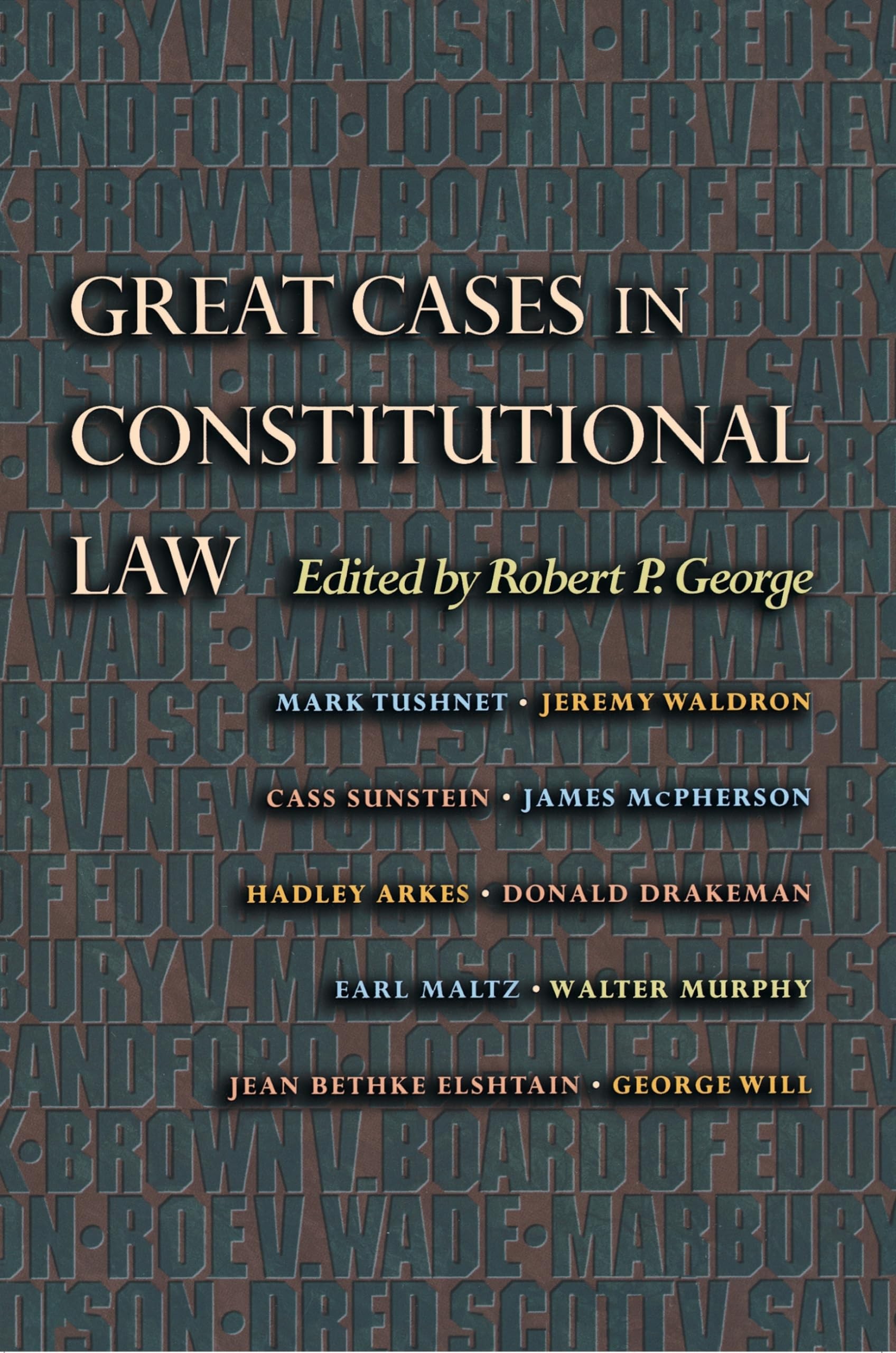
Great Cases in Constitutional Law (English, Robert P. George)
Constitutional Law
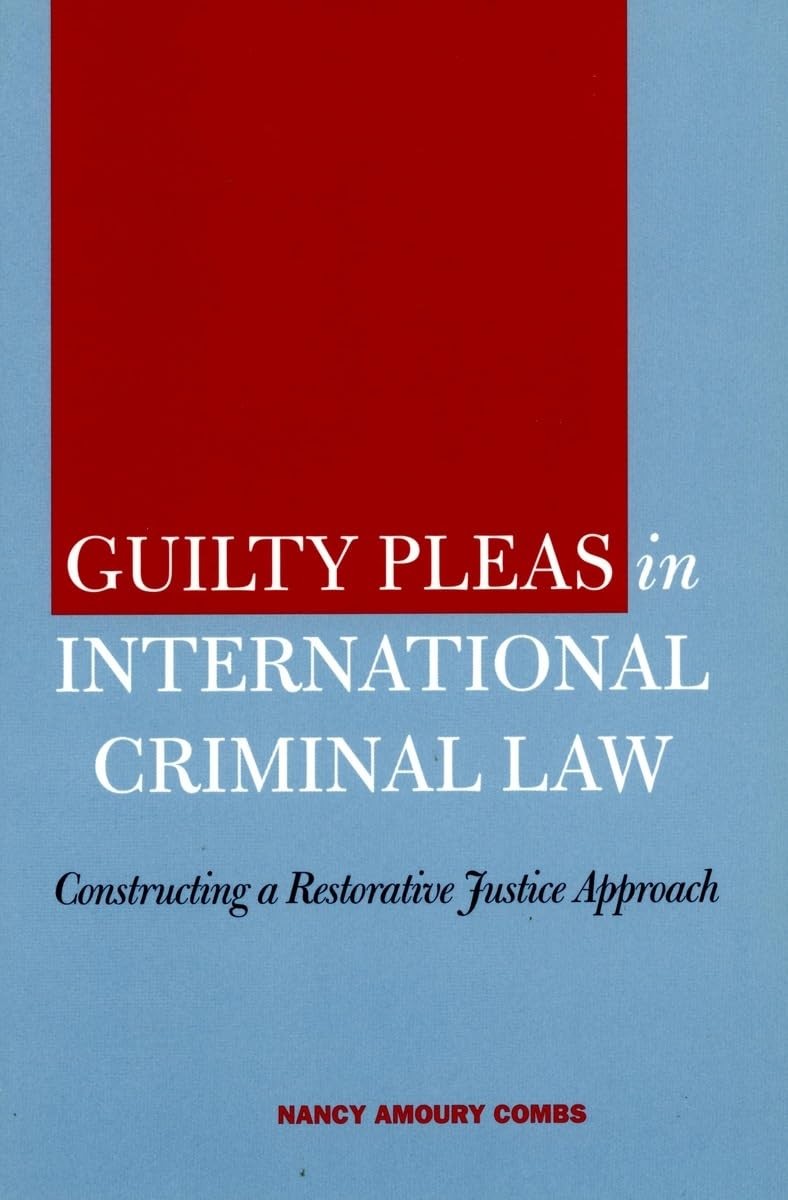
Guilty Pleas in International Criminal Law (English, Nancy Amoury Combs)
Constitutional Law
The Growth of the Law by Benjamin N. Cardozo – Jurisprudence
Constitutional Law
Court of Injustice: Law Without Recognition in U.S. Immigration by J. C. Salyer
Constitutional Law
Youth: Learning Through Cases
Related Products
View All
Law
Mediasport | by Lawrence Wenner | Routledge | by Lawrence Wenner | Routledge | by Lawrence Wenner | Routledge | by Lawrence Wenner | Routledge | by Lawrence Wenner | Routledge | by Lawrence Wenner | Routledge | by Lawrence Wenner | Routledge | by Lawrence Wenner | Routledge | by Lawrence Wenner | Routledge | by Lawrence Wenner | Routledge | by Lawrence Wenner | Routledge | by Lawrence Wenner | Routledge | by Lawrence Wenner | Routledge | by Lawrence Wenner | Routledge | by Lawrence Wenner | Rout
Law
Human Rights Diplomacy | by Rein Mullerson | Routledge | by Rein Mullerson | Routledge | by Rein Mullerson | Routledge | by Rein Mullerson | Routledge | by Rein Mullerson | Routledge | by Rein Mullerson | Routledge | by Rein Mullerson | Routledge | by Rein Mullerson | Routledge | by Rein Mullerson | Routledge | by Rein Mullerson | Routledge | by Rein Mullerson | Routledge | by Rein Mullerson | Routledge | by Rein Mullerson | Routledge | by Rein Mullerson | Routledge | by Rein Mullerson | Routled
Law
Rome the Law-Giver | by Declareuil J. | Routledge | by Declareuil J. | Routledge | by Declareuil J. | Routledge | by Declareuil J. | Routledge | by Declareuil J. | Routledge | by Declareuil J. | Routledge | by Declareuil J. | Routledge | by Declareuil J. | Routledge | by Declareuil J. | Routledge | by Declareuil J. | Routledge | by Declareuil J. | Routledge | by Declareuil J. | Routledge | by Declareuil J. | Routledge | by Declareuil J. | Routledge | by Declareuil J. | Routledge | by Declareuil

Law
Human Rights and Gender Politics | by Anne-Marie Hilsdon | Martha MacIntyre | Vera MacKie | Routledge | by Anne-Marie Hilsdon | Martha MacIntyre | Vera MacKie | Routledge | by Anne-Marie Hilsdon | Martha MacIntyre | Vera MacKie | Routledge | by Anne-Marie Hilsdon | Martha MacIntyre | Vera MacKie | Routledge | by Anne-Marie Hilsdon | Martha MacIntyre | Vera MacKie | Routledge | by Anne-Marie Hilsdon | Martha MacIntyre | Vera MacKie | Routledge | by Anne-Marie Hilsdon | Martha MacIntyre | Vera Mac
Law
Politics of Human Rights in Southeast Asia | by Philip J. Eldridge | Routledge | by Philip J. Eldridge | Routledge | by Philip J. Eldridge | Routledge | by Philip J. Eldridge | Routledge | by Philip J. Eldridge | Routledge | by Philip J. Eldridge | Routledge | by Philip J. Eldridge | Routledge | by Philip J. Eldridge | Routledge | by Philip J. Eldridge | Routledge | by Philip J. Eldridge | Routledge | by Philip J. Eldridge | Routledge | by Philip J. Eldridge | Routledge | by Philip J. Eldridge |
Law