
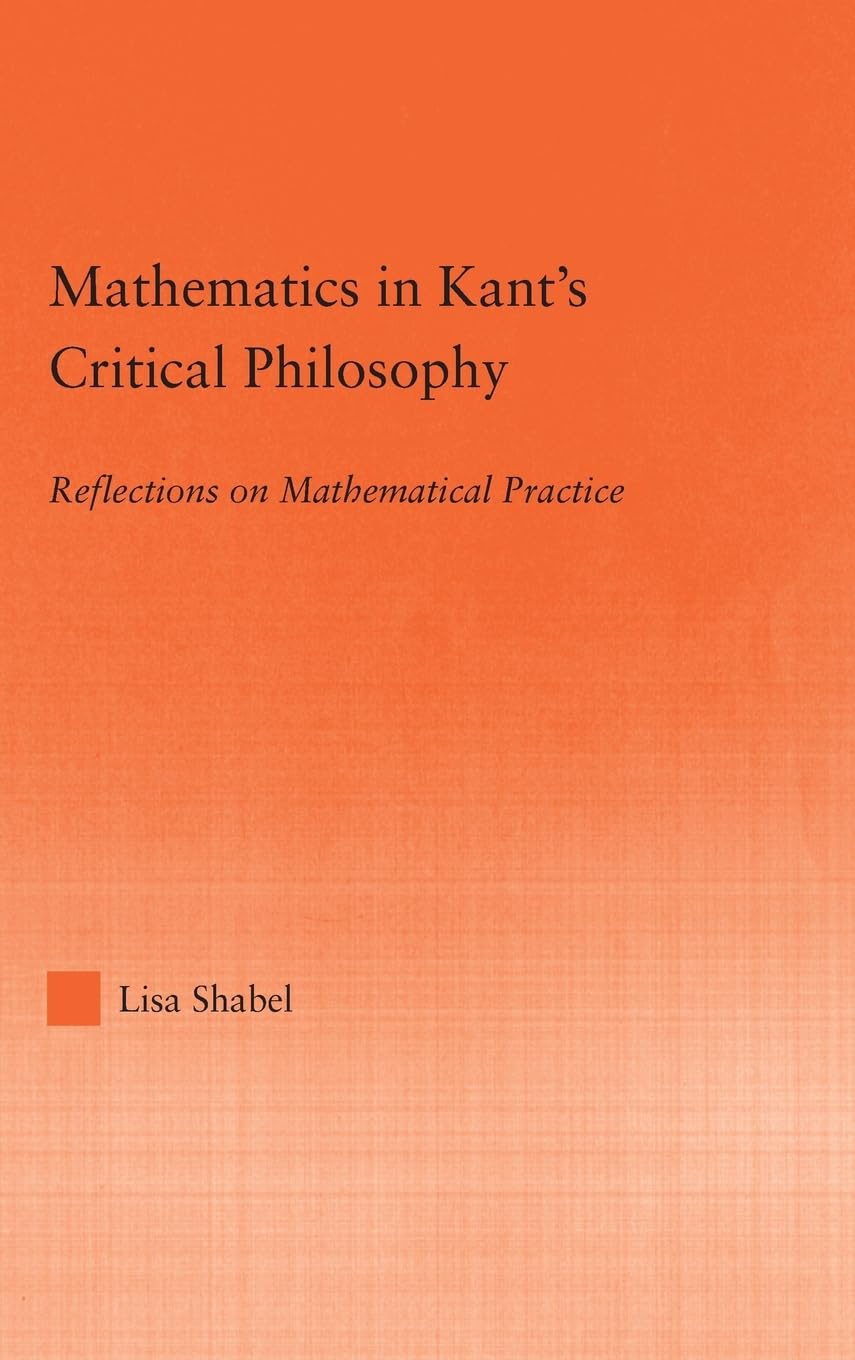
Mathematics in Kant's Critical Philosophy: Reflections on Mathematical Practice by Lisa Shabel – A Scholarly Analysis of
Inclusive of all applicable taxes. FREE shipping on all orders.
Available Offers
- 🚚Free Delivery — Free shipping on all orders
- 💵Cash on Delivery — Pay when your order arrives
- ↩️15-Day Easy Returns — Hassle-free return policy
- 🔒Cash on Delivery — Pay safely when your order arrives
Check Delivery
Product Description
Introduction
For students of philosophy and mathematics alike, Immanuel Kant’s critical philosophy presents a fascinating, yet often daunting, intersection between abstract reasoning and concrete mathematical practice. Lisa Shabel’s Mathematics in Kant's Critical Philosophy: Reflections on Mathematical Practice offers a rigorous and illuminating exploration of how Kant’s theories of knowledge were deeply influenced by the mathematical methods of his time. This hardcover volume from Routledge is an indispensable resource for Indian scholars, researchers, and advanced students seeking to understand the foundations of Kantian thought through the lens of eighteenth-century mathematics.
Book Overview
This book is not merely a commentary on Kant; it is a contextual re-reading that places his critical philosophy within the actual mathematical practices of the Enlightenment era. Shabel argues that to truly grasp Kant’s theory of mathematical construction, one must first understand the textbooks and problems that shaped his thinking. By examining Euclid’s geometry and Christian Wolff’s mathematical methodologies, the author reconstructs the intellectual environment that informed Kant’s Critique of Pure Reason. The result is a work that clarifies long-debated passages and offers a fresh perspective on the relationship between intuition, concept, and construction in mathematics.
Key Highlights
- Contextual Analysis: A thorough examination of eighteenth-century mathematical textbooks, providing the necessary background for interpreting Kant’s philosophy.
- Original Interpretation: Shabel offers a new reading of Kant’s theory of mathematical construction, challenging conventional interpretations.
- Euclid and Wolff: Detailed case studies of Euclid’s Elements and Wolff’s mathematical works, showing their direct influence on Kant.
- Clarity on Debates: Sheds light on many opaque and contested passages in Kant’s writings, making them accessible to modern readers.
- Interdisciplinary Approach: Bridges the gap between the history of mathematics, philosophy of science, and Kantian scholarship.
Inside the Book
The volume is structured to guide the reader from historical context to philosophical depth. Shabel begins by situating Kant’s work within the mathematical culture of the 1700s, discussing the role of geometry, arithmetic, and algebra in early modern thought. She then moves into a detailed analysis of Kant’s concept of intuition and how it relates to the construction of mathematical objects. Through close readings of primary sources, the book demonstrates how Kant’s notion of a priori intuition was not abstract but grounded in the actual procedures of drawing figures, manipulating symbols, and solving problems. Later chapters tackle the implications of this view for Kant’s transcendental idealism, offering a coherent framework for understanding his philosophy of mathematics.
Key Topics
- Kant’s theory of mathematical construction and its roots in eighteenth-century practice.
- The role of Euclidean geometry in shaping Kant’s concept of space.
- Christian Wolff’s influence on Kant’s methodology and logic.
- The relationship between pure intuition and empirical intuition in mathematical reasoning.
- Reinterpretation of Kant’s Schematism and Axioms of Intuition.
- Historical connections between mathematical problem-solving and transcendental philosophy.
Reader Benefits
This book empowers readers to move beyond superficial readings of Kant and engage with his philosophy on its own historical terms. By understanding the mathematical practice that Kant assumed, readers gain a more accurate and nuanced grasp of his arguments. For Indian students preparing for competitive exams or research in philosophy, this volume provides a solid foundation in both the history of ideas and the technical aspects of Kant’s system. It also helps philosophers of science appreciate how mathematical reasoning was understood before the formalization of modern logic.
Learning Outcomes
- Develop a deep understanding of how Kant’s critical philosophy was shaped by real mathematical problems.
- Learn to critically evaluate traditional interpretations of Kant’s philosophy of mathematics.
- Gain the ability to connect historical mathematical texts with philosophical concepts.
- Master the key arguments in Kant’s Critique of Pure Reason related to space, time, and intuition.
- Acquire tools to analyze the role of construction in both geometry and algebra.
Who Should Read
This book is ideal for postgraduate students and faculty in philosophy departments, especially those specializing in Kant, German idealism, or the history of philosophy. It is equally valuable for mathematicians and historians of science who wish to explore the philosophical underpinnings of their discipline. Indian readers in interdisciplinary programs—such as cognitive science, logic, or mathematics education—will find Shabel’s work a rich resource for understanding how abstract thought emerges from concrete practice.
About the Author
Lisa Shabel is a professor of philosophy at The Ohio State University, where she specializes in the history of modern philosophy, particularly Immanuel Kant and the philosophy of mathematics. Her research focuses on the intersection of philosophical theory and scientific practice in the eighteenth century. Shabel has published numerous articles on Kant’s theory of mathematics and is widely recognized for her meticulous historical scholarship. Her work has been instrumental in reshaping how scholars understand the role of mathematical construction in Kant’s critical project.
About the Publisher
Routledge is a leading global academic publisher in the humanities and social sciences, known for its authoritative books in philosophy, history, and science. With a reputation for rigorous editorial standards, Routledge brings works like Shabel’s to a worldwide audience of scholars and students. This hardcover edition is built to last, making it a valuable addition to any academic library or personal collection.
Conclusion
Mathematics in Kant's Critical Philosophy: Reflections on Mathematical Practice is a landmark study that reconnects Kant’s transcendental philosophy with the mathematical realities of his era. Lisa Shabel’s contextual approach illuminates difficult passages and offers a coherent, historically grounded interpretation that will benefit serious students of philosophy and mathematics. For Indian readers seeking to deepen their understanding of Kant, this book is an essential and rewarding investment. Order your copy today from Bookshops.in and explore the fascinating dialogue between mathematical practice and critical thought.
Quick Summary
Mathematics in Kant's Critical Philosophy: Reflections on Mathematical Practice by Lisa Shabel is a meticulously researched academic work that reinterprets Kant's philosophy of mathematics by grounding it in the actual mathematical textbooks and practices of the 18th century. Shabel argues that previous readings of Kant's theory of mathematical construction have been incomplete because they ignored the historical context of Euclidean geometry and Wolffian mathematics. By examining these sources in detail, she sheds new light on long-debated passages in Kant's Critique of Pure Reason and other critical writings. This book is intended for advanced students and researchers in philosophy, history of mathematics, and Kantian studies. Readers will learn how Kant's concept of synthetic a priori knowledge in mathematics emerged from the mathematical practices of his time, and how this understanding resolves many interpretive puzzles. Published by Routledge in a durable hardcover edition, it is a must-have for university libraries and serious scholars. Buy from Bookshops.in for reliable delivery across India and authentic imported editions.
Book Highlights
Book Specifications
| ISBN-13 | 9780415939553 |
| ISBN-10 | 0415939550 |
| Publisher | Routledge |
| Language | English |
| Dimensions | 16.1 x 1.65 x 23.57 cm |
| Weight | 64 g |
| Category | Philosophy › History & Surveys |
| Genre | Nonfiction |
| Reading Age | Adult |
| Original Language | English |
Frequently Asked Questions
What is the main thesis of Mathematics in Kant's Critical Philosophy?
Who is Lisa Shabel?
Is this book suitable for undergraduates?
Does the book cover Kant's entire critical philosophy?
Why are Euclid and Wolff important in this book?
Is the book available in Indian bookstores?
Does the book include a bibliography?
What language is the book written in?
Is this book relevant for mathematicians?
Does the book discuss Kant's synthetic a priori?
Can this book be used for a PhD seminar?
Where can I buy this book in India?
Readers Also Search For
Customers Also Bought
Islam
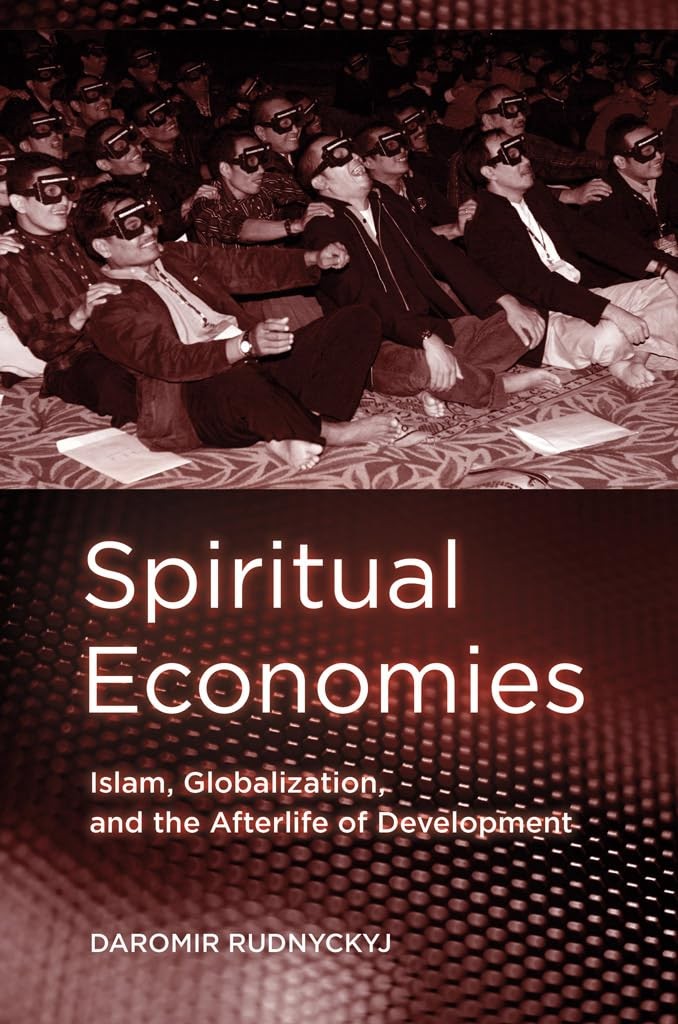
Spiritual Economies (English, Daromir Rudnyckyj)

Islam
Who Is Allah? (English, Bruce B. Lawrence)
Islam
Islam and Liberal Citizenship: The Search for an Overlapping Consensus by Andrew F. March

Islam
Fiqh Us-Sunnah: Funerals and Diggers by Al-Sayyid Sabiq – Islamic Funeral Guide

Christianity
Genetics (English, Thomas a. Shannon | Mark P. Aulisio | Françoise Baylis)

Hinduism
Karma and Creativity by Christopher Key Chapple – Indian Philosophy
Related Products
View All
Philosophy
Latin American Philosophy: Currents, Issues, Debates by Eduardo Mendieta

Philosophy
Al-Farabi's Short Commentary on Aristotle's Prior Analytics by Nicholas Rescher – Philosophy
Philosophy
Poetics of Imagining: Modern to Post-modern by Richard Kearney
Philosophy
The Metaphysics of Extrinsic Properties: 11 (Metaphysical Research, 11)
Philosophy
Dialogues on Metaphysics and on Religion by Nicolas Malebranche – Philosophy
Philosophy