
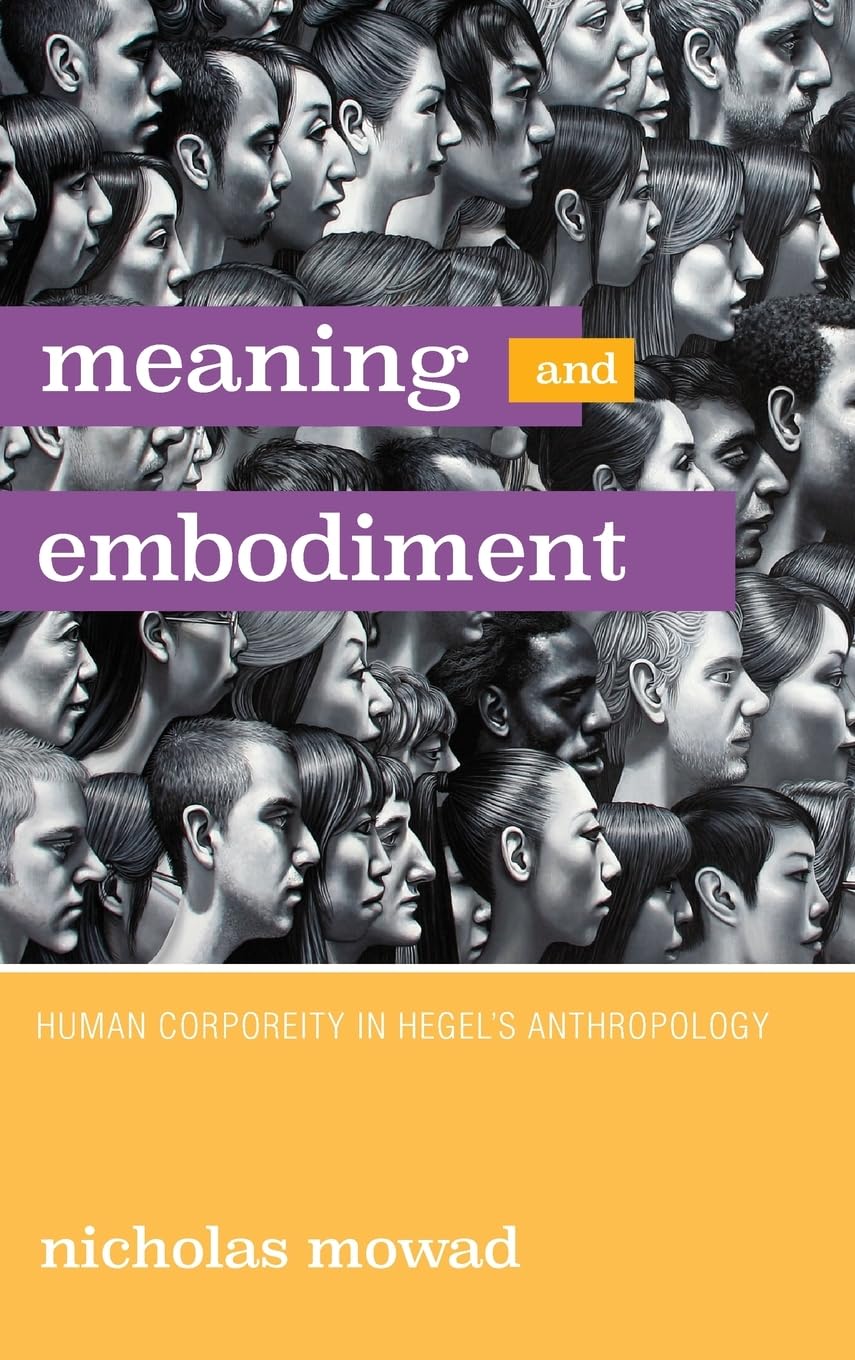
Meaning and Embodiment: Human Corporeity in Hegel's Anthropology by Nicholas Mowad – A Philosophical Study of Body, Spir
Inclusive of all applicable taxes. FREE shipping on all orders.
Available Offers
- 🚚Free Delivery — Free shipping on all orders
- 💵Cash on Delivery — Pay when your order arrives
- ↩️15-Day Easy Returns — Hassle-free return policy
- 🔒Cash on Delivery — Pay safely when your order arrives
Check Delivery
Product Description
Introduction
What does it truly mean to be human in a physical body? In Meaning and Embodiment: Human Corporeity in Hegel's Anthropology, philosopher Nicholas Mowad offers a rigorous yet accessible exploration of how our bodies shape our identity, culture, and spiritual life. Drawing on Hegel's often-overlooked Anthropology, this book reveals that embodiment is not just a biological fact but a dynamic process through which we create meaning, develop habits, and experience the world. For Indian readers, students, and scholars of philosophy, this work bridges Western idealism with universal questions about selfhood, freedom, and the body-mind relationship.
Book Overview
This hardcover volume, published by the prestigious State University of New York Press, delves into Hegel's intricate theory of human corporeity. Mowad argues that humans are not merely animals with added consciousness; rather, we actively produce our own spiritual embodiment through culture, habits, and symbolic action. The book traces how the body functions simultaneously as a physical object, a living organism, a site of social meaning, and a vehicle for spiritual expression. By clarifying these different layers, Mowad addresses persistent problems in philosophy—such as the mind-body dualism, aesthetic experience, and the feeling of meaninglessness—with fresh insight. This is the first comprehensive study of Hegel's anthropology in English, making it an essential resource for understanding how embodiment shapes human existence.
Key Highlights
- Original synthesis of Hegel's philosophy of the body, rarely treated in such depth
- Clear, non-technical language that makes complex Hegelian ideas accessible to students
- Real-world relevance—connects embodiment to culture, language, aesthetics, and existential angst
- Critical engagement with contemporary issues like identity, habit formation, and symbolic meaning
- Scholarly yet readable, with a logical structure that guides the reader from basic to advanced concepts
Inside the Book
The book unfolds in a carefully structured argument. It begins with Hegel's critique of Cartesian dualism, showing how the body is not an external prison but an integral part of selfhood. Mowad then explores the development of human embodiment through three stages: the natural body subject to physical forces, the living body with biological drives, and the spiritual body shaped by culture and habit. Later chapters examine how humans experience beauty, sublimity, and even nihilism—all rooted in our unique capacity to transcend mere biological meaning. The final sections apply Hegel's insights to issues of symbolic speech, ritual, and the formation of ethical life. Throughout, Mowad uses examples from everyday experience, making abstract theory tangible.
Key Topics
- Hegel's anthropology and philosophy of mind
- The concept of corporeity (Leiblichkeit) in German idealism
- Embodiment as a process of self-making through habit and culture
- The difference between animal and human meaning-making
- Aesthetic experience: beauty, sublimity, and the sublime in nature and art
- Nihilism and the feeling of meaninglessness
- Symbolic systems: language, gesture, and social ritual
- The body as a site of freedom and constraint
Reader Benefits
- Deepen your understanding of Hegel's philosophy beyond the Phenomenology of Spirit
- Gain tools to analyze contemporary debates on identity, embodiment, and culture
- Bridge theory and life—see how abstract ideas illuminate personal experience
- Strengthen your academic writing and critical thinking through rigorous argumentation
- Access a niche subject that is rarely covered in standard philosophy courses
Learning Outcomes
- Understand the central role of the body in Hegel's system
- Explain how habits and culture shape our spiritual identity
- Critically evaluate dualistic views of mind and body
- Apply Hegelian concepts to issues of aesthetics, ethics, and meaning
- Recognize the different layers of embodiment—physical, biological, social, spiritual
Who Should Read
This book is ideal for undergraduate and postgraduate students of philosophy, especially those studying German idealism, phenomenology, or philosophy of mind. It will also appeal to scholars of Hegel, cultural theorists, and psychologists interested in embodiment and selfhood. General readers with a background in philosophy or a deep curiosity about what it means to be human will find it rewarding. Indian readers engaged with Vedantic or Buddhist ideas of the self will discover fascinating parallels and contrasts with Hegel's Western framework.
About the Author
Nicholas Mowad is a philosopher specializing in German idealism, particularly Hegel's philosophy of mind and anthropology. He has taught at several universities and published numerous articles on Hegel, embodiment, and aesthetics. His work is known for making complex Hegelian ideas accessible without sacrificing depth. Meaning and Embodiment is his first major monograph, representing years of meticulous research and teaching experience.
About the Publisher
State University of New York Press (SUNY Press) is a leading academic publisher known for its distinguished series in philosophy, including the SUNY series in Hegelian Studies. Founded in 1966, SUNY Press has a reputation for publishing rigorous, innovative scholarship that advances knowledge across the humanities and social sciences. This volume upholds that tradition, offering a definitive study of Hegel's anthropology for a global audience.
Conclusion
Meaning and Embodiment is a landmark work that reorients our understanding of Hegel—and of human existence itself. By showing how we are embodied in multiple, overlapping ways, Nicholas Mowad provides a powerful framework for thinking about identity, culture, and the search for meaning in a fragmented world. Whether you are a philosophy student, a curious intellectual, or someone seeking deeper insight into the body's role in shaping who we are, this book is an indispensable addition to your library. Order your copy today from Bookshops.in and embark on a transformative journey into the heart of human corporeity.
Quick Summary
Meaning and Embodiment: Human Corporeity in Hegel's Anthropology by Nicholas Mowad is a rigorous scholarly work that delves into G.W.F. Hegel's philosophical anthropology, focusing on the role of the body in shaping human identity, culture, and meaning. Mowad argues that for Hegel, being human involves actively producing one's own spiritual embodiment through habits, cultural practices, and symbolic systems like language. Unlike animals, whose experience of nature is limited to biological drives, humans can appreciate beauty, confront nihilism, and create complex systems of meaning. The book examines how we are embodied in multiple ways at once—as physical, chemical, and spiritual beings—and how these layers interact. This volume is ideal for advanced philosophy students, researchers in German Idealism, and anyone interested in embodiment theory. Readers will gain a nuanced understanding of Hegel's view of the human condition, bridging his 19th-century system with contemporary questions about mind, body, and culture. By purchasing from Bookshops.in, Indian readers receive a genuine hardcover edition with reliable service.
Book Highlights
Book Specifications
| ISBN-13 | 9781438475578 |
| ISBN-10 | 1438475578 |
| Publisher | State University of New York Press |
| Language | English |
| Dimensions | 15.24 x 2.54 x 23.5 cm |
| Weight | 608 g |
| Country | India |
| Category | Humanities › Philosophy |
| Genre | Philosophy |
| Original Language | English |
Frequently Asked Questions
What is the main focus of Meaning and Embodiment?
Who is the author of this book?
Which Hegel text does this book analyze?
Is this book suitable for beginners in Hegel?
What does 'corporeity' mean in Hegel's context?
Does the book cover Hegel's aesthetics?
How does this book relate to contemporary embodiment studies?
What is the ISBN-13 of this book?
Is this book available in hardcover?
Does the book address nihilism?
What language is the book written in?
Why buy this book from Bookshops.in?
Readers Also Search For
Customers Also Bought
Islam
Spiritual Economies (English, Daromir Rudnyckyj)

Islam
Who Is Allah? (English, Bruce B. Lawrence)
Islam
Islam and Liberal Citizenship: The Search for an Overlapping Consensus by Andrew F. March
Islam
Fiqh Us-Sunnah: Funerals and Diggers by Al-Sayyid Sabiq – Islamic Funeral Guide

Christianity
Genetics (English, Thomas a. Shannon | Mark P. Aulisio | Françoise Baylis)

Hinduism
Karma and Creativity by Christopher Key Chapple – Indian Philosophy
Related Products
View All
Philosophy
Latin American Philosophy: Currents, Issues, Debates by Eduardo Mendieta

Philosophy
Al-Farabi's Short Commentary on Aristotle's Prior Analytics by Nicholas Rescher – Philosophy
Philosophy
Poetics of Imagining: Modern to Post-modern by Richard Kearney
Philosophy
The Metaphysics of Extrinsic Properties: 11 (Metaphysical Research, 11)
Philosophy
Dialogues on Metaphysics and on Religion by Nicolas Malebranche – Philosophy
Philosophy