
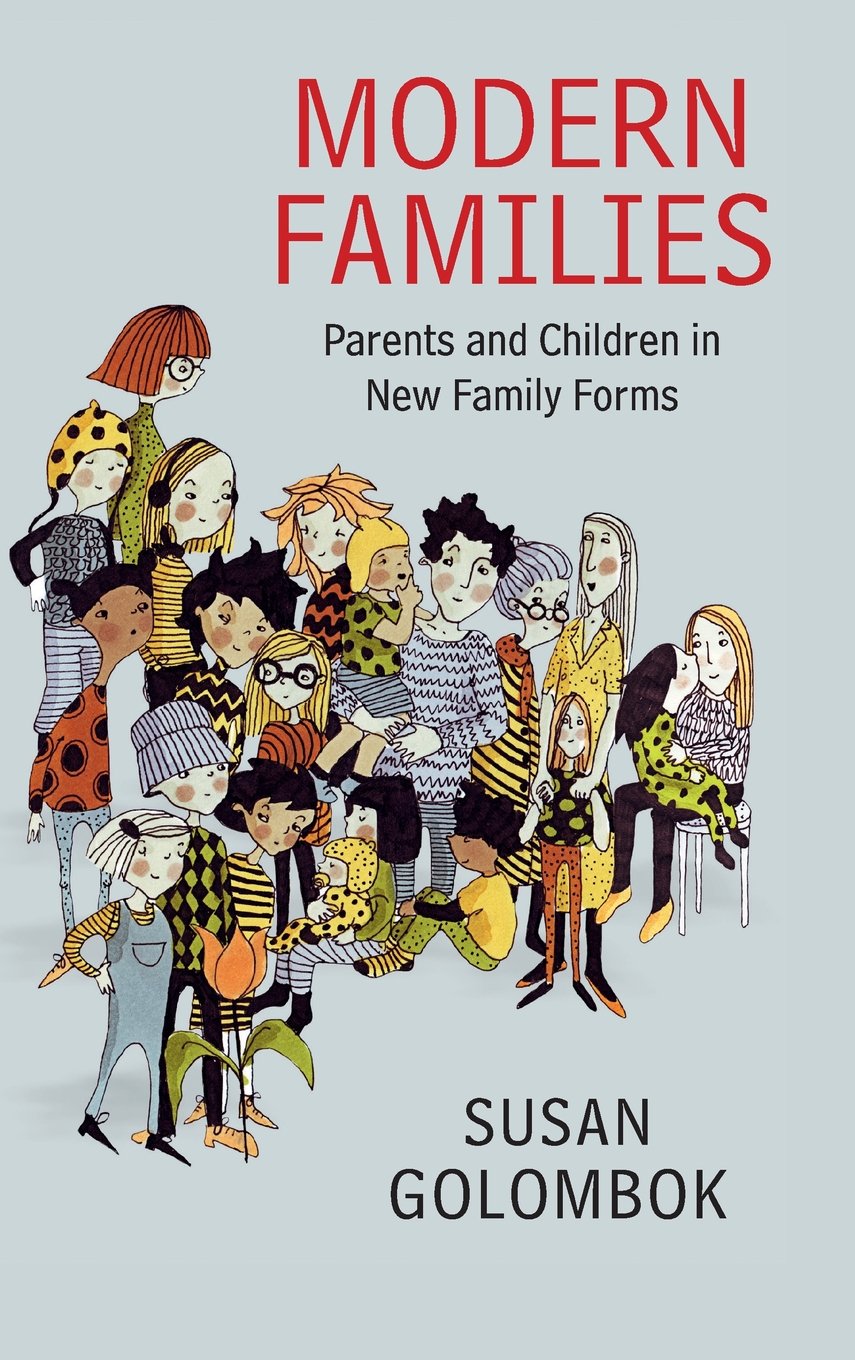
Modern Families: Parents and Children in New Family Forms – A Comprehensive Research Study by Susan Golombok
Inclusive of all applicable taxes. FREE shipping on all orders.
Available Offers
- 🚚Free Delivery — Free shipping on all orders
- 💵Cash on Delivery — Pay when your order arrives
- ↩️15-Day Easy Returns — Hassle-free return policy
- 🔒Cash on Delivery — Pay safely when your order arrives
Check Delivery
Product Description
Introduction
In a rapidly changing society, the definition of family has evolved far beyond the traditional nuclear unit. Modern Families: Parents and Children in New Family Forms by Susan Golombok offers a groundbreaking exploration of contemporary family structures, including lesbian mother families, gay father families, single mothers by choice, and families formed through assisted reproductive technologies like IVF, egg donation, sperm donation, embryo donation, and surrogacy. This book is essential for Indian readers and students seeking to understand how diverse family environments shape child development and well-being.
Book Overview
Published by Cambridge University Press, this hardcover volume presents decades of rigorous research from the world-renowned Centre for Family Research at the University of Cambridge. Golombok challenges long-held assumptions about the necessity of a mother and father in a child's life, arguing instead that the quality of relationships within a family—and the broader social environment—matters far more than the number, gender, sexual orientation, or biological relatedness of parents. The book systematically examines the psychological and social outcomes of children raised in these new family forms, offering a balanced, evidence-based perspective that is both compassionate and intellectually rigorous.
Key Highlights
- Evidence-Based Insights: Draws on longitudinal studies and large-scale data to debunk myths about non-traditional families.
- Global Relevance: While rooted in Western research, the findings are applicable to India's evolving family landscape, including surrogacy laws, single-parent households, and LGBTQ+ parenting.
- Challenging Theories: Questions classic developmental theories by showing that family structure is less critical than family process.
- Practical Implications: Offers valuable guidance for policymakers, educators, and mental health professionals working with diverse families.
Inside the Book
The book is structured into thematic chapters that guide the reader through the complexities of modern parenting. Golombok begins by setting the historical and social context, then moves into detailed analyses of each family type. She explores the experiences of lesbian mothers, gay fathers, single mothers by choice, and families created through donor conception and surrogacy. Each chapter includes case studies, statistical findings, and discussions of ethical and legal issues. The final chapters synthesize the evidence to propose a new framework for understanding child development—one that prioritizes loving relationships over traditional norms.
Key Topics
- Lesbian Mother Families: Examining children's adjustment, social relationships, and gender development.
- Gay Father Families: The impact of having two fathers on children's emotional and cognitive growth.
- Single Mothers by Choice: Why women choose solo parenthood and how children fare.
- Assisted Reproductive Technologies: The psychological effects of donor conception, surrogacy, and IVF on parents and children.
- Quality of Family Relationships: How warmth, stability, and communication influence outcomes more than family structure.
- Policy and Legal Issues: Implications for family law, adoption, and reproductive rights in India and globally.
Reader Benefits
Readers will gain a nuanced understanding of how children thrive in diverse family settings. The book provides a counterpoint to popular fears and stereotypes, showing that children in modern families often exhibit strong psychological health, resilience, and secure attachments. For Indian students of psychology, sociology, and gender studies, this text offers a vital comparative perspective that enriches local discussions on family diversity. Parents, educators, and healthcare providers will also find actionable insights to support children from all family backgrounds.
Learning Outcomes
- Understand the key research findings on child development in non-traditional families.
- Critically evaluate myths and biases about parenting by LGBTQ+ individuals and single parents.
- Analyze the role of biological relatedness versus social parenting in child outcomes.
- Apply evidence-based knowledge to real-world contexts, such as counseling, teaching, or policy-making.
- Develop a more inclusive and scientifically grounded perspective on family diversity.
Who Should Read
This book is ideal for undergraduate and postgraduate students in psychology, sociology, social work, and gender studies. It is also highly relevant for family therapists, child psychologists, pediatricians, and legal professionals dealing with custody, adoption, and surrogacy cases. Additionally, anyone interested in contemporary social issues—especially in India where family structures are rapidly diversifying—will find this book enlightening and thought-provoking.
About the Author
Susan Golombok is a professor of family research and the director of the Centre for Family Research at the University of Cambridge. She is a leading authority on the psychology of parenting and child development in non-traditional families. Her work has been published in top-tier journals and has influenced policy and practice worldwide. Golombok is also the author of several other influential books, including Parenting: What Really Counts? and We Are Family: The Modern Transformation of Parents and Children.
About the Publisher
Cambridge University Press is a prestigious academic publisher with a history dating back to 1534. Known for its rigorous peer-review process and high-quality publications, Cambridge University Press is a trusted source for scholarly books in the humanities, social sciences, and sciences. This hardcover edition reflects the publisher's commitment to excellence in research dissemination.
Conclusion
Modern Families: Parents and Children in New Family Forms is a timely and essential read for anyone seeking to understand the realities of contemporary parenting. Susan Golombok's meticulous research dismantles outdated prejudices and offers a hopeful, evidence-based vision for the future of family life. Whether you are a student, professional, or curious reader, this book will transform how you think about what makes a family—and what truly matters for children's well-being. Order your copy from Bookshops.in today and join the conversation on modern family diversity.
Quick Summary
Modern Families: Parents and Children in New Family Forms by Susan Golombok is a landmark research volume that systematically examines parenting and child development across diverse family structures. Drawing on decades of empirical studies, Golombok explores lesbian mother families, gay father families, single mothers by choice, and families formed through assisted reproductive technologies such as IVF, egg donation, sperm donation, embryo donation, and surrogacy. The book critically evaluates popular myths and societal anxieties about these families, demonstrating that children raised in non-traditional settings show no developmental disadvantages compared to those in conventional two-parent households. Instead, Golombok argues that the quality of family relationships—warmth, stability, and support—is the crucial factor for healthy child development. This work challenges established psychological theories that privilege the traditional nuclear family and offers a more inclusive, evidence-based perspective. Ideal for psychology and sociology students, researchers, clinicians, and parents, this book provides a compassionate yet rigorous look at modern family life. Purchasing from Bookshops.in ensures you receive a genuine Cambridge University Press hardcover edition, delivered across India with trusted service.
Book Highlights
Book Specifications
| ISBN-13 | 9781107055582 |
| ISBN-10 | 110705558X |
| Publisher | Cambridge University Press |
| Language | English |
| Dimensions | 15.88 x 2.54 x 22.86 cm |
| Weight | 520 g |
| Country | India |
| Category | Health, Family & Personal Development › Family & Relationships |
| Genre | Non-fiction |
| Reading Age | Adult |
| Original Language | English |
Frequently Asked Questions
What is the main focus of Modern Families?
Who is the author of Modern Families?
Is this book based on research?
Does the book support same-sex parenting?
What family forms are covered?
Is this book suitable for Indian readers?
Does the book discuss assisted reproductive technologies?
What theories does the book challenge?
Is this a textbook?
What is the price of Modern Families in India?
Can I buy this book for a university course?
Does the book address ethical concerns?
Why should I buy from Bookshops.in?
Readers Also Search For
Customers Also Bought
Psychology
Koinonia: From Hate, Through Dialogue, to Culture in the Large Group by Patrick B. Demare
Psychology
Mindfulness-Based Interventions for Trauma and Its Consequences (Concise Guides on Trauma Care, 4)

Psychology
Handbook for Teaching Statistics and Research Methods by Mark E. Ware

Psychology
Psychoanalysis and the Nuclear Threat: Clinical and Theoretical Studies
Psychology
Humor and Psyche: Psychoanalytic Perspectives by James W. Barron

Relationships
The Experience and Expression of Uncertainty in Close Relationships by Jennifer A. Theiss
Related Products
View All
Health, Family & Personal Development
Making the Transition to Home: Simple Modifications to Encourage Independent Living
Health, Family & Personal Development
Asian Functional Foods (Nutraceutical Science and Technology)

Health, Family & Personal Development
State of the Marital Union: Rhetoric, Identity, and Nineteenth-Century Marriage Controversies
Health, Family & Personal Development
My Mindset, My Asset: Laying Hold on the Potentials of the Mind
Health, Family & Personal Development
Paraverbal Communication in Psychotherapy: Beyond the Words
Health, Family & Personal Development