
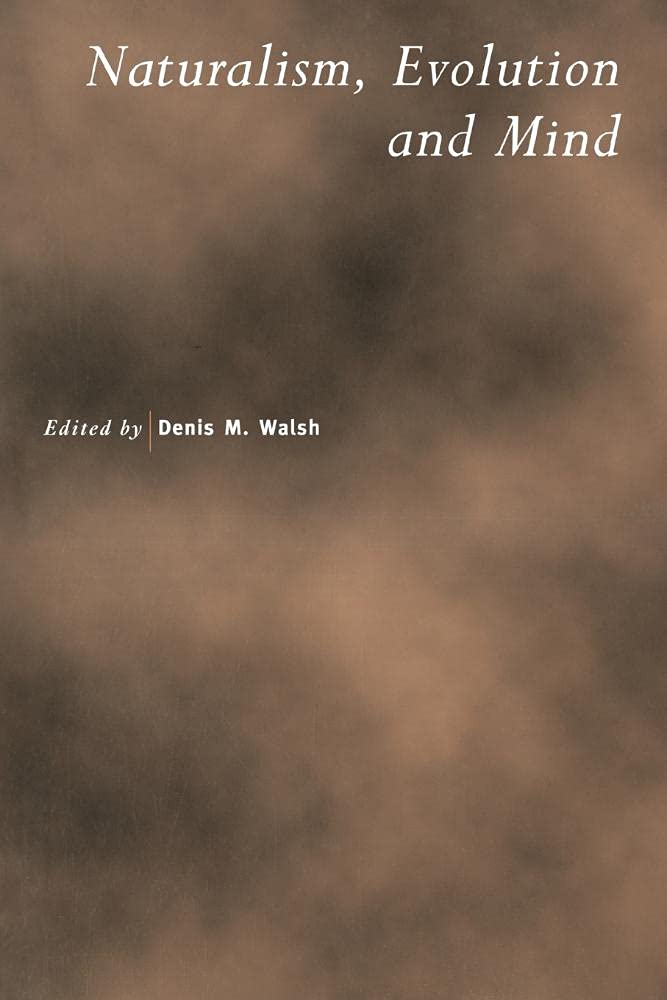
Naturalism, Evolution and Mind by D. M. Walsh – A Cambridge University Press Exploration of Evolutionary Philosophy of M
Inclusive of all applicable taxes. FREE shipping on all orders.
Available Offers
- 🚚Free Delivery — Free shipping on all orders
- 💵Cash on Delivery — Pay when your order arrives
- ↩️15-Day Easy Returns — Hassle-free return policy
- 🔒Cash on Delivery — Pay safely when your order arrives
Check Delivery
Product Description
Introduction
In the ever-evolving landscape of philosophy and cognitive science, few questions are as compelling as the place of the human mind within the natural order. Naturalism, Evolution and Mind, edited by D. M. Walsh and published by Cambridge University Press, offers a rigorous and thought-provoking exploration of how concepts from evolutionary biology can illuminate our understanding of the mind. This hardcover volume is an essential addition for Indian students, researchers, and academics who seek to bridge the gap between naturalised philosophy and the biological sciences.
Book Overview
This collection of original essays delves into the core tenets of naturalised philosophy of mind, with a particular focus on the evolutionary processes that shape cognition, intention, and consciousness. The book argues that to fully comprehend mental phenomena, we must view them through the lens of adaptation and natural selection. It challenges traditional dualistic perspectives and offers a cohesive vision where mind emerges as a product of natural, biological forces. The essays are carefully curated to provide both breadth and depth, making the volume suitable for advanced undergraduate courses, postgraduate seminars, and independent scholarly research.
Key Highlights
- Original Essays: Features contributions from leading philosophers and cognitive scientists, offering fresh perspectives on long-standing debates.
- Evolutionary Focus: Uniquely integrates Darwinian principles with philosophy of mind, exploring how natural selection shapes reasoning, rationality, and intentionality.
- Comprehensive Coverage: Addresses both intentional and phenomenal content, providing a balanced view of the mind's subjective and objective dimensions.
- Methodological Insights: Includes critical discussions on cognitive ethology and evolutionary psychology, helping readers understand the strengths and limitations of these approaches.
Inside the Book
The volume is structured around several key themes. It begins by examining the advantages of construing the mind as an adaptation, setting the stage for deeper inquiries into the naturalisation of intentional and phenomenal content. Subsequent chapters explore the evolution of means-end reasoning, the emergence of rationality, and the development of higher-order intentionality. The book also tackles methodological issues, questioning how we can reliably study animal cognition and human psychological evolution. Each essay is self-contained yet contributes to a larger narrative about the natural origins of mind.
Key Topics
- Naturalised philosophy of mind and its foundations
- The mind as a biological adaptation
- Evolution of intentionality and phenomenal consciousness
- Means-end reasoning and practical rationality
- Higher-order intentionality and self-awareness
- Cognitive ethology and the study of animal minds
- Methodological challenges in evolutionary psychology
Reader Benefits
Readers will gain a sophisticated understanding of how evolutionary biology can inform philosophical questions about the mind. The book encourages critical thinking by presenting multiple viewpoints and encouraging readers to evaluate evidence from both philosophy and empirical science. It also provides a solid foundation for further research, equipping scholars with the conceptual tools needed to engage with contemporary debates in naturalism, cognitive science, and evolutionary theory.
Learning Outcomes
- Understand the core arguments for naturalising the mind using evolutionary principles.
- Analyse the relationship between adaptation, function, and mental representation.
- Critically evaluate different approaches to explaining consciousness and intentionality.
- Apply evolutionary concepts to problems in philosophy of mind and cognitive science.
- Recognise the methodological strengths and pitfalls of evolutionary psychology and cognitive ethology.
Who Should Read
This book is ideal for philosophy students at the postgraduate level, especially those specialising in philosophy of mind, philosophy of biology, or cognitive science. It will also appeal to psychology and biology students interested in the philosophical underpinnings of their fields. Academic researchers and faculty members looking for a comprehensive, up-to-date reference on naturalism and evolution will find this volume invaluable. Indian readers engaged in interdisciplinary studies will appreciate its accessible yet scholarly tone.
About the Author
D. M. Walsh is a distinguished philosopher of biology and mind, known for his work on evolutionary theory, teleology, and naturalised epistemology. He has taught at leading universities and contributed extensively to academic journals. His editorial vision ensures that the essays in this volume are both intellectually rigorous and thematically coherent, making complex ideas accessible without sacrificing depth.
About the Publisher
Cambridge University Press is one of the world's oldest and most respected academic publishers. With a strong commitment to scholarly excellence, Cambridge publishes works that advance knowledge across disciplines. This hardcover edition reflects the publisher's high standards of production, featuring durable binding and clear typography suitable for long-term reference and repeated reading.
Conclusion
Naturalism, Evolution and Mind is a landmark collection that pushes the boundaries of how we think about the mind in a natural world. By weaving together evolutionary biology and philosophy, it offers readers a nuanced and scientifically informed perspective on consciousness, reason, and intentionality. For Indian students and academics seeking a deep, original, and challenging read, this book is a worthy investment. Order your copy today from Bookshops.in and add this essential volume to your library.
Quick Summary
Naturalism, Evolution and Mind, edited by D. M. Walsh, is a compelling collection of original essays that delve into the naturalised philosophy of mind through the lens of evolutionary biology. The book addresses fundamental questions about how mental phenomena—such as intentionality, phenomenal consciousness, reasoning, and rationality—can be understood as products of natural selection and adaptation. It brings together perspectives from philosophy, cognitive ethology, and evolutionary psychology, offering a rich interdisciplinary dialogue. This Cambridge University Press hardcover is ideal for Indian students and researchers in philosophy, cognitive science, and biology who seek to deepen their understanding of the mind's place in nature. Readers will gain insights into the evolution of means-end reasoning, higher-order intentionality, and methodological debates in studying animal and human cognition. By purchasing from Bookshops.in, you receive a premium physical copy that supports your academic journey with reliable, curated content for Indian readers.
Book Highlights
Book Specifications
| ISBN-13 | 9780521003735 |
| ISBN-10 | 0521003733 |
| Publisher | Cambridge University Press |
| Language | English |
| Dimensions | 15.19 x 1.85 x 22.91 cm |
| Weight | 389 g |
| Category | Humanities › Philosophy |
| Genre | Non-fiction |
| Original Language | English |
Frequently Asked Questions
What is the main theme of Naturalism, Evolution and Mind?
Who edited this collection?
Is this book suitable for Indian undergraduate students?
Does the book cover evolutionary psychology?
Which publisher released this book?
What is the ISBN for this edition?
Is this book available in hardcover?
What language is the book in?
Does the book discuss adaptation and mind?
Are there chapters on consciousness?
What is the price of this book on Bookshops.in?
Who should buy this book?
Does the book include author biographies?
Can I use this book for my research?
Readers Also Search For
Customers Also Bought

Islam
Spiritual Economies (English, Daromir Rudnyckyj)

Islam
Who Is Allah? (English, Bruce B. Lawrence)
Islam
Islam and Liberal Citizenship: The Search for an Overlapping Consensus by Andrew F. March

Islam
Fiqh Us-Sunnah: Funerals and Diggers by Al-Sayyid Sabiq – Islamic Funeral Guide

Christianity
Genetics (English, Thomas a. Shannon | Mark P. Aulisio | Françoise Baylis)

Hinduism
Karma and Creativity by Christopher Key Chapple – Indian Philosophy
Related Products
View All
Philosophy
Latin American Philosophy: Currents, Issues, Debates by Eduardo Mendieta

Philosophy
Al-Farabi's Short Commentary on Aristotle's Prior Analytics by Nicholas Rescher – Philosophy
Philosophy
Poetics of Imagining: Modern to Post-modern by Richard Kearney

Philosophy
The Metaphysics of Extrinsic Properties: 11 (Metaphysical Research, 11)

Philosophy
Dialogues on Metaphysics and on Religion by Nicolas Malebranche – Philosophy
Philosophy