
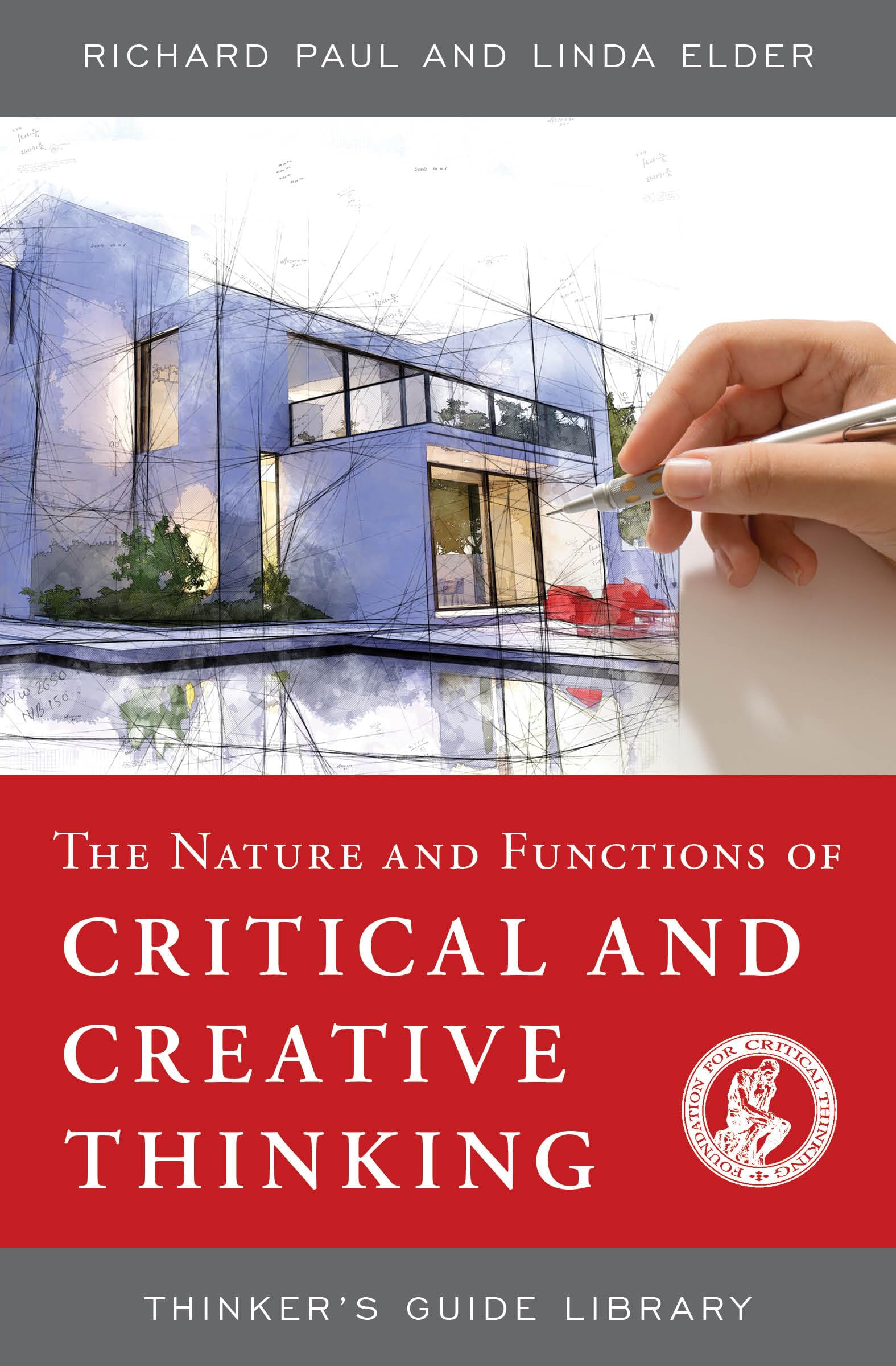
The Nature and Functions of Critical & Creative Thinking: A Thinker's Guide for Educators and Students by Richard Paul
Inclusive of all applicable taxes. FREE shipping on all orders.
Available Offers
- 🚚Free Delivery — Free shipping on all orders
- 💵Cash on Delivery — Pay when your order arrives
- ↩️15-Day Easy Returns — Hassle-free return policy
- 🔒Cash on Delivery — Pay safely when your order arrives
Check Delivery
Product Description
Introduction
In a world that demands both innovation and sound judgment, the ability to think critically and creatively is no longer optional—it is essential. The Nature and Functions of Critical & Creative Thinking by Richard Paul is a groundbreaking guide that dismantles the false divide between criticality and creativity. Instead of treating them as opposites, this book reveals how they are deeply interconnected, each enriching the other. Whether you are a student striving for academic excellence or a professional seeking sharper problem-solving skills, this hardbound volume from the Foundation for Critical Thinking offers a transformative approach to thinking itself.
Book Overview
This book is part of the acclaimed Thinker’s Guide Library, a series dedicated to cultivating fairminded critical societies. Richard Paul, a pioneer in critical thinking theory, presents a comprehensive framework for understanding how critical and creative thinking work together. The book moves beyond abstract concepts, providing practical strategies that educators, students, and lifelong learners can apply immediately. It challenges the common misconception that creativity is purely spontaneous and critical thinking purely analytical, showing instead that both are disciplined, purposeful processes. By the end, readers will see thinking as a dynamic interplay of analysis and imagination, logic and insight.
Key Highlights
- Interconnected Thinking: Explores how critical and creative thinking are not separate but complementary, with each enhancing the other in problem-solving and decision-making.
- Practical Framework: Offers a structured approach to thinking that can be applied across subjects, from science and humanities to business and everyday life.
- Educational Focus: Specifically designed for teachers, school administrators, and curriculum developers to integrate both thinking modes into existing lesson plans.
- Thinker’s Guide Series: Part of a globally respected library that promotes intellectual virtues like fairmindedness, intellectual humility, and perseverance.
- Hardcover Edition: A durable, premium-quality book suitable for repeated reference and study.
Inside the Book
The pages of this guide are filled with clear explanations, illustrative examples, and actionable exercises. Richard Paul begins by defining the core elements of thought: purpose, question, information, interpretation, concepts, assumptions, implications, and point of view. He then shows how these elements operate in both critical and creative thinking. The book includes comparative charts, self-assessment tools, and classroom-friendly activities that help readers practice generating novel ideas while evaluating them rigorously. Each chapter builds on the last, creating a coherent roadmap for developing what Paul calls “fairminded criticality” and “disciplined creativity.”
Key Topics
- The relationship between criticality and creativity in learning
- Elements of thought and intellectual standards
- How to generate creative ideas through critical analysis
- Strategies for teaching thinking skills across the curriculum
- Overcoming biases that block creative and critical insight
- Developing intellectual virtues for lifelong thinking
Reader Benefits
- Enhanced Problem-Solving: Learn to approach challenges with both analytical rigor and imaginative flexibility.
- Improved Academic Performance: Master thinking techniques that lead to deeper understanding and better grades.
- Practical Teaching Tools: Educators gain ready-to-use methods for fostering thinking in their classrooms.
- Personal Growth: Cultivate a mindset that values clarity, fairness, and innovation in every aspect of life.
- Career Advancement: Stand out in any profession by demonstrating superior reasoning and creative initiative.
Learning Outcomes
- Understand the interdependent nature of critical and creative thinking
- Identify and use the eight elements of thought effectively
- Apply intellectual standards such as clarity, accuracy, precision, relevance, depth, breadth, logic, and fairness
- Generate original ideas while evaluating them with critical criteria
- Design learning experiences that integrate both thinking modes
- Develop fairmindedness and intellectual empathy in discussions and debates
Who Should Read
This book is ideal for school teachers, college professors, curriculum designers, and educational administrators who want to transform their approach to teaching thinking. It is also highly valuable for university students in education, psychology, philosophy, or any discipline that values rigorous thought. Lifelong learners, corporate trainers, and professionals in fields requiring creative problem-solving—such as business, engineering, design, and law—will find the insights immediately applicable. Anyone who wishes to think more clearly, creatively, and ethically will benefit from this guide.
About the Author
Richard Paul was a world-renowned scholar and the leading authority on critical thinking. He co-founded the Foundation for Critical Thinking and authored numerous books and articles that have shaped modern education. His work emphasizes the importance of fairmindedness, intellectual discipline, and the integration of thinking skills across all domains of life. Paul’s legacy continues through the Thinker’s Guide Library, which remains a cornerstone for educators and thinkers worldwide.
About the Publisher
The Foundation for Critical Thinking is a non-profit organization dedicated to transforming education and society by promoting critical thinking as a foundational skill. Based in the United States, it has influenced curricula in schools and universities across the globe. The Foundation’s Thinker’s Guide Library is widely regarded as the most authoritative resource on practical critical thinking, used by educators, students, and professionals in over 50 countries.
Conclusion
The Nature and Functions of Critical & Creative Thinking is more than a book—it is a toolkit for a better mind. By bridging the gap between analysis and imagination, Richard Paul equips readers with the intellectual habits needed to navigate complexity, generate breakthroughs, and make sound decisions. Whether you are shaping young minds or sharpening your own, this hardcover guide is an investment in your cognitive future. Add it to your collection today and start thinking in ways you never thought possible.
Quick Summary
The Nature and Functions of Critical & Creative Thinking by Richard Paul is an essential guide for educators and students who want to understand the deep connection between critical and creative thinking. Published by the Foundation for Critical Thinking, this book argues that criticality and creativity are not opposites but complementary processes that enhance learning and intellectual growth. Readers will learn how to integrate both types of thinking into existing curricula, develop fairminded critical thinking, and cultivate intellectual virtues like curiosity and open-mindedness. The book is part of the Thinker's Guide Library and provides practical strategies, examples, and exercises for classroom application. Whether you are a teacher, administrator, or lifelong learner, this guide will help you think more deeply and creatively. Buy from Bookshops.in for a trusted, high-quality physical copy delivered to your doorstep in India.
Book Highlights
Book Specifications
| ISBN-13 | 9780944583265 |
| ISBN-10 | 0944583261 |
| Publisher | Foundation for Critical Thinking |
| Language | English |
| Dimensions | 13.34 x 0.28 x 20.32 cm |
| Weight | 82 g |
| Category | Philosophy › Logic |
| Series | Thinker's Guide Library |
| Genre | Nonfiction |
| Original Language | English |
Frequently Asked Questions
What is the main subject of this book?
Who is the author of this book?
Is this book suitable for teachers?
Does the book include practical exercises?
Can this book be used for self-study?
What age group is this book for?
Is this book part of a series?
Does the book cover both critical and creative thinking?
Is the book available in hardcover?
What is the price of this book?
Is this book recommended for college courses?
Readers Also Search For
Customers Also Bought
Islam
Spiritual Economies (English, Daromir Rudnyckyj)

Islam
Who Is Allah? (English, Bruce B. Lawrence)
Islam
Islam and Liberal Citizenship: The Search for an Overlapping Consensus by Andrew F. March

Islam
Fiqh Us-Sunnah: Funerals and Diggers by Al-Sayyid Sabiq – Islamic Funeral Guide

Christianity
Genetics (English, Thomas a. Shannon | Mark P. Aulisio | Françoise Baylis)

Hinduism
Karma and Creativity by Christopher Key Chapple – Indian Philosophy
Related Products
View All
Philosophy
Latin American Philosophy: Currents, Issues, Debates by Eduardo Mendieta

Philosophy
Al-Farabi's Short Commentary on Aristotle's Prior Analytics by Nicholas Rescher – Philosophy
Philosophy
Poetics of Imagining: Modern to Post-modern by Richard Kearney
Philosophy
The Metaphysics of Extrinsic Properties: 11 (Metaphysical Research, 11)
Philosophy
Dialogues on Metaphysics and on Religion by Nicolas Malebranche – Philosophy
Philosophy