
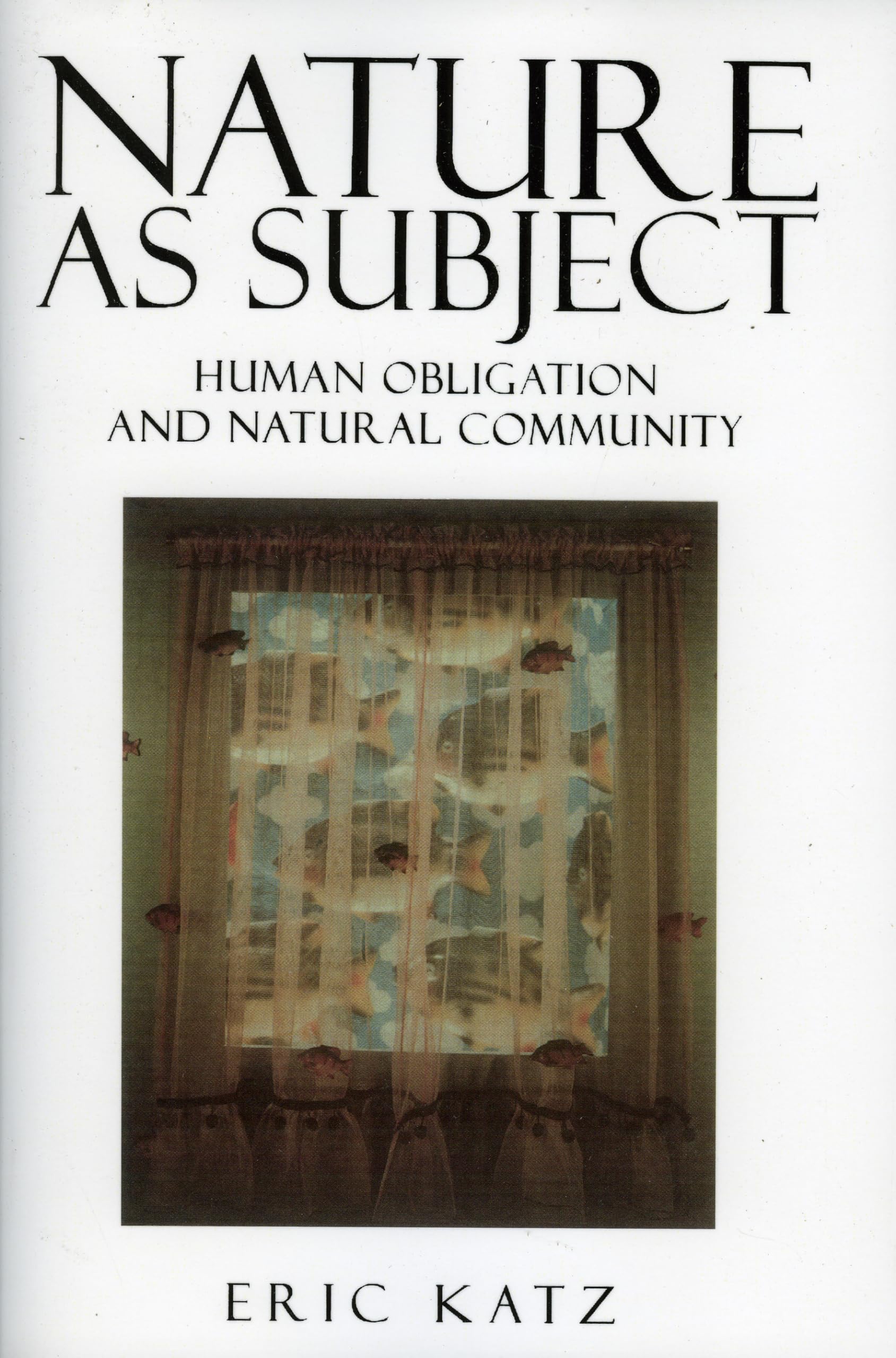
Nature As Subject: Human Obligation and Natural Community by Eric Katz – A Foundational Environmental Ethics Book for In
Inclusive of all applicable taxes. FREE shipping on all orders.
Available Offers
- 🚚Free Delivery — Free shipping on all orders
- 💵Cash on Delivery — Pay when your order arrives
- ↩️15-Day Easy Returns — Hassle-free return policy
- 🔒Cash on Delivery — Pay safely when your order arrives
Check Delivery
Product Description
Introduction
In an era marked by accelerating climate change, biodiversity loss, and environmental degradation, the question of our ethical responsibility toward the natural world has never been more urgent. Nature As Subject: Human Obligation and Natural Community by Eric Katz offers a profound and thought-provoking exploration of how we can construct a moral framework that places nature itself—not merely human interests—at the center of our ethical deliberations. This is not just another environmental book; it is a rigorous philosophical inquiry that challenges the very foundations of modern environmental policy and personal conscience. For Indian readers, students, and scholars grappling with issues ranging from deforestation in the Western Ghats to pollution in the Ganges, Katz's work provides a critical lens through which to reimagine our relationship with the land, water, and all living beings.
Book Overview
Published by Rowman & Littlefield Publishers, this hardcover edition brings together decades of Eric Katz's pioneering thought in environmental ethics. The book systematically argues that nature should be treated as a subject of moral consideration, not merely an object for human use or management. Katz moves beyond traditional anthropocentric views to propose a biocentric ethic that recognizes the intrinsic value of natural communities. Drawing on analogies from justice, domination, imperialism, and even the Holocaust, he provocatively connects human treatment of nature with broader patterns of oppression and exploitation. The result is a compelling case for a new ethical policy—one that respects the autonomy and integrity of ecosystems. This volume is essential reading for anyone seeking to understand the philosophical underpinnings of modern environmentalism and the moral obligations we hold toward the planet.
Key Highlights
- Pioneering Biocentric Ethics: Develops a comprehensive ethical theory centered on nature as an autonomous subject.
- Interdisciplinary Approach: Bridges philosophy, environmental science, policy, and social justice.
- Critical Analysis: Examines themes of domination, imperialism, and historical atrocities to illuminate environmental issues.
- Practical Implications: Offers actionable insights for policy makers, activists, and students.
- Authoritative Scholarship: Written by Eric Katz, a leading figure in the field of environmental philosophy.
Inside the Book
The book is structured as a collection of interconnected essays that trace the evolution of Katz's thought. It begins by critiquing the dominant human-centered worldview and then builds a case for recognizing the moral standing of natural entities and ecosystems. Key chapters delve into the concept of 'natural community,' the ethics of restoration and intervention, and the dangers of treating nature as a resource to be managed. Katz does not shy away from difficult questions: Can we truly 'restore' a damaged ecosystem? Is human intervention in nature always a form of domination? By drawing parallels with human history—including colonialism and the Holocaust—he forces readers to confront the uncomfortable truth that our environmental crisis is deeply entwined with patterns of power and control. The writing is dense but accessible, making it suitable for advanced undergraduates, graduate students, and professionals alike.
Key Topics
- The moral status of non-human nature
- Biocentrism vs. anthropocentrism in environmental ethics
- Environmental justice and ecological imperialism
- Restoration ecology and the ethics of intervention
- Holocaust analogies in environmental thought
- Autonomy and integrity of natural communities
- Policy implications for conservation and sustainability
Reader Benefits
By engaging with Nature As Subject, readers will gain a deep and nuanced understanding of environmental ethics that goes beyond superficial 'green' rhetoric. This book equips you with the philosophical tools to critically evaluate environmental policies, corporate practices, and personal choices. It challenges you to reconsider your own place in the natural world and to recognize the intrinsic value of ecosystems—not just their utility to humans. For Indian students, this is particularly valuable as it provides a global philosophical framework that can be applied to local environmental challenges, fostering a sense of responsibility that is both intellectual and ethical.
Learning Outcomes
- Understand the key arguments for biocentric environmental ethics.
- Critically analyze the concept of 'natural community' and its moral implications.
- Evaluate the ethical dimensions of environmental restoration and management.
- Connect historical patterns of domination (e.g., imperialism, genocide) to contemporary environmental issues.
- Develop a personal ethical stance on human obligations toward nature.
- Apply philosophical concepts to real-world environmental problems in India and globally.
Who Should Read
This book is indispensable for advanced students and scholars in philosophy, environmental studies, political science, and law. It is also highly relevant for policy makers, environmental activists, conservationists, and anyone involved in natural resource management. Additionally, concerned citizens who want to deepen their understanding of the ethical dimensions of the environmental crisis will find Katz's work both enlightening and challenging. For Indian readers, especially those studying at universities like Delhi University, JNU, or IITs, this book serves as a vital resource for courses on environmental ethics, sustainability, and social justice.
About the Author
Eric Katz is a professor of philosophy at the New Jersey Institute of Technology and a leading voice in environmental ethics. His work has been widely published in academic journals and anthologies, and he has been instrumental in shaping the discourse on biocentrism, ecological restoration, and the ethics of technology. Katz's scholarship is known for its intellectual rigor and moral seriousness, often drawing unexpected but illuminating connections between environmental philosophy and broader social and historical issues. He continues to influence a generation of thinkers and activists committed to rethinking humanity's place in the natural order.
About the Publisher
Rowman & Littlefield Publishers is a distinguished academic publisher based in the United States, renowned for its extensive catalog in philosophy, political science, and environmental studies. With a commitment to publishing works that advance scholarly discourse and public understanding, Rowman & Littlefield has been a trusted name in higher education for decades. This hardcover edition of Nature As Subject reflects the publisher's dedication to producing high-quality, durable books that serve as lasting resources for libraries, classrooms, and personal collections.
Conclusion
Nature As Subject: Human Obligation and Natural Community is more than a book—it is a call to rethink the very foundations of our ethical relationship with the Earth. Eric Katz's powerful arguments compel us to see nature not as a backdrop to human life, but as a community of subjects deserving of respect and moral consideration. For anyone serious about environmental ethics, this volume is an essential addition to their library. Whether you are a student, a scholar, a policy maker, or an activist, this book will challenge your assumptions, broaden your perspective, and deepen your commitment to a just and sustainable world. Order your hardcover copy today from Bookshops.in and join the conversation that is shaping the future of environmental thought.
Quick Summary
Nature As Subject: Human Obligation and Natural Community by Eric Katz is a foundational work in environmental ethics that challenges the traditional human-centered view of morality. Katz argues that nature itself has intrinsic value and that human beings have a direct ethical obligation to protect natural communities, not merely for human benefit but for the sake of the natural world. The book applies this biocentric framework to pressing environmental issues, including justice, domination, imperialism, and even the Holocaust, drawing powerful parallels between the exploitation of nature and historical atrocities. This volume is essential reading for students of philosophy and environmental studies, policy makers, activists, and anyone seeking a deeper understanding of ecological ethics. Katz's rigorous analysis and compelling arguments make this a cornerstone text for both academic and practical discussions about humanity's role in the natural world. Readers will gain critical tools to evaluate environmental policies and develop a more ethical relationship with the planet. By purchasing from Bookshops.in, Indian readers receive a premium hardcover edition with fast delivery and authentic copies, supporting a trusted local bookstore dedicated to quality academic literature.
Book Highlights
Book Specifications
| ISBN-13 | 9780847683048 |
| ISBN-10 | 0847683044 |
| Publisher | Rowman & Littlefield Pub Inc |
| Language | English |
| Dimensions | 14.99 x 1.68 x 22.61 cm |
| Weight | 408 g |
| Category | Philosophy › Ethics |
| Genre | Non-fiction |
| Original Language | English |
Frequently Asked Questions
What is Nature As Subject about?
Who is the author Eric Katz?
Is this book suitable for Indian students?
What is the ISBN of this book?
Is this a textbook?
Does the book discuss Indian environmental issues?
What binding is available?
What is the price of this book?
Can I use this book for my PhD research?
Does the book include a bibliography?
What language is the book in?
Is the book available in digital format?
How is this book different from other environmental ethics books?
Readers Also Search For
Customers Also Bought
Islam
Spiritual Economies (English, Daromir Rudnyckyj)

Islam
Who Is Allah? (English, Bruce B. Lawrence)
Islam
Islam and Liberal Citizenship: The Search for an Overlapping Consensus by Andrew F. March

Islam
Fiqh Us-Sunnah: Funerals and Diggers by Al-Sayyid Sabiq – Islamic Funeral Guide

Christianity
Genetics (English, Thomas a. Shannon | Mark P. Aulisio | Françoise Baylis)

Hinduism
Karma and Creativity by Christopher Key Chapple – Indian Philosophy
Related Products
View All
Philosophy
Latin American Philosophy: Currents, Issues, Debates by Eduardo Mendieta

Philosophy
Al-Farabi's Short Commentary on Aristotle's Prior Analytics by Nicholas Rescher – Philosophy
Philosophy
Poetics of Imagining: Modern to Post-modern by Richard Kearney

Philosophy
The Metaphysics of Extrinsic Properties: 11 (Metaphysical Research, 11)
Philosophy
Dialogues on Metaphysics and on Religion by Nicolas Malebranche – Philosophy
Philosophy