
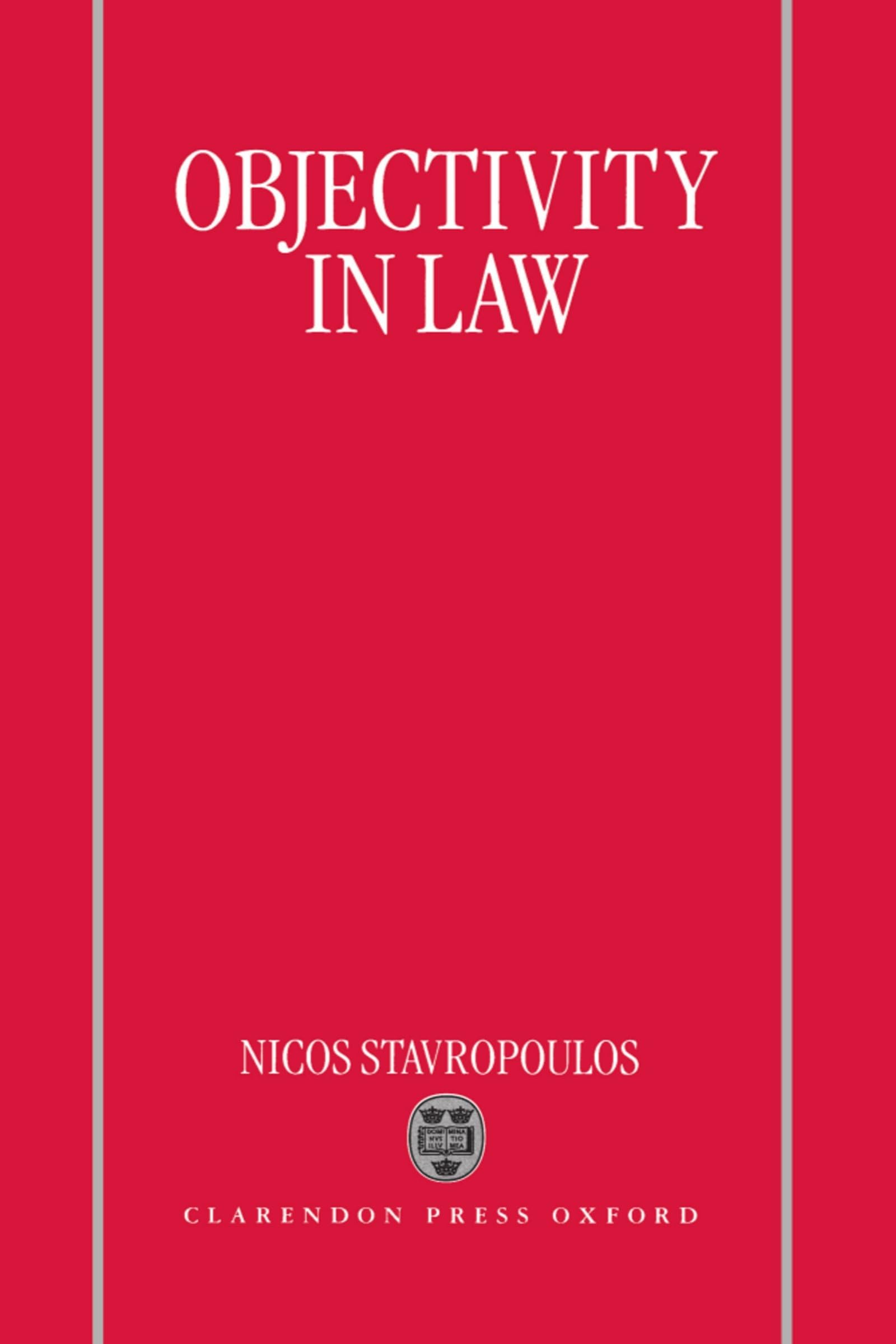
Objectivity in Law by Nicos Stavropoulos – A Philosophical Inquiry into Legal Interpretation and Jurisprudence
Inclusive of all applicable taxes. FREE shipping on all orders.
Available Offers
- 🚚Free Delivery — Free shipping on all orders
- 💵Cash on Delivery — Pay when your order arrives
- ↩️15-Day Easy Returns — Hassle-free return policy
- 🔒Cash on Delivery — Pay safely when your order arrives
Check Delivery
Product Description
Introduction
In the vast and often contentious field of jurisprudence, few questions are as foundational as whether legal interpretations can be truly objective. For Indian law students, legal professionals, and academics navigating a pluralistic legal system, the quest for objectivity in law is both intellectually stimulating and practically urgent. Objectivity in Law by Nicos Stavropoulos offers a rigorous philosophical defence of the possibility of objective legal interpretation, engaging with deep questions of metaphysics, philosophy of mind, language, and meta-ethics. This hardcover edition from OUP Oxford is an essential addition to any serious legal library in India.
Book Overview
This book systematically argues that objectivity in legal interpretation is not only possible but also philosophically defensible. Stavropoulos challenges the sceptical views that have dominated legal theory, showing that they rest on a series of philosophical prejudices. By grounding his argument in contemporary metaphysics and philosophy of mind, he demonstrates that legal objectivity does not require a mysterious realm of 'legal facts' but emerges from our shared conceptual practices. The work is a sophisticated blend of analytic philosophy and legal theory, making it a landmark text in modern jurisprudence.
Key Highlights
- Rigorous Philosophical Approach: Combines metaphysics, philosophy of mind, and meta-ethics to address legal objectivity.
- Critical Engagement: Systematically dismantles common sceptical arguments against objective legal interpretation.
- Original Thesis: Argues that objectivity in law is grounded in the very structure of our conceptual and linguistic practices.
- Relevance to Indian Jurisprudence: Offers tools for understanding how judges and legal interpreters can arrive at determinate, non-arbitrary meanings.
- Authoritative Publisher: Published by OUP Oxford, a global leader in academic legal publishing.
Inside the Book
The book is structured to first establish the metaphysical and semantic foundations for objectivity. Stavropoulos draws on the work of philosophers like Saul Kripke, Hilary Putnam, and Donald Davidson to argue that meaning is not merely a matter of subjective intention but is shaped by objective constraints. He then applies this framework to law, showing how legal interpretation can be both creative and constrained. The final chapters identify and critique the philosophical prejudices—such as the fact/value distinction and the idea that interpretation is always evaluative—that have led many to reject legal objectivity. Each chapter builds carefully on the last, making complex arguments accessible to readers with a background in legal theory or philosophy.
Key Topics
- Objectivity and interpretation in law
- Metaphysical foundations of legal facts
- Philosophy of language and legal meaning
- Meta-ethics and the nature of legal values
- Critique of legal scepticism and relativism
- Conceptual analysis in jurisprudence
- Semantic externalism and legal content
Reader Benefits
- Deepen Your Understanding: Gain a sophisticated grasp of one of the most debated topics in legal philosophy.
- Enhance Critical Thinking: Learn to identify and challenge philosophical assumptions in legal arguments.
- Strengthen Your Arguments: Equip yourself with rigorous concepts to defend or critique claims about legal certainty.
- Excel in Academics: Ideal for coursework, seminars, and research in jurisprudence, legal theory, and philosophy of law.
- Broaden Your Perspective: See how insights from analytic philosophy illuminate legal practice and adjudication.
Learning Outcomes
By engaging with this book, readers will be able to: articulate the central arguments for and against objectivity in legal interpretation; critically evaluate the philosophical premises underlying different theories of law; apply concepts from metaphysics and philosophy of mind to legal debates; identify common fallacies and prejudices in sceptical arguments about law; and develop a more nuanced view of how legal meaning is determined in complex cases. These outcomes are particularly valuable for students preparing for competitive examinations like the CLAT PG, UGC NET Law, or for those pursuing advanced degrees in law or philosophy.
Who Should Read
This book is indispensable for advanced law students, legal academics, and practising lawyers interested in legal theory. It is also highly relevant for philosophy students specialising in ethics, political philosophy, or philosophy of language. Indian readers will find it especially useful for understanding debates about judicial discretion, constitutional interpretation, and the rule of law in a diverse and evolving legal landscape. Professors teaching jurisprudence or legal philosophy will find it a valuable resource for course design and classroom discussion.
About the Author
Nicos Stavropoulos is a distinguished legal philosopher and academic. He has held teaching and research positions at leading institutions, including the University of Oxford, where he has contributed significantly to contemporary jurisprudence. His work focuses on the intersection of legal theory with metaphysics, philosophy of mind, and language. Stavropoulos is known for his rigorous analytic style and his ability to bring clarity to complex philosophical debates. This book represents the culmination of his sustained engagement with the problem of objectivity in law.
About the Publisher
OUP Oxford is the academic imprint of Oxford University Press, one of the oldest and most respected publishing houses in the world. With a legacy spanning over five centuries, OUP is renowned for its authoritative and high-quality publications in law, philosophy, and the humanities. This hardcover edition reflects OUP's commitment to producing durable, scholarly works that meet the highest standards of academic excellence. Indian readers can trust the reliability and intellectual rigour of every OUP title.
Conclusion
Objectivity in Law is not merely a book; it is a vital intellectual tool for anyone serious about understanding the foundations of legal reasoning. Nicos Stavropoulos offers a compelling, philosophically grounded defence of objectivity that challenges prevailing scepticism and opens new avenues for thought. Whether you are a student grappling with legal theory for the first time or a seasoned scholar seeking fresh insights, this hardcover edition from OUP Oxford will enrich your understanding of law's deepest questions. Order your copy today from Bookshops.in and add a cornerstone work to your legal collection.
Quick Summary
Objectivity in Law by Nicos Stavropoulos is a rigorous philosophical work that tackles one of the most contentious issues in jurisprudence: whether legal interpretations can be objective. Stavropoulos argues that objectivity is indeed possible, grounding his case in metaphysics, philosophy of mind, philosophy of language, and meta-ethics. The book systematically identifies and critiques the philosophical prejudices—such as skepticism about meaning, ethical non-cognitivism, and certain forms of legal realism—that have historically resisted the idea of objectivity in law. By doing so, it illuminates foundational debates in legal theory, offering a fresh perspective that bridges analytic philosophy and jurisprudence. This book is ideal for law students, academics, and legal professionals who want a deeper, philosophically informed understanding of legal interpretation. Readers will learn how to defend objectivity in legal reasoning and recognize hidden assumptions in competing theories. Buying from Bookshops.in ensures you receive a genuine hardcover edition from OUP Oxford, delivered across India with reliable service.
Book Highlights
Book Specifications
| ISBN-13 | 9780198258995 |
| ISBN-10 | 0198258992 |
| Publisher | Clarendon Pr |
| Language | English |
| Dimensions | 16.36 x 1.84 x 24.13 cm |
| Weight | 522 g |
| Category | Philosophy › History & Surveys |
| Genre | Non-fiction |
| Original Language | English |
Frequently Asked Questions
What is Objectivity in Law about?
Who is the author of Objectivity in Law?
Is this book suitable for Indian law students?
What is the binding of this book?
Which publisher released Objectivity in Law?
Does the book cover meta-ethics?
What philosophical areas does the book address?
Is Objectivity in Law a textbook?
How does the book differ from other jurisprudence books?
What is the ISBN of this book?
Can I buy this book from Bookshops.in?
Does the book address legal skepticism?
Is the book written in English?
What is the price of Objectivity in Law?
Readers Also Search For
Customers Also Bought

Islam
Spiritual Economies (English, Daromir Rudnyckyj)

Islam
Who Is Allah? (English, Bruce B. Lawrence)

Islam
Islam and Liberal Citizenship: The Search for an Overlapping Consensus by Andrew F. March

Islam
Fiqh Us-Sunnah: Funerals and Diggers by Al-Sayyid Sabiq – Islamic Funeral Guide

Christianity
Genetics (English, Thomas a. Shannon | Mark P. Aulisio | Françoise Baylis)

Hinduism
Karma and Creativity by Christopher Key Chapple – Indian Philosophy
Related Products
View All
Philosophy
Latin American Philosophy: Currents, Issues, Debates by Eduardo Mendieta

Philosophy
Al-Farabi's Short Commentary on Aristotle's Prior Analytics by Nicholas Rescher – Philosophy

Philosophy
Poetics of Imagining: Modern to Post-modern by Richard Kearney

Philosophy
The Metaphysics of Extrinsic Properties: 11 (Metaphysical Research, 11)

Philosophy
Dialogues on Metaphysics and on Religion by Nicolas Malebranche – Philosophy
Philosophy