
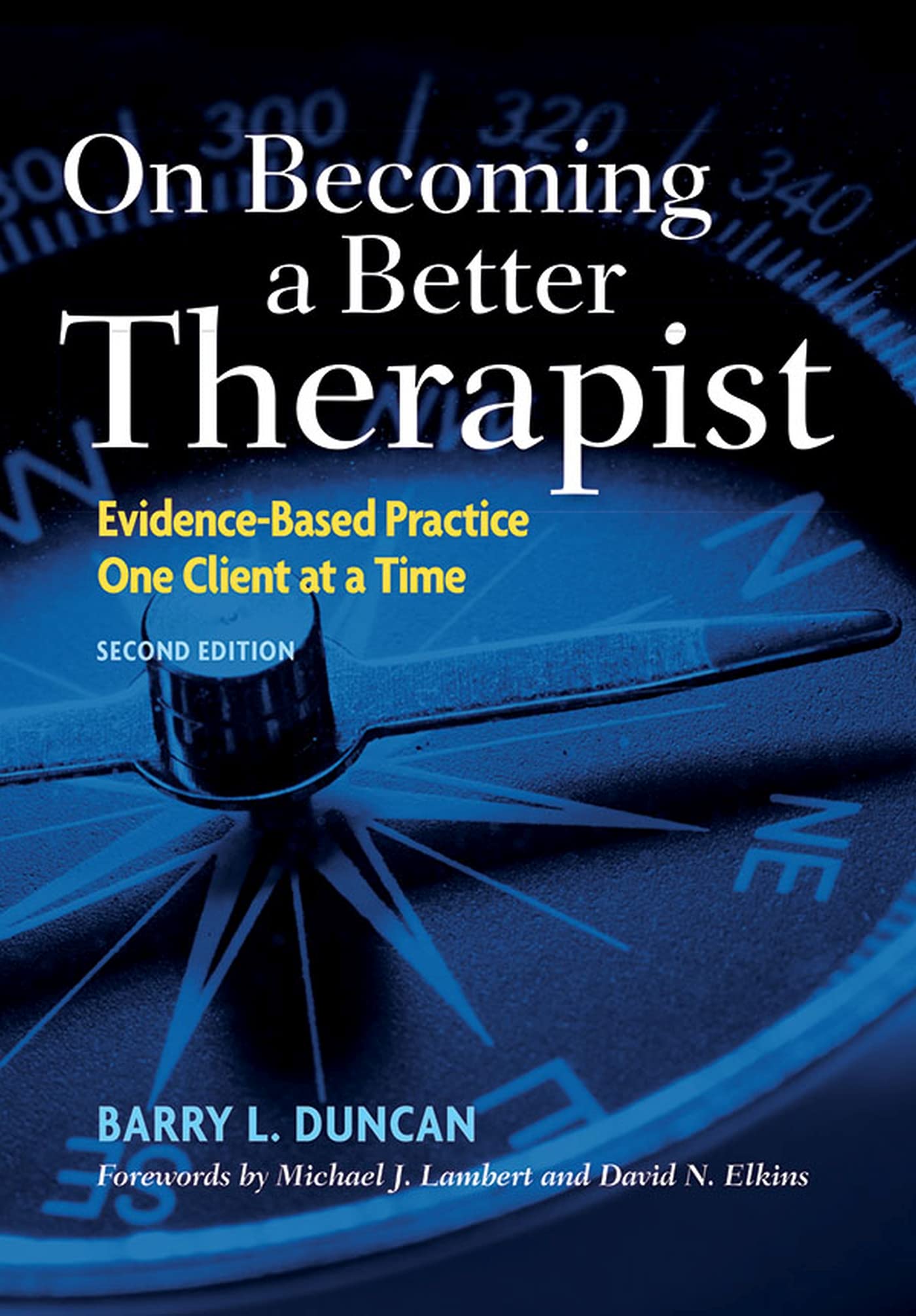
On Becoming a Better Therapist: Evidence-Based Practice One Client at a Time by Barry L. Duncan – A Comprehensive Guide
Inclusive of all applicable taxes. FREE shipping on all orders.
Available Offers
- 🚚Free Delivery — Free shipping on all orders
- 💵Cash on Delivery — Pay when your order arrives
- ↩️15-Day Easy Returns — Hassle-free return policy
- 🔒Cash on Delivery — Pay safely when your order arrives
Check Delivery
Product Description
Introduction
In the demanding world of mental health practice, therapists often face the challenge of staying effective while avoiding burnout and client dropout. On Becoming a Better Therapist: Evidence-Based Practice One Client at a Time by Barry L. Duncan offers a refreshing, practical roadmap for clinicians who want to grow continuously. This hardcover edition from the American Psychological Association (APA) is a must-have for Indian psychology students, practicing therapists, and mental health professionals seeking to integrate real-world feedback into their daily work.
Book Overview
This book presents the groundbreaking Partners for Change Outcome Management System (PCOMS), a client-driven approach that uses systematic feedback to improve therapy outcomes. Barry L. Duncan draws on decades of research and clinical experience to show how therapists can harness the power of the therapeutic alliance, learn from each client, and take charge of their own professional development. The result is a highly readable, evidence-based guide that transforms how therapists think about success.
Key Highlights
- Client Feedback at the Core: Learn how to use real-time outcome and session rating scales to identify clients at risk of dropping out before they leave.
- Common Factors Approach: Understand the universal elements of effective therapy—alliance, empathy, and collaboration—that transcend any single model.
- Practical Tools: Step-by-step instructions for implementing PCOMS in any setting, from private practice to community clinics.
- Burnout Prevention: Discover how focusing on client feedback can reignite your passion and reduce professional fatigue.
Inside the Book
The book is structured around a five-step process that guides therapists from initial assessment to ongoing improvement. Each chapter combines research findings, case examples, and reflective exercises. Duncan emphasizes the importance of the therapeutic alliance as the foundation of change, and he encourages readers to expand their theoretical breadth by learning directly from clients. The writing is accessible, making complex concepts easy to grasp for both new and experienced practitioners.
Key Topics
- Partners for Change Outcome Management System (PCOMS)
- Therapeutic alliance and its role in positive outcomes
- Client feedback as a tool for self-correction
- Evidence-based practice tailored to individual clients
- Preventing dropout and improving retention
- Integrating common factors into everyday therapy
- Self-supervision and personal growth as a therapist
Reader Benefits
By reading this book, you will gain a clear framework for measuring your effectiveness session by session. You will learn how to pivot when therapy is not working, strengthen your relationship with each client, and build a sustainable career that thrives on curiosity rather than exhaustion. Indian therapists, in particular, will appreciate the culturally adaptable nature of PCOMS, which respects diverse client backgrounds and therapeutic settings.
Learning Outcomes
- Master the use of outcome and session rating scales to track progress.
- Develop skills to identify and address client non-response early.
- Enhance your ability to form strong therapeutic alliances.
- Apply evidence-based principles without rigidly following protocols.
- Reflect on your own growth as a therapist through structured self-assessment.
Who Should Read
This book is ideal for clinical psychologists, counsellors, psychotherapists, social workers, and mental health students in India. It is also valuable for supervisors, trainers, and anyone involved in mental health education. Whether you are a beginner or a seasoned professional, the insights here will help you become more intentional and effective in your practice.
About the Author
Barry L. Duncan is a renowned therapist, researcher, and trainer with over 30 years of experience. He is the co-developer of PCOMS and has authored several influential books on evidence-based practice. His work has been translated into multiple languages and is used by clinicians worldwide. Duncan’s practical, client-centered approach has made him a sought-after speaker and consultant in the field of psychotherapy.
About the Publisher
American Psychological Association (APA) is the leading scientific and professional organization representing psychology in the United States. APA Books publishes authoritative titles that advance the science and practice of psychology. This hardcover edition reflects the high editorial standards and evidence-based rigor that APA is known for, making it a trusted resource for professionals globally.
Conclusion
On Becoming a Better Therapist is more than a book—it is a companion for lifelong learning. By putting client feedback and self-development at the heart of practice, Barry L. Duncan offers a path to deeper satisfaction and better outcomes. Whether you are starting your journey or seeking to refine your skills, this APA hardcover will inspire you to grow one client at a time.
Quick Summary
On Becoming a Better Therapist: Evidence-Based Practice One Client at a Time by Barry L. Duncan is a transformative guide for mental health professionals who want to enhance their effectiveness and reignite their passion for therapy. The book centers on two core pillars: systematically collecting client feedback using the Partners for Change Outcome Management System (PCOMS), and taking charge of one's own professional development. Duncan draws on decades of research to show that the therapeutic alliance and common factors—such as empathy, collaboration, and hope—are far more predictive of success than any specific technique. By learning to identify clients who are not responding to treatment early, therapists can prevent dropout and tailor interventions to each individual. The book is filled with practical examples, case studies, and actionable advice, making it ideal for practicing therapists, counselors, social workers, and graduate students. It also addresses therapist burnout by encouraging a humble, feedback-informed approach that keeps the work meaningful. Published by the American Psychological Association, this hardcover edition is a trusted resource for anyone committed to becoming a better therapist. Buy it from Bookshops.in for fast delivery across India.
Book Highlights
Book Specifications
| ISBN-13 | 9781433817458 |
| ISBN-10 | 1433817454 |
| Publisher | Amer Psychological Assn |
| Language | English |
| Dimensions | 17.78 x 2.54 x 26.67 cm |
| Weight | 680 g |
| Country | USA |
| Category | Psychology › Clinical Psychology |
| Genre | Non-fiction |
| Original Language | English |
Frequently Asked Questions
What is the main focus of 'On Becoming a Better Therapist'?
Who is Barry L. Duncan?
What is PCOMS?
Is this book suitable for beginner therapists?
Does the book cover specific therapy techniques?
How can this book help with therapist burnout?
Is the content based on research?
Can I use PCOMS without additional training?
What is the therapeutic alliance?
Does the book address cultural considerations?
How is this book different from other therapy books?
Is this book only for individual therapy?
Where can I buy this book in India?
Readers Also Search For
Customers Also Bought
Psychology
Koinonia: From Hate, Through Dialogue, to Culture in the Large Group by Patrick B. Demare
Psychology
Mindfulness-Based Interventions for Trauma and Its Consequences (Concise Guides on Trauma Care, 4)

Psychology
Handbook for Teaching Statistics and Research Methods by Mark E. Ware

Psychology
Psychoanalysis and the Nuclear Threat: Clinical and Theoretical Studies
Psychology
Humor and Psyche: Psychoanalytic Perspectives by James W. Barron

Relationships
The Experience and Expression of Uncertainty in Close Relationships by Jennifer A. Theiss
Related Products
View AllPsychology
Mindfulness-Based Interventions for Trauma and Its Consequences (Concise Guides on Trauma Care, 4)
Psychology
Handbook for Teaching Statistics and Research Methods by Mark E. Ware
Psychology
Psychoanalysis and the Nuclear Threat: Clinical and Theoretical Studies
Psychology
Humor and Psyche: Psychoanalytic Perspectives by James W. Barron

Psychology
Proceedings of the First International Conference on Genetic Algorithms and Their Applications
Psychology