
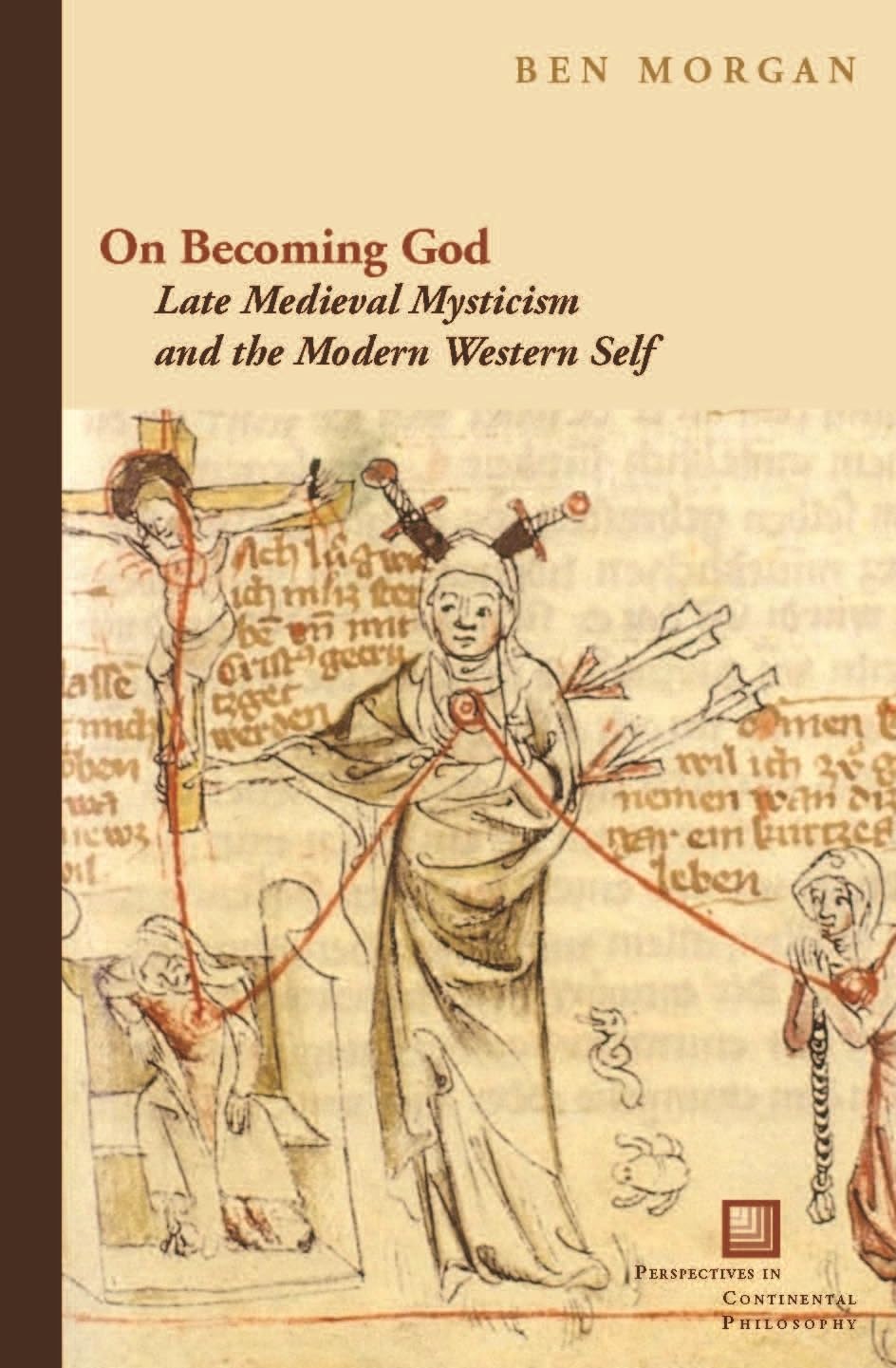
On Becoming God: Late Medieval Mysticism and the Modern Western Self by Ben Morgan – A Philosophical Study of Identity,
Inclusive of all applicable taxes. FREE shipping on all orders.
Available Offers
- 🚚Free Delivery — Free shipping on all orders
- 💵Cash on Delivery — Pay when your order arrives
- ↩️15-Day Easy Returns — Hassle-free return policy
- 🔒Cash on Delivery — Pay safely when your order arrives
Check Delivery
Product Description
Introduction
In a world where the modern self is often understood as a solitary, isolated entity, Ben Morgan’s On Becoming God: Late Medieval Mysticism and the Modern Western Self offers a radical rethinking of human identity. This compelling work bridges centuries of thought, from the mystical practices of late medieval Germany to contemporary debates in phenomenology, gender studies, and neuroscience. For Indian readers and students of philosophy, religion, and cultural history, this book provides a fresh lens to examine how we become who we are—not alone, but together.
Book Overview
Ben Morgan challenges the dominant narrative that the modern Western self is a self-contained individual, cut off from others and from the divine. Instead, he argues that identity is a shared, dynamic process—a way of doing things with the concept of “God.” Drawing on the writings of Meister Eckhart and other late medieval mystics, Morgan shows how these thinkers managed impulses and experiences associated with the divine, not as private encounters, but as communal practices. The book reinterprets the history of the self by weaving together insights from Martin Heidegger, Simone de Beauvoir, Judith Butler, and contemporary neuroscience, offering a bold alternative to established theories by Michel Foucault and Charles Taylor.
Key Highlights
- Original Thesis: Proposes that the self is not a fixed entity but a collaborative activity—a way of managing the divine.
- Interdisciplinary Approach: Blends medieval mysticism, phenomenology, gender studies, and neuroscience into a coherent argument.
- Critical Engagement: Challenges influential thinkers like Foucault and Taylor, offering a new path for understanding modernity.
- Historical Depth: Focuses on late medieval German mystics, especially Meister Eckhart, to uncover forgotten practices of identity.
- Contemporary Relevance: Applies medieval insights to modern questions about selfhood, community, and spirituality.
Inside the Book
The book is structured to guide readers from a critique of existing models of selfhood to a constructive alternative. Early chapters survey the works of Foucault and Taylor, highlighting their limitations. Morgan then turns to Meister Eckhart and his milieu, analyzing mystical texts that treat God not as a distant object but as a shared experience. Later chapters bring in phenomenology (Heidegger) to explore being-in-the-world, gender studies (Beauvoir and Butler) to examine how identity is performed, and neuroscience to ground these ideas in embodied reality. Each chapter builds toward a vision of the self as an ongoing, relational practice.
Key Topics
- Late Medieval Mysticism: Meister Eckhart’s sermons and the German mystical tradition.
- Modern Selfhood: Critiques of individualism and the isolated subject.
- Phenomenology: Heidegger’s concept of Dasein and being-with-others.
- Gender and Identity: Beauvoir’s and Butler’s theories of performativity.
- Neuroscience: Embodied cognition and the social brain.
- Philosophy of Religion: Rethinking God as a shared practice rather than a belief.
Reader Benefits
- Deepen Your Understanding: Gain a nuanced perspective on the history of Western identity.
- Bridge Disciplines: Connect medieval spirituality with modern philosophy and science.
- Challenge Assumptions: Question the idea of the self as isolated and autonomous.
- Practical Insights: Discover how communal practices shape who we are.
- Engage with Original Texts: Explore primary sources from Eckhart and his contemporaries.
Learning Outcomes
- Critically evaluate major theories of selfhood from Foucault and Taylor.
- Analyze late medieval mystical texts as models of shared identity.
- Apply phenomenological and gender theories to historical material.
- Synthesize insights from neuroscience with philosophical and religious traditions.
- Articulate an alternative vision of the self as a collaborative, dynamic process.
Who Should Read
This book is ideal for students and scholars of philosophy, religious studies, history, and cultural theory. It also appeals to readers interested in mysticism, the history of the self, and interdisciplinary approaches to human identity. Indian readers, especially those familiar with traditions that emphasize relational selfhood (like Advaita Vedanta or Bhakti), will find Morgan’s arguments both challenging and resonant. The book is suitable for advanced undergraduates, graduate students, and anyone curious about how medieval ideas can illuminate modern life.
About the Author
Ben Morgan is a scholar of medieval and modern philosophy, with expertise in mysticism, phenomenology, and gender studies. He has taught at universities in the United Kingdom and the United States, and his research focuses on how historical texts can reshape contemporary debates about identity. Morgan’s work is known for its clarity, originality, and willingness to cross disciplinary boundaries.
About the Publisher
Fordham University Press is a prestigious academic publisher based in New York, known for its contributions to philosophy, theology, and the humanities. With a commitment to rigorous scholarship and accessible writing, the press has published works that shape conversations across disciplines. This hardcover edition reflects the high production standards expected by serious readers.
Conclusion
On Becoming God is not just a book about the past—it is a provocative invitation to rethink who we are today. By showing that the self is something we do together, Ben Morgan opens up new possibilities for community, spirituality, and identity. For Indian students and thinkers, this book offers a valuable dialogue between Eastern and Western traditions, reminding us that the journey toward becoming human is never a solitary one. Add this thought-provoking volume to your library and join the conversation about what it means to become a self.
Quick Summary
On Becoming God: Late Medieval Mysticism and the Modern Western Self by Ben Morgan is a groundbreaking interdisciplinary study that rethinks the history of modern identity. Morgan argues that the self is not an isolated, private entity but a shared practice—something we do together. Drawing on phenomenology (Heidegger), gender studies (Beauvoir, Butler), and contemporary neuroscience, he shows how human beings manage impulses and experiences associated with the word 'God' through collective acts of self-formation. The book surveys late medieval mystical traditions to reveal how they prefigure modern theories of identity, challenging secularization narratives. It is written for advanced students and scholars in philosophy, theology, religious studies, and critical theory. Readers will gain a fresh perspective on the self, spirituality, and social interaction. By purchasing from Bookshops.in, Indian readers receive a genuine hardcover edition with reliable delivery and support, making it a valuable addition to any academic library.
Book Highlights
Book Specifications
| ISBN-13 | 9780823239924 |
| ISBN-10 | 0823239926 |
| Publisher | Fordham Univ Pr |
| Language | English |
| Dimensions | 15.24 x 2.54 x 24.13 cm |
| Weight | 567 g |
| Category | Philosophy › History & Surveys |
| Genre | Philosophy |
| Original Language | English |
Frequently Asked Questions
What is On Becoming God about?
Who is the author of On Becoming God?
What disciplines does this book cover?
Is this book suitable for undergraduate students?
Does the book discuss medieval mystics?
How does the book use neuroscience?
What is unique about this book's approach?
Is this book available in hardcover?
What is the ISBN?
Can I use this book for a course on mysticism?
Does the book engage with feminist theory?
Why should I buy from Bookshops.in?
Readers Also Search For
Customers Also Bought
Islam
Spiritual Economies (English, Daromir Rudnyckyj)

Islam
Who Is Allah? (English, Bruce B. Lawrence)
Islam
Islam and Liberal Citizenship: The Search for an Overlapping Consensus by Andrew F. March
Islam
Fiqh Us-Sunnah: Funerals and Diggers by Al-Sayyid Sabiq – Islamic Funeral Guide

Christianity
Genetics (English, Thomas a. Shannon | Mark P. Aulisio | Françoise Baylis)

Hinduism
Karma and Creativity by Christopher Key Chapple – Indian Philosophy
Related Products
View All
Philosophy
Latin American Philosophy: Currents, Issues, Debates by Eduardo Mendieta

Philosophy
Al-Farabi's Short Commentary on Aristotle's Prior Analytics by Nicholas Rescher – Philosophy
Philosophy
Poetics of Imagining: Modern to Post-modern by Richard Kearney
Philosophy
The Metaphysics of Extrinsic Properties: 11 (Metaphysical Research, 11)
Philosophy
Dialogues on Metaphysics and on Religion by Nicolas Malebranche – Philosophy
Philosophy