
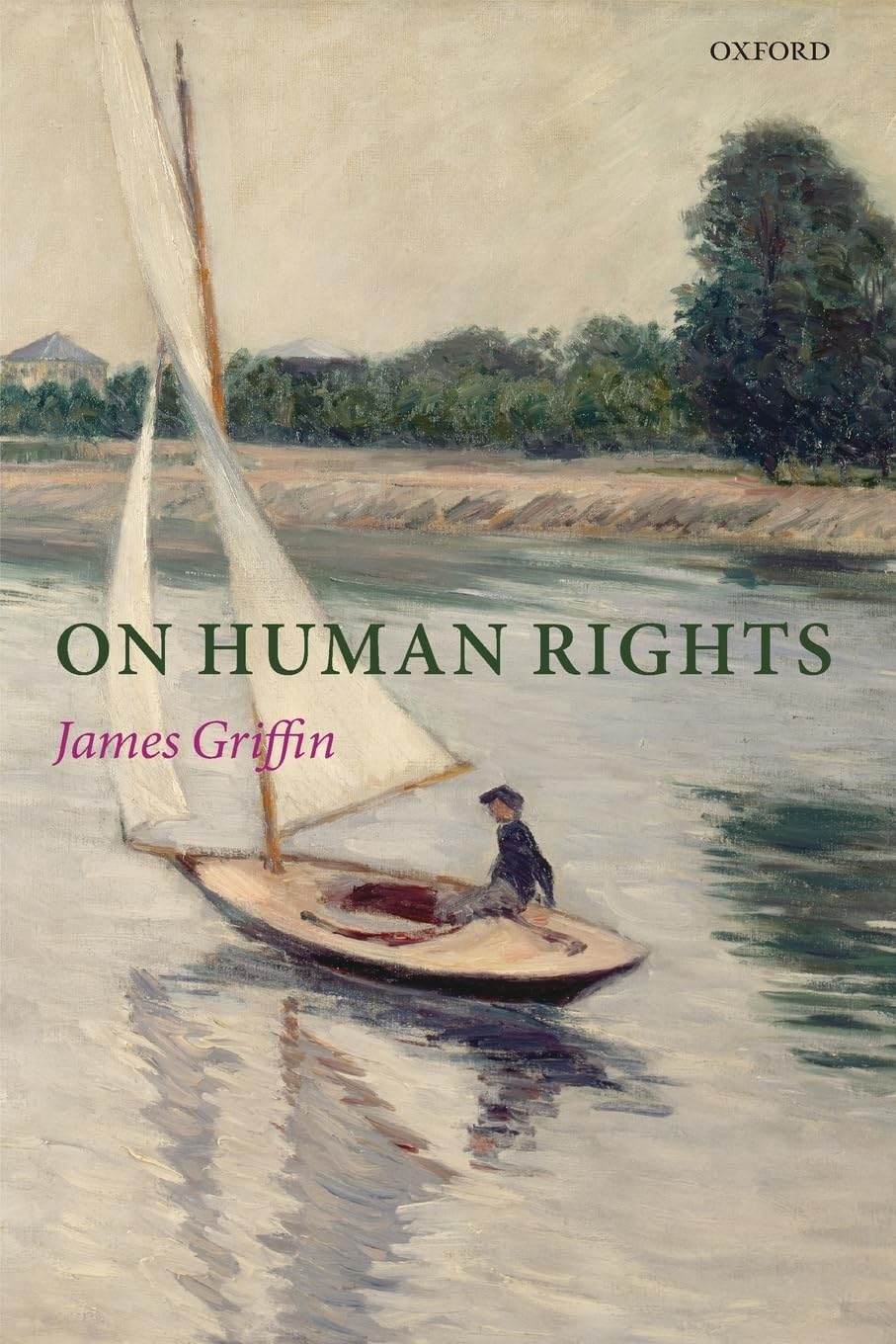
On Human Rights: A Philosophical Inquiry into the Foundations of Human Rights by James Griffin
Inclusive of all applicable taxes. FREE shipping on all orders.
Available Offers
- 🚚Free Delivery — Free shipping on all orders
- 💵Cash on Delivery — Pay when your order arrives
- ↩️15-Day Easy Returns — Hassle-free return policy
- 🔒Cash on Delivery — Pay safely when your order arrives
Check Delivery
Product Description
Introduction
In an era where the language of rights dominates legal, political, and moral discourse, the question 'What is a human right?' remains surprisingly unsettled. James Griffin's On Human Rights offers a rigorous philosophical investigation that cuts through the clutter, providing a clear and compelling framework for understanding the foundation, content, and limits of human rights. This book is an essential read for law students, philosophers, political theorists, and anyone who seeks to ground their advocacy in sound reasoning.
Book Overview
On Human Rights is a landmark work that traces the historical evolution of the concept from its medieval roots in natural law to its modern, secular form. Griffin argues that the Enlightenment left us with an incomplete idea of human rights, stripping away the theological background without providing a robust philosophical substitute. He then builds a systematic account, proposing that human rights are best understood as protections of our 'normative agency'—our capacity to choose, pursue, and revise our own conception of a worthwhile life. The book addresses pressing questions: How do we identify a genuine human right? How do we determine its content? And how do we resolve conflicts between competing rights?
Key Highlights
- Foundational Clarity: Griffin provides a unified theory of human rights grounded in the concept of normative agency, offering a principled way to distinguish genuine rights from mere political claims.
- Historical Depth: The book traces the journey from late medieval natural law through the Enlightenment, showing how the theological underpinnings were shed without adequate replacement.
- Practical Application: Griffin applies his theory to contentious issues such as the right to life, liberty, and security, demonstrating how to resolve conflicts between rights in real-world scenarios.
- Critical Engagement: The work engages with major thinkers like Kant, Mill, and Rawls, as well as contemporary human rights discourse, making it a vital contribution to ongoing debates.
Inside the Book
The book is structured in three parts. Part I examines the historical emergence of the idea of a natural right and the conceptual confusion left by the Enlightenment. Part II builds Griffin's positive account, centering on normative agency as the ground of human rights. Part III applies this framework to specific rights—such as the right to life, the right to autonomy, and the right to welfare—and explores how to adjudicate conflicts. Throughout, Griffin writes with precision and clarity, making complex philosophical arguments accessible to serious readers.
Key Topics
- What is a human right? A philosophical definition
- The historical shift from natural law to natural rights
- Normative agency as the foundation of human rights
- The right to life, liberty, and personal autonomy
- Conflicts between rights: theory and resolution
- Human rights and social justice
- The limits of human rights claims
Reader Benefits
- For Law Students: Gain a solid philosophical grounding for understanding constitutional and international human rights law.
- For Philosophers: Engage with a systematic and original theory that challenges prevailing views.
- For Activists: Learn to articulate and defend human rights claims with logical rigor.
- For General Readers: Develop a deeper, more nuanced understanding of one of the most important concepts of our time.
Learning Outcomes
- Articulate a clear definition of human rights based on normative agency.
- Trace the historical development of the concept from natural law to modern rights.
- Critically evaluate proposed human rights against a coherent philosophical standard.
- Analyze and resolve conflicts between different human rights in practical contexts.
- Apply Griffin's framework to contemporary legal and political debates.
Who Should Read
This book is ideal for undergraduate and postgraduate students of law, philosophy, political science, and human rights. It is also a valuable resource for legal practitioners, judges, policymakers, and human rights advocates who wish to deepen their theoretical understanding. Anyone interested in the moral foundations of rights will find Griffin's work both challenging and rewarding.
About the Author
James Griffin is a distinguished philosopher and Emeritus Professor of Moral Philosophy at the University of Oxford. He is a Fellow of the British Academy and the author of several influential works, including Well-Being: Its Meaning, Measurement, and Moral Importance and Value Judgement: Improving Our Ethical Beliefs. Griffin's work has shaped contemporary debates in ethics, political philosophy, and human rights.
About the Publisher
Oxford University Press (OUP) is a world-renowned academic publisher with a rich history dating back to 1586. OUP is committed to publishing works of the highest scholarly standard, and its law and philosophy catalogues are among the most respected in the world. This hardcover edition is produced to the highest quality, making it a durable addition to any library.
Conclusion
On Human Rights is not merely a book; it is an intellectual tool for thinking clearly about the most fundamental moral and legal claims we make today. James Griffin's rigorous yet accessible treatment provides a much-needed compass in a field often muddied by political rhetoric. For the Indian reader—whether a student at a National Law University, a philosopher at a central university, or a human rights practitioner—this book offers a framework that is both universally relevant and practically useful. Add this essential volume to your collection and equip yourself with the philosophical depth that human rights discourse demands.
Quick Summary
On Human Rights by James Griffin is a rigorous philosophical exploration of the foundations, content, and conflicts of human rights. Griffin, a leading moral philosopher, traces the idea from its origins in medieval natural law through the Enlightenment, showing how the concept evolved into the modern human rights framework. He argues that human rights are best understood as protections of our normative agency – our capacity to choose and pursue a life of value. The book provides a systematic method for determining what qualifies as a human right, how to establish its content, and how to resolve conflicts when rights clash. This work is essential for law students, philosophy scholars, human rights activists, and policymakers who seek a deeper understanding of the moral and intellectual underpinnings of rights discourse. By grounding rights in a coherent philosophical theory, Griffin helps readers critically evaluate claims and navigate real-world dilemmas. On Human Rights is a must-have for any serious academic library or professional collection. Buy your copy from Bookshops.in – India's trusted online bookstore for authentic, high-quality academic titles.
Book Highlights
Book Specifications
| ISBN-13 | 9780199573103 |
| ISBN-10 | 0199573107 |
| Publisher | OUP UK |
| Language | English |
| Dimensions | 23.11 x 15.49 x 2.79 cm |
| Weight | 499 g |
| Country | India |
| Category | Philosophy › Ethics |
| Genre | Non-fiction |
| Original Language | English |
Frequently Asked Questions
What is On Human Rights about?
Who is James Griffin?
Is this book suitable for beginners?
Does the book cover international human rights law?
How does Griffin define a human right?
What historical periods does the book cover?
Is this book used in Indian universities?
Does the book address conflicts between rights?
What is the ISBN?
Is the book available in hardcover?
What is the price?
Can I use this book for my research?
Why buy from Bookshops.in?
Readers Also Search For
Customers Also Bought
Islam
Spiritual Economies (English, Daromir Rudnyckyj)

Islam
Who Is Allah? (English, Bruce B. Lawrence)
Islam
Islam and Liberal Citizenship: The Search for an Overlapping Consensus by Andrew F. March

Islam
Fiqh Us-Sunnah: Funerals and Diggers by Al-Sayyid Sabiq – Islamic Funeral Guide

Christianity
Genetics (English, Thomas a. Shannon | Mark P. Aulisio | Françoise Baylis)

Hinduism
Karma and Creativity by Christopher Key Chapple – Indian Philosophy
Related Products
View All
Philosophy
Latin American Philosophy: Currents, Issues, Debates by Eduardo Mendieta

Philosophy
Al-Farabi's Short Commentary on Aristotle's Prior Analytics by Nicholas Rescher – Philosophy
Philosophy
Poetics of Imagining: Modern to Post-modern by Richard Kearney
Philosophy
The Metaphysics of Extrinsic Properties: 11 (Metaphysical Research, 11)
Philosophy
Dialogues on Metaphysics and on Religion by Nicolas Malebranche – Philosophy
Philosophy