
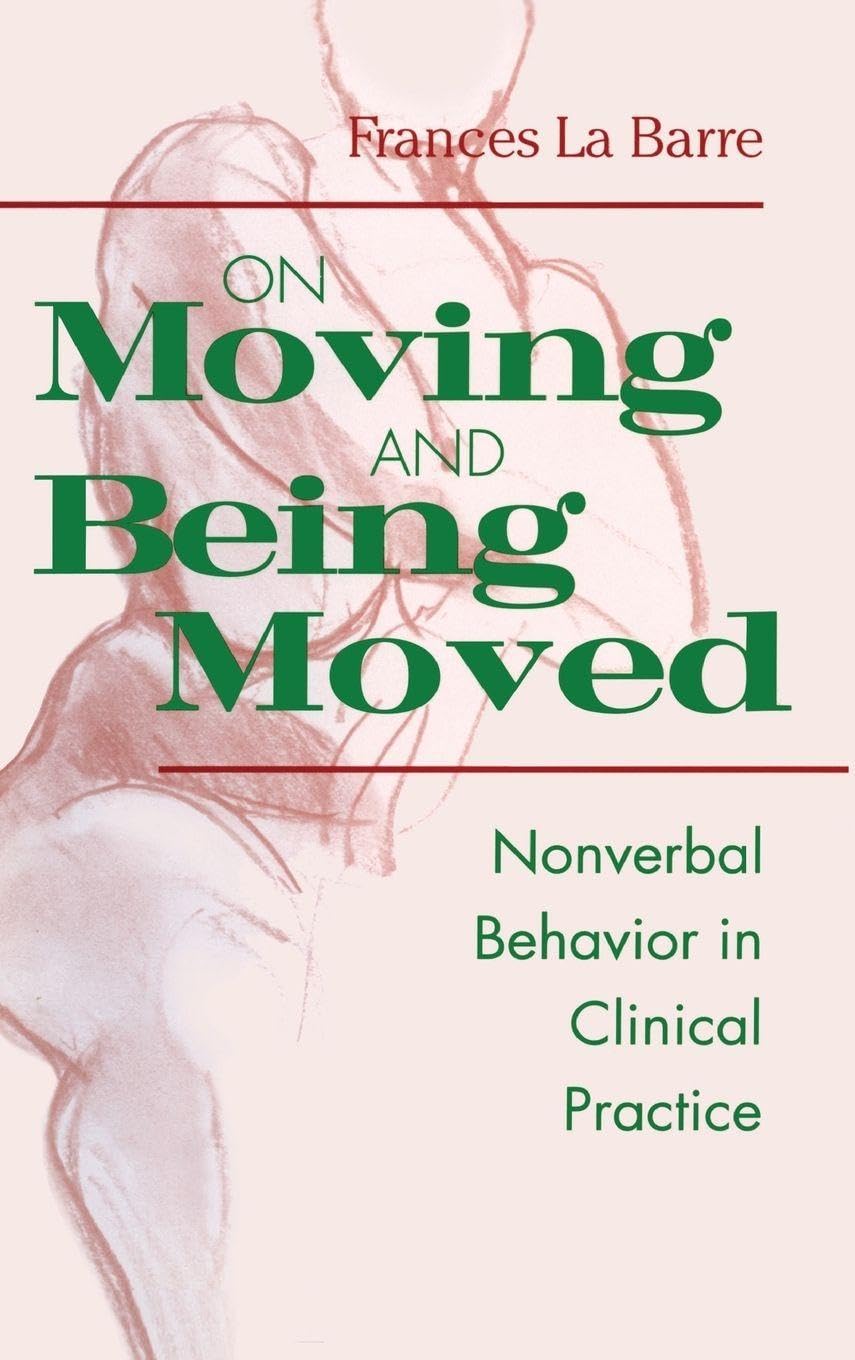
On Moving and Being Moved: Nonverbal Behavior in Clinical Practice by Frances La Barre – A Routledge Guide for Therapist
Inclusive of all applicable taxes. FREE shipping on all orders.
Available Offers
- 🚚Free Delivery — Free shipping on all orders
- 💵Cash on Delivery — Pay when your order arrives
- ↩️15-Day Easy Returns — Hassle-free return policy
- 🔒Cash on Delivery — Pay safely when your order arrives
Check Delivery
Product Description
Introduction
In the nuanced world of psychotherapy and clinical practice, words often tell only half the story. Every seasoned therapist knows that a patient’s posture, a fleeting gesture, or a subtle shift in breathing can speak volumes about unspoken emotions and hidden conflicts. Yet, translating these nonverbal cues into meaningful therapeutic insights remains a formidable challenge. Frances La Barre’s On Moving and Being Moved: Nonverbal Behavior in Clinical Practice bridges this gap with elegance and scholarly depth. This hardcover volume from Routledge offers Indian clinicians, students, and mental health professionals a rare opportunity to deepen their understanding of the body’s language in the therapeutic encounter.
Book Overview
This book is not merely a theoretical treatise; it is a practical guide that integrates decades of research on movement, gesture, and nonverbal communication with real-world clinical applications. La Barre draws from her rich background as a dancer and psychoanalyst to illuminate how therapists can attune themselves to the subtle rhythms of body language. The work explores how movement patterns—from posture-gesture mergers to self-touching behaviors—carry profound psychological meaning. By weaving together insights from anthropology, developmental psychology, and psychoanalysis, the author provides a comprehensive framework for observing, interpreting, and responding to nonverbal behavior in therapy sessions.
Key Highlights
- Interdisciplinary Approach: Seamlessly merges findings from kinesics, context analysis, and developmental psychology with clinical psychoanalysis.
- Practical Guidance: Offers concrete strategies for therapists to enhance their observational skills and use nonverbal cues to deepen therapeutic rapport.
- Rich Case Examples: Illustrates key concepts with vivid clinical vignettes that bring theory to life.
- Author’s Unique Perspective: Combines La Barre’s expertise as a dancer with her extensive analytic experience, offering a fresh lens on embodied communication.
- Evidence-Based: Grounded in a thorough review of research literature, ensuring clinical recommendations are scientifically sound.
Inside the Book
The book is structured to guide readers from foundational concepts to advanced clinical applications. Early chapters introduce the vocabulary of nonverbal behavior—defining terms like kines, posture-gesture mergers, and body attitudes. La Barre then delves into how these behaviors manifest in different diagnostic groups and therapeutic relationships. Later sections explore the therapist’s own bodily responses, emphasizing the importance of self-awareness and countertransference through movement. Each chapter builds on the last, creating a cohesive narrative that respects both the art and science of reading the body in therapy.
Key Topics
- The language of posture and gesture in clinical settings
- Developmental origins of nonverbal communication
- Cross-cultural perspectives on movement and meaning
- Nonverbal indicators of defense mechanisms and resistance
- Using movement observation to enhance empathy and attunement
- The therapist’s body as an instrument of healing
- Integrating nonverbal cues with verbal interpretations
Reader Benefits
Indian mental health practitioners and students will find this book particularly valuable in a multicultural context where nonverbal cues can vary widely across communities. By honing the ability to read subtle body signals, readers can build stronger therapeutic alliances, avoid misdiagnoses, and unlock deeper layers of patient experience. The book also equips readers with a systematic method to document and analyze movement patterns, making supervision and case discussions more insightful. For those training in clinical psychology, psychiatry, or counseling, this text fills a critical gap often overlooked in standard curricula.
Learning Outcomes
- Develop a refined observational vocabulary for describing patient movement and posture.
- Understand the theoretical underpinnings linking nonverbal behavior to psychological states.
- Learn to differentiate between culturally normal gestures and clinically significant patterns.
- Gain skills to use one’s own bodily reactions as therapeutic data.
- Integrate nonverbal observations into case formulations and treatment planning.
Who Should Read
This book is essential for psychotherapists, psychoanalysts, clinical psychologists, psychiatrists, and counselors at all career stages. It is also highly relevant for students in mental health training programs, dance movement therapists, and body-oriented practitioners. Additionally, educators teaching courses on therapeutic communication or nonverbal behavior will find it a valuable resource. Indian readers working in diverse settings—from urban clinics to rural mental health camps—will benefit from the universal yet culturally adaptable insights presented.
About the Author
Frances La Barre is a psychoanalyst and clinical psychologist with a unique background in dance. She trained at the William Alanson White Institute and has maintained a private practice in New York City. Her dual expertise in movement and psychoanalysis has made her a sought-after speaker and teacher. She has contributed numerous articles to professional journals and is known for her ability to translate complex embodied phenomena into accessible clinical wisdom. Her work continues to inspire therapists to attend to the silent dialogues that unfold in the consulting room.
About the Publisher
Routledge, a global imprint of Taylor & Francis, is one of the most respected publishers in the social sciences and humanities. With a legacy spanning over 150 years, Routledge is renowned for publishing authoritative works in psychology, psychoanalysis, and counseling. This hardcover edition is meticulously produced to meet the highest academic standards, making it a durable addition to any professional library. Indian readers can trust Routledge for rigorous scholarship and practical relevance in clinical literature.
Conclusion
On Moving and Being Moved is more than a book—it is an invitation to deepen the therapeutic encounter by embracing the full spectrum of human communication. In a field that often privileges words over presence, Frances La Barre reminds us that the body holds its own wisdom. For Indian clinicians seeking to enrich their practice with a nuanced understanding of nonverbal behavior, this volume is an indispensable companion. Whether you are a seasoned practitioner or a student beginning your journey, this book will transform how you see, hear, and feel your clients.
Quick Summary
On Moving and Being Moved: Nonverbal Behavior in Clinical Practice by Frances La Barre is a groundbreaking exploration of how movement, posture, and gesture shape therapeutic communication. La Barre, a psychoanalyst with a background in dance, synthesizes research from psychology, psychoanalysis, and movement studies to offer clinicians a practical framework for interpreting nonverbal cues. This book is ideal for psychotherapists, psychoanalysts, counselors, and mental health students in India who want to deepen their understanding of embodied interaction in therapy. Readers will learn to observe subtle body language, enhance therapeutic alliance, and integrate movement awareness into their clinical work. The hardcover edition from Routledge is a durable reference for professionals. By purchasing from Bookshops.in, Indian readers get fast delivery, genuine copies, and trusted service. Whether you are a seasoned clinician or a student, this book will transform how you see and hear your clients.
Book Highlights
Book Specifications
| ISBN-13 | 9780881633160 |
| ISBN-10 | 088163316X |
| Publisher | Routledge |
| Language | English |
| Dimensions | 15.84 x 2.06 x 23.46 cm |
| Weight | 499 g |
| Country | India |
| Category | Psychology › Psychotherapy |
| Genre | Clinical Psychology / Psychotherapy |
| Reading Age | Adult |
| Original Language | English |
Frequently Asked Questions
What is On Moving and Being Moved about?
Who is the author of this book?
Is this book suitable for Indian therapists?
Does the book include case studies?
What is the ISBN-13?
Is this book part of a series?
Can this book help with therapeutic communication?
What is the price in INR?
What is the rating of this book?
Does the book cover dance movement therapy?
Where can I buy this book in India?
Readers Also Search For
Customers Also Bought

Psychology
Koinonia: From Hate, Through Dialogue, to Culture in the Large Group by Patrick B. Demare

Psychology
Mindfulness-Based Interventions for Trauma and Its Consequences (Concise Guides on Trauma Care, 4)

Psychology
Handbook for Teaching Statistics and Research Methods by Mark E. Ware

Psychology
Psychoanalysis and the Nuclear Threat: Clinical and Theoretical Studies

Psychology
Humor and Psyche: Psychoanalytic Perspectives by James W. Barron

Relationships
The Experience and Expression of Uncertainty in Close Relationships by Jennifer A. Theiss
Related Products
View AllPsychology
Mindfulness-Based Interventions for Trauma and Its Consequences (Concise Guides on Trauma Care, 4)
Psychology
Handbook for Teaching Statistics and Research Methods by Mark E. Ware
Psychology
Psychoanalysis and the Nuclear Threat: Clinical and Theoretical Studies
Psychology
Humor and Psyche: Psychoanalytic Perspectives by James W. Barron

Psychology
Proceedings of the First International Conference on Genetic Algorithms and Their Applications
Psychology