
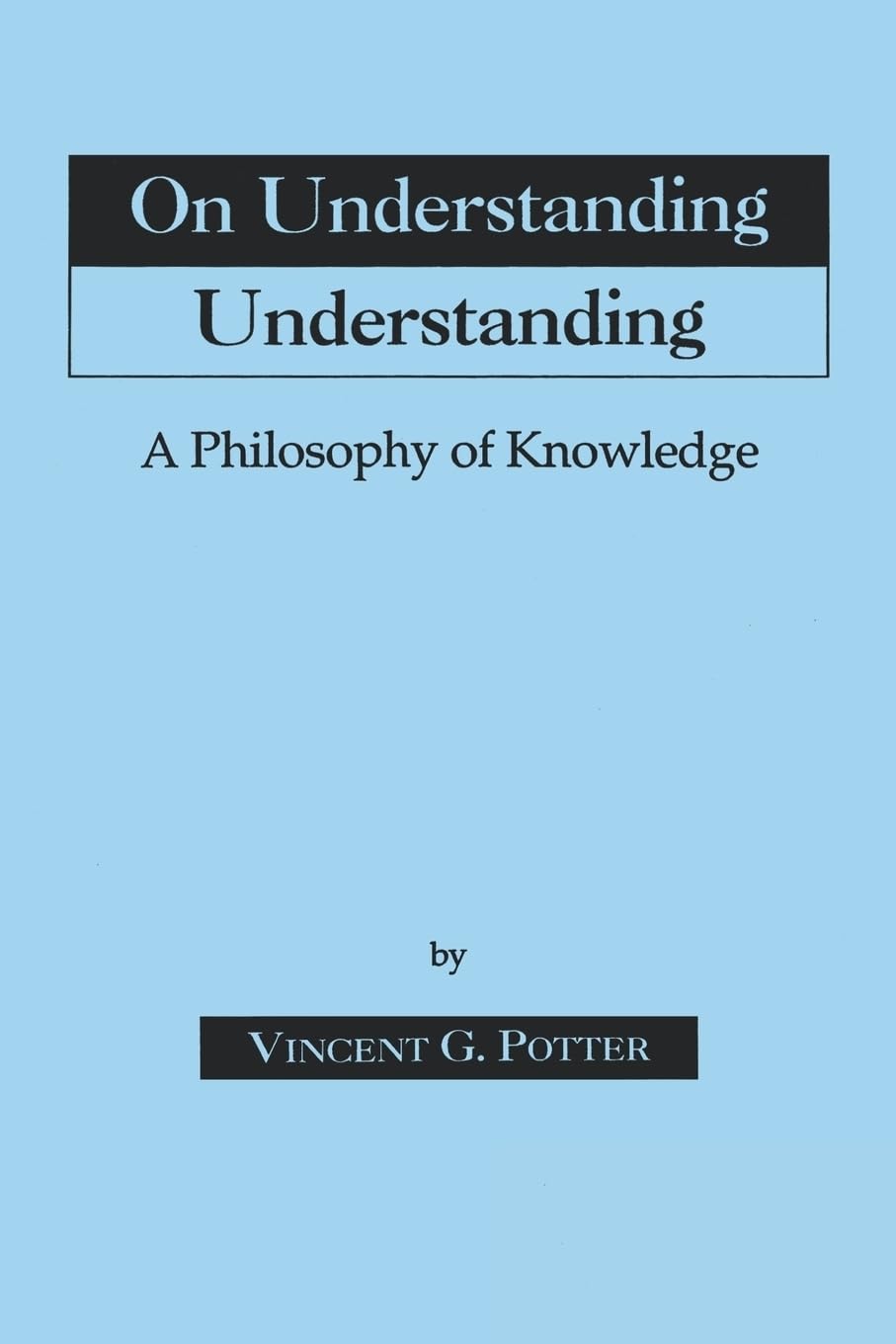
On Understanding Understanding: A Philosophy of Knowledge by Vincent G. Potter – A Comprehensive Introduction to Epistem
Inclusive of all applicable taxes. FREE shipping on all orders.
Available Offers
- 🚚Free Delivery — Free shipping on all orders
- 💵Cash on Delivery — Pay when your order arrives
- ↩️15-Day Easy Returns — Hassle-free return policy
- 🔒Cash on Delivery — Pay safely when your order arrives
Check Delivery
Product Description
Introduction
In an age where information flows endlessly, the ability to truly understand—rather than merely consume—knowledge is more precious than ever. Vincent G. Potter’s On Understanding Understanding: A Philosophy of Knowledge invites readers on a rigorous yet accessible journey into the heart of epistemology. Published by Fordham University Press, this hardcover volume is a thoughtful companion for Indian students, scholars, and curious minds who wish to explore the foundational questions of human knowing.
Book Overview
This book is a concise but profound introduction to the philosophical study of knowledge. Potter, a distinguished philosopher, guides readers through the essential puzzles of epistemology: What does it mean to know something? How do we distinguish true belief from mere opinion? What are the limits of human understanding? Written with clarity and depth, the book balances classical philosophical traditions with contemporary concerns, making it an ideal starting point for anyone new to the subject or seeking a refresher.
Key Highlights
- Structured as a systematic inquiry into the nature, sources, and validity of knowledge
- Features carefully designed study questions at the end of each chapter to deepen engagement
- Bridges Western philosophical thought with universal questions about cognition and reality
- Written in an accessible yet intellectually rigorous style, suitable for both classroom use and independent reading
Inside the Book
The book unfolds in a logical progression, beginning with the basic concepts of belief, truth, and justification. Potter then examines major theories of knowledge—including empiricism, rationalism, and skepticism—before delving into the role of perception, memory, and testimony. Later chapters explore the relationship between understanding and language, the problem of induction, and the social dimensions of knowing. Each section is punctuated with reflective questions that encourage the reader to test ideas against their own experience.
Key Topics
- The definition and criteria of knowledge
- The distinction between a priori and a posteriori knowledge
- The problem of skepticism and certainty
- The nature of perception and conceptual frameworks
- The role of inference and evidence in reasoning
- Knowledge as a social and communal enterprise
Reader Benefits
By working through this book, readers will develop a sharper awareness of how they form beliefs and evaluate arguments. The study questions serve as a practical tool for self-assessment, helping to solidify concepts and encourage critical thinking. Potter’s clear exposition makes complex ideas manageable, while his respectful treatment of opposing views fosters intellectual humility. This is not a dry textbook but a lively invitation to think more deeply about what it means to understand.
Learning Outcomes
- Grasp the central problems and debates in epistemology
- Learn to identify and analyze different types of knowledge claims
- Develop the ability to construct and critique philosophical arguments
- Apply epistemological insights to everyday reasoning and decision-making
- Build a foundation for further study in philosophy, logic, and cognitive science
Who Should Read
This book is ideal for undergraduate and postgraduate students of philosophy, especially those enrolled in Indian universities offering courses in epistemology or metaphysics. It is equally valuable for educators designing syllabi, researchers in the humanities, and general readers with a passion for intellectual inquiry. Anyone who has ever wondered how we know what we know will find this work both enlightening and rewarding.
About the Author
Vincent G. Potter was a renowned American philosopher and professor at Fordham University, where he specialized in epistemology, metaphysics, and the philosophy of Charles Sanders Peirce. His scholarly work is marked by a rare combination of analytical precision and pedagogical warmth. Potter’s deep commitment to making philosophy accessible to students shines through every page of this book.
About the Publisher
Fordham University Press, based in New York, is a respected academic publisher known for its contributions to philosophy, theology, and the humanities. With a legacy spanning over a century, the press upholds the highest standards of scholarly excellence. This hardcover edition reflects that commitment, with a durable binding and clear typography that will serve readers for years.
Conclusion
On Understanding Understanding is more than an introductory text—it is a companion for the lifelong pursuit of wisdom. Whether you are a student preparing for exams, a teacher seeking fresh perspectives, or a thinker who simply loves to question, Vincent G. Potter’s work will challenge and inspire you. Add this essential volume to your library today and take a decisive step toward mastering the art of understanding.
Quick Summary
On Understanding Understanding: A Philosophy of Knowledge by Vincent G. Potter is a foundational text that introduces readers to the central questions of epistemology—the branch of philosophy concerned with the nature, scope, and limits of human knowledge. Written in a clear and engaging style, the book guides readers through key concepts such as truth, belief, justification, skepticism, and the methods of philosophical inquiry. Each chapter is enriched with thoughtfully designed study questions that encourage active learning and critical reflection. This hardcover edition, published by Fordham University Press, is ideal for Indian undergraduate and postgraduate philosophy students, as well as self-learners and educators seeking a reliable resource for courses on theory of knowledge. By reading this book, you will gain a deeper understanding of how we come to know the world and how to evaluate competing claims about knowledge. Purchase your copy from Bookshops.in, India's trusted premium online bookstore, and enrich your philosophical journey with this timeless work.
Book Highlights
Book Specifications
| ISBN-13 | 9780823214860 |
| ISBN-10 | 0823214869 |
| Publisher | Fordham Univ Pr |
| Language | English |
| Dimensions | 15.24 x 1.27 x 22.86 cm |
| Weight | 272 g |
| Country | India |
| Category | Philosophy › Epistemology |
| Genre | Non-fiction |
| Reading Age | 18+ |
| Original Language | English |
Frequently Asked Questions
What is On Understanding Understanding about?
Who is the author of this book?
Is this book suitable for Indian philosophy students?
Does the book include study questions?
What is the binding of this book?
What is the ISBN for this book?
What is the price of this book?
Can I use this book for self-study?
Does this book cover Western or Eastern philosophy?
Is this book part of a series?
Where can I buy this book in India?
What is the reading level of this book?
Readers Also Search For
Customers Also Bought

Islam
Spiritual Economies (English, Daromir Rudnyckyj)

Islam
Who Is Allah? (English, Bruce B. Lawrence)
Islam
Islam and Liberal Citizenship: The Search for an Overlapping Consensus by Andrew F. March

Islam
Fiqh Us-Sunnah: Funerals and Diggers by Al-Sayyid Sabiq – Islamic Funeral Guide

Christianity
Genetics (English, Thomas a. Shannon | Mark P. Aulisio | Françoise Baylis)

Hinduism
Karma and Creativity by Christopher Key Chapple – Indian Philosophy
Related Products
View All
Philosophy
Latin American Philosophy: Currents, Issues, Debates by Eduardo Mendieta

Philosophy
Al-Farabi's Short Commentary on Aristotle's Prior Analytics by Nicholas Rescher – Philosophy
Philosophy
Poetics of Imagining: Modern to Post-modern by Richard Kearney

Philosophy
The Metaphysics of Extrinsic Properties: 11 (Metaphysical Research, 11)
Philosophy
Dialogues on Metaphysics and on Religion by Nicolas Malebranche – Philosophy
Philosophy