
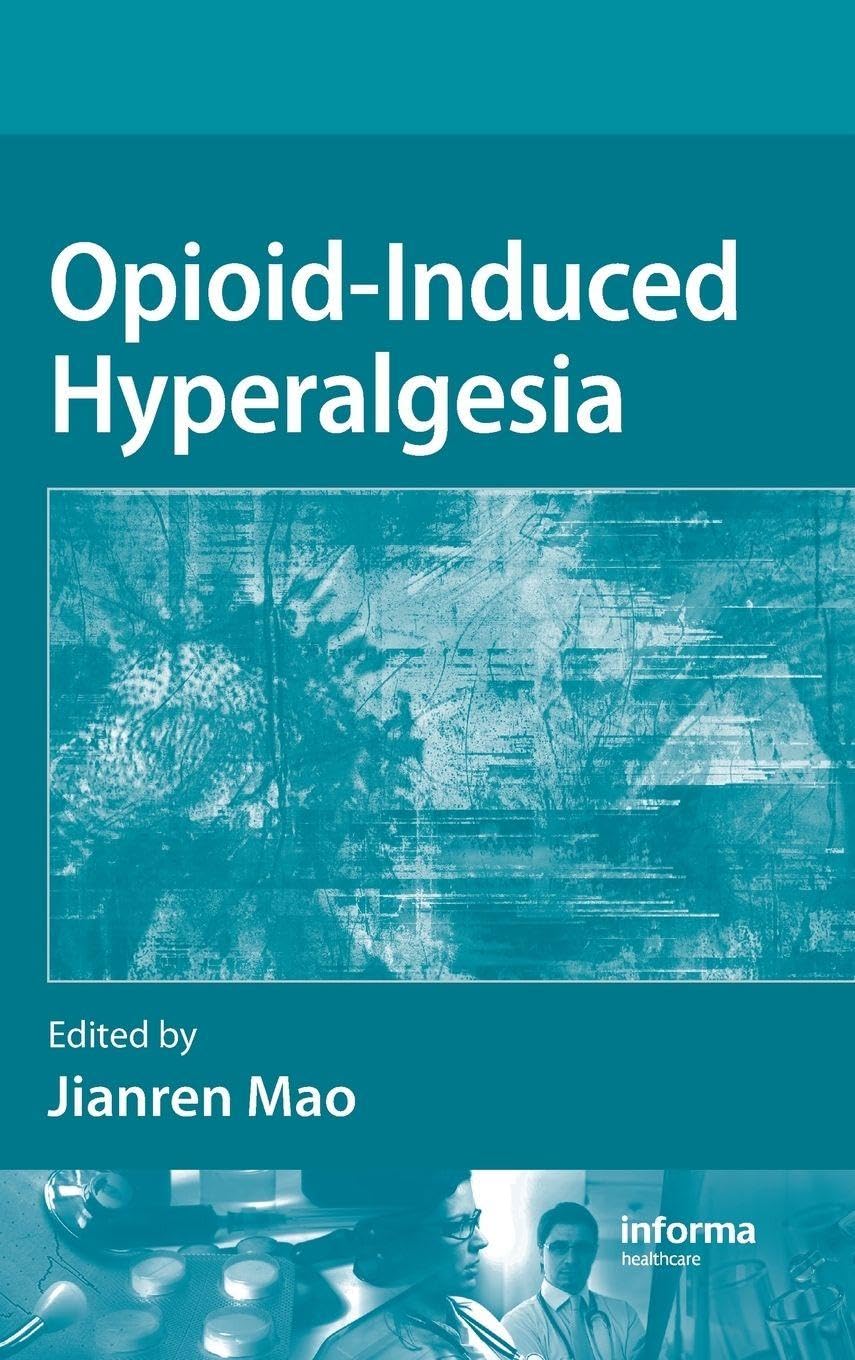
Opioid-Induced Hyperalgesia: A Clinical Guide for Pain Management Professionals by Jianren Mao
Inclusive of all applicable taxes. FREE shipping on all orders.
Available Offers
- 🚚Free Delivery — Free shipping on all orders
- 💵Cash on Delivery — Pay when your order arrives
- ↩️15-Day Easy Returns — Hassle-free return policy
- 🔒Cash on Delivery — Pay safely when your order arrives
Check Delivery
Product Description
Introduction
Opioid-Induced Hyperalgesia, edited by Dr. Jianren Mao, is a groundbreaking clinical reference that addresses one of the most challenging paradoxes in pain medicine: the phenomenon where opioid medications, instead of relieving pain, actually increase a patient's sensitivity to pain. Published by CRC Press, this hardbound volume is the first dedicated resource to equip pain specialists, anaesthesiologists, and neurologists with evidence-based strategies for recognising, assessing, and managing OIH. For Indian medical professionals and students navigating the complexities of chronic pain therapy, this book offers practical, patient-centred guidance rooted in cutting-edge research.
Book Overview
This authoritative text brings together leading international experts to demystify opioid-induced hyperalgesia, a condition often mistaken for opioid tolerance or disease progression. The book systematically explains the underlying neurobiological mechanisms—from central sensitisation to glial cell activation—and translates them into actionable clinical insights. With a strong emphasis on differential diagnosis, it helps clinicians distinguish OIH from tolerance, withdrawal, and other pain syndromes. The volume also provides a comprehensive review of pharmacological and non-pharmacological interventions, including opioid rotation, dose tapering, adjuvant analgesics, and multimodal analgesia. Real-world case studies and management algorithms make this an indispensable tool for Indian hospitals, pain clinics, and academic departments.
Key Highlights
- First clinically focused book on OIH – A pioneer in the field, dedicated entirely to this emerging area of pain medicine.
- Evidence-based best practice guidelines – Offers clear, step-by-step protocols for assessment, diagnosis, and management.
- Dosage optimisation strategies – Detailed recommendations to minimise the risk of hyperalgesia and delay its onset.
- Opioid rotation and tapering techniques – Practical approaches for switching or reducing opioids safely.
- Multidisciplinary perspectives – Contributions from anaesthesiologists, neurologists, pharmacologists, and pain psychologists.
- Indian context relevance – Addresses challenges faced in resource-limited settings, including availability of adjuvant drugs and monitoring tools.
Inside the Book
The content is organised into three major sections. Part I covers the basic science of OIH, including animal models, molecular pathways, and genetic factors. Part II focuses on clinical assessment, with chapters on patient history, quantitative sensory testing, and imaging biomarkers. Part III presents therapeutic options: opioid tapering schedules, NMDA receptor antagonists, alpha-2 agonists, non-steroidal anti-inflammatory drugs, and interventional procedures. Each chapter includes clinical pearls, cautionary notes, and summary tables that facilitate quick reference during busy clinical hours.
Key Topics
- Mechanisms of opioid-induced hyperalgesia: central and peripheral sensitisation
- Differences between OIH, opioid tolerance, and opioid withdrawal
- Risk factors: genetic predisposition, high-dose opioids, and prolonged use
- Diagnostic tools: bedside testing, pain scales, and quantitative sensory analysis
- Opioid rotation: converting between morphine, fentanyl, methadone, and buprenorphine
- Adjuvant medications: ketamine, lidocaine, gabapentinoids, and clonidine
- Non-pharmacological interventions: cognitive behavioural therapy, physical therapy, and neuromodulation
- Special populations: paediatric, geriatric, and palliative care patients
- Ethical and legal considerations in opioid prescribing
Reader Benefits
- Gain confidence in identifying OIH early, preventing unnecessary dose escalation and adverse effects.
- Learn safe opioid rotation and tapering protocols that reduce withdrawal symptoms and improve pain control.
- Access ready-to-use management algorithms that can be applied directly in Indian clinical settings.
- Understand the latest research on glial cell modulators and novel analgesic targets.
- Enhance patient outcomes by integrating multimodal pain management strategies.
- Stay updated with international guidelines adapted to local drug availability and regulatory frameworks.
Learning Outcomes
- Differentiate OIH from opioid tolerance, addiction, and disease progression using clinical and diagnostic criteria.
- Apply evidence-based dosing schedules to minimise the development of hyperalgesia in chronic pain patients.
- Design individualised treatment plans that combine opioid rotation, adjuvant pharmacotherapy, and non-drug interventions.
- Evaluate the role of genetic testing and biomarkers in predicting OIH risk.
- Implement safe tapering protocols for patients on long-term high-dose opioid therapy.
- Communicate effectively with patients and families about the risks and benefits of chronic opioid use.
Who Should Read
This book is essential reading for practising pain physicians, anaesthesiologists, neurologists, physiatrists, and palliative care specialists. It is equally valuable for postgraduate trainees in pain medicine, anaesthesia, and neurology, as well as clinical pharmacists and nurse practitioners involved in pain management. Researchers in neuropharmacology and addiction medicine will also find the mechanistic chapters highly informative. Indian medical students and residents preparing for specialty board examinations will benefit from the concise, exam-oriented summaries and clinical vignettes.
About the Author
Dr. Jianren Mao is a globally recognised authority in pain medicine and opioid pharmacology. He serves as the Vice Chair for Research in the Department of Anaesthesia, Critical Care, and Pain Medicine at Massachusetts General Hospital and is a Professor at Harvard Medical School. With over three decades of clinical and laboratory research, Dr. Mao has published extensively on opioid tolerance, hyperalgesia, and neuropathic pain. His work has shaped international guidelines on safe opioid prescribing. In this volume, he brings together a distinguished panel of contributors, ensuring that every chapter reflects the highest standard of scientific rigour and clinical relevance.
About the Publisher
CRC Press, a premier imprint of the Taylor & Francis Group, has been a trusted name in scientific and medical publishing for over a century. Known for its rigorous peer-review process and commitment to evidence-based knowledge, CRC Press delivers authoritative textbooks and reference works to healthcare professionals worldwide. This hardcover edition is produced to the highest production standards, with durable binding, clear typography, and high-quality paper—ideal for repeated use in busy clinical libraries and personal collections.
Conclusion
Opioid-Induced Hyperalgesia is an indispensable clinical resource for anyone involved in the care of patients with chronic pain. By bridging the gap between basic neuroscience and bedside practice, Dr. Mao and his team provide a roadmap for safer, more effective pain management. For Indian clinicians grappling with the dual challenges of pain relief and opioid stewardship, this book offers both the scientific foundation and the practical tools needed to improve patient outcomes. Add this essential volume to your library and stay at the forefront of pain medicine.
Quick Summary
Opioid-Induced Hyperalgesia by Jianren Mao is a pioneering clinical text dedicated to the emerging field of opioid-induced hyperalgesia (OIH). This book is specifically designed for pain specialists, anesthesiologists, and neurologists who encounter patients experiencing increased pain sensitivity due to opioid therapy. It delivers the most current research and therapeutic options, offering best practice guidelines for effective assessment, diagnosis, and management. Readers will learn about opioid rotation and tapering strategies, dosage recommendations to minimize hyperalgesia, and alternative approaches for difficult cases. The book is organized for quick reference, making it an indispensable tool in clinical settings. By purchasing from Bookshops.in, Indian medical professionals gain access to a premium imported hardcover edition with reliable delivery and customer support, ensuring they have the latest knowledge to improve patient outcomes.
Book Highlights
Book Specifications
| ISBN-13 | 9781420088991 |
| ISBN-10 | 1420088998 |
| Publisher | CRC Pr I Llc |
| Language | English |
| Dimensions | 15.24 x 1.27 x 22.86 cm |
| Weight | 408 g |
| Country | India |
| Category | Basic Sciences › Pharmacology |
| Genre | Medical |
| Original Language | English |
Frequently Asked Questions
What is opioid-induced hyperalgesia?
Who is the author of this book?
What is the main focus of this book?
Is this book suitable for Indian medical professionals?
Does the book cover opioid rotation?
What kind of dosage recommendations are included?
Who should read this book?
Is this book a textbook or a clinical reference?
Does the book include case studies?
Is the book available in hardcover?
Can I use this book for exam preparation?
What are alternative approaches covered in the book?
Why buy from Bookshops.in?
Readers Also Search For
Customers Also Bought

Anatomy
Ultrastructure of the Digestive Tract: 4 (Electron Microscopy in Biology and Medicine)

Anatomy
Ultrastructure of the Connective Tissue Matrix: 3 (Electron Microscopy in Biology and Medicine)

Anatomy
Reproductive Genetics (Royal College of Obstetricians and Gynaecologists Study Group)

Anatomy
Human Gross Anatomy: An Outline Text by Robert J. Leonard – Medical Anatomy

Pharmacology
Mathematical Modeling and Simulation in Enteric Neurobiology

Anatomy
Nature’s Patterns and the Fractional Calculus: 2 (Fractional Calculus in Applied Sciences and Engineering, 2)
Related Products
View All
Pharmacology
A Handbook of Artificial Intelligence in Drug Delivery (English, Anil K. Philip)
Pharmacology
Plant Microevolution and Conservation in Human-influenced Ecosystems by David Briggs
Pharmacology
Electrochemotherapy, Electrogenetherapy, and Transdermal Drug Delivery by Mark J. Jaroszeski – Biome
Pharmacology
A Guide to the Extrapyramidal Side-Effects of Antipsychotic Drugs by D. G. Cunningham Owens
Pharmacology
Progress in Heterocyclic Chemistry: A Critical Review of the 2000 Literature by G. W. Gribble
Pharmacology