
Chemistry
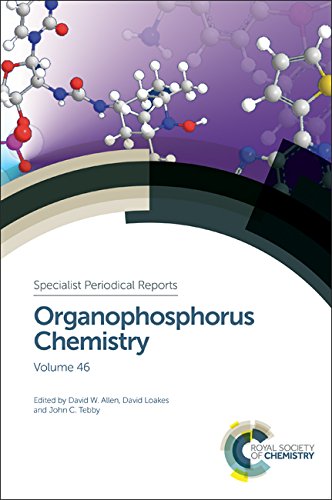
ORGANOPHOSPHORUS CHEMISTRY: Volume 46 (Specialist Periodical Reports - Organophosphorus Chemistry)
₹5,814
Inclusive of all applicable taxes. FREE shipping on all orders.
Quantity:
1
Free DeliveryOn every order
15-Day ReturnEasy returns
Genuine BookPhysical copy only
Available Offers
- 🚚Free Delivery — Free shipping on all orders
- 💵Cash on Delivery — Pay when your order arrives
- ↩️15-Day Easy Returns — Hassle-free return policy
- 🔒Cash on Delivery — Pay safely when your order arrives
Check Delivery
Product Description
Coverage in this annual review of the literature presents a comprehensive and critical survey of the vast field of study involving organophosphorus compounds, from phosphines and phosphonium salts through to phosphorus acids, nucleotides, ylides and phosphazenes. The Editors have added to the usual content with a timely chapter on the recent developments in green synthetic approaches in organophosphorus chemistry to reflect current interests in the area.
Product description From the Back Cover Coverage in this annual review of the literature presents a comprehensive and critical survey of the vast field of study involving organophosphorus compounds, from phosphines and phosphonium salts through to phosphorus acids, nucleotides, ylides and phosphazenes. The Editors have added to the usual content with a timely chapter on the recent developments in green synthetic approaches in organophosphorus chemistry to reflect current interests in the area. About the Author Professor David Allen is Emeritus professor of chemistry at the Sheffield Hallam University, UK. His main research interests are in phosphonium salts and related compounds. Current interests include the preparation of phosphonioalkyl derivatives of biologically active molecules, the phosphonioalkyl group facilitating the passage of the biologically active agent through cell membranes, and studies of the formation of biologically active surface-functionalised gold nanoparticles. Excerpt. © Reprinted by permission. All rights reserved. Organophosphorus Chemistry Volume 46By D. W. Allen, J. C. Tebby, D. LoakesThe Royal Society of ChemistryCopyright © 2017 The Royal Society of ChemistryAll rights reserved.ISBN: 978-1-78262-901-6ContentsPreface David Allen, David Loakes and John Tebby, v, Phosphines and related C–P bonded compounds D. W. Allen, 1, Tervalent phosphorus acid derivatives Mariette M. Pereira, Rui M. B. Carrilho and Mario J. F. Calvete, 52, Phosphine chalcogenides G. Keglevich, 104, Phosphonium salts and P-ylides Maurizio Selva, Alvise Perosa and Marco Noè, 139, Nucleotides and nucleic acids: mononucleotides Piotr Guga and Anna D. Maciaszek, 183, Quinquevalent phosphorus acids Piotr Balczewski and Joanna Skalik, 213, Pentacoordinated and hexacoordinated compounds Romana Pajkert and Gerd-Volker Röschenthaler, 323, Phosphazenes Vadapalli Chandrasekhar and Ramakirushnan Suriya Narayanan, 342, Green synthetic approaches in organophosphorus chemistry: recent developments Goutam Brahmachari, 418, CHAPTER 1Phosphines and related C–P bonded compoundsD. W. AllenDOI: 10.1039/9781788010689-000011 IntroductionThis chapter covers the literature published during 2015 relating to the above area. The number of papers published in 2015 is similar to that in 2014. Although it has been necessary to continue to be selective in the choice of publications cited, it is hoped that the most significant developments have been noted. The past year has again seen the publication of a considerable number of review articles and many of these are cited in the various sections of this report. The use of a wide range of tervalent phosphorus ligands in catalysis continues to be a major driver in the chemistry of traditional P–C-bonded phosphines (and also that of tervalent phosphorus acid derivatives, usually covered in detail elsewhere in this volume). As in recent years, a noteworthy feature of the literature reviewed here is the large number of papers reporting studies of the reactivity of phosphines, in particular those involving nucleophilic attack at a carbon atom of an electrophilic substrate. Recent general reviews include a survey of the chemistry of primary phosphines, the synthesis and reactivity of apical heteroatomic branched triphosphines, and a survey of modern methods for the synthesis of heteroleptic phosphines R2PR'. Also of interest is a review of advances in phosphorus-centred radical reactions in P–C bond formation.2 Phosphines2.1 Preparation2.1.1 From halogenophosphines and organometallic reagents. This route has continued to be applied widely, with most work involving the use of organolithium reagents. Once again, although very few reports of Grignard and related organomagnesium-based procedures have appeared, these reagents have found use, in combination with chlorophosphines, in the development of routes to the sterically crowded ter-aryl monophosphine and the diphosphinoimidazole (and related imidazolium–phosphenium salt systems). In contrast, organolithium-halogenophosphine routes have been used in the synthesis of a wide range of new mono-, di- and polyphosphines. Among new monophosphines reported are various N-(disilylaminoaryl)phosphines, the air-stable 2-arylindenylphosphine and the hybrid phosphino-o-dicarbaborane-m-terphenyl, a series of perfluoropropenylphosphines, a range of 2-(N-pyrrolyl- or N-pyrazolyl)-dialkyl- and diaryl-phosphinophenylphosphines, e.g., hydrophilic zwitterionic phosphines, e.g., the dihydroxyterphenylphosphines, phosphinocarbyne complexes of the type R2P-C[equivalent]W(L)n", the phosphino-silane chelating ligand (8), unusual electron-rich imidazolin-2-ylideneaminophosphines, e.g., and a wide range of new mono-, and di-phosphinobiaryls, e.g., and the route to the latter involving desymmetrization of the prochiral 2,2,6,6-tetrabromobiphenyl via asymmetric bromine-lithium exchange. Among other functionalised diphosphines accessed by organolithium-halogenophosphine routes are
Book Specifications
| ISBN-13 | 9781782629016 |
| ISBN-10 | 1782629017 |
| Publisher | Royal Society of Chemistry |
| Language | English |
| Dimensions | 15.6 x 2.31 x 23.4 cm |
| Weight | 215 g |
| Country | India |
| Category | Science & Mathematics › Chemistry |
Frequently Asked Questions
What is the price of ORGANOPHOSPHORUS CHEMISTRY: Volume 46?
ORGANOPHOSPHORUS CHEMISTRY: Volume 46 is available at ₹5,814 on BookShops.in.
Does BookShops.in offer free delivery for ORGANOPHOSPHORUS CHEMISTRY: Volume 46?
FREE delivery on all orders for ORGANOPHOSPHORUS CHEMISTRY: Volume 46.
Is Cash on Delivery available for ORGANOPHOSPHORUS CHEMISTRY: Volume 46?
Yes, Cash on Delivery (COD) is available for ORGANOPHOSPHORUS CHEMISTRY: Volume 46 on BookShops.in. Pay when your order arrives.
What is the return policy for ORGANOPHOSPHORUS CHEMISTRY: Volume 46?
BookShops.in offers a 15-day hassle-free return policy for ORGANOPHOSPHORUS CHEMISTRY: Volume 46. Contact us at support@bookshops.in or call +91 90874 10993.
Is ORGANOPHOSPHORUS CHEMISTRY: Volume 46 authentic?
ORGANOPHOSPHORUS CHEMISTRY: Volume 46 is listed on BookShops.in after verification of product details including ISBN, title, and availability information.
Customers Also Bought
Mathematics
Stereotype Spaces and Algebras: 73 (De Gruyter Expositions in Mathematics, 73)
₹5,013
Mathematics
Semigroups in Algebra, Geometry and Analysis: 20 (De Gruyter Expositions in Mathematics, 20)
₹5,131
Mathematics
Geometry from the Pacific Rim: Proceedings of the Pacific Rim Geometry Conference held at National University of Singapore, Republic of Singapore, ... 1994 (De Gruyter Proceedings in Mathematics)
₹5,511
Mathematics
First International Tainan-Moscow Algebra Workshop: Proceedings of the International Conference held at National Cheng Kung University Tainan, Taiwan, ... 1994 (De Gruyter Proceedings in Mathematics)
₹5,822
Mathematics
Differential Geometry - Proceedings of the VIII International Colloquium (English, Jesus A. Alvarez Lopez | Eduardo Garcia-Rio)
₹4,830
Mathematics
Mathematical Theory of Optimal Processes (Classics of Soviet Mathematics)
₹5,722
Related Products
View All
Chemistry
Proceedings of the Third USSR - FRG Symposium, Makhachkala (USSR), October 2–6, 1980: 001
₹5,683
Chemistry
Confining Electrochemistry to Nanopores: From Fundamentals to Applications: Volume 17 (Detection Science)
₹5,870
Chemistry
Inorganic Chemistry of the Main-Group Elements: Volume 1 (Specialist Periodical Reports - Inorganic Chemistry of the Main-Group Elements)
₹5,312
Chemistry
SYNTHETIC POLYMER CHEMISTRY: INNOVATIONS AND OUTLOOK: Volume 32 (Polymer Chemistry Series)
₹5,162
Chemistry
Theoretical Chemistry for Electronic Excited States: Volume 12 (Theoretical and Computational Chemistry Series)
₹3,876
Chemistry
Concise Encyclopedia of Biochemistry
₹5,980