
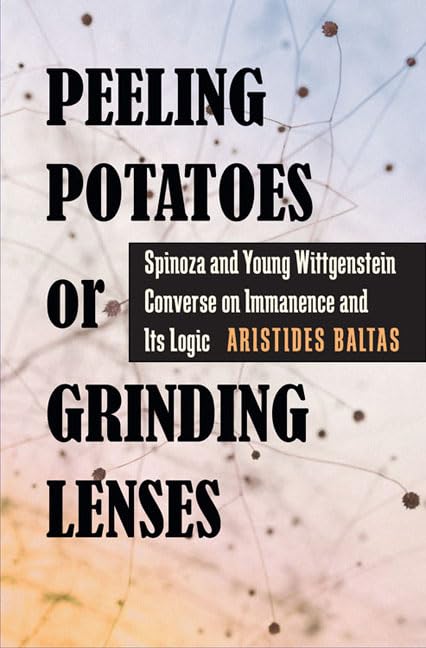
Peeling Potatoes or Grinding Lenses: Spinoza and Young Wittgenstein Converse on Immanence and Its Logic by Aristides Bal
Inclusive of all applicable taxes. FREE shipping on all orders.
Available Offers
- 🚚Free Delivery — Free shipping on all orders
- 💵Cash on Delivery — Pay when your order arrives
- ↩️15-Day Easy Returns — Hassle-free return policy
- 🔒Cash on Delivery — Pay safely when your order arrives
Check Delivery
Product Description
Introduction
Peeling Potatoes or Grinding Lenses: Spinoza and Young Wittgenstein Converse on Immanence and Its Logic by Aristides Baltas is a profound and illuminating work that bridges two towering figures in Western philosophy. Published by the University of Pittsburgh Press, this hardcover volume invites readers into a unique intellectual dialogue between Baruch Spinoza and the young Ludwig Wittgenstein. Baltas masterfully explores how both thinkers, separated by centuries, converge on the radical idea of immanence—the notion that truth, meaning, and reality are not transcendent but emerge from within the world itself. This book is a must-have for philosophy students, scholars, and anyone fascinated by the deep structures of thought and language.
Book Overview
In this meticulously researched monograph, Aristides Baltas draws a striking parallel between Spinoza’s Ethics and Wittgenstein’s Tractatus Logico-Philosophicus. Rather than treating these works as isolated monuments, he reveals their shared commitment to a logic of immanence—a logic that dissolves traditional philosophy by showing that the world, thought, and language are self-contained. The title itself alludes to Wittgenstein’s remark that peeling potatoes helped him think, much like lens-grinding aided Spinoza. Baltas uses this metaphor to frame a conversation that challenges fundamentalism and redefines how we understand reality, ethics, and logic. The book is both a scholarly deep dive and an accessible guide for Indian readers seeking to grapple with these complex ideas.
Key Highlights
- Unique Comparative Analysis: Bridges the gap between Spinoza’s 17th-century metaphysics and Wittgenstein’s early 20th-century logic, showing their surprising unity.
- Radical Immanence Explained: Clarifies how both philosophers argue that God, nature, logic, and language are not separate but interwoven from within.
- Dissolution of Philosophy: Explores how both works aim to end traditional philosophical questioning by revealing its own limits.
- Anti-Fundamentalist Stance: Provides a powerful argument against dogmatic thinking, relevant to contemporary debates in India and globally.
- Metaphor-Driven Narrative: Uses the everyday acts of peeling potatoes and grinding lenses to illustrate profound theoretical insights.
Inside the Book
Baltas takes readers on a journey through Spinoza’s pantheistic universe where God is identical to Nature, and Wittgenstein’s logical universe where the structure of language mirrors the structure of reality. The book unpacks dense passages from the Ethics and the Tractatus, making them accessible without oversimplification. Each chapter builds a case for how immanence operates—not as a doctrine but as a method. Readers will encounter close readings of key propositions, discussions of causality, substance, and the limits of language, all woven into a cohesive narrative that feels like a conversation between two minds.
Key Topics
- Immanence vs. Transcendence: How Spinoza and Wittgenstein reject external foundations for truth and meaning.
- Logic and Nature: The role of logical form in shaping our understanding of the natural world.
- Self-Contained Systems: How both thinkers view the world as a closed system requiring no external explanation.
- Ethics Without God: Spinoza’s ethical naturalism and Wittgenstein’s ethical silence.
- Language and Reality: The Tractatus view that language pictures facts, and Spinoza’s view that ideas reflect reality.
Reader Benefits
This book offers Indian readers a chance to engage with Western philosophy through a fresh lens that emphasizes interconnectedness—a concept familiar to Indian traditions. It sharpens critical thinking by challenging assumptions about divinity, logic, and meaning. Students of philosophy will gain a deeper appreciation for how two canonical texts can be read together, while general readers will find the metaphor-rich style engaging. The hardcover edition is built to last, making it a valuable addition to any personal library or academic collection.
Learning Outcomes
By reading Peeling Potatoes or Grinding Lenses, you will learn to identify the structural parallels between Spinoza and Wittgenstein, understand the concept of radical immanence, and see how philosophy can dissolve its own questions. You will also develop skills in comparative analysis and textual interpretation, useful for exams, research, or personal enrichment. The book equips you to recognise fundamentalism in its many forms and to appreciate the power of thinking from within the world.
Who Should Read
This book is ideal for postgraduate and advanced undergraduate students of philosophy, particularly those studying metaphysics, logic, or the history of ideas. It also appeals to scholars working on Spinoza, Wittgenstein, or immanence theory. Indian readers with a background in Vedanta or Buddhist philosophy will find intriguing resonance with the idea of an immanent reality. Additionally, anyone curious about how everyday activities like peeling potatoes can spark profound thought will enjoy this accessible yet rigorous work.
About the Author
Aristides Baltas is a distinguished philosopher and professor known for his work on the intersections of logic, metaphysics, and the history of philosophy. His scholarship often bridges analytic and continental traditions, bringing clarity to complex texts. With a career spanning decades, Baltas has a gift for making dense philosophical ideas feel alive and relevant. In this book, he channels his expertise into a dialogue that is both scholarly and deeply human.
About the Publisher
University of Pittsburgh Press is a respected academic publisher known for producing high-quality works in philosophy, history, and the social sciences. Their titles are rigorously peer-reviewed and designed to advance knowledge while remaining accessible. This hardcover edition reflects their commitment to durable, well-crafted books that stand the test of time—perfect for serious readers in India.
Conclusion
Peeling Potatoes or Grinding Lenses is not just a book; it is an invitation to rethink the very foundations of thought and reality. Aristides Baltas has crafted a work that is as intellectually stimulating as it is beautifully written. Whether you are a philosopher or a curious mind, this book will change how you see the world, logic, and the quiet acts of daily life. Order your copy from Bookshops.in today and join the conversation between Spinoza and Wittgenstein.
Quick Summary
Peeling Potatoes or Grinding Lenses by Aristides Baltas is a profound philosophical work that compares Baruch Spinoza's Ethics and Ludwig Wittgenstein's Tractatus Logico-Philosophicus through the lens of radical immanence. Baltas argues that both philosophers, despite being separated by centuries, share a commitment to understanding the world, thought, and language from the inside, leading to the dissolution of all philosophy and a powerful argument against fundamentalism. The book is ideal for advanced philosophy students, scholars, and anyone interested in metaphysics, logic, or the history of ideas. Readers will learn how immanence challenges traditional dualisms and offers a cohesive framework for interpreting these classic texts. By purchasing from Bookshops.in, Indian readers gain access to a premium hardcover edition with reliable delivery and excellent customer service, supporting a local bookstore dedicated to quality academic literature.
Book Highlights
Book Specifications
| ISBN-13 | 9780822944164 |
| ISBN-10 | 0822944162 |
| Publisher | Univ of Pittsburgh Pr |
| Language | English |
| Dimensions | 15.88 x 2.54 x 24.13 cm |
| Weight | 590 g |
| Category | Philosophy › History & Surveys |
| Genre | Philosophy |
| Reading Age | Adult |
| Original Language | English |
Frequently Asked Questions
What is the main argument of this book?
Who is the author Aristides Baltas?
Is this book suitable for beginners in philosophy?
What does the title 'Peeling Potatoes or Grinding Lenses' mean?
How does the book relate to Indian philosophy?
What format is this book available in?
Can I get this book delivered to India?
What is the ISBN?
Is the book part of a series?
What language is the book in?
Does the book include references to other philosophers?
What is the price in INR?
Where can I buy this book online in India?
Readers Also Search For
Customers Also Bought
Islam
Spiritual Economies (English, Daromir Rudnyckyj)

Islam
Who Is Allah? (English, Bruce B. Lawrence)
Islam
Islam and Liberal Citizenship: The Search for an Overlapping Consensus by Andrew F. March
Islam
Fiqh Us-Sunnah: Funerals and Diggers by Al-Sayyid Sabiq – Islamic Funeral Guide

Christianity
Genetics (English, Thomas a. Shannon | Mark P. Aulisio | Françoise Baylis)

Hinduism
Karma and Creativity by Christopher Key Chapple – Indian Philosophy
Related Products
View All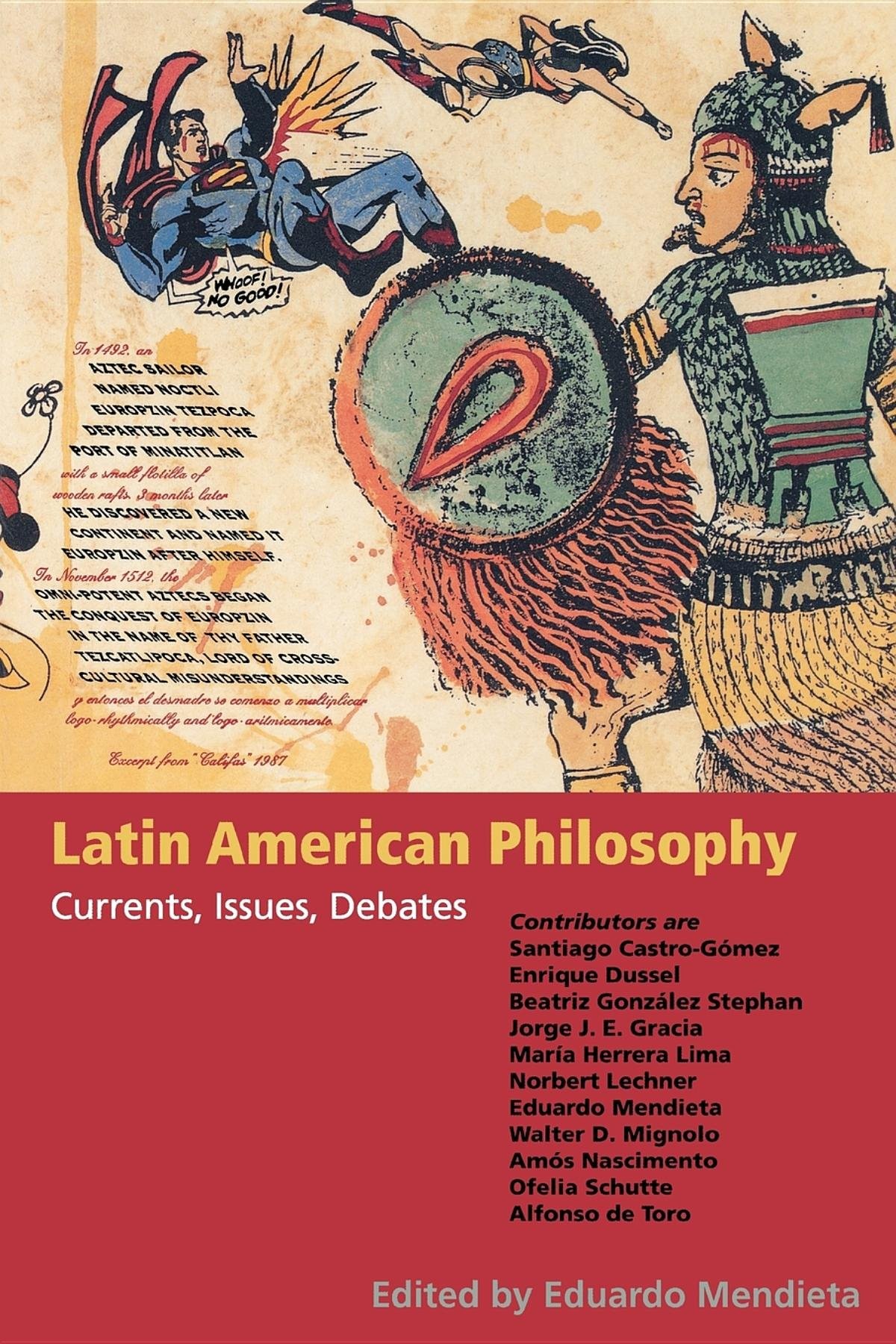
Philosophy
Latin American Philosophy: Currents, Issues, Debates by Eduardo Mendieta

Philosophy
Al-Farabi's Short Commentary on Aristotle's Prior Analytics by Nicholas Rescher – Philosophy
Philosophy
Poetics of Imagining: Modern to Post-modern by Richard Kearney
Philosophy
The Metaphysics of Extrinsic Properties: 11 (Metaphysical Research, 11)
Philosophy
Dialogues on Metaphysics and on Religion by Nicolas Malebranche – Philosophy
Philosophy