
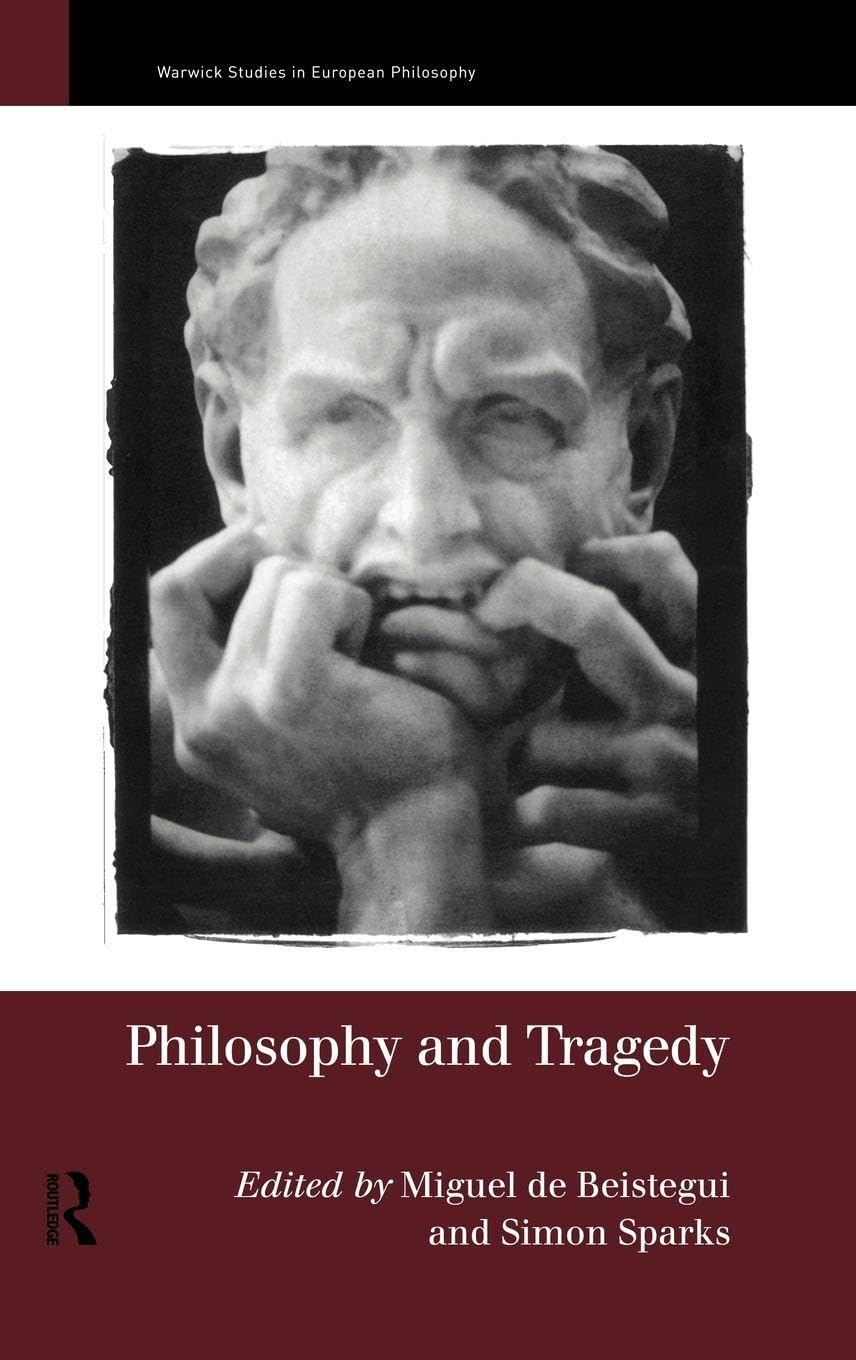
Philosophy and Tragedy: A Major Philosophical Study by Simon Sparks – From Plato to Nietzsche
Inclusive of all applicable taxes. FREE shipping on all orders.
Available Offers
- 🚚Free Delivery — Free shipping on all orders
- 💵Cash on Delivery — Pay when your order arrives
- ↩️15-Day Easy Returns — Hassle-free return policy
- 🔒Cash on Delivery — Pay safely when your order arrives
Check Delivery
Product Description
Introduction
Philosophy and tragedy have shared a long, complex, and often contentious relationship. From the ancient Greek amphitheaters to the lecture halls of modern universities, the question of what tragedy means—and why it matters—has haunted some of the greatest minds in Western thought. Philosophy and Tragedy, edited by Simon Sparks, offers a rare and rigorous exploration of this enduring dialogue. Published by Routledge, this hardcover volume brings together eleven original essays by internationally renowned philosophers who examine how tragedy has shaped—and been shaped by—philosophical inquiry. For Indian readers and students of philosophy, literature, and social sciences, this book opens a window into a tradition that continues to influence how we understand suffering, fate, and human agency.
Book Overview
This collection addresses a surprising oversight in philosophical scholarship: while thinkers from Plato and Aristotle to Nietzsche and Benjamin have repeatedly turned to tragedy in their major works, tragedy itself has rarely been treated as a philosophical tradition in its own right. Philosophy and Tragedy fills this gap with depth and clarity. The essays move chronologically and thematically, covering key moments from ancient Greece through the nineteenth century and into modern critical theory. Each chapter examines why figures as diverse as Hegel, Heidegger, and Walter Benjamin made tragedy central to their philosophical projects. The book also asks why, after Immanuel Kant, an important strand of European philosophy began to present itself in tragic terms. This is not merely a history of ideas; it is a sustained meditation on the philosophical stakes of tragedy itself.
Key Highlights
- First comprehensive treatment of tragedy as a philosophical tradition, not just a literary genre
- Eleven original essays by world-renowned philosophers, including leading scholars on Hegel, Nietzsche, and Benjamin
- In-depth readings of Sophocles’ Antigone through Heidegger’s lens, and Nietzsche’s The Birth of Tragedy as a philosophical landmark
- Critical engagement with the relationship between tragedy, modernity, and post-Kantian philosophy
- Interdisciplinary appeal bridging philosophy, literary theory, political thought, and cultural studies
Inside the Book
The volume is divided into carefully curated sections that guide the reader from ancient foundations to modern reinterpretations. Early chapters revisit Aristotle’s Poetics and Plato’s ambivalent treatment of tragic poetry in the Republic. Later essays explore Hegel’s dialectical account of tragedy in his Lectures on Aesthetics and his Phenomenology of Spirit. A particularly striking chapter examines Walter Benjamin’s Origin of German Tragic Drama, situating it within his broader critique of modernity. Nietzsche’s The Birth of Tragedy receives extended treatment, with contributors debating its influence on later continental philosophy. The final essays turn to Heidegger’s reading of Sophocles and the tragic dimensions of existential phenomenology. Throughout, the writing is scholarly yet accessible, making complex arguments understandable for advanced students and researchers alike.
Key Topics
- The concept of tragic wisdom in ancient Greek philosophy
- Aristotle’s Poetics and the definition of tragedy
- Hegel’s dialectical theory of tragic conflict
- Nietzsche’s Apollonian and Dionysian dichotomy
- Walter Benjamin and the mourning play (Trauerspiel)
- Heidegger’s interpretation of Antigone
- Tragedy and the post-Kantian turn in philosophy
- The politics of tragedy: from Sophocles to modern critical theory
Reader Benefits
This book offers Indian students and scholars a rare opportunity to engage with a European philosophical tradition that has often been overlooked in standard curricula. By reading Philosophy and Tragedy, you will gain a deeper appreciation of how tragedy informs not only literature but also ethics, politics, and metaphysics. The essays are written to be self-contained, allowing you to dip into specific chapters without needing to read the entire volume. For those preparing for competitive examinations in philosophy or social sciences, this book provides a rich source of critical perspectives that can sharpen your analytical skills. Moreover, the hardcover edition is built to last, making it a valuable addition to any personal or institutional library.
Learning Outcomes
- Understand the historical development of philosophical approaches to tragedy from Plato to the twentieth century
- Analyze key texts such as Aristotle’s Poetics, Nietzsche’s The Birth of Tragedy, and Heidegger’s essays on Sophocles
- Evaluate the role of tragedy in shaping modern continental philosophy
- Critically assess the relationship between tragedy, politics, and aesthetics
- Develop the ability to read philosophical texts with attention to their tragic dimensions
Who Should Read
Philosophy and Tragedy is ideal for undergraduate and postgraduate students of philosophy, especially those specializing in continental philosophy, aesthetics, or ancient philosophy. It is equally valuable for students of literary theory, comparative literature, and cultural studies who wish to understand the philosophical underpinnings of tragic drama. Researchers and faculty members looking for a comprehensive reference work on the topic will find the essays both stimulating and authoritative. Indian readers with an interest in the intersections of Eastern and Western thought will also discover resonant themes—particularly in the discussions of fate, suffering, and ethical responsibility.
About the Author
Simon Sparks is a respected scholar in continental philosophy and critical theory. He has edited and contributed to several volumes that explore the boundaries between philosophy, literature, and politics. His work is known for its clarity and its ability to bring difficult philosophical ideas into dialogue with contemporary concerns. Sparks’s editorial vision for Philosophy and Tragedy ensures that each essay speaks to the central theme while maintaining its own distinctive voice.
About the Publisher
Routledge is one of the world’s leading academic publishers, with a strong reputation for producing high-quality books in philosophy, social sciences, and the humanities. Their titles are widely used in universities across India and globally. This hardcover edition reflects Routledge’s commitment to durable, well-edited scholarship that serves both teaching and research needs.
Conclusion
Philosophy and Tragedy is an essential volume for anyone who wishes to understand why tragedy has been a persistent and powerful concern for philosophy. By gathering together some of the finest minds in the field, Simon Sparks has created a work that is both a scholarly resource and an invitation to think more deeply about the human condition. Whether you are a student beginning your journey into philosophy or a seasoned researcher, this book will challenge and reward you in equal measure. Order your copy today from Bookshops.in and add a landmark text to your collection.
Quick Summary
Philosophy and Tragedy, edited by Simon Sparks, is a landmark collection that establishes tragedy as a vital philosophical tradition rather than merely a literary genre. The volume brings together eleven original essays by internationally renowned philosophers, each examining how major thinkers from Plato and Aristotle to Nietzsche, Hegel, and Walter Benjamin have made tragedy central to their work. Readers will explore why tragedy recurs as a theme in key philosophical texts, from The Republic and Poetics to The Birth of Tragedy and beyond. The book is ideal for postgraduate students and researchers in continental philosophy, aesthetics, and literary theory, as well as Indian academics seeking a rigorous interdisciplinary resource. By delving into questions of suffering, fate, and the human condition, Philosophy and Tragedy offers a fresh perspective on classic philosophical debates. Purchasing from Bookshops.in ensures you receive a genuine Routledge hardcover edition, with reliable delivery across India and excellent customer service for academic customers.
Book Highlights
Book Specifications
| ISBN-13 | 9780415191418 |
| ISBN-10 | 0415191416 |
| Publisher | Routledge |
| Language | English |
| Dimensions | 16.2 x 1.96 x 23.99 cm |
| Weight | 522 g |
| Category | Philosophy › Aesthetics |
| Genre | Philosophy |
| Original Language | English |
Frequently Asked Questions
What is Philosophy and Tragedy about?
Who is the editor of this book?
Which philosophers are discussed in the book?
Is this book suitable for undergraduate students?
Does the book cover only Greek tragedy?
What is the main argument of the book?
Is this a textbook or a research volume?
What is the publication date?
Is the book available in hardcover?
Can I use this book for a course on Nietzsche?
Does the book include essays on Benjamin?
Is the language accessible for non-native English speakers?
Where can I buy this book in India?
Readers Also Search For
Customers Also Bought
Islam
Spiritual Economies (English, Daromir Rudnyckyj)

Islam
Who Is Allah? (English, Bruce B. Lawrence)
Islam
Islam and Liberal Citizenship: The Search for an Overlapping Consensus by Andrew F. March
Islam
Fiqh Us-Sunnah: Funerals and Diggers by Al-Sayyid Sabiq – Islamic Funeral Guide

Christianity
Genetics (English, Thomas a. Shannon | Mark P. Aulisio | Françoise Baylis)

Hinduism
Karma and Creativity by Christopher Key Chapple – Indian Philosophy
Related Products
View All
Philosophy
Latin American Philosophy: Currents, Issues, Debates by Eduardo Mendieta

Philosophy
Al-Farabi's Short Commentary on Aristotle's Prior Analytics by Nicholas Rescher – Philosophy
Philosophy
Poetics of Imagining: Modern to Post-modern by Richard Kearney

Philosophy
The Metaphysics of Extrinsic Properties: 11 (Metaphysical Research, 11)
Philosophy
Dialogues on Metaphysics and on Religion by Nicolas Malebranche – Philosophy
Philosophy