
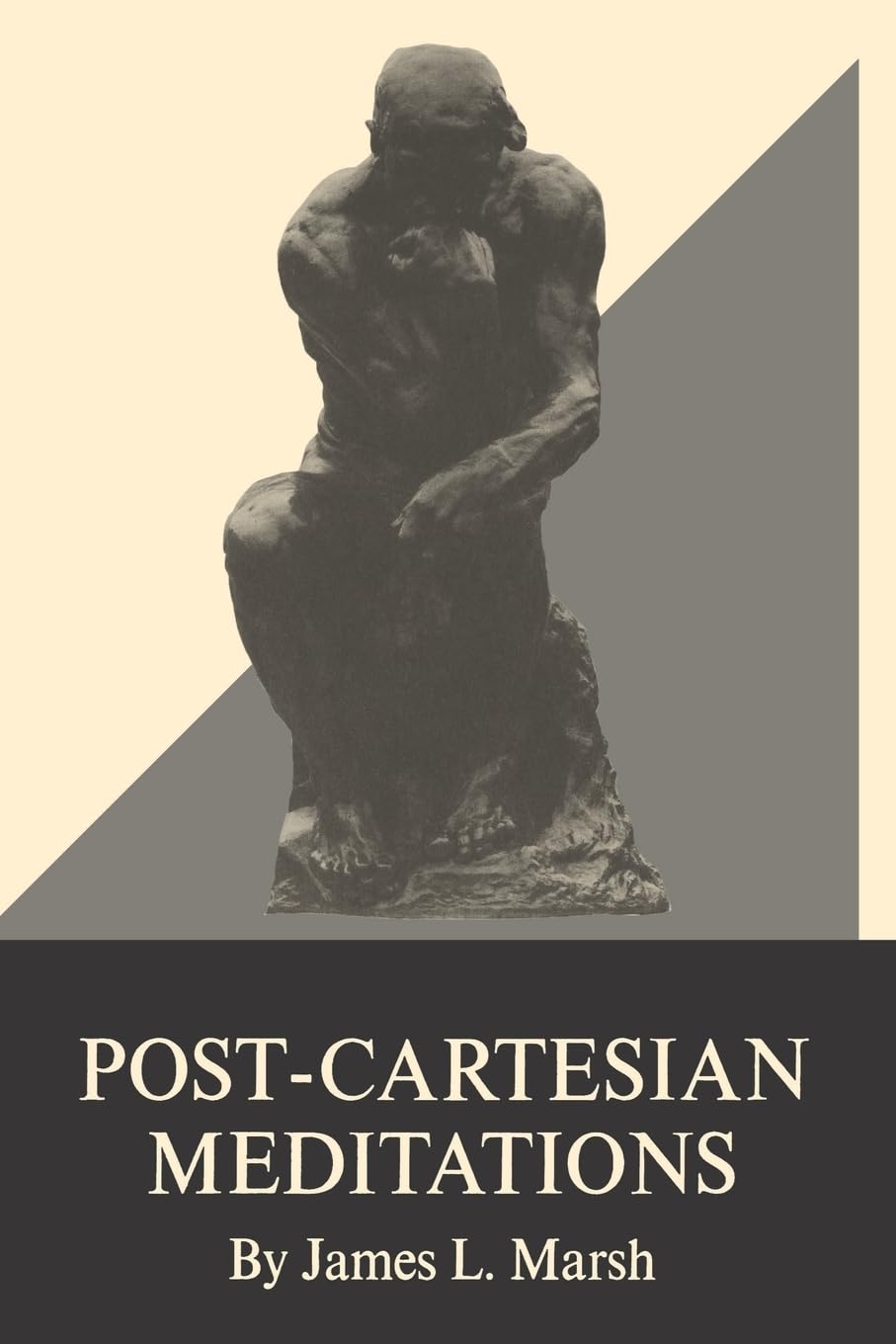
Post-Cartesian Meditations: An Essay in Dialectical Phenomenology by James L. Marsh – A Critical Social Philosophy Book
Inclusive of all applicable taxes. FREE shipping on all orders.
Available Offers
- 🚚Free Delivery — Free shipping on all orders
- 💵Cash on Delivery — Pay when your order arrives
- ↩️15-Day Easy Returns — Hassle-free return policy
- 🔒Cash on Delivery — Pay safely when your order arrives
Check Delivery
Product Description
Introduction
In the landscape of contemporary philosophy, few works dare to challenge the foundational assumptions of Cartesian thought as boldly as James L. Marsh’s Post-Cartesian Meditations: An Essay in Dialectical Phenomenology. This rigorous and transformative volume, published by Fordham University Press, offers a compelling journey from the isolated, bourgeois ego to a socially embedded, communal self. For Indian students and scholars of philosophy, this book serves as a vital bridge between classical phenomenology and critical social theory, making it an indispensable addition to any serious academic library.
Book Overview
Marsh’s work is both a homage and a critique of Descartes’ Meditations and Husserl’s Cartesian Meditations. Rather than simply reaffirming the individualistic, reflective, and apodictic self-recovery that marks Cartesianism, the author systematically dismantles it. Through a dialectical method, the book reconstructs the self as worldly, linguistic, historical, practical, and critical. The result is a post-bourgeois subjectivity that is inherently social and communal, yet retains the richness of individual experience. This hardcover edition is a robust resource for those seeking to understand phenomenology’s evolution beyond its Cartesian roots.
Key Highlights
- Original Dialectical Approach: Marsh combines phenomenology with dialectical reasoning, offering a unique method that moves from individual perception to social critique.
- Progressive Expansion: The chapters unfold in a carefully structured sequence, beginning with perception and thought, then moving to knowledge of others, practical engagements, hermeneutics, and finally critiques of the psychological and social unconscious.
- Critical Social Theory: The book integrates insights from Marx, Freud, and hermeneutic philosophers, making it relevant for interdisciplinary studies in sociology, psychology, and political theory.
- Accessible Yet Profound: Despite its depth, the text is written with clarity, making it suitable for advanced undergraduates, graduate students, and professional philosophers alike.
Inside the Book
The volume is structured as a series of meditations that progressively expand their scope. Early chapters focus on the individual’s perception, thought, and freedom, establishing a phenomenological foundation. Subsequent sections explore intersubjectivity, ethical engagement with others, and the role of language and history in shaping the self. The final chapters delve into the unconscious—both psychological and social—offering a critique of hidden structures that constrain human freedom. Each meditation builds on the previous, creating a cohesive argument for a socially situated, dialectical self.
Key Topics
- Phenomenology and dialectical method
- Critique of Cartesian individualism
- Social and communal selfhood
- Intersubjectivity and empathy
- Hermeneutics and language
- Practical engagement and ethics
- Psychological and social unconscious
- Freedom and historical context
- Post-bourgeois subjectivity
Reader Benefits
Readers will gain a deeper understanding of how phenomenology can be applied to contemporary social issues. The book challenges the reader to move beyond solipsistic thinking and embrace a more relational, critical worldview. Indian philosophy students will find parallels with dialogical traditions, while researchers will appreciate the rigorous argumentation and extensive references to continental philosophy. This book is a tool for intellectual growth, encouraging a reflective yet socially engaged mode of thought.
Learning Outcomes
- Understand the limitations of Cartesian epistemology and its impact on modern philosophy.
- Learn to apply dialectical phenomenology to analyze individual and social experience.
- Develop critical insights into the role of language, history, and the unconscious in shaping identity.
- Articulate a post-Cartesian conception of the self that is both free and socially responsible.
- Engage with key texts in phenomenology, critical theory, and hermeneutics with greater depth.
Who Should Read
This book is essential for postgraduate students and scholars of philosophy, especially those specializing in phenomenology, existentialism, or critical theory. It is also highly relevant for students of sociology, psychology, and political science who are interested in the philosophical foundations of social critique. Advanced undergraduates with a background in continental philosophy will find it challenging but rewarding. For Indian readers, the book offers a fresh perspective on selfhood that resonates with non-Western communal values.
About the Author
James L. Marsh is a distinguished professor of philosophy known for his work in phenomenology, critical theory, and Marxist thought. His scholarship bridges the gap between Husserlian phenomenology and the Frankfurt School, and he has authored numerous books and articles on dialectical method, ethics, and social philosophy. Marsh’s writing is characterized by its systematic rigor and its commitment to a socially engaged philosophy that addresses real-world problems.
About the Publisher
Fordham University Press is a respected academic publisher based in New York, known for its contributions to philosophy, theology, and the humanities. With a strong catalog in continental philosophy and critical theory, Fordham University Press ensures that works like Post-Cartesian Meditations meet the highest standards of scholarly excellence. This hardcover edition is printed on quality paper and bound to last, making it a durable addition to any library.
Conclusion
Post-Cartesian Meditations: An Essay in Dialectical Phenomenology is not merely a philosophical text; it is an invitation to rethink what it means to be a self in a world of others. By moving beyond the isolated ego, James L. Marsh opens up new possibilities for understanding freedom, community, and critique. For Indian readers engaged with the rich traditions of both Eastern and Western thought, this book offers a powerful synthesis that is both intellectually demanding and deeply rewarding. Order your copy from Bookshops.in today and embark on a transformative philosophical journey.
Quick Summary
Post-Cartesian Meditations: An Essay in Dialectical Phenomenology by James L. Marsh is a rigorous philosophical work that reimagines phenomenology by rejecting the isolated, bourgeois ego of Cartesian tradition. Instead, Marsh presents a social, communal self that is worldly, linguistic, historical, practical, and critical. The book systematically expands from individual perception and thought to broader social contexts, making it a compelling read for advanced students and scholars of continental philosophy. Readers will learn how dialectical phenomenology can overcome individualism and offer a more integrated understanding of self and society. Published by Fordham University Press, this hardcover edition is a valuable addition to any philosophy library. Buy from Bookshops.in to support a premium Indian bookstore and receive authentic, well-packaged copies.
Book Highlights
Book Specifications
| ISBN-13 | 9780823212170 |
| ISBN-10 | 0823212173 |
| Publisher | Fordham Univ Pr |
| Language | English |
| Dimensions | 14.61 x 2.54 x 22.86 cm |
| Weight | 431 g |
| Country | India |
| Category | Philosophy › History & Surveys |
| Genre | Non-fiction |
| Reading Age | Adult |
| Original Language | English |
Frequently Asked Questions
What is Post-Cartesian Meditations about?
Who wrote Post-Cartesian Meditations?
Is this book suitable for beginners in phenomenology?
What makes this book different from other phenomenology texts?
Which publisher released this book?
What is the publication date?
Is this a hardcover edition?
What is the ISBN-13?
Can I use this book for my university course?
Does the book cover Husserl's Cartesian Meditations?
Is the book available in India?
What language is the book in?
What is the price?
Does this book include practical applications?
Readers Also Search For
Customers Also Bought
Islam
Spiritual Economies (English, Daromir Rudnyckyj)

Islam
Who Is Allah? (English, Bruce B. Lawrence)
Islam
Islam and Liberal Citizenship: The Search for an Overlapping Consensus by Andrew F. March
Islam
Fiqh Us-Sunnah: Funerals and Diggers by Al-Sayyid Sabiq – Islamic Funeral Guide

Christianity
Genetics (English, Thomas a. Shannon | Mark P. Aulisio | Françoise Baylis)

Hinduism
Karma and Creativity by Christopher Key Chapple – Indian Philosophy
Related Products
View All
Philosophy
Latin American Philosophy: Currents, Issues, Debates by Eduardo Mendieta

Philosophy
Al-Farabi's Short Commentary on Aristotle's Prior Analytics by Nicholas Rescher – Philosophy
Philosophy
Poetics of Imagining: Modern to Post-modern by Richard Kearney
Philosophy
The Metaphysics of Extrinsic Properties: 11 (Metaphysical Research, 11)
Philosophy
Dialogues on Metaphysics and on Religion by Nicolas Malebranche – Philosophy
Philosophy