
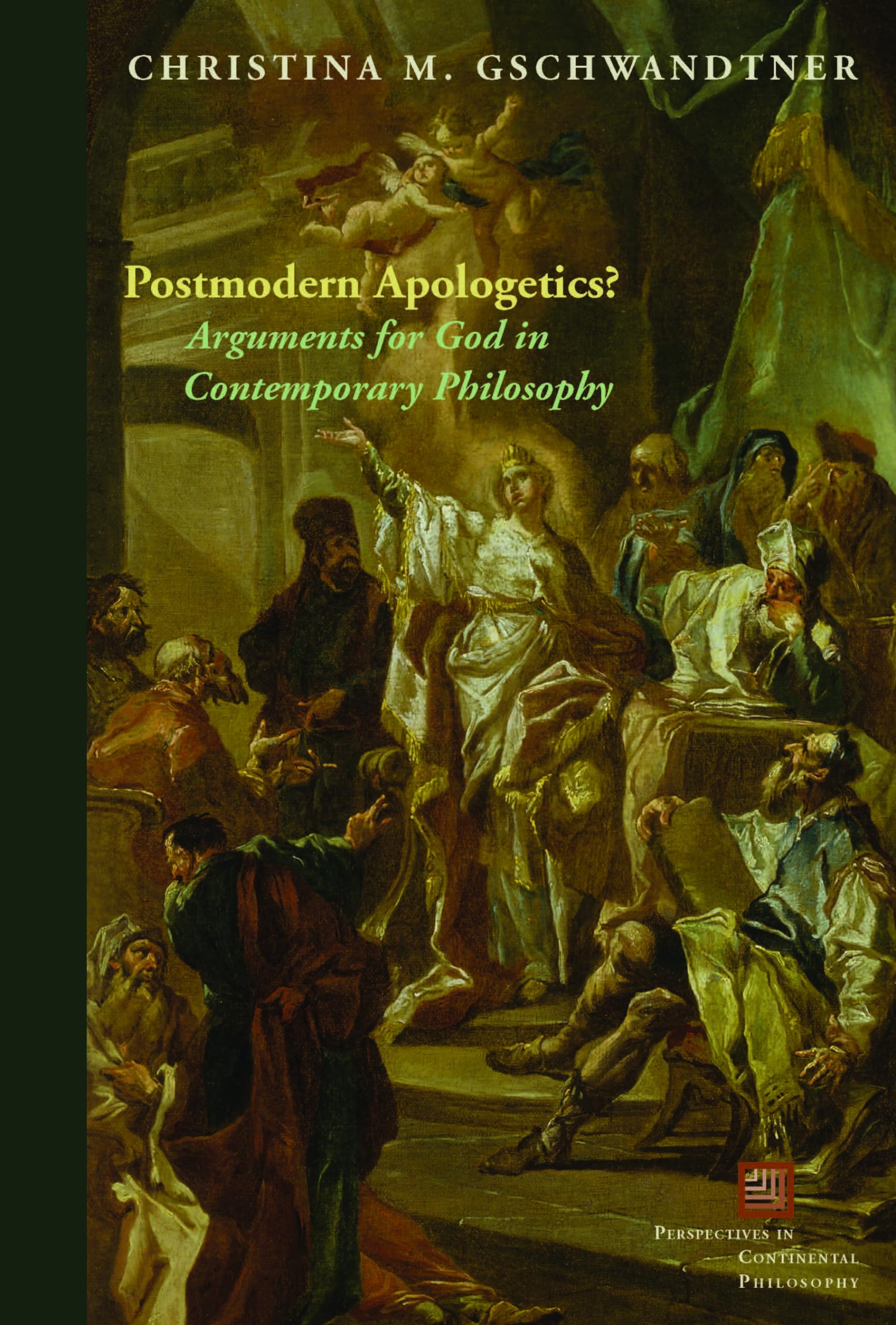
Postmodern Apologetics?: Arguments for God in Contemporary Philosophy by Christina M. Gschwandtner
Inclusive of all applicable taxes. FREE shipping on all orders.
Available Offers
- 🚚Free Delivery — Free shipping on all orders
- 💵Cash on Delivery — Pay when your order arrives
- ↩️15-Day Easy Returns — Hassle-free return policy
- 🔒Cash on Delivery — Pay safely when your order arrives
Check Delivery
Product Description
Introduction
In the landscape of modern philosophy, the question of God has often been relegated to the margins, dismissed as a relic of a pre-scientific age. Yet, a vibrant and sophisticated counter-movement has emerged within continental philosophy, one that not only takes religious experience seriously but also mounts rigorous intellectual arguments for the divine. Christina M. Gschwandtner’s Postmodern Apologetics?: Arguments for God in Contemporary Philosophy serves as the definitive guide to this fascinating terrain. This book is not merely a survey; it is an invitation to witness how some of the most influential thinkers of our time—from Levinas to Marion, from Ricoeur to Falque—have re-opened the doors to theological reflection within the heart of postmodern thought. For Indian students and scholars seeking to understand the intersection of faith, reason, and contemporary philosophy, this work offers a lucid, comprehensive, and deeply engaging roadmap.
Book Overview
Published by the prestigious Fordham University Press, this hardcover volume is a landmark contribution to the field of continental philosophy of religion. Gschwandtner meticulously charts the evolution of a philosophical movement that has moved beyond the anti-metaphysical strictures of postmodernism to articulate compelling, phenomenologically grounded arguments for God. The book is structured in two clear parts: the first examines the foundational, albeit non-apologetic, work of Heidegger, Levinas, and Derrida, showing how they prepared the ground for religious discourse. The second part dives deep into the contemporary French phenomenologists—Paul Ricoeur, Jean-Luc Marion, Michel Henry, Jean-Louis Chrétien, Jean-Yves Lacoste, and Emmanuel Falque—who have built upon this foundation to develop robust, positive accounts of religious experience. Gschwandtner argues persuasively that their work constitutes a form of “apologetics” for our time, one that is philosophical, rigorous, and deeply attentive to the texture of lived faith.
Key Highlights
- Comprehensive Coverage: The only single-volume work to systematically cover the major figures of the continental philosophy of religion movement, from Heidegger to Falque.
- Clear Conceptual Framework: Distinguishes between the preparatory work of earlier thinkers and the explicitly apologetic projects of contemporary philosophers.
- Phenomenological Focus: Demonstrates how these thinkers use phenomenology to explore religious phenomena such as prayer, liturgy, revelation, and the sacred.
- Accessible Scholarship: Written with clarity and precision, making complex ideas understandable for advanced undergraduates, graduate students, and general readers.
- Critical Engagement: Offers balanced analysis, highlighting both the strengths and potential limitations of each thinker’s approach.
Inside the Book
This volume is a treasure trove of philosophical insight. Part I opens with an examination of Martin Heidegger, whose critique of onto-theology paradoxically opened space for a non-metaphysical approach to the divine. It then explores Emmanuel Levinas’s ethics of the face-to-face encounter, which places the infinite within the ethical demand of the other. The section concludes with Jacques Derrida, whose deconstruction of presence is shown to harbor a messianic structure that points beyond itself. Part II is the heart of the book, with each chapter dedicated to a single thinker. Readers will encounter Paul Ricoeur’s hermeneutics of revelation, Jean-Luc Marion’s saturated phenomena and the God without being, Michel Henry’s radical phenomenology of Life as divine self-affection, Jean-Louis Chrétien’s phenomenology of the call and response, Jean-Yves Lacoste’s exploration of liturgy and the experience of God, and Emmanuel Falque’s bold integration of the human and the divine in the experience of finitude. Each chapter is rich with textual analysis, philosophical context, and critical evaluation.
Key Topics
- Heidegger and the question of God after onto-theology
- Levinas and the ethical transcendence of the Other
- Derrida, deconstruction, and the messianic without messianism
- Phenomenology of religious experience
- Jean-Luc Marion’s saturated phenomena and the God of love
- Michel Henry’s radical phenomenology of Life
- Jean-Louis Chrétien on the phenomenology of the call
- Jean-Yves Lacoste and the liturgy of the world
- Emmanuel Falque and the crossing of the human and the divine
- The relationship between philosophy and theology in contemporary thought
Reader Benefits
- Gain a Mastery of a Complex Field: Understand the central arguments and debates in continental philosophy of religion without getting lost in jargon.
- Bridge Philosophy and Theology: See how rigorous philosophical methods can be used to explore and defend religious belief in a postmodern context.
- Enrich Your Academic Work: Ideal for research papers, seminar presentations, and doctoral dissertations on religion, phenomenology, or contemporary French thought.
- Deepen Your Intellectual Curiosity: Challenge your assumptions about the relationship between faith and reason in the modern world.
- Build a Strong Foundation: This book provides the essential background needed to read the primary texts of these thinkers with confidence.
Learning Outcomes
By reading this book, you will be able to: explain the key contributions of Heidegger, Levinas, and Derrida to the philosophy of religion; articulate the core arguments of the major contemporary French phenomenologists of religion; critically evaluate the strengths and weaknesses of each thinker’s apologetic project; understand the methodological shift from deconstruction to constructive phenomenology; and apply these insights to contemporary debates about secularism, faith, and the nature of religious experience.
Who Should Read
This book is essential for students and scholars of philosophy, theology, and religious studies. It is particularly valuable for those studying continental philosophy, phenomenology, postmodernism, and the philosophy of religion. Indian readers engaged in comparative philosophy, especially those exploring the dialogue between Western and Eastern traditions of thought, will find it a rich resource. It is also highly recommended for seminarians, clergy, and anyone interested in understanding how contemporary philosophy can illuminate the life of faith. Whether you are a postgraduate student in Delhi, a professor in Mumbai, or a thoughtful reader in Bengaluru, this book will expand your intellectual horizons.
About the Author
Christina M. Gschwandtner is a distinguished scholar of continental philosophy of religion and a professor of philosophy at the University of Scranton. She has authored numerous books and articles on phenomenology, postmodern thought, and the intersection of philosophy and theology. Her work is known for its clarity, depth, and ability to make complex ideas accessible to a wide audience. She is a leading voice in the field and a trusted guide to the thinkers she explores.
About the Publisher
Fordham University Press is a prestigious academic publisher based in New York, renowned for its contributions to philosophy, theology, and the humanities. With a commitment to scholarly excellence, it has published many of the most important works in continental philosophy and religious studies. This hardcover edition reflects the high production standards expected of a premier academic press, making it a durable addition to any personal or institutional library.
Conclusion
Postmodern Apologetics?: Arguments for God in Contemporary Philosophy is more than a book; it is an intellectual journey into the heart of contemporary thought about God. Christina Gschwandtner has crafted a work that is both a comprehensive introduction and a critical engagement with some of the most challenging and rewarding thinkers of our time. For anyone seeking to understand how philosophy can once again speak meaningfully about the divine, this volume is indispensable. Order your hardcover copy today from Bookshops.in and join the conversation that is reshaping the intellectual landscape of faith and reason.
Quick Summary
Postmodern Apologetics? by Christina M. Gschwandtner is a groundbreaking exploration of how continental philosophy has reopened the door for religious argumentation in an age often considered post-metaphysical. The book is divided into two parts: the first examines the religious dimensions in the thought of Martin Heidegger, Emmanuel Levinas, and Jacques Derrida, showing how each thinker, though not explicitly apologetic, legitimised religious language within philosophical discourse. The second part turns to contemporary French philosophers who build on this foundation to articulate explicit arguments for God. Written for graduate students, theologians, and researchers, the volume offers a clear, systematic introduction to the emerging field of continental philosophy of religion. Readers will gain a deep understanding of how postmodern thought can serve faith rather than undermine it. This book is ideal for Indian scholars seeking to engage with Western philosophical traditions in a critical yet constructive manner. By purchasing from Bookshops.in, you support a trusted Indian retailer that offers genuine imported editions, secure payment, and reliable delivery across India.
Book Highlights
Book Specifications
| ISBN-13 | 9780823242740 |
| ISBN-10 | 0823242749 |
| Publisher | Fordham University Press |
| Language | English |
| Dimensions | 15.88 x 2.54 x 23.5 cm |
| Weight | 635 g |
| Country | India |
| Category | Religious Studies › Theology & Philosophy of Religion |
| Genre | Philosophy of Religion |
| Reading Age | Adult |
| Original Language | English |
Frequently Asked Questions
What is the main argument of Postmodern Apologetics?
Who is Christina M. Gschwandtner?
Is this book suitable for beginners in philosophy?
Does the book only cover Christian apologetics?
How does this book relate to Indian philosophy?
Is this a hardcover or paperback?
Does the book include Derrida's deconstruction?
Can I use this book for a university course?
What is the price in INR?
Is the book only about French philosophers?
Does the book have an index?
What makes this book different from other philosophy of religion texts?
Where can I buy this book in India?
Readers Also Search For
Customers Also Bought
Islam
Spiritual Economies (English, Daromir Rudnyckyj)

Islam
Who Is Allah? (English, Bruce B. Lawrence)
Islam
Islam and Liberal Citizenship: The Search for an Overlapping Consensus by Andrew F. March
Islam
Fiqh Us-Sunnah: Funerals and Diggers by Al-Sayyid Sabiq – Islamic Funeral Guide

Christianity
Genetics (English, Thomas a. Shannon | Mark P. Aulisio | Françoise Baylis)

Hinduism
Karma and Creativity by Christopher Key Chapple – Indian Philosophy
Related Products
View All
Religion & Spirituality
Spiritual Competency in Psychotherapy | by Philip Brownell | Springer Publishing Company | by Philip Brownell | Springer Publishing Company | by Philip Brownell | Springer Publishing Company | by Philip Brownell | Springer Publishing Company | by Philip Brownell | Springer Publishing Company | by Philip Brownell | Springer Publishing Company | by Philip Brownell | Springer Publishing Company | by Philip Brownell | Springer Publishing Company | by Philip Brownell | Springer Publishing Company | b
Religion & Spirituality
Religion as a Conversation Starter | by Ina Merdjanova | Continuum | by Ina Merdjanova | Continuum | by Ina Merdjanova | Continuum | by Ina Merdjanova | Continuum | by Ina Merdjanova | Continuum | by Ina Merdjanova | Continuum | by Ina Merdjanova | Continuum | by Ina Merdjanova | Continuum | by Ina Merdjanova | Continuum | by Ina Merdjanova | Continuum | by Ina Merdjanova | Continuum | by Ina Merdjanova | Continuum | by Ina Merdjanova | Continuum | by Ina Merdjanova | Continuum | by Ina Merdjano
Religion & Spirituality
The Other Jewish Question: Identifying the Jew and Making Sense of Modernity
Religion & Spirituality
The Oxford Guide to People & Places of the Bible | by Bruce M. Metzger | Michael D. Coogan | Oxford University Press | by Bruce M. Metzger | Michael D. Coogan | Oxford University Press | by Bruce M. Metzger | Michael D. Coogan | Oxford University Press | by Bruce M. Metzger | Michael D. Coogan | Oxford University Press | by Bruce M. Metzger | Michael D. Coogan | Oxford University Press | by Bruce M. Metzger | Michael D. Coogan | Oxford University Press | by Bruce M. Metzger | Michael D. Coogan |

Religion & Spirituality
Anti-Judaism in Early Christianity | by Stephen G. Wilson | Wilfrid Laurier University Press | by Stephen G. Wilson | Wilfrid Laurier University Press | by Stephen G. Wilson | Wilfrid Laurier University Press | by Stephen G. Wilson | Wilfrid Laurier University Press | by Stephen G. Wilson | Wilfrid Laurier University Press | by Stephen G. Wilson | Wilfrid Laurier University Press | by Stephen G. Wilson | Wilfrid Laurier University Press | by Stephen G. Wilson | Wilfrid Laurier University Press |
Religion & Spirituality