
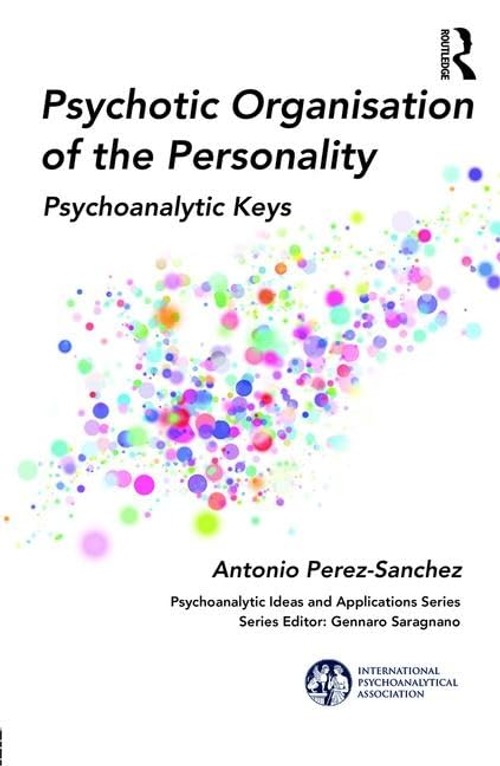
Psychotic Organisation of the Personality: Psychoanalytic Keys by Antonio Perez-Sanchez – A Deep Kleinian and Bionian St
Inclusive of all applicable taxes. FREE shipping on all orders.
Available Offers
- 🚚Free Delivery — Free shipping on all orders
- 💵Cash on Delivery — Pay when your order arrives
- ↩️15-Day Easy Returns — Hassle-free return policy
- 🔒Cash on Delivery — Pay safely when your order arrives
Check Delivery
Product Description
Introduction
In the vast landscape of psychoanalytic literature, few works tackle the enigma of psychosis with the depth and clinical precision found in Psychotic Organisation of the Personality: Psychoanalytic Keys by Antonio Perez-Sanchez. This hardbound volume from Routledge offers Indian students, clinicians, and scholars a rigorous yet accessible exploration of how the psychotic mind structures itself. Rather than viewing psychosis as a mere breakdown, Perez-Sanchez presents it as a coherent—albeit pathological—organisation of the personality, drawing on the seminal ideas of Bion, Klein, and Freud. For anyone seeking to understand the inner world of the psychotic patient, this book is an indispensable guide.
Book Overview
Published by the prestigious Routledge imprint, this book bridges classical psychoanalytic theory with contemporary Kleinian thought. The author, a seasoned psychoanalyst, weaves together theoretical exposition and vivid clinical material, including a detailed case study of a schizophrenic patient. The text illuminates how psychic pain—often unbearable and unprocessed—lies at the heart of psychotic organisation. Perez-Sanchez argues that the distinction between feeling psychic pain and truly suffering it is a crucial indicator for assessing a patient's readiness for psychoanalytic treatment. This book is not a dry manual but a living dialogue between theory and practice, making it a vital resource for Indian readers navigating the complexities of severe mental illness.
Key Highlights
- Original framework: Unpacks psychosis as a structured organisation of the personality, not a chaotic breakdown.
- Clinical depth: Features a detailed, multi-angle case study of a schizophrenic patient, showing the analyst-patient relationship in real time.
- Theoretical lineage: Traces ideas from Freud, Klein, and Bion through to contemporary Kleinian authors, offering a coherent intellectual journey.
- Focus on psychic pain: Positions pain as the cornerstone of psychopathology, with practical insights for clinicians.
- Routledge quality: A hardcover edition from a world-renowned academic publisher, ensuring lasting value for libraries and personal collections.
Inside the Book
The book is structured to guide the reader from foundational concepts to advanced clinical applications. Early chapters establish the theoretical groundwork, introducing Bion's concept of the psychotic personality and Steiner's pathological organisations. Mid-section chapters delve into the role of psychic pain, exploring how the psychotic patient defends against it through fragmentation and projection. The latter half is devoted to a compelling case study: the author's work with a woman diagnosed with schizophrenia. Here, Perez-Sanchez examines the therapeutic process from multiple perspectives—transference, countertransference, and the patient's internal world—demonstrating how the psychoanalytic method can reach even the most disturbed minds. Each chapter builds on the last, creating a cumulative understanding that is both intellectually satisfying and clinically practical.
Key Topics
- Psychotic personality organisation versus neurotic structures
- Bion's theory of thinking and its application to psychosis
- The role of projective identification in psychotic states
- Psychic pain: feeling versus suffering
- Pathological organisations as defences against unbearable reality
- Transference and countertransference in treating schizophrenia
- The Klein-Bion tradition and its evolution
- Assessment criteria for psychoanalytic suitability in psychotic patients
Reader Benefits
Indian readers—whether in bustling cities like Mumbai, Delhi, or Bengaluru, or in quieter academic towns—will find this book a powerful tool for deepening their clinical work. For students of psychology and psychiatry, it offers a clear theoretical map of a complex terrain. For practising psychotherapists and psychoanalysts, it provides fresh strategies for engaging with patients who are often considered untreatable. The case study, rich in detail, helps bridge the gap between abstract theory and the messy reality of the consulting room. Moreover, the book's emphasis on psychic pain resonates with the Indian cultural context, where emotional suffering is often expressed through somatic symptoms or family dynamics. By understanding the psychotic organisation, readers can better empathise with and treat those who struggle to contain their inner chaos.
Learning Outcomes
- Understand psychosis as a structured, meaningful organisation of the personality
- Identify key theoretical contributions from Freud, Klein, Bion, and Steiner
- Recognise the distinction between feeling psychic pain and suffering it
- Apply psychoanalytic principles to the assessment and treatment of psychotic patients
- Analyse clinical material through multiple theoretical lenses
- Evaluate the role of psychic pain in psychopathology
- Develop a nuanced view of the therapeutic relationship with severely disturbed individuals
Who Should Read
This book is essential for psychoanalysts, psychotherapists, clinical psychologists, and psychiatrists working with severe mental illness. It is also highly recommended for postgraduate students in psychology, psychiatry, and counselling—especially those preparing for the Indian Association of Clinical Psychologists (IACP) exams or similar qualifications. Academics teaching psychoanalytic theory will find it a valuable text for advanced seminars. Additionally, anyone with a deep interest in the human mind—writers, philosophers, or social workers—will gain profound insights into how the psyche organises itself even in the face of fragmentation.
About the Author
Antonio Perez-Sanchez is a distinguished psychoanalyst and psychiatrist with decades of clinical experience. A member of the International Psychoanalytical Association, he has worked extensively with psychotic patients in both hospital and private practice settings. His writing combines rigorous scholarship with a compassionate, humane approach to the most challenging psychiatric conditions. Perez-Sanchez is known for his ability to make complex ideas accessible without sacrificing depth, making him a respected voice in the psychoanalytic community.
About the Publisher
Routledge is a global leader in academic publishing, particularly in the fields of psychology, psychoanalysis, and mental health. Founded in 1836, Routledge has a long tradition of bringing groundbreaking scholarship to readers worldwide. Their books are known for their editorial excellence, rigorous peer review, and commitment to advancing knowledge. This hardcover edition reflects Routledge's dedication to producing durable, high-quality volumes that stand the test of time—perfect for Indian libraries and personal collections.
Conclusion
Psychotic Organisation of the Personality: Psychoanalytic Keys is more than a textbook; it is a compassionate invitation to understand the most misunderstood of human conditions. Antonio Perez-Sanchez offers a roadmap for clinicians and students alike, showing that even in psychosis, there is structure, meaning, and the possibility of healing. For Indian readers seeking to deepen their psychoanalytic knowledge and clinical skills, this book is a treasure. Order your hardcover copy from Bookshops.in today and unlock the keys to the psychotic mind.
Quick Summary
Psychotic Organisation of the Personality: Psychoanalytic Keys by Antonio Perez-Sanchez is a seminal work that reinterprets psychosis as a structured organisation of the personality, rather than a mere breakdown. Drawing on the foundational theories of Freud, Melanie Klein, and Wilfred Bion, and extending into the work of John Steiner and contemporary Kleinian analysts, the book places psychic pain at the centre of psychopathology. A crucial distinction is made between feeling psychic pain and truly suffering it—a concept that becomes a clinical indicator for treatment suitability. The author illustrates his arguments with a detailed case study of a schizophrenic patient, offering readers a vivid picture of the therapeutic process. This book is intended for psychoanalytic clinicians, postgraduate students, and mental health professionals who wish to deepen their understanding of severe personality disorders. By purchasing from Bookshops.in, Indian readers gain access to a premium hardcover edition from Routledge, ensuring reliable delivery and authentic copies for academic and clinical use.
Book Highlights
Book Specifications
| ISBN-13 | 9781782205685 |
| ISBN-10 | 1782205683 |
| Publisher | Routledge |
| Language | English |
| Dimensions | 15.88 x 2.54 x 22.23 cm |
| Weight | 426 g |
| Country | India |
| Category | Health, Family & Personal Development › Healthy Living & Wellness |
| Genre | Non-fiction |
| Reading Age | Adult |
| Original Language | English |
Frequently Asked Questions
What is the main thesis of this book?
Who is Antonio Perez-Sanchez?
Which psychoanalytic theorists are discussed?
Is this book suitable for beginners in psychoanalysis?
Does the book include case studies?
What is the role of psychic pain in this book?
Is this book relevant for Indian readers?
What does Bion mean by 'psychotic personality'?
What are 'pathological organisations'?
How does the book help clinicians?
Is this a hardcover edition?
What is the ISBN?
Can I use this book for academic research?
Does the book cover contemporary Kleinian thought?
Readers Also Search For
Customers Also Bought
Psychology
Koinonia: From Hate, Through Dialogue, to Culture in the Large Group by Patrick B. Demare
Psychology
Mindfulness-Based Interventions for Trauma and Its Consequences (Concise Guides on Trauma Care, 4)

Psychology
Handbook for Teaching Statistics and Research Methods by Mark E. Ware

Psychology
Psychoanalysis and the Nuclear Threat: Clinical and Theoretical Studies
Psychology
Humor and Psyche: Psychoanalytic Perspectives by James W. Barron

Relationships
The Experience and Expression of Uncertainty in Close Relationships by Jennifer A. Theiss
Related Products
View All
Health, Family & Personal Development
Making the Transition to Home: Simple Modifications to Encourage Independent Living

Health, Family & Personal Development
Asian Functional Foods (Nutraceutical Science and Technology)

Health, Family & Personal Development
State of the Marital Union: Rhetoric, Identity, and Nineteenth-Century Marriage Controversies

Health, Family & Personal Development
My Mindset, My Asset: Laying Hold on the Potentials of the Mind
Health, Family & Personal Development
Paraverbal Communication in Psychotherapy: Beyond the Words

Health, Family & Personal Development