
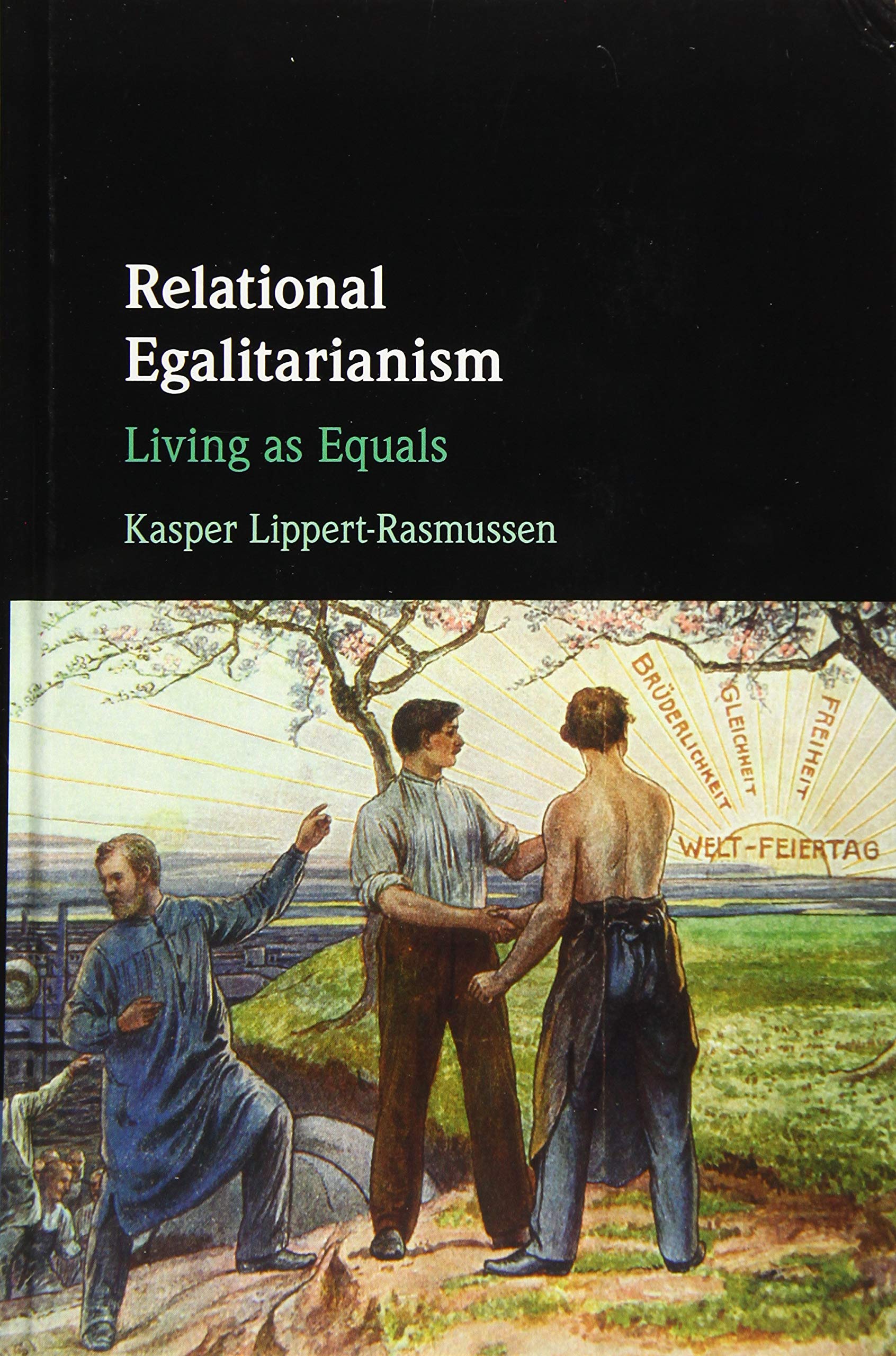
Relational Egalitarianism: Living as Equals by Kasper Lippert-Rasmussen – A Deep Dive into Justice, Social Relations, an
Inclusive of all applicable taxes. FREE shipping on all orders.
Available Offers
- 🚚Free Delivery — Free shipping on all orders
- 💵Cash on Delivery — Pay when your order arrives
- ↩️15-Day Easy Returns — Hassle-free return policy
- 🔒Cash on Delivery — Pay safely when your order arrives
Check Delivery
Product Description
Introduction
In contemporary political philosophy, a quiet but profound shift has taken place. For decades, debates about justice revolved around the fair distribution of resources, income, and opportunities. But what if justice is not merely about what we have, but about how we relate to one another? Relational Egalitarianism: Living as Equals by Kasper Lippert-Rasmussen offers a rigorous and accessible exploration of this transformative idea. Published by Cambridge University Press, this hardcover volume is an essential read for students, scholars, and anyone interested in the foundations of a just society.
Book Overview
This book provides a comprehensive examination of the relational egalitarian ideal—the notion that justice is fundamentally about social relations of equality, rather than just the distribution of goods. Lippert-Rasmussen systematically evaluates the strengths and weaknesses of this paradigm, comparing it with distributive theories like luck egalitarianism. He argues that a fully adequate egalitarian theory must incorporate elements from both relational and distributive perspectives. The book is both a critical introduction and an original contribution, offering new conceptual tools to understand what it means to relate as equals and why this ideal is desirable. It challenges readers to rethink the very purpose of justice in our personal and political lives.
Key Highlights
- Original Synthesis: Bridges the gap between relational and distributive egalitarianism, proposing a hybrid theory that captures the insights of both traditions.
- Critical Engagement: Shows how many challenges faced by luck egalitarianism—such as the problem of expensive tastes—reappear in relational egalitarianism, prompting deeper analysis.
- New Conceptual Tools: Introduces fresh analytical frameworks to clarify the nature of social equality and its moral foundations.
- Accessible yet Rigorous: Written in clear, engaging prose suitable for advanced undergraduates, graduate students, and professional philosophers.
- Timely Relevance: Addresses urgent questions about hierarchy, discrimination, and social standing in contemporary societies, including India.
Inside the Book
The book is structured around a careful unpacking of the relational egalitarian ideal. Lippert-Rasmussen begins by defining what it means to relate as equals, distinguishing it from mere distributive equality. He then examines various objections and refinements, including the role of respect, recognition, and power. The middle chapters delve into specific applications, such as how relational equality applies to the workplace, the family, and political institutions. The final part develops his own positive proposal: a comprehensive egalitarianism that integrates distributive concerns with relational ones. Throughout, the author engages with major thinkers like Elizabeth Anderson, Samuel Scheffler, and Ronald Dworkin, making this book a dialogue with the best of contemporary political philosophy.
Key Topics
- The relational paradigm versus the distributive paradigm
- Luck egalitarianism and its critics
- Social equality, hierarchy, and domination
- The moral psychology of relating as equals
- Justice in personal relationships and institutions
- Equality of opportunity versus equality of social standing
- The value of non-domination and mutual respect
Reader Benefits
By reading this book, you will gain a nuanced understanding of one of the most vibrant debates in modern political philosophy. You will learn to critically evaluate arguments about justice, not just as a matter of resources, but as a matter of how we treat each other. The book equips you with analytical tools to assess social hierarchies, discrimination, and inequality in everyday life. For Indian readers, it offers a philosophical lens to examine issues of caste, class, and gender relations. Whether you are a student preparing for exams, a researcher looking for fresh insights, or a curious reader, this book will deepen your thinking about equality and justice.
Learning Outcomes
- Understand the core tenets of relational egalitarianism and how they differ from distributive theories.
- Identify the key challenges and objections to the relational ideal.
- Evaluate the strengths and weaknesses of different egalitarian approaches.
- Apply relational egalitarian concepts to real-world social issues.
- Develop a critical perspective on the relationship between distribution and social relations.
Who Should Read
This book is ideal for students of political philosophy, ethics, and social theory at the undergraduate and postgraduate levels. It is also highly valuable for academics and researchers working on egalitarianism, social justice, or political liberalism. Additionally, activists, policy makers, and general readers with an interest in equality and social change will find the arguments stimulating and relevant. The book assumes some familiarity with philosophical concepts, but it is written in a style that welcomes dedicated newcomers.
About the Author
Kasper Lippert-Rasmussen is a leading political philosopher and professor at Aarhus University, Denmark. He has written extensively on egalitarianism, discrimination, and applied ethics. His previous works include Luck Egalitarianism and Making Sense of Affirmative Action. Known for his analytical clarity and fair-minded engagement with opposing views, Lippert-Rasmussen is a respected voice in contemporary debates about justice. In this book, he brings years of scholarship to bear on the relational egalitarian ideal, offering a balanced and insightful assessment.
About the Publisher
Cambridge University Press is one of the oldest and most prestigious academic publishers in the world. Founded in 1534, it has a long tradition of publishing groundbreaking works in philosophy, science, and the humanities. This hardcover edition reflects the Press’s commitment to high-quality scholarship and durable production. For Indian readers, Cambridge University Press books are synonymous with academic excellence and are widely used in universities across the country.
Conclusion
Relational Egalitarianism: Living as Equals is a landmark work that reshapes how we think about justice. By arguing that equality is not just about what we have, but about how we stand in relation to each other, Kasper Lippert-Rasmussen offers a vision of society that is both intellectually rigorous and deeply humane. Whether you are a philosopher or a concerned citizen, this book will challenge and inspire you. Add it to your library and begin the journey toward understanding what it truly means to live as equals.
Quick Summary
Relational Egalitarianism: Living as Equals by Kasper Lippert-Rasmussen is a groundbreaking work in political philosophy that redefines justice as a matter of social relations rather than mere distribution. Over the last twenty years, many philosophers have shifted from the distributive paradigm to a relational one, and this book systematically describes, refines, and assesses that shift. Lippert-Rasmussen proposes a comprehensive egalitarianism that incorporates elements from both paradigms, showing how challenges from luck egalitarianism reappear in relational contexts. The book introduces new conceptual tools for understanding the relational ideal and explores why living as equals matters. It is written for advanced students, scholars, and anyone interested in social equality. Readers will gain a rigorous understanding of contemporary egalitarian thought, critical analysis of key philosophers, and a framework for thinking about justice in society. By purchasing from Bookshops.in, Indian readers get access to this premium Cambridge University Press hardcover at a competitive price, with reliable delivery and support for academic needs.
Book Highlights
Book Specifications
| ISBN-13 | 9781107158900 |
| ISBN-10 | 1107158907 |
| Publisher | Cambridge University Press |
| Language | English |
| Dimensions | 15.88 x 1.91 x 23.5 cm |
| Weight | 500 g |
| Country | India |
| Category | Philosophy › History & Surveys |
| Genre | Non-fiction |
| Original Language | English |
Frequently Asked Questions
What is Relational Egalitarianism about?
Who is the author of Relational Egalitarianism?
Is this book suitable for Indian students?
What is the main argument of the book?
Does the book cover luck egalitarianism?
Who is the publisher?
What is the publication date?
What is the price of the book?
Is this book a hardcover?
What language is the book in?
Does this book critique other philosophers?
Can I use this book for my research?
Is the book available in India?
What makes this book unique?
Readers Also Search For
Customers Also Bought
Islam
Spiritual Economies (English, Daromir Rudnyckyj)

Islam
Who Is Allah? (English, Bruce B. Lawrence)
Islam
Islam and Liberal Citizenship: The Search for an Overlapping Consensus by Andrew F. March

Islam
Fiqh Us-Sunnah: Funerals and Diggers by Al-Sayyid Sabiq – Islamic Funeral Guide

Christianity
Genetics (English, Thomas a. Shannon | Mark P. Aulisio | Françoise Baylis)

Hinduism
Karma and Creativity by Christopher Key Chapple – Indian Philosophy
Related Products
View All
Philosophy
Latin American Philosophy: Currents, Issues, Debates by Eduardo Mendieta

Philosophy
Al-Farabi's Short Commentary on Aristotle's Prior Analytics by Nicholas Rescher – Philosophy

Philosophy
Poetics of Imagining: Modern to Post-modern by Richard Kearney
Philosophy
The Metaphysics of Extrinsic Properties: 11 (Metaphysical Research, 11)
Philosophy
Dialogues on Metaphysics and on Religion by Nicolas Malebranche – Philosophy
Philosophy